Zinc Oxide vs. Titanium Dioxide: Which Mineral Sunscreen Filter Is Better?
Zinc oxide and titanium dioxide are the two FDA-approved mineral sunscreen actives most often compared in everyday skin care. They belong to the same category, but they do not behave the same way across the UV spectrum, on skin, or in finished formulas. That is why many modern mineral sunscreens use both instead of treating them as interchangeable. This guide breaks down the differences that matter in practice: protection profile, cosmetic finish, safety, environmental questions, and when one mineral—or a blend—makes more sense.
Table of Contents
Quick Comparison Table
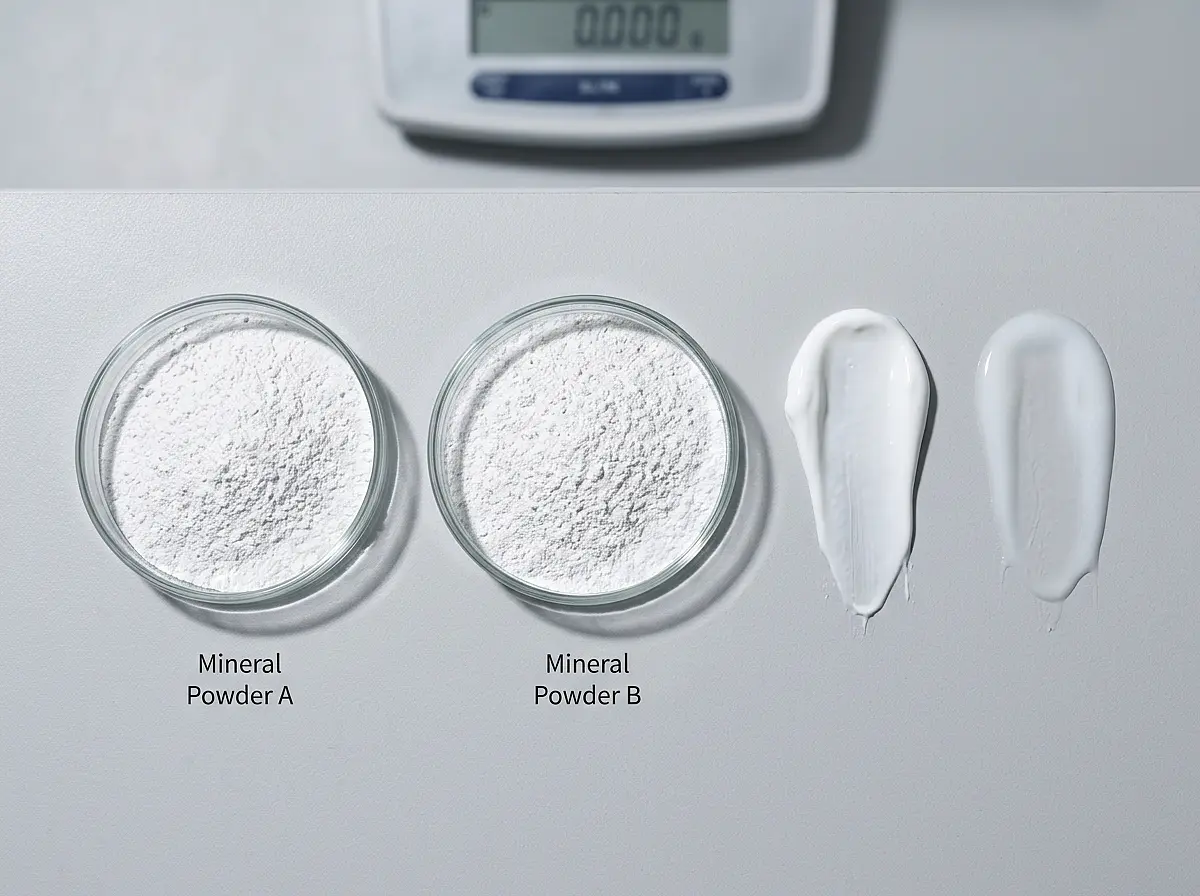
Fast takeaway: In a zinc oxide vs titanium dioxide comparison, zinc oxide is usually the stronger standalone broad-spectrum mineral, while titanium dioxide is often the more efficient SPF booster and the easier cosmetic partner.
Comparison snapshot
Feature | Zinc Oxide | Titanium Dioxide
UVA coverage | Strong, including meaningful UVA1 reach | More limited, stronger in shorter UVA than long UVA
UVB coverage | Good | Strong
Whitening effect on skin | Usually higher, especially at high active loads | Usually lower at comparable use levels
Particle size options | Non-nano and nano grades | Non-nano and nano grades
FDA approval | Approved OTC mineral sunscreen active | Approved OTC mineral sunscreen active
EU status | Allowed UV filter; nano use subject to specific conditions | Allowed UV filter; nano use subject to specific conditions
Reef safety | Often marketed as reef-friendlier than many chemical filters, but marine zinc toxicity remains a concern | Often viewed as the lower-concern mineral option in current literature, though not impact-free
Photostability | High in real-world sunscreen use | Very high in real-world sunscreen use
Typical SPF contribution | Helpful, but less SPF-efficient than TiO₂ | Strong contributor to SPF testing
Skin feel | Can feel denser, drier, or more draggy | Often smoother and easier to make lightweight
Best for | Users prioritizing broad UVA coverage in a mineral filter | Users prioritizing SPF efficiency, lighter wear, or blend-friendly formulas
How Each Filter Works

Both filters are mineral, physical UV filters in the FDA OTC sunscreen framework. They protect by blocking ultraviolet radiation through reflection and scattering, although in real formulas absorption and film formation also affect final performance. What matters most to users is not the old “tiny mirror” simplification, but how each filter behaves across UVA and UVB and how evenly it sits on skin.
Zinc oxide is valued because its protection extends further into longer UVA wavelengths, while titanium dioxide is particularly strong in UVB and contributes more moderately in UVA. For a broader material overview, see what is titanium dioxide. When comparing zinc oxide vs titanium dioxide in practice, this difference in spectral profile is the main reason they are not interchangeable.
Many formulators combine both because the pairing covers the UV range more evenly than either mineral often does alone. That is the core logic behind so many zinc oxide and titanium dioxide sunscreen formulas on the market.
Zinc Oxide: Broad-Spectrum Mineral Coverage
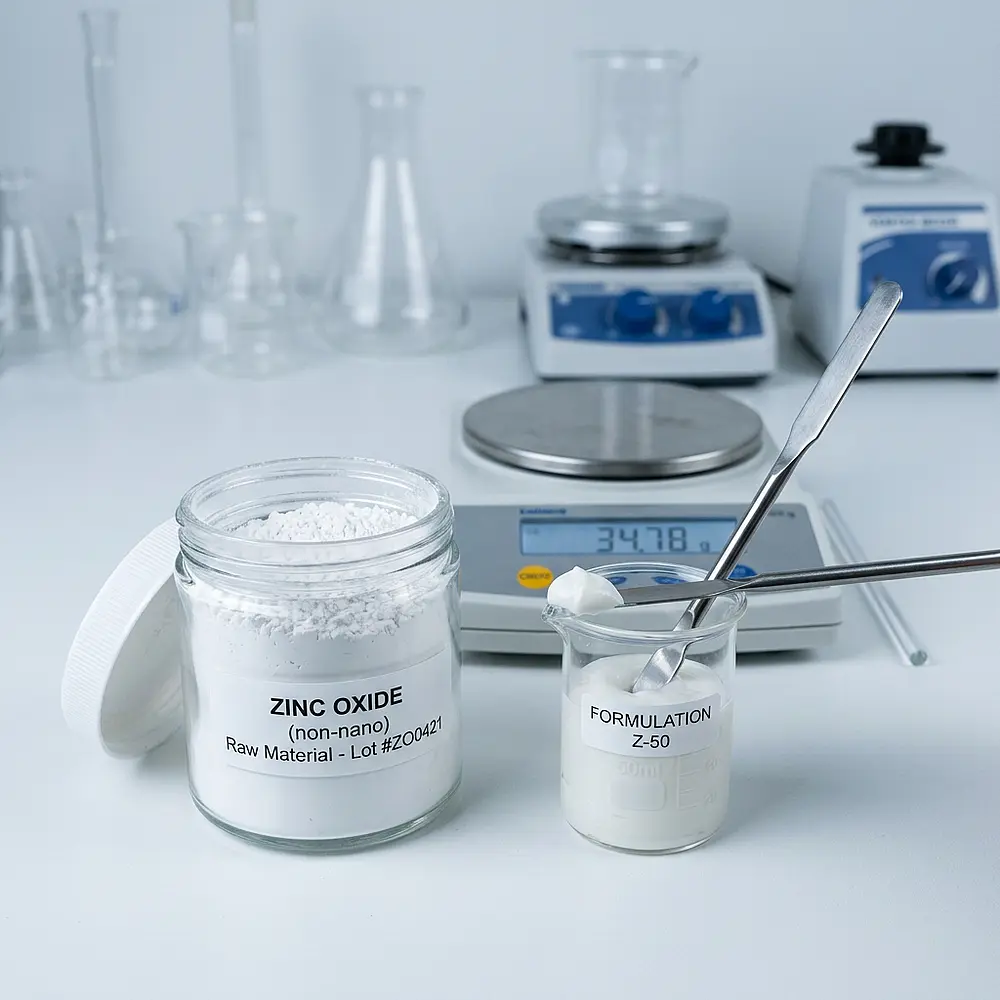
Zinc oxide is the more complete single-ingredient mineral filter when the goal is broad-spectrum coverage. In standard dermatology terms, the UV bands are UVB 280–320 nm, UVA2 320–340 nm, and UVA1 340–400 nm. Zinc oxide remains useful deeper into UVA1 than titanium dioxide, which is why it appears so often in mineral sunscreens focused on photoaging, pigmentation, and daily facial protection.
The trade-off is that strong mineral UVA coverage usually comes with a cosmetic cost. Formulas that lean heavily on zinc oxide often need enough active material to become more visible, thicker, or drier on the skin.
Titanium Dioxide: Strong UVB and Short-UVA Performance

Titanium dioxide is especially effective in the wavelengths that drive erythema, which is why it contributes strongly to SPF performance. It also covers part of UVA, particularly the shorter side, but it does not reach as far into long-wave UVA as zinc oxide does.
That profile makes TiO₂ highly useful, but less complete as a one-filter mineral solution. On its own, it is usually better at building sunburn protection than at delivering the most balanced UVA profile.
Why Combining Both Filters Improves Balance

When both minerals appear in the same formula, each can contribute where it is most efficient. That allows the formulator to build stronger broad-spectrum protection without relying as heavily on a single particle type.
The result is not only a more balanced UV profile, but also more room to control spreadability, opacity, and skin feel. This is one reason sunscreen with zinc oxide and titanium dioxide is so common across modern mineral product ranges.
UV Protection: Coverage & SPF

This is the core of the titanium dioxide vs zinc oxide decision. The standard UV bands are UVB 280–320 nm, UVA2 320–340 nm, and UVA1 340–400 nm. SPF is weighted mainly toward UVB-driven redness, while broad-spectrum quality depends on how far protection extends into UVA. In the U.S., the FDA broad-spectrum test uses a critical wavelength of at least 370 nm, so a sunscreen can post a high SPF yet still be less complete on the UVA side if its spectral curve drops off too early.
Spectrum comparison
UV band | Zinc Oxide | Titanium Dioxide
UVB 280–320 nm | Good protection | Strong protection
UVA2 320–340 nm | Strong coverage | Moderate to good coverage
UVA1 340–400 nm | Stronger extension into long UVA | Relatively limited extension
Coverage by UV Range

Zinc oxide is the more evenly distributed mineral filter across the full dermatologic UV map. Its main advantage is not that it dominates every wavelength, but that it remains useful where titanium dioxide becomes less efficient: the longer UVA region associated with photoaging and persistent pigment change.
Titanium dioxide is strongest where SPF testing gives the most weight. That makes it excellent at helping a sunscreen score well against sunburn-producing radiation, even though its long-UVA reach is not as complete. In simple ZnO vs TiO2 terms, zinc oxide is broader, while titanium dioxide is more concentrated in its strengths.
Why Zinc Oxide Works Better as a Standalone Broad-Spectrum Filter

If a mineral sunscreen uses only one active and still aims for robust broad-spectrum performance, zinc oxide is usually the safer technical choice. Its spectral profile is more likely to extend far enough to support broad-spectrum expectations without another filter filling the long-UVA gap.
That does not mean every zinc-only sunscreen is automatically better. Real protection still depends on film uniformity, actual active percentage, user application amount, and whether the product is wearable enough to be used generously.
Why Many Sunscreens Use Both

Many brands solve the broad-spectrum problem by using both minerals rather than forcing one to do every job alone. A mixed system can support broad-spectrum claims more efficiently than a titanium-dioxide-only formula, while avoiding the very high zinc load that can make a product look and feel heavier.
Typical SPF contribution is part of that trade-off: titanium dioxide often delivers a stronger UVB/SPF boost than zinc oxide at similar use levels, while zinc oxide usually adds more of the UVA side. For consumers, the practical lesson is simple: do not judge UVA balance by SPF number alone. If long-UVA protection matters to you, the ingredient list and the mineral ratio matter more than front-label marketing shorthand.
Skin Feel & White Cast
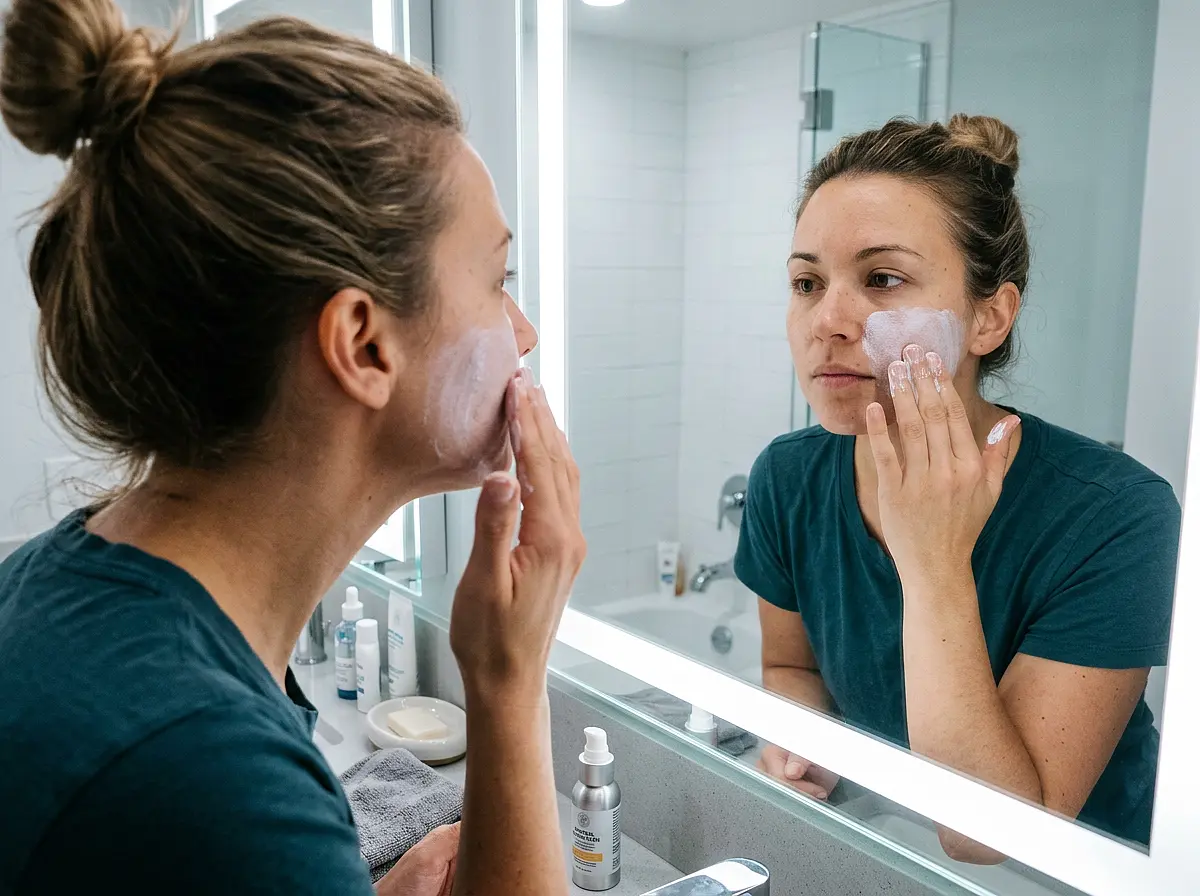
This is the difference most users notice first. Two sunscreens can both be mineral, broad-spectrum, and SPF 50, yet feel completely different once they are on the face. White cast, drag, dryness, pilling, and compatibility with makeup are driven by the active mineral, but also by particle treatment, dispersion quality, base formula, and whether the product is tinted.
Both filters are available in non-nano and nano particle forms, and particle size has a direct effect on transparency and visible residue. Non-nano grades generally scatter more visible light and therefore look chalkier, while smaller particles can appear sheerer when they are well dispersed and surface-treated. That means the white-cast outcome is not dictated by ingredient name alone, but by the exact grade and how the formula is built.
Zinc oxide tends to leave more visible residue than titanium dioxide, especially when non-nano particles are used at the higher concentrations needed for strong broad-spectrum performance. Titanium dioxide can still whiten the skin, but at nano scale it is often considered the more cosmetically elegant mineral option. For users comparing daily facial sunscreens, that is usually the most noticeable practical difference between the two.
How Particle Size Changes Finish

Particle size changes three things at once: visible whiteness, spreadability, and how uniform the film looks after application. Larger particles are easier to see because they scatter visible light more strongly. Smaller ones appear sheerer, particularly when they are well coated and evenly dispersed.
That is why ingredient lists alone do not tell the whole story. Two zinc oxide sunscreens with the same active percentage can behave very differently if one uses a better dispersion system or more refined particle treatment.
Which Filter Tends to Leave More White Cast
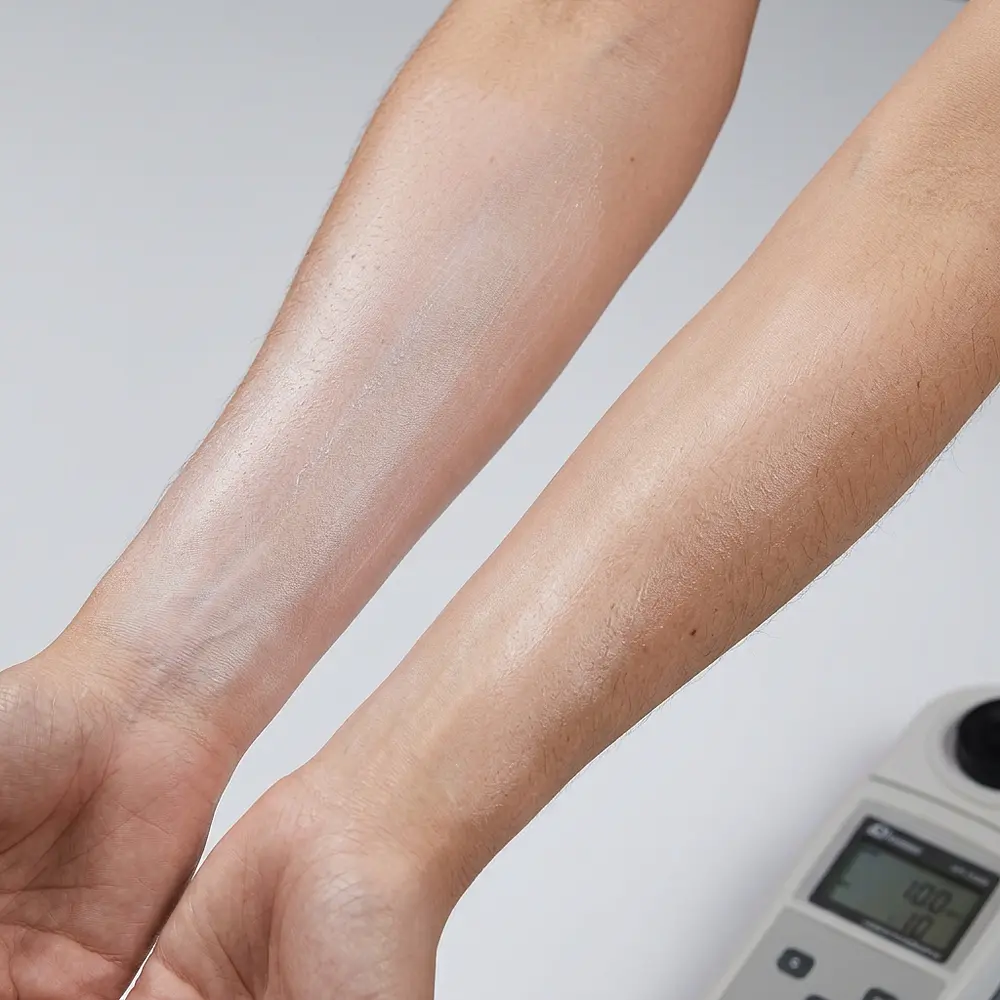
At similar protection levels, zinc oxide usually leaves the stronger cast. That becomes most obvious in high-zinc facial sunscreens and in untinted formulas designed around broad UVA coverage.
Titanium dioxide is not invisible, but it often reaches a more acceptable finish sooner. Especially in modern fluid textures, it is commonly the easier mineral to wear under everyday conditions.
Tinted Formulas and Makeup Wear
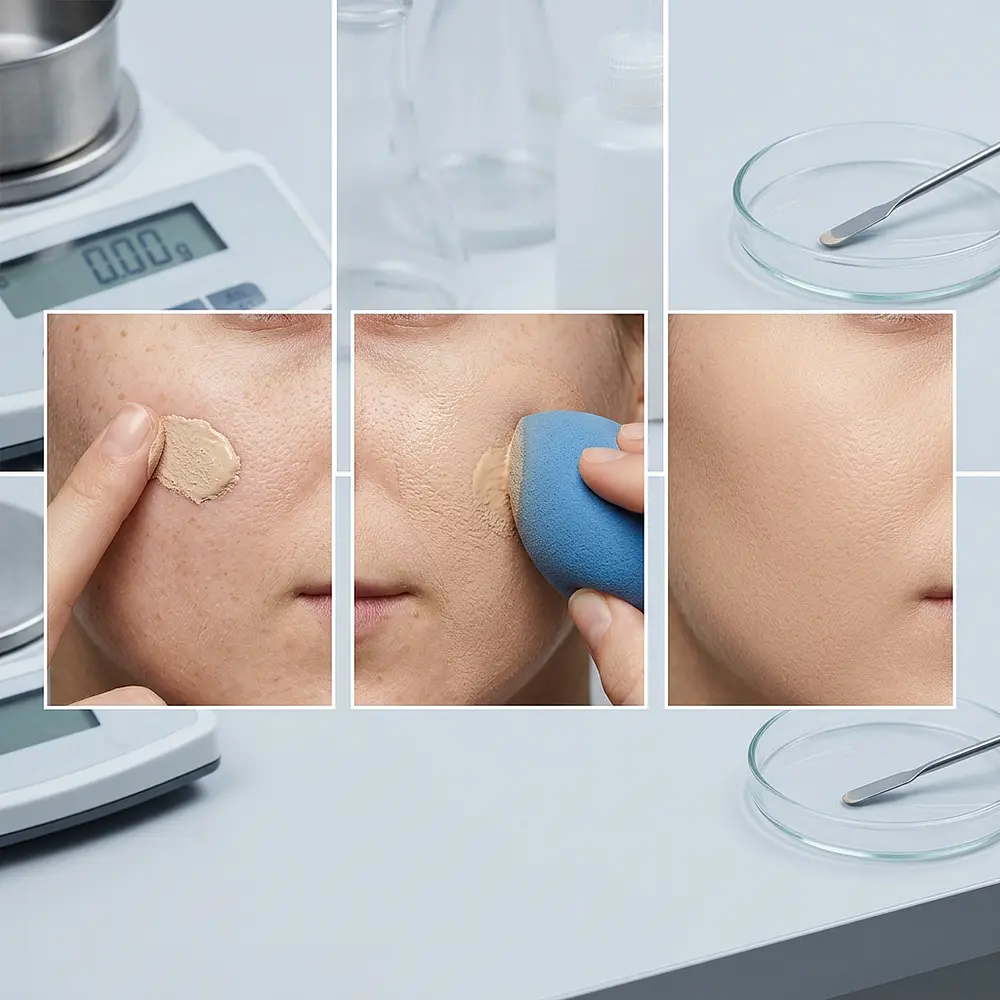
Tint is often the most effective fix for mineral cast because iron oxides visually rebalance the pale film left by the UV filters. This matters most for medium to deep skin tones, but it can also improve the look of mineral sunscreen on lighter skin by reducing chalkiness and flashback.
Under makeup, thinner emulsions and better-dispersed mineral systems usually perform best. Titanium-dioxide-leaning or mixed-mineral fluids often behave more like a primer, while very zinc-heavy creams can grip foundation or create patchy buildup unless the formula is carefully engineered.
Safety Comparison
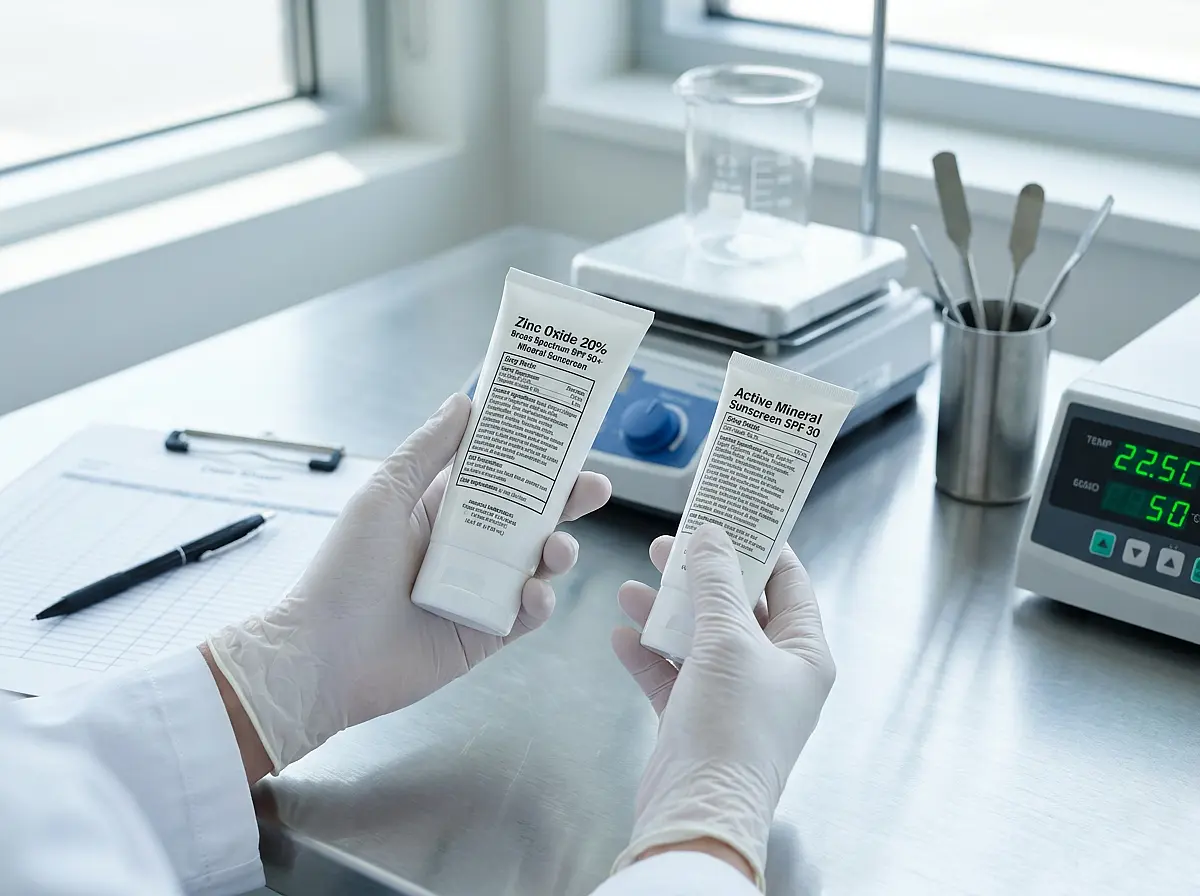
For everyday topical use, both zinc oxide and titanium dioxide have strong regulatory support as mineral sunscreen actives. The key safety distinction is not “natural versus synthetic” or “nano versus non-nano” in the abstract, but route of exposure: a cream on intact skin is assessed differently from particles that could be inhaled.
In the United States, both are permitted under the FDA OTC sunscreen framework at concentrations up to 25%. In the SCCS context, titanium dioxide is referenced as a UV-filter through entry 27 Annex VI to Regulation (EC) n.1272/2008; the SCCS opinion is at the same time situated within the cosmetics-law framework of Regulation 1223/2009. That legal framing matters because SCCS conclusions are tied to form, particle characteristics, and exposure route rather than to a simple blanket approval concept.
That context matters most for inhalable formats. For titanium dioxide, SCCS discussions around aerosol, spray, and powder exposure use margin-of-safety logic and concentration limits tied to inhalation concerns, including the broader regulatory backdrop around possible Carcinogen Category 2 classification by inhalation. In some product categories, such as certain hair-styling aerosols, the safety conclusion is therefore linked to derived maximum concentrations rather than to the ingredient name alone. Zinc oxide nanoparticles are treated with the same exposure-based logic: SCCS and EU regulation distinguish topical use on skin from inhalation risk in airborne formats. For more detail on the broader risk discussion, see is titanium dioxide safe.
Evidence on skin penetration is also broadly consistent for both filters. Most studies find that the particles remain on the surface or in the outer stratum corneum rather than penetrating into viable skin to any meaningful degree. IARC-related hazard context is also easy to overstate: titanium dioxide is commonly cited because of inhalation classifications in dust-like occupational exposure, and zinc oxide is likewise assessed separately in health and regulatory literature rather than treated as identical by default. For sunscreen buyers, the practical point is that safety conclusions depend heavily on product format and exposure route.
Skin Penetration and Systemic Exposure

Human skin is an effective barrier to insoluble mineral particles. The current evidence base for both filters supports minimal penetration beyond the outer dead-cell layer under normal use conditions on intact skin.
Some studies discuss trace ionic absorption, analytical limits, or damaged-skin scenarios, but those points do not overturn the broader conclusion that topical sunscreen use is primarily a surface-exposure situation rather than a deep systemic one.
IARC and Occupational Context

IARC’s classification of titanium dioxide as Group 2B is frequently quoted without the exposure context that gives it meaning. The concern relates to inhalation of dust-like particles, particularly in occupational settings, not to the act of wearing a sunscreen cream on the skin.
For sunscreen buyers, that makes IARC an important technical note, but not a reason by itself to avoid topical TiO₂ products.
FDA and EU Regulatory Status
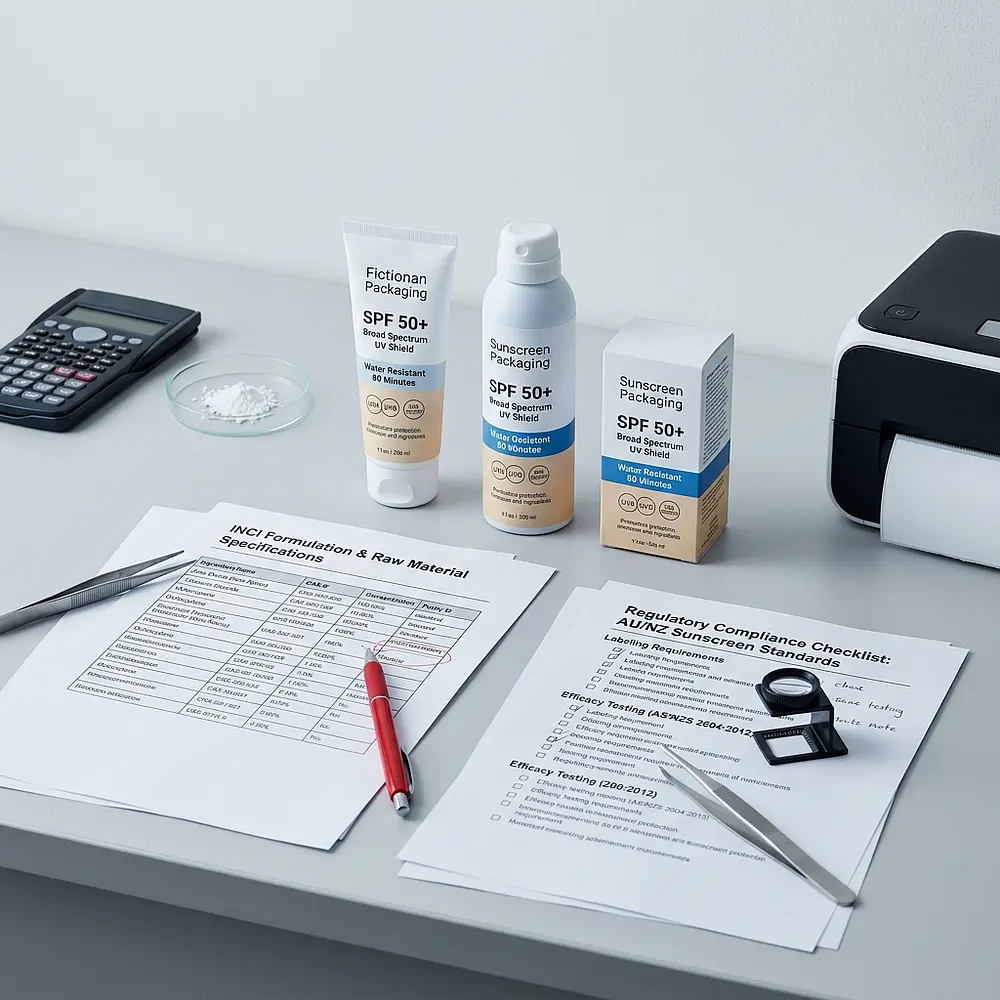
From a consumer perspective, the regulatory position is straightforward: both minerals are established sunscreen actives, not fringe ingredients. U.S. claims such as SPF, broad-spectrum, and water resistance are governed by FDA testing rules rather than by branding language.
In Europe, compliance is more form-specific. Annex VI-related SCCS evaluation, nano labeling, and use conditions matter, especially where the exposure route changes the safety assessment.
Nanoparticles and Inhalation Risk
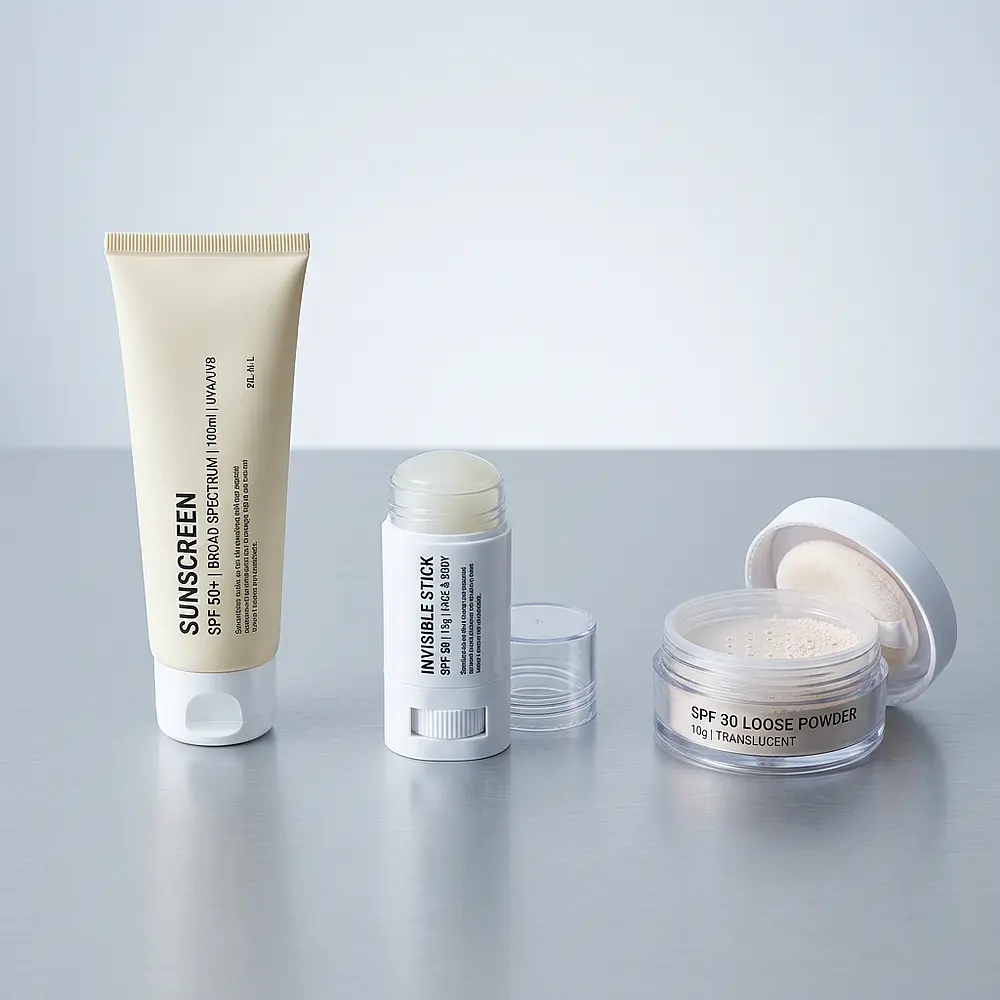
The nanoparticle debate becomes much clearer once product format is separated from ingredient name. In a lotion, stick, or cream, the particles are embedded in a vehicle and applied to skin. In a spray or loose powder, there is more potential for airborne exposure, which is why regulators and safety reviewers treat those formats more cautiously.
That does not mean “nano” automatically equals unsafe. It means the context of use matters, and inhalation is the route where the strongest caution appears for both ZnO and TiO₂.
Reef & Environmental Safety
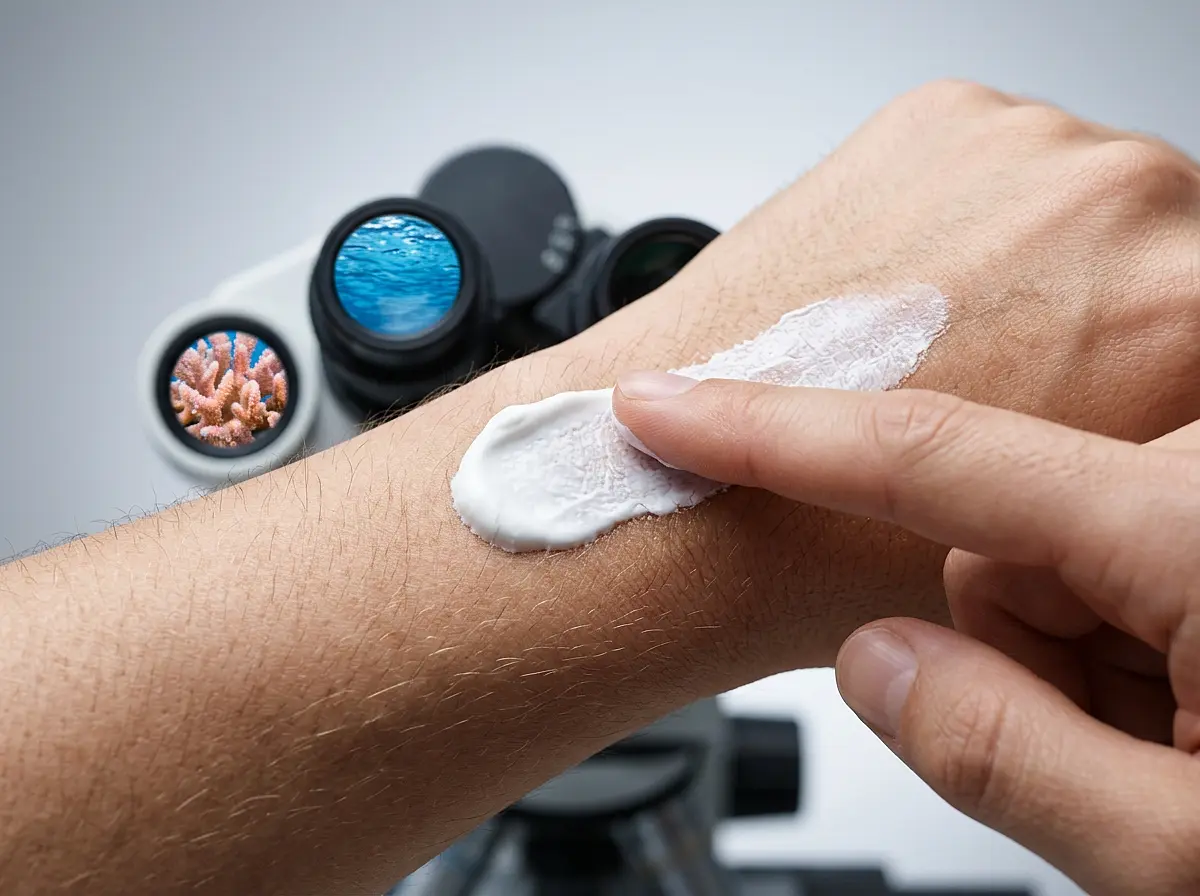
“Reef-safe” is one of the most oversimplified phrases in sunscreen marketing. Hawaii and similar laws mainly restricted certain organic UV filters such as oxybenzone and octinoxate; they did not ban mineral filters like zinc oxide or titanium dioxide. So the relevant comparison is not whether ZnO and TiO₂ are perfect for marine ecosystems, but how their environmental behavior differs.
Zinc oxide raises concern mainly because it can dissolve and release biologically active zinc ions. Titanium dioxide is far less soluble, but it can show surface photoreactivity under light unless the cosmetic grade is coated to reduce that behavior. In marine toxicology literature, nano-ZnO often appears more problematic than TiO₂ at comparable test conditions, especially in studies involving coral larvae, algae, or other sensitive organisms.
That said, real-world impact depends on coating, particle aggregation, salinity, light, concentration, and local water chemistry. Cosmetic TiO₂ grades are commonly engineered to reduce reactivity, and not every lab setup reflects realistic beach exposure. Still, the current literature often treats titanium dioxide as the more reef-friendly mineral of the two, while zinc oxide is more likely to be discussed as potentially problematic in nano or high-concentration scenarios.
Practical takeaway: if your goal is to avoid the filters most often targeted by reef legislation, either mineral is usually preferable to oxybenzone- or octinoxate-based formulas. If you want the lower-concern option within the mineral category, titanium dioxide currently has the cleaner environmental profile in most consumer-facing decisions.
What Reef-Safe Laws Actually Cover
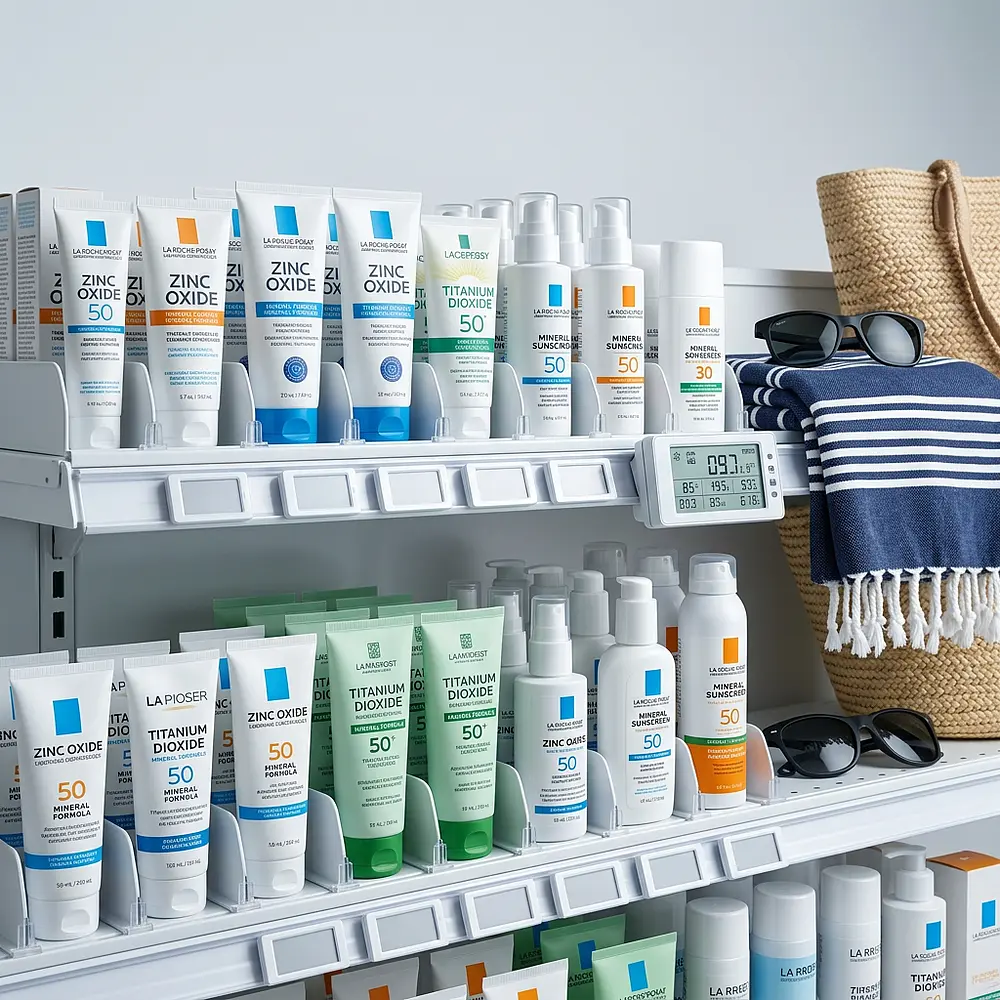
Most reef-related legislation is narrow in scope. It bans or restricts named organic filters rather than certifying a product as ecosystem-neutral.
That is why a mineral sunscreen may legally qualify for sale in those markets without proving that every particle, coating, or auxiliary ingredient is benign in every marine setting.
Environmental Profile of Zinc Oxide

Zinc oxide’s environmental challenge is tied to dissolution. Once zinc ions are released, the exposure is no longer just about a particle sitting in water; it becomes a question of zinc chemistry and biological availability.
In controlled studies, that can translate into higher observed toxicity for some marine organisms. The degree of concern changes with coatings and seawater conditions, but ZnO is the mineral filter that more often attracts caution in coral-related discussions.
Environmental Profile of Titanium Dioxide

Titanium dioxide behaves differently because it is poorly soluble and often aggregates in water. Its main issue is not ion release, but whether the particle surface can generate reactive oxygen species under UV light.
For sunscreen use, this is partly addressed by using coated cosmetic grades designed to suppress that reactivity. As a result, TiO₂ is often treated as the more marine-compatible mineral filter, even though “lower concern” should not be mistaken for “no concern.”
Photostability
For users, the short answer is simple: both zinc oxide and titanium dioxide are photostable in normal sunscreen use. They do not suffer from the same kind of rapid UV-driven breakdown associated with some older organic filters, which is one reason mineral sunscreens remain attractive for long outdoor wear.
Titanium dioxide is generally the more photostable of the two, while zinc oxide is still highly stable and clearly more durable in sunlight than many chemical filters. That difference is real, but in practical sunscreen use it is smaller than the effects of sweating, rubbing, water exposure, and uneven application.
The technical nuance is that photostability is not exactly the same thing as surface photoreactivity. Some forms of TiO₂, especially if uncoated or more photocatalytically active, can generate reactive oxygen species under UV exposure. In sunscreen formulation, this is why manufacturers often prefer coated, rutile-oriented cosmetic grades that reduce surface reactivity while preserving UV protection.
How Stable Each Filter Is in Sunlight

Neither filter gives consumers a major day-to-day reason for concern about rapid light degradation. In finished sunscreens made to current standards, both are reliable UV filters under sun exposure.
The remaining differences are more relevant to ingredient engineering than to label reading. What matters at the user level is whether the sunscreen holds an even film on the skin.
Why Reapplication Still Matters

Even a photostable filter cannot protect skin well once the film becomes patchy. Sweating, swimming, touching the face, towel friction, and simple movement gradually reduce coverage over time.
That is why reapplication guidance still matters for mineral sunscreens, including the FDA’s familiar 40-minute and 80-minute water-resistance claim framework. Stability is an advantage, but it does not replace proper use.
Which Is Better for Your Skin Type?

There is no universal winner here. The better choice depends on what your skin needs most: stronger inherent UVA coverage, lower visible residue, a lighter finish, a richer barrier feel, or a family-friendly format that is easy to reapply.
Decision table
Main priority | What to lean toward | Why
PIH, melasma, photoaging concern | Zinc-oxide-led or strongly broad-spectrum mineral formula | Better inherent long-UVA support
Oily or acne-prone skin | Titanium-dioxide-led fluid or lightweight blend | Often easier to wear daily and reapply
Dry skin | Zinc-rich cream or richer mixed-mineral lotion | More often paired with emollient, cushiony bases
Darker skin tones | Tinted blend with iron oxides | Better odds of a natural-looking finish
Highly sensitive or rosacea-prone skin | Fragrance-free mineral sunscreen you already tolerate | Formula simplicity matters more than ideology
Children | Lotion or stick using either or both minerals | Broad-spectrum, easy coverage, non-inhalable format
Darker Skin Tones

For medium-deep to deep skin tones, mineral sunscreen selection is often a finish problem before it is a spectrum problem. The best choices are usually tinted formulas or better-dispersed blends that are designed with visible-wear performance in mind.
This is one case where zinc oxide and titanium dioxide sunscreen systems often outperform single-mineral identities. The added flexibility helps brands pair UV filters with iron oxides and tone-balancing pigments more effectively.
Children and Family Use

For children, the main priorities are broad-spectrum protection, easy full-coverage application, and a format that works under real-life conditions. Lotions and sticks are usually easier to apply thoroughly than airy or highly cosmetic textures, and they fit the cautious approach regulators take toward inhalable products.
Within those limits, either mineral can work well. For family use, the best sunscreen is the one that can be applied generously and without resistance.
Sensitive or Rosacea-Prone Skin
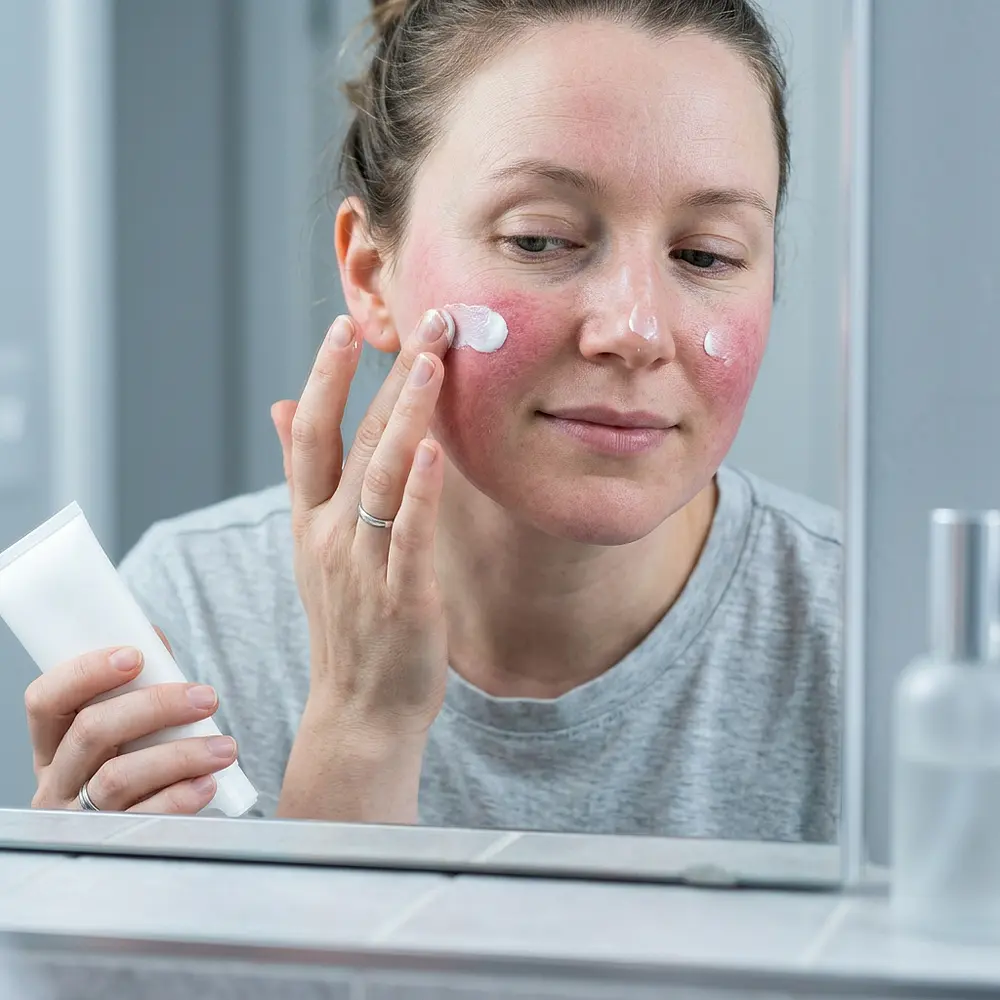
Both minerals are widely used in products for reactive skin because they tend to be well tolerated and do not rely on the same chemistry as many organic filters. The deciding factor is usually the full formula: fragrance, essential oils, alcohol level, and preservative system can matter more than whether the active is ZnO or TiO₂.
If your skin flushes or stings easily, choose the sunscreen you can wear consistently without irritation. In this category, tolerability beats theoretical filter superiority.
Acne-Prone, Oily, and Combination Skin
For oily or breakout-prone skin, texture often determines compliance. A sunscreen that feels heavy, greasy, or pasty is less likely to be applied at the correct amount or reapplied later in the day.
Titanium dioxide often has an advantage here because it is commonly used in thinner mineral fluids and lighter matte formulas. A well-designed mixed-mineral sunscreen can work just as well, but TiO₂ is frequently the easier starting point for a more elegant finish.
Dry Skin and Barrier Support
Dry skin often benefits from the kind of cream base that appears in zinc-oxide-rich sunscreens. Those products are frequently built with more emollients and a more substantial film, which can feel protective rather than heavy if your barrier is compromised or easily dehydrated.
If that sounds appealing but you dislike a dense finish, look for a mixed-mineral cream rather than an ultra-high-zinc paste. The base formulation usually matters more for dry skin than the ingredient winner on paper.
Why Many Sunscreens Use Both

Most combined mineral sunscreens are built that way for formulation reasons, not because the label needs two familiar ingredients. Using both filters gives chemists more control over active load, dispersion, opacity, texture, and finished-film behavior.
A blend can reduce the burden placed on one mineral alone. That helps in several practical ways: the sunscreen may spread more evenly, look less chalky, feel less dry, and leave more room for tints or primer-like textures. For facial products especially, that flexibility is often what separates a technically good formula from one people actually enjoy wearing.
Where combined systems are especially common
- Daily face sunscreens: better chance of balancing wearability with broad-spectrum claims.
- Tinted mineral formulas: more flexibility for matching pigments and reducing a flat white finish.
- Higher-SPF mineral products: easier to build protection without pushing one active into a cosmetically awkward range.
Broader Protection at Lower Individual Concentrations
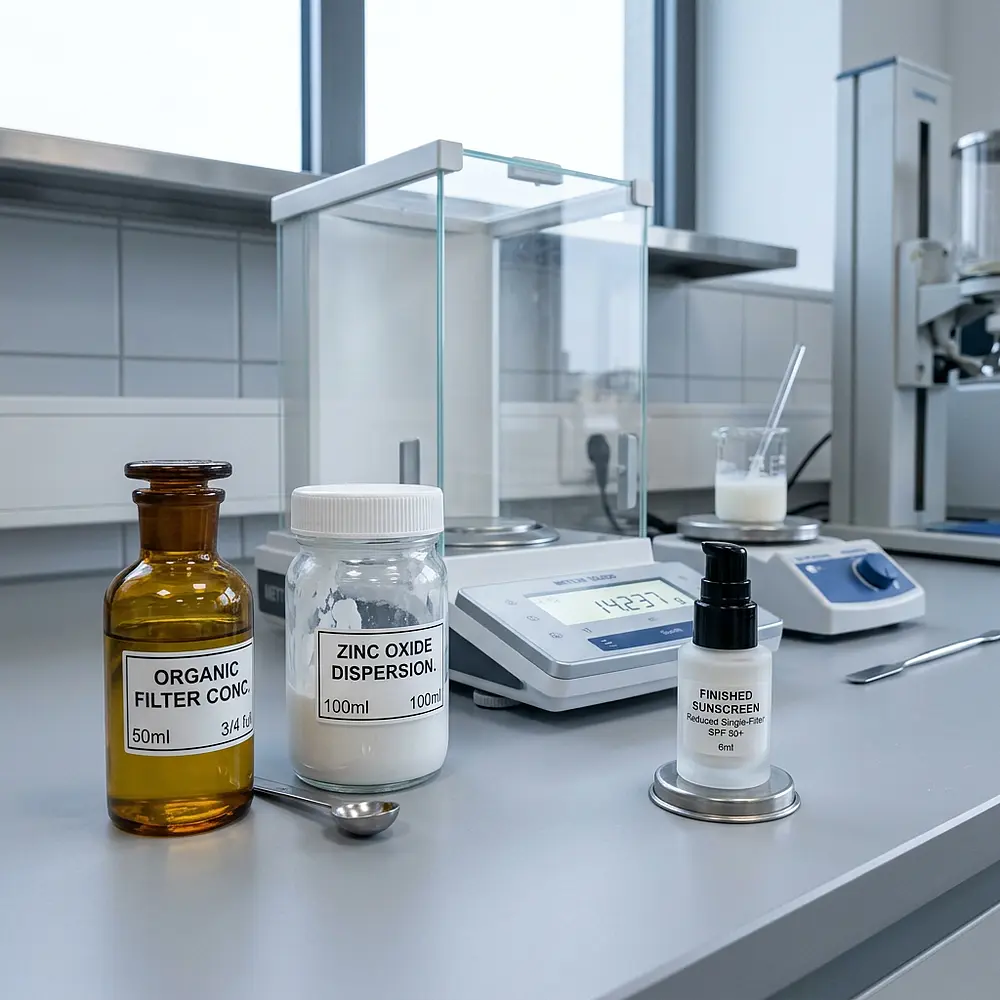
One advantage of a dual-mineral system is that it lets formulators distribute performance targets across two actives instead of maximizing one. That can improve manufacturing flexibility and make it easier to hit broad-spectrum and SPF goals without relying on very high single-filter loading.
For shoppers, the practical result is often a sunscreen that feels less extreme in either direction: not as chalky as a zinc-heavy formula, and not as UVA-limited as a titanium-dioxide-only one.
Better Cosmetic Elegance Than Single-Filter Systems
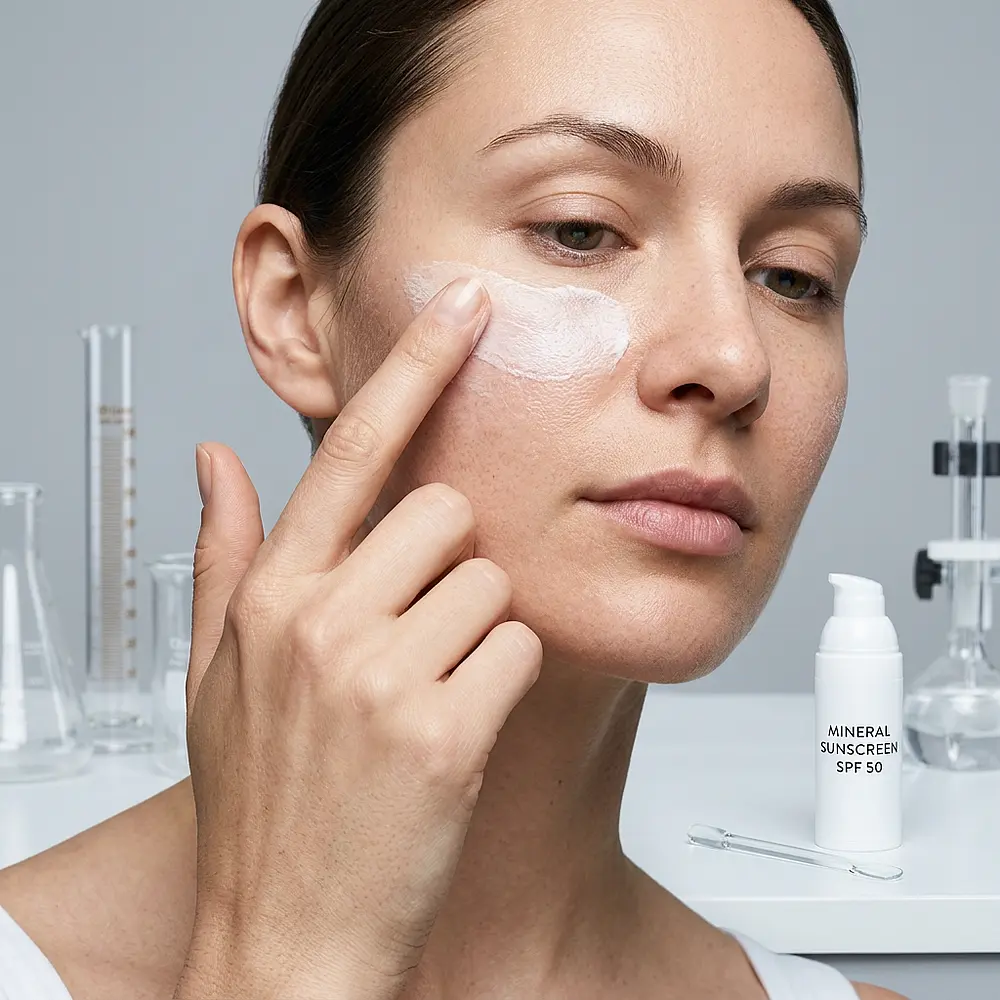
Texture is where blended formulas often justify themselves. Once a product has to deliver decent SPF, broad-spectrum protection, acceptable spreadability, and a wearable finish under makeup, a two-filter mineral system can simply be easier to engineer.
That matters because cosmetic elegance is not a vanity issue. If the sunscreen sits better on skin, users are more likely to apply enough of it and to keep using it consistently.
Zinc Oxide vs. Titanium Dioxide Beyond Sunscreen
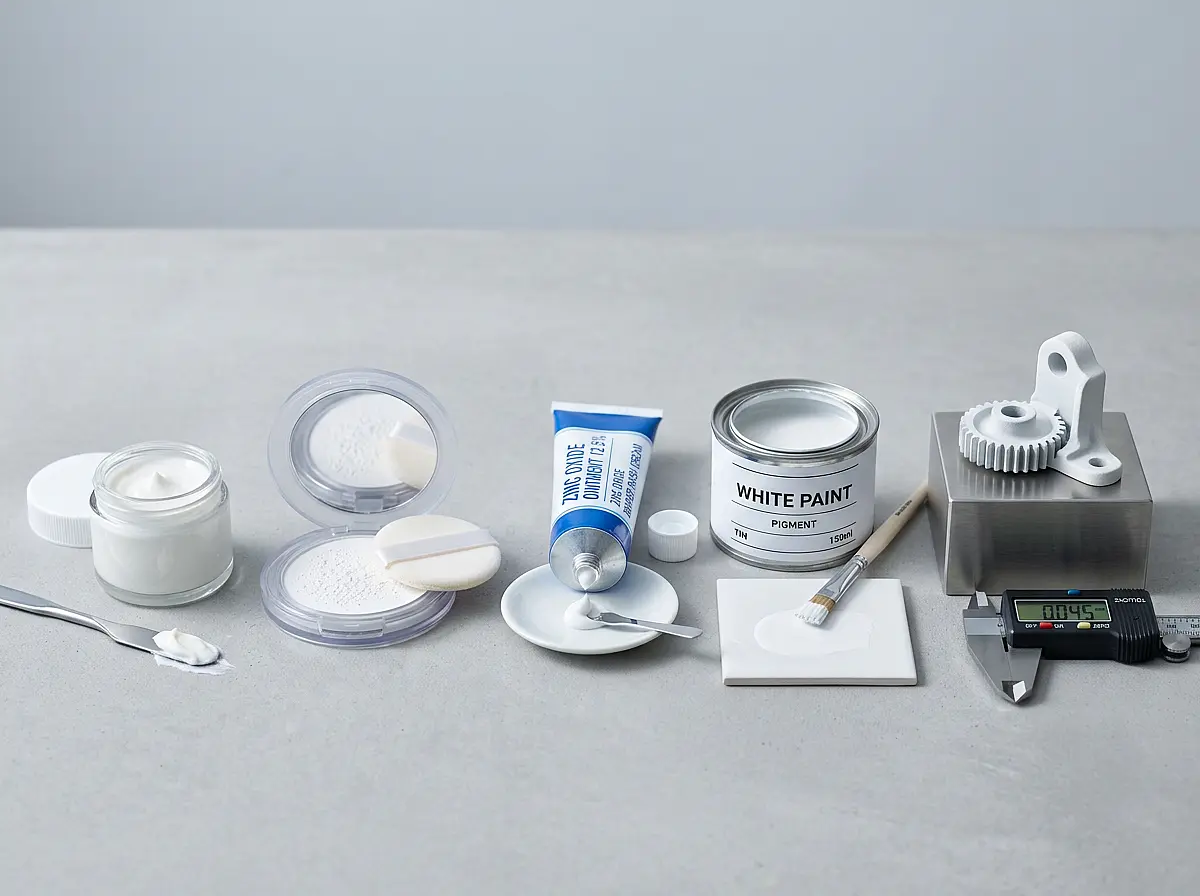
The comparison also matters outside sunscreen because the two materials play very different roles in cosmetics and industry. They may appear side by side in personal-care formulas, but their broader commercial identities are not similar.
In makeup, both can function as white pigments, opacifiers, and texture modifiers, although titanium dioxide in makeup is especially important where brightness and opacity are needed. In industrial pigments, TiO₂ dominates because of its high refractive index and exceptional visible-light scattering, which make it the benchmark white pigment in paints, coatings, plastics, paper, and inks.
Zinc oxide is stronger in other niches. It has a long history in skin protectants, diaper rash products, and barrier creams, where a dense protective film is useful rather than cosmetically inconvenient. It is also more associated with certain antimicrobial applications because zinc-containing materials can influence microbial behavior. Titanium dioxide, by contrast, is a major material in photocatalysis and technical surface science, where UV-activated surface reactions are valuable in self-cleaning coatings and environmental applications.
Those broader uses help explain why the ingredients can look similar on a sunscreen label but behave differently in product design. One is the dominant industrial white pigment with major technical applications; the other has a stronger identity in protective topical care and zinc-related functionality.
Zinc Oxide in Antimicrobial and Skin-Protective Applications

Zinc oxide has a stronger place in protective skin products such as diaper rash creams and barrier ointments, where a substantial film is beneficial. Its reputation in those categories comes from long-established topical use rather than from cosmetic elegance.
It is also more closely associated with antimicrobial-adjacent applications because zinc ions can affect biological systems in ways that are relevant to protective and functional topical products.
Titanium Dioxide in Photocatalysis and Technical Uses

Titanium dioxide is a foundational material in photocatalysis because UV light can activate its surface and drive oxidation reactions. That makes it useful in self-cleaning surfaces, technical coatings, environmental treatment concepts, and some ceramic applications.
The sunscreen relevance is indirect but important: the same surface reactivity that is useful in technical applications is exactly why cosmetic TiO₂ grades are often coated to make them behave appropriately in personal-care formulas.
Use in Makeup and Complexion Products
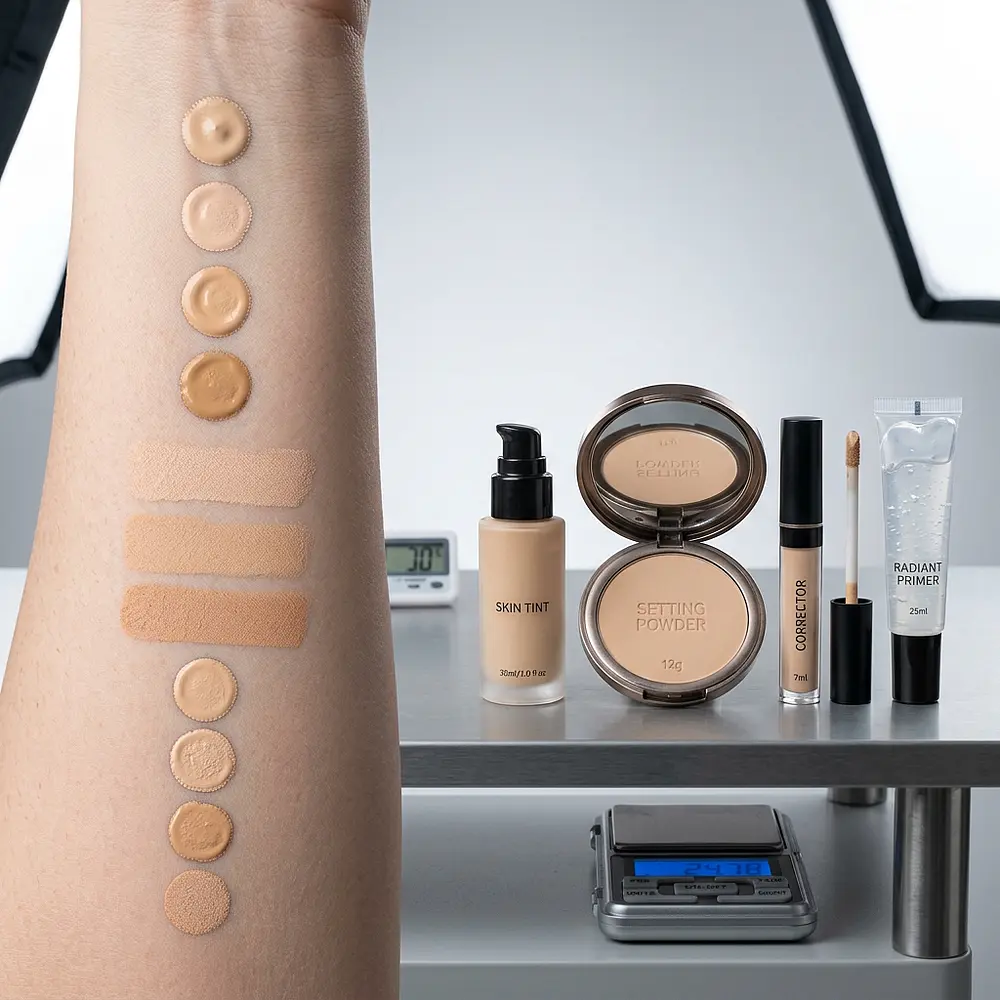
In foundations, powders, primers, and concealers, both minerals are often used for optical performance rather than tested sunscreen function. Titanium dioxide is especially useful where coverage and brightness are needed, while zinc oxide is more likely to appear in products positioned around sensitive skin.
That said, incidental UV blocking from makeup should not be confused with regulated sunscreen performance unless the product has been specifically tested and labeled for SPF and broad-spectrum protection.
Industrial Pigments: Why Titanium Dioxide Dominates

Titanium dioxide is the dominant white pigment in industry because it scatters visible light extremely efficiently. That property gives it major commercial advantages in paint, coatings, plastics, laminates, paper, and many whitening applications.
This leadership does not automatically make TiO₂ the superior sunscreen filter. Industrial pigment dominance is about opacity and visible-light performance, not about the most balanced UV curve on skin.
Sources and Further Reading
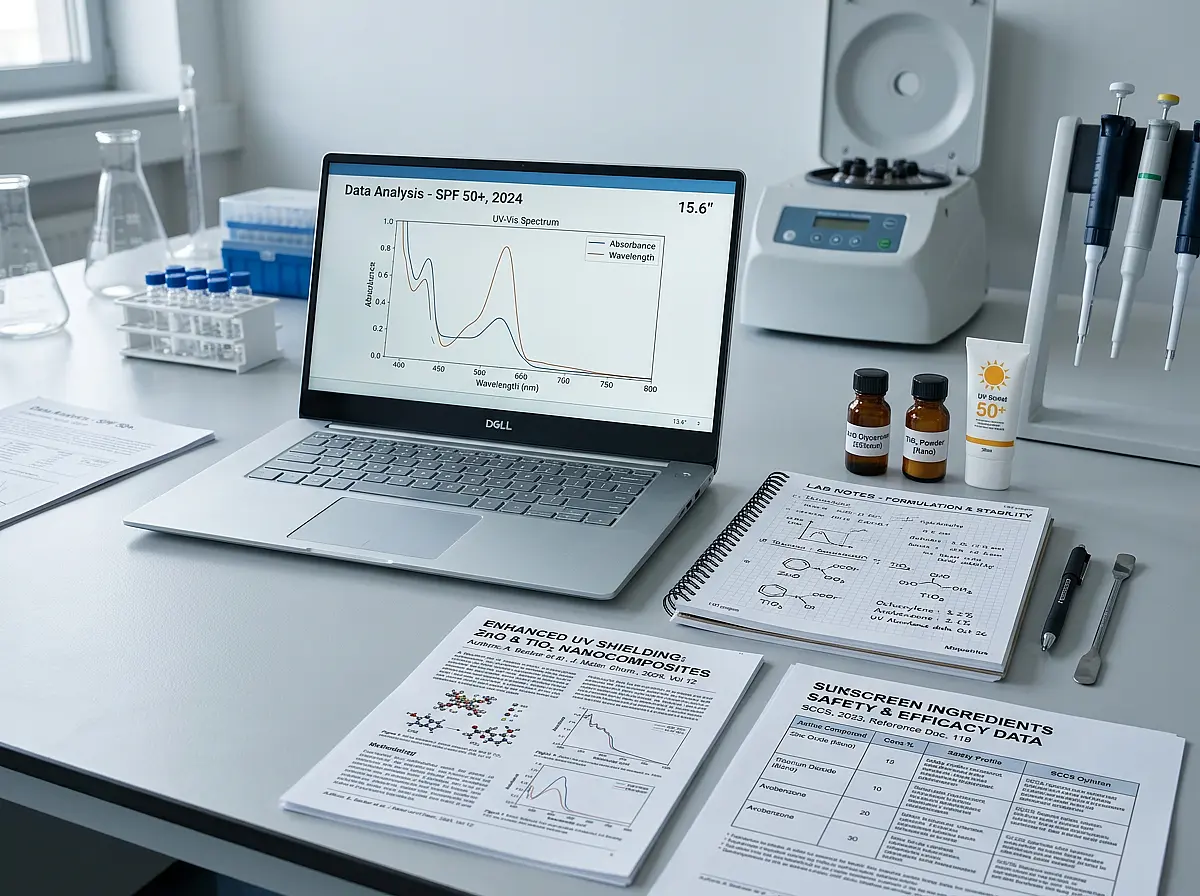
Key references used for this page and what they support:
- U.S. Food and Drug Administration. Labeling and Effectiveness Testing; Sunscreen Drug Products for Over-the-Counter Human Use (Final Rule, 2011). Supports SPF labeling, broad-spectrum testing, critical wavelength ≥370 nm, and water-resistance claim structure.
- U.S. Food and Drug Administration. Sunscreen Drug Products for Over-the-Counter Human Use; Deemed Final Order and related OTC sunscreen framework. Supports the continuing U.S. regulatory status of zinc oxide and titanium dioxide as permitted mineral sunscreen actives and the 25% concentration context.
- SCCS and EU regulatory context. Titanium dioxide as UV-filter is referenced through entry 27 Annex VI to Regulation (EC) n.1272/2008; Regulation 1223/2009 provides the cosmetics-law framework in which the SCCS opinion is cited. Supports the legal and evaluative context used for titanium dioxide in cosmetic UV-filter assessment.
- SCCS. Opinion on Zinc Oxide (nano form) as UV-Filter in Sunscreens and updates. Supports the conclusion that ZnO nanoparticles are considered acceptable for dermal use in non-inhalable cosmetic products under assessed conditions.
- SCCS. Opinion on Titanium Dioxide (nano form) as UV-Filter in Cosmetic Products and updates. Supports the conclusion that TiO₂ nanoparticles can be acceptable for topical use while inhalation exposure remains a separate concern.
- IARC Monographs. Titanium Dioxide. Supports the Group 2B classification in inhalation and occupational exposure context rather than normal topical sunscreen use.
- Gulson B. et al. Peer-reviewed human study on topical ZnO sunscreen use and zinc absorption. Useful for understanding the difference between trace ionic absorption signals and whole-particle skin penetration claims.
- Sadrieh N. et al. Study on lack of significant penetration of zinc oxide nanoparticles into viable skin. Supports the surface-localization argument for topical use on intact skin.
- Cross S.E. et al. Research on titanium dioxide nanoparticle localization in the stratum corneum. Supports the view that TiO₂ remains mainly on or within the outer dead-cell layer of skin.
- Serpone N., Dondi D., Albini A. Work on inorganic and organic UV filters and sunscreen photochemistry. Useful for explaining why mineral filters are photostable yet still affected by particle surface behavior and coatings.
- Smijs T.G., Pavel S. Review on titanium dioxide and zinc oxide nanoparticles in sunscreens. Supports the broad comparison of UV performance, particle-size effects, and formulation trade-offs between the two mineral filters.
- Environmental nanotoxicology literature on ZnO and TiO₂ in marine systems. Supports the distinction between zinc-ion dissolution concerns for ZnO and photocatalytic or reactive-surface concerns for TiO₂ under certain test conditions.
For related reading, see titanium dioxide sunscreen, is titanium dioxide safe, what is titanium dioxide, titanium dioxide in makeup, or return to the homepage.
FAQ
Are zinc oxide and titanium dioxide both FDA-approved mineral sunscreen ingredients?
Yes. In the US, both zinc oxide and titanium dioxide are among the FDA-recognized mineral UV filters for OTC sunscreens. For consumers, this simply means: both may be used as active sunscreen ingredients in appropriate products. The key point here isn't that one is somehow "more official" than the other, but that both are regulatorily accepted as mineral sunscreen active ingredients. Differences between them are more about protection profile, skin feel, and formulation goals than their basic status. In short: yes, both are considered approved mineral sunscreen ingredients in the US.
Which feels lighter on the skin: zinc oxide or titanium dioxide?
Titanium dioxide often feels somewhat lighter, drier, and less tacky on the skin. Zinc oxide, by contrast, more often gives a denser, creamier, or slightly heavier feel, especially when used in larger amounts. In terms of skin feel, this means: if you're after a more fluid, dry, or barely noticeable finish, titanium-dioxide-forward products often suit you better. If you prefer a richer, more substantial skin feel, zinc oxide isn't necessarily a drawback. The direct answer: titanium dioxide tends to feel lighter by comparison, while zinc oxide tends to feel fuller and grippier.
How do nano and non-nano forms of zinc oxide and titanium dioxide affect skin appearance?
Nano and non-nano forms mainly affect the visible finish on the skin. Smaller particles tend to look more transparent, even, and cosmetically elegant, while larger particles sit more visibly on the skin and make the product more noticeable. This largely determines whether a mineral sunscreen looks modern and understated or more pasty and clearly visible. For this question, the main difference isn't primarily UV protection but appearance: the finer the particles, the less they disrupt the look of the skin. For mineral filters especially, particle form is therefore a key factor for everyday wearability and comfort.
Which leaves more white cast on the skin: zinc oxide or titanium dioxide?
Titanium dioxide usually leaves the more visible white cast, especially when the formula is heavily opaque, lightly tinted, or otherwise pigment-rich. Zinc oxide can also appear whitish but tends to look somewhat less chalky on the skin. The difference shows up quickly, especially on medium to darker skin tones: titanium dioxide often looks more opaque and chalky, while zinc oxide tends to look more ashy than truly opaque-white. For consumers, this means the filter choice isn't the only thing that matters—whether the product is tinted and how naturally it blends with your own skin tone matters too. The more practical short answer: titanium dioxide tends to whiten more.
Why do many mineral sunscreens use both zinc oxide and titanium dioxide?
Many mineral sunscreens use both because the two filters complement each other. Zinc oxide is especially valuable for broader UVA coverage, while titanium dioxide is strong at UVB and shorter UVA wavelengths. Together, they make it easier to achieve balanced broad-spectrum protection and high SPF without relying too heavily on one mineral alone. Blending them can also improve the formula’s texture, reduce the heavy feel of high zinc-only products, and help manage whitening by optimizing particle blends and pigments. In practice, brands often combine both to balance protection, cosmetic elegance, and formulation flexibility rather than because one is universally “better.”
Does titanium dioxide provide stronger UVB protection than zinc oxide?
Often, yes: titanium dioxide is usually more effective in the UVB range than zinc oxide and can boost SPF efficiently as a result. That's the central point for the UVB question. At the same time, this strength alone doesn't say much about a sunscreen's overall performance, because a product needs a well-rounded protection profile, not just maximum UVB absorption. In practice: if the focus is specifically on SPF boost and UVB efficiency, titanium dioxide often has the edge. If you're looking for a more balanced protection spectrum overall, the picture is more complex than just asking "which filter is stronger in UVB?"
What is the main difference between zinc oxide and titanium dioxide in sunscreen?
The main difference is their UV coverage profile. Zinc oxide generally gives more balanced broad-spectrum protection, especially deeper UVA, while titanium dioxide is especially strong in UVB and shorter UVA. In practice, that means zinc oxide is often preferred when UVA coverage is a priority, while titanium dioxide can help boost SPF efficiently. They also differ cosmetically: titanium dioxide can feel lighter in some formulas, while zinc oxide may create more drag or a heavier feel depending on particle size and coating. Neither is automatically “better” overall—the right choice depends on the formula’s goal, skin feel, finish, and the level of broad-spectrum protection needed.
How do zinc oxide and titanium dioxide differ outside sunscreen in cosmetics and industrial uses?
Outside sunscreen, zinc oxide is used more as a skin-soothing, protective ingredient in diaper creams, calamine-type products, anti-chafing balms, powders, and some makeup for oil control. Titanium dioxide is used far more often as a white pigment and opacifier in foundations, powders, primers, toothpaste, paints, plastics, paper, inks, and coatings. In cosmetics, TiO₂ mainly boosts whiteness, coverage, and brightness, while ZnO more often supports barrier feel and mild astringent properties. Industrially, titanium dioxide is the bigger-volume material because of its strong opacity and color performance; zinc oxide is more niche, including rubber, ceramics, glass, and some antimicrobial or anti-corrosion applications.
Is a sunscreen with zinc oxide and titanium dioxide better for darker skin tones or wearing under makeup?
Often yes, especially when the formula is well tinted or spreads evenly. For darker skin tones, what matters most is how visibly a product sits on the skin: combining zinc oxide and titanium dioxide can give formulators more room to balance coverage, protection, and wearability. Under makeup this can also be an advantage, because such blends often give a more even, controlled finish than mineral-filter systems built heavily around a single ingredient. That said, it's not automatic. The real strength of a combination lies mainly in formulation flexibility. That's why it can often work better, but it doesn't have to in every individual case.
Which is better for sensitive or acne-prone skin: zinc oxide or titanium dioxide?
For sensitive or acne-prone skin, zinc oxide is often the more obvious first choice. It's considered especially well tolerated and is frequently preferred when skin tends toward redness, stinging, or irritation. For acne, it also helps that zinc oxide is often seen as the calmer, more straightforward option in sunscreen products. Titanium dioxide can work well too, but in direct comparison it's named somewhat less often as the first recommendation for very sensitive, problem-prone skin. If you had to choose between just the two, zinc oxide would usually come out ahead. In short: for sensitive or acne-prone skin, zinc oxide is generally the preferred choice.
How photostable are zinc oxide and titanium dioxide compared with chemical UV filters?
Zinc oxide and titanium dioxide are both considered highly photostable. This means they generally remain stable in sunlight and don't easily lose their protective effect through UV exposure. In practice, this is an advantage of mineral filters: they're inherently built more for stability than for rapid breakdown. Depending on its form, titanium dioxide can show photocatalytic properties, which is why sunscreen-grade qualities are adjusted accordingly. Zinc oxide is likewise regarded as stable under UV. Compared with many chemical filters, photostability is therefore more of a strength for both mineral filters. The short answer: both are usually very robust in this respect.
What does the IARC say about titanium dioxide, and does it apply to sunscreen use?
The IARC classifies titanium dioxide as "possibly carcinogenic to humans" in connection with inhalation. The type of exposure is the key point here: this refers to inhaled, lung-deposited particles, not the normal application of a cream to the skin. For the sunscreen question, this distinction is central, because it explains why the classification doesn't automatically mean a typical sunscreen product on intact skin poses a cancer risk. The topic becomes more relevant in applications where particles can become airborne. In short: the IARC statement concerns inhaling titanium dioxide, not the usual use of a lotion or cream on the skin.
Are zinc oxide and titanium dioxide safe in spray sunscreens?
Fundamentally, zinc oxide and titanium dioxide are less of a concern on the skin than in the air. With sprays, however, a different risk arises because fine particles can accidentally be inhaled. That's why mineral sunscreens in lotion, cream, or stick form are usually the more practical choice if you want to keep that risk low. If you do use a spray, avoid spraying it directly onto the face—apply it to your hands first and try to avoid inhaling it during application. The short answer: use sprays only with caution, not because of the skin application itself, but because of the possible uptake through the airways during use.
Do zinc oxide or titanium dioxide nanoparticles penetrate the skin?
Based on current evidence, nano forms of zinc oxide and titanium dioxide are largely not considered to meaningfully penetrate intact skin. They mostly remain on the surface or only in the outermost layers of the stratum corneum, rather than reaching living skin layers. For this specific question, that's the key takeaway: under normal use on healthy skin, deep penetration is not regarded as the main risk factor. More caution is applied to severely damaged, injured, or freshly treated skin, since the barrier function may be altered there. For typical creams and lotions, the practical answer is: significant skin penetration is largely not expected.
How do EU safety assessments compare for zinc oxide and titanium dioxide?
In the EU, both are fundamentally approved mineral UV filters, but the safety assessments place different emphasis. For titanium dioxide, the focus is more on inhalable applications, while for zinc oxide, the specific particle form and use type are more closely examined. In practical terms: both are broadly accepted for skin use, but titanium dioxide is more strongly linked, from a regulatory standpoint, to questions around inhaled particles. That's why Europe distinguishes more carefully between whether a product is applied as a cream or used in a form where particles can become airborne. So the safety assessments are similar in principle, but not identical in emphasis.