Titanium Dioxide in Food (E171): What It Is, Where It's Found & Why Europe Banned It
Titanium dioxide has been used in food for decades as a white colorant that makes products look brighter, cleaner, and more uniform. Many people only notice it after spotting titanium dioxide on a candy, frosting, vitamin, or pill label and wondering what purpose it serves. The ingredient is more common than most shoppers realize because it has historically been used across sweets, decorations, coatings, and some tablet shells.
Where the story becomes complicated is safety and regulation. In the United States, the FDA still allows this substance as a food color additive under 21 CFR 73.575. In the European Union, the same substance as a food additive — E171 — was removed from the list of authorized additives after EFSA’s 2021 reassessment, and the change was implemented through Commission Regulation (EU) 2022/63.
This guide explains what titanium dioxide in food does, which products have used it, how to recognize it on a label, and why American and European regulators reached different outcomes. If your practical question is “is titanium dioxide safe to eat?”, the goal here is to give a clear, balanced answer without overstating what the evidence does or does not show.
Table of Contents
- Key Facts at a Glance
- What Does Titanium Dioxide Do in Food?
- Which Foods Contain Titanium Dioxide?
- How to Identify Titanium Dioxide on a Food Label
- Is Titanium Dioxide in Food Safe? What the Science Says
- Why Did Europe Ban Titanium Dioxide in Food?
- Is Titanium Dioxide Still Allowed in Food in the United States?
- Titanium Dioxide in Food vs. In Cosmetics: Different Rules
- The Skittles Controversy
- Regulatory Sources and Related Reading
- FAQ
Key Facts at a Glance
Role in food: A whitening and brightening color additive used for appearance, not for taste, preservation, or nutrition.
E171: The European food-additive designation for titanium dioxide when used in food in the EU.
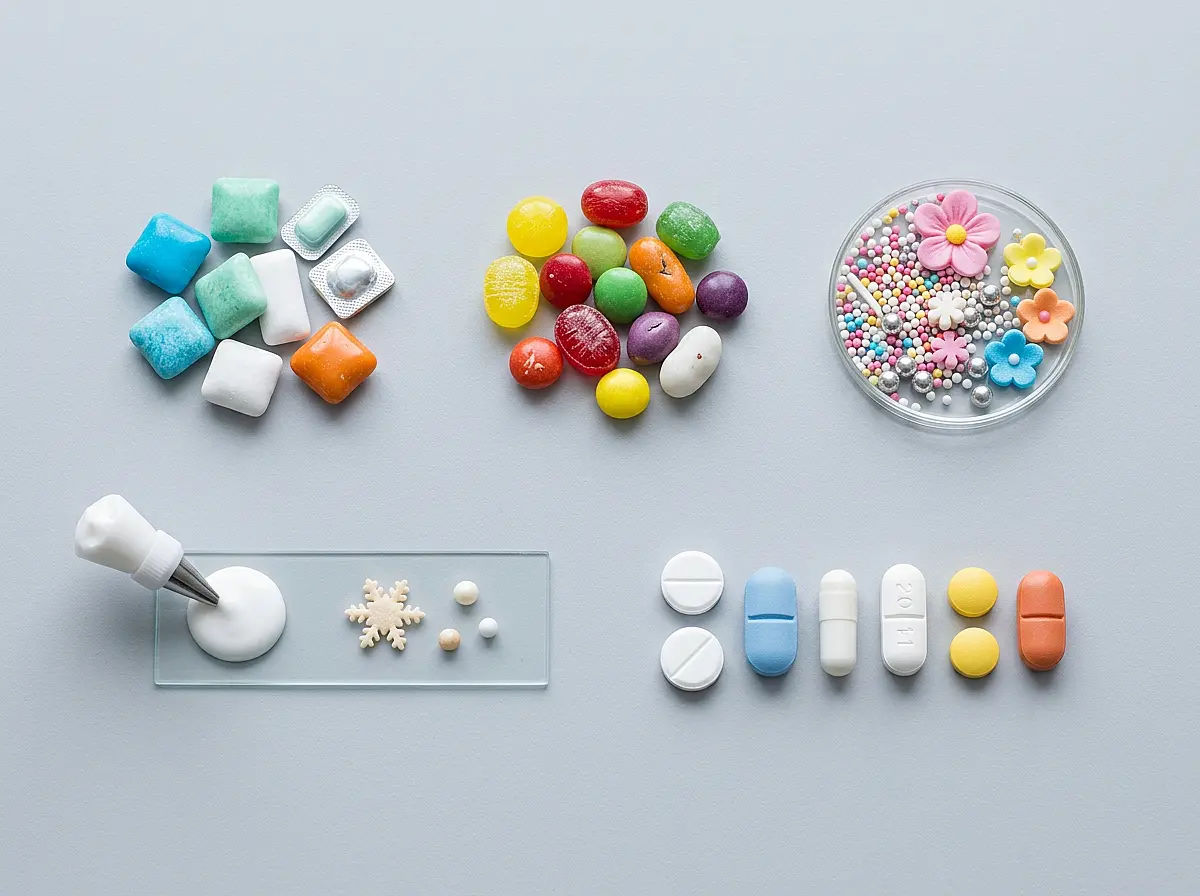
Where it has appeared: Most often in confectionery, chewing gum, white icings, cake decorations, tablet coatings, and some supplements and medicines.
US status: Approved by the FDA as a color additive exempt from certification for foods, subject to conditions in 21 CFR 73.575.
EU status: No longer authorized as a food additive in the EU since 2022.
Why this matters: The US and EU reviewed overlapping evidence but reached opposite regulatory conclusions about safety for titanium dioxide in food.
What Does Titanium Dioxide Do in Food?
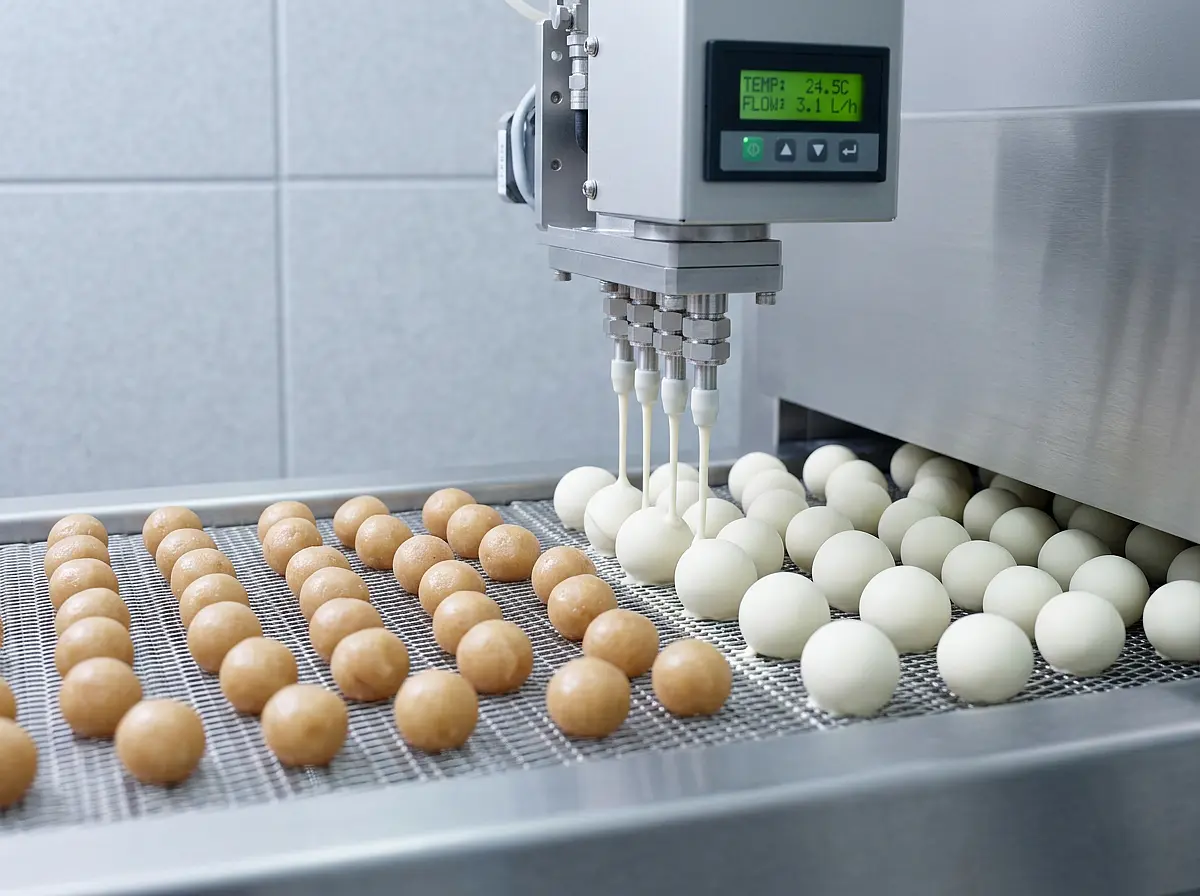
In food, titanium dioxide works as a color additive that makes products look whiter, brighter, and more opaque. Manufacturers use it to create a cleaner visual finish, improve uniformity, and help coatings or decorations appear more vivid.
That visual effect matters most in products where appearance strongly shapes expectations. A candy shell, marshmallow, icing, or tablet coating often looks more polished when it has a bright white base instead of a dull or cream-colored tone. This ingredient helps deliver that look consistently across large production runs.
Its job is purely aesthetic. It does not preserve food, improve flavor, or add nutritional value. In practical terms, it is there because consumers often associate bright, even color with freshness and quality.
Use levels are generally low. Under the US rule, titanium dioxide may be used for coloring foods as long as it does not exceed 1% by weight of the food, and many real-world formulations use less than that because the whitening effect is strong even in small amounts.
Why Manufacturers Use It

Manufacturers choose titanium dioxide because few alternatives produce the same opaque, bright-white finish as reliably and efficiently. Many food ingredients naturally create a slightly yellow, beige, or grey cast. When brands want a coating to look crisp white rather than merely pale, a dedicated whitening agent can make a noticeable difference.
It also helps mask minor color variation in the underlying recipe. Sugar-based coatings, starch systems, dairy-derived components, and other raw materials can vary slightly from batch to batch. A whitening pigment can make those differences less visible, which is useful when a company wants every candy piece, cake decoration, or tablet coating to look the same.
Another advantage is that a white base makes pastel or light-colored dyes appear cleaner. Pink, mint, lavender, and pale blue coatings often look more saturated and less muddy when laid over an opaque white underlayer rather than an off-white background.
Typical Use Levels
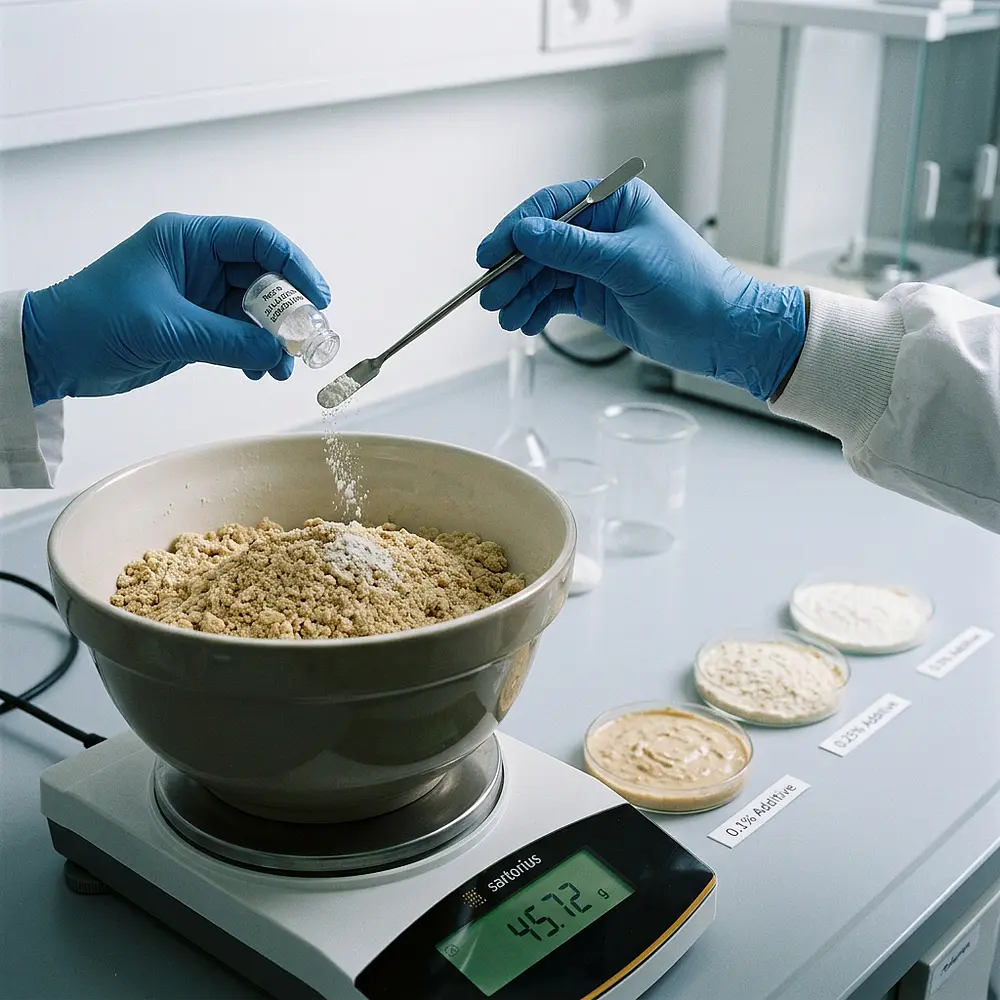
Consumers sometimes assume that seeing an ingredient on a label means it is present in a large amount. With this additive, that is usually not the case. Titanium dioxide has a high refractive index, which means a relatively small quantity can create a strong whitening effect.
The important regulatory number in the United States is the ceiling, not a description of what every product contains. 21 CFR 73.575 sets a maximum permitted amount, while actual recipe levels are often lower because manufacturers do not need much to achieve the desired appearance.
That distinction matters when reading headlines about the ingredient. A legal limit defines what is allowed under the rule; it does not tell you how much is present in a specific candy, icing, or coated tablet. Exposure depends on both formulation and how often a person consumes those products.
Which Foods Contain Titanium Dioxide?
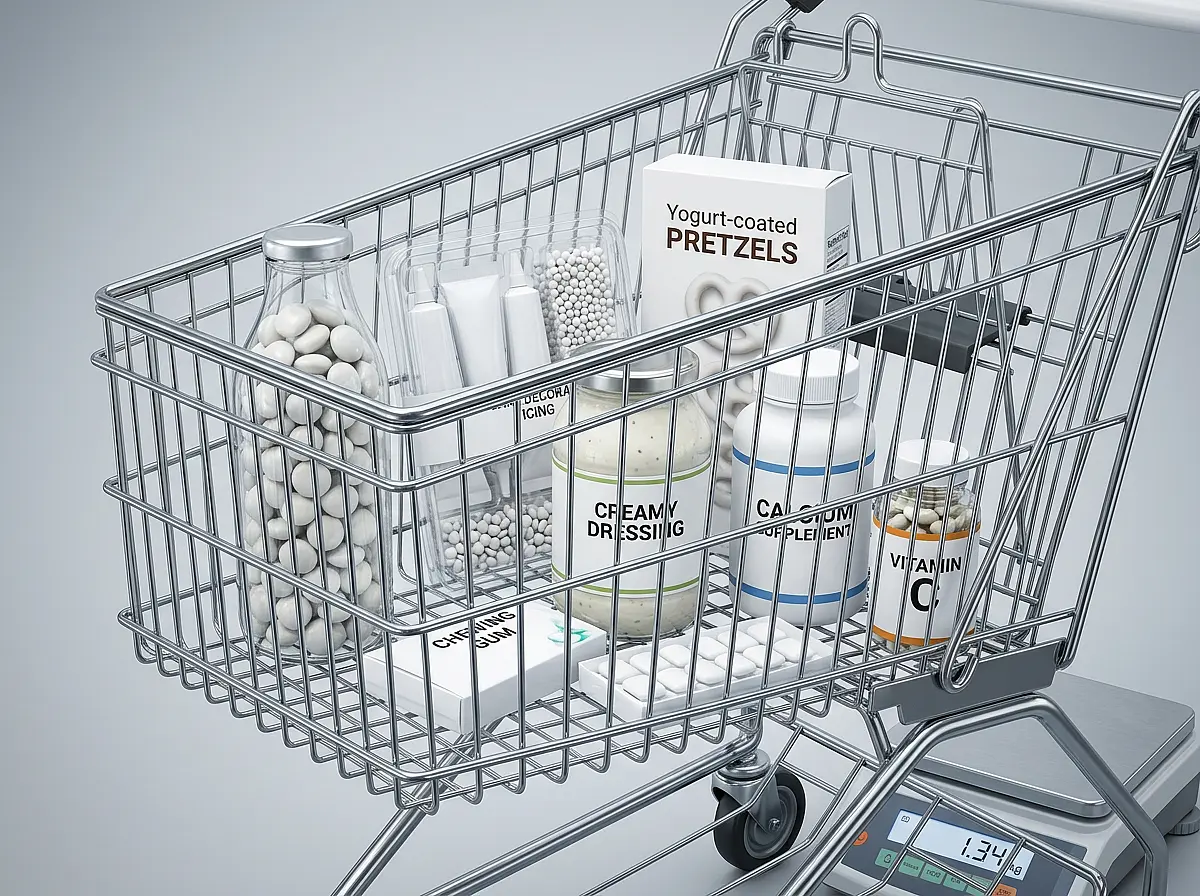
The most useful way to think about titanium dioxide in food is by function, not by memorizing a long shopping list. Historically, manufacturers used it where they wanted a bright white base, a more opaque outer layer, or a cleaner-looking surface. That means the ingredient has shown up less in “all candies” or “all dairy products” as broad categories and more in specific products with a visual reason to use it.
Usage history matters more than category labels alone because many brands have reformulated since the EU change in 2022. So the question is not just what type of food could contain it? but also whether this particular brand still does.
There is also an important dividing line between conventional foods and swallowed non-food products such as supplements and medicines. Consumers often encounter the same substance in both places, but the legal framework is not the same.
Sauces, Dressings, and Dairy-Style Products

Outside sweets, the additive has sometimes been used in foods where consumers expect a white or uniformly creamy appearance. That can include certain dressings, white sauces, horseradish, some cheeses, and some creamer-style products.
In these applications, the main purpose is to reduce visible variation and create a more standardized look. A small shift in shade may not affect flavor at all, but it can make a product look different enough that consumers notice.
This category is less predictable than candy or icing. Some products in these segments never used titanium dioxide at all, while others did and later changed formula. For that reason, broad category knowledge is helpful, but the specific ingredients list on the product in front of you is what answers the practical question.
Supplements and Medicines
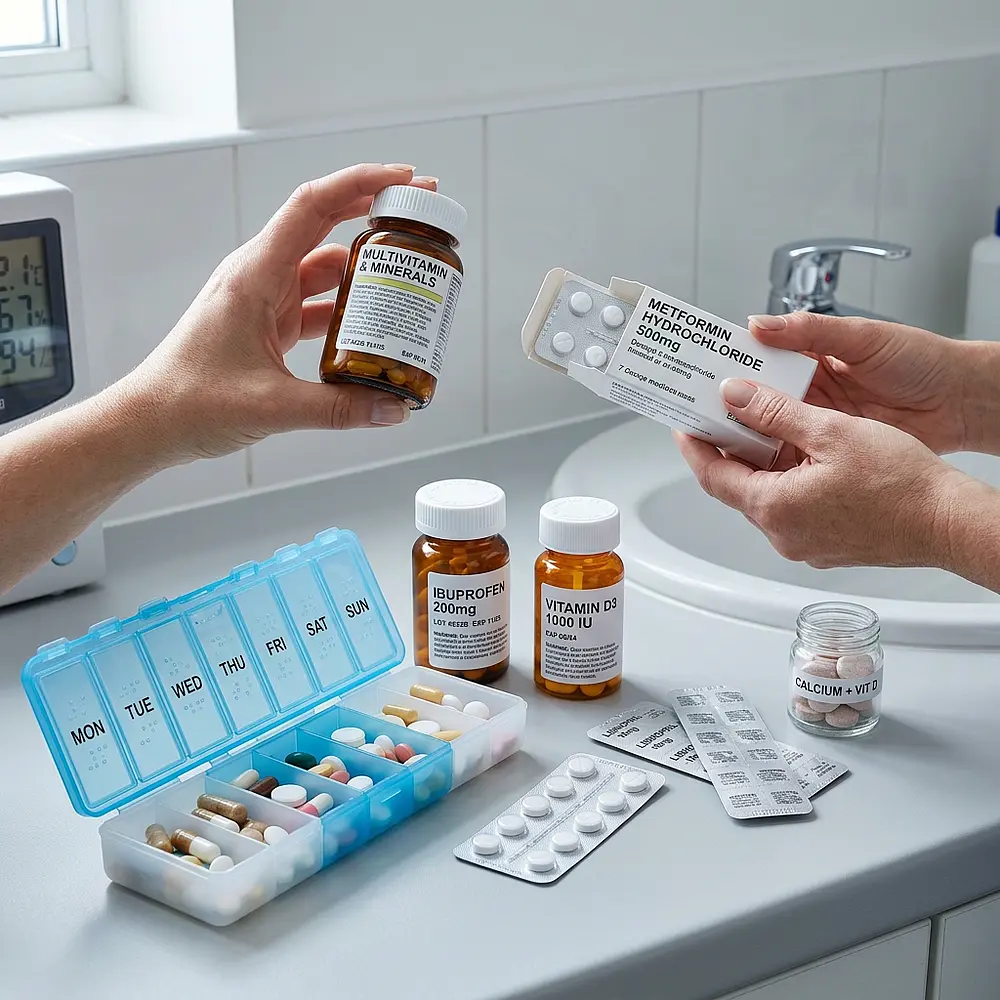
If the product is a vitamin, chewable supplement, capsule, or tablet, do not expect the labeling layout to match a cereal or candy bar. Supplements often place it under other ingredients, while medicines may list it in the inactive ingredients section.
This is one reason consumers sometimes miss it at first. They check food panels carefully but overlook the non-active parts of swallowed products that are not marketed as foods.
Beyond ordinary foods, titanium dioxide has also been used in tablet coatings, capsule shells, and pharmaceutical pill coatings where a bright, even outer finish is part of the product design.
Confectionery and Candy
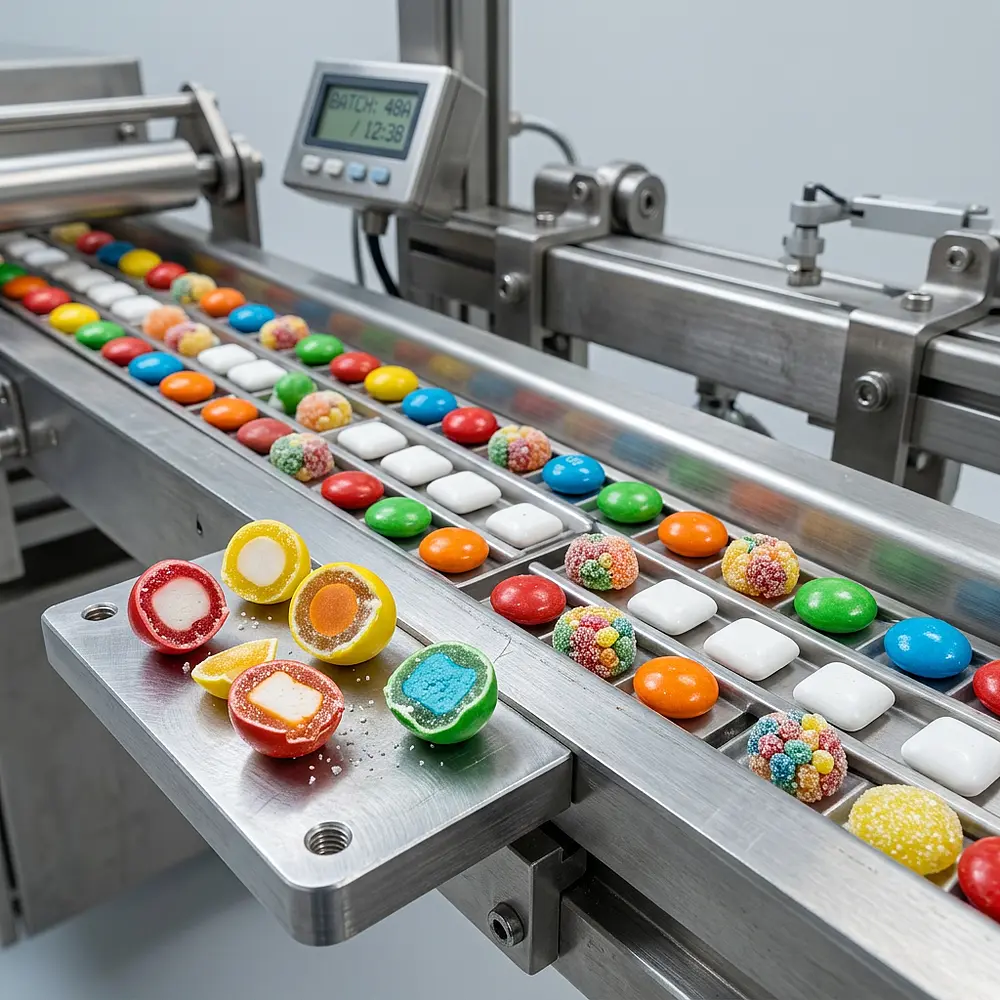
Candy is where the additive has attracted the most public attention. Products with polished shells or pale coatings often need an opaque base to look even and bright. That has made confectionery one of the most common historical uses of this titanium dioxide food additive.
Examples include chewing gum pellets, decorative sweets, jelly beans, some coated chocolates, sugar-coated fruit candies, and marshmallow-style products. In these applications, the ingredient is not there for taste. Its role is to improve the look of the surface and help color coatings appear cleaner.
Skittles became the highest-profile US example because consumers began checking ingredient panels and linking the brand to broader questions about whether the additive should still be used in food. Mars later said it had removed titanium dioxide from US Skittles in 2022, and the episode remains a practical example of how public pressure can drive reformulation even without a direct FDA ban.
Baked Goods and Decorations

Bakery products often need a very specific kind of whiteness that ordinary sugar, fat, and starch ingredients do not naturally provide. Frostings, fondant, royal icing, donut glazes, and molded cake decorations can otherwise appear slightly yellow or uneven.
That is why whitening additives have been useful in this category. Commercial decorations especially benefit from a crisp, uniform finish because consumers expect them to look precise, bright, and consistent from one batch to the next.
These uses are visual rather than functional. The product still works without titanium dioxide; it simply may not look as bright. Since the EU decision on E171 took effect, companies selling these products into European markets have had to rely on alternative whitening strategies.
How to Identify Titanium Dioxide on a Food Label
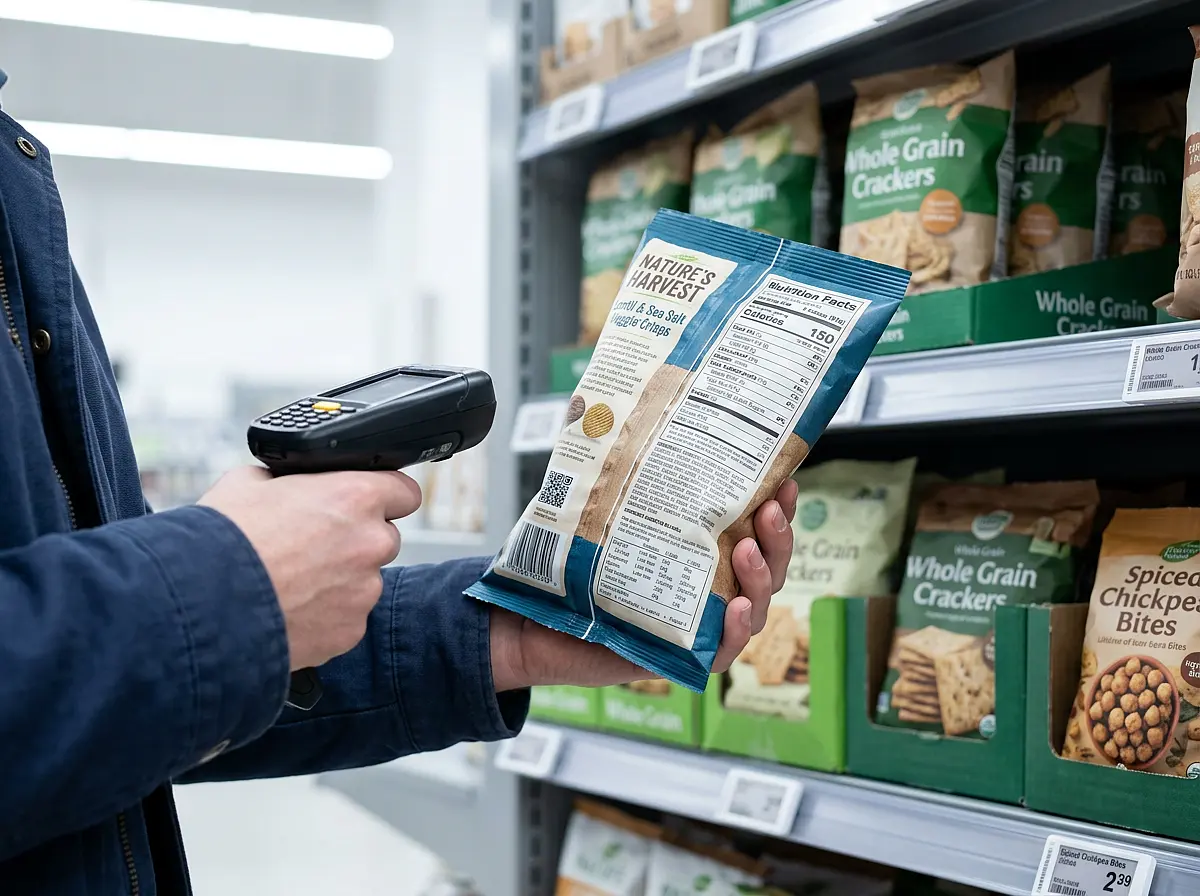
If you are standing in front of a package and want a quick answer, start with the product type and market. On a US food label, the most likely wording is simply titanium dioxide. On an older EU-style or imported label, the same food additive may appear as E171. If you run into CI 77891, that usually comes up in cosmetics or pigment research rather than on ordinary grocery foods.
Labeling also looks different depending on whether you are checking a snack, a supplement, or a medicine. The name may be the same, but the place where it appears on the package is not always the same.
One more caution: older online photos can linger long after a reformulation, and sell-through packaging may stay in circulation for a while. For a current answer about a specific product, rely on the package you have now rather than an archived image or ingredient screenshot.
Names You May See
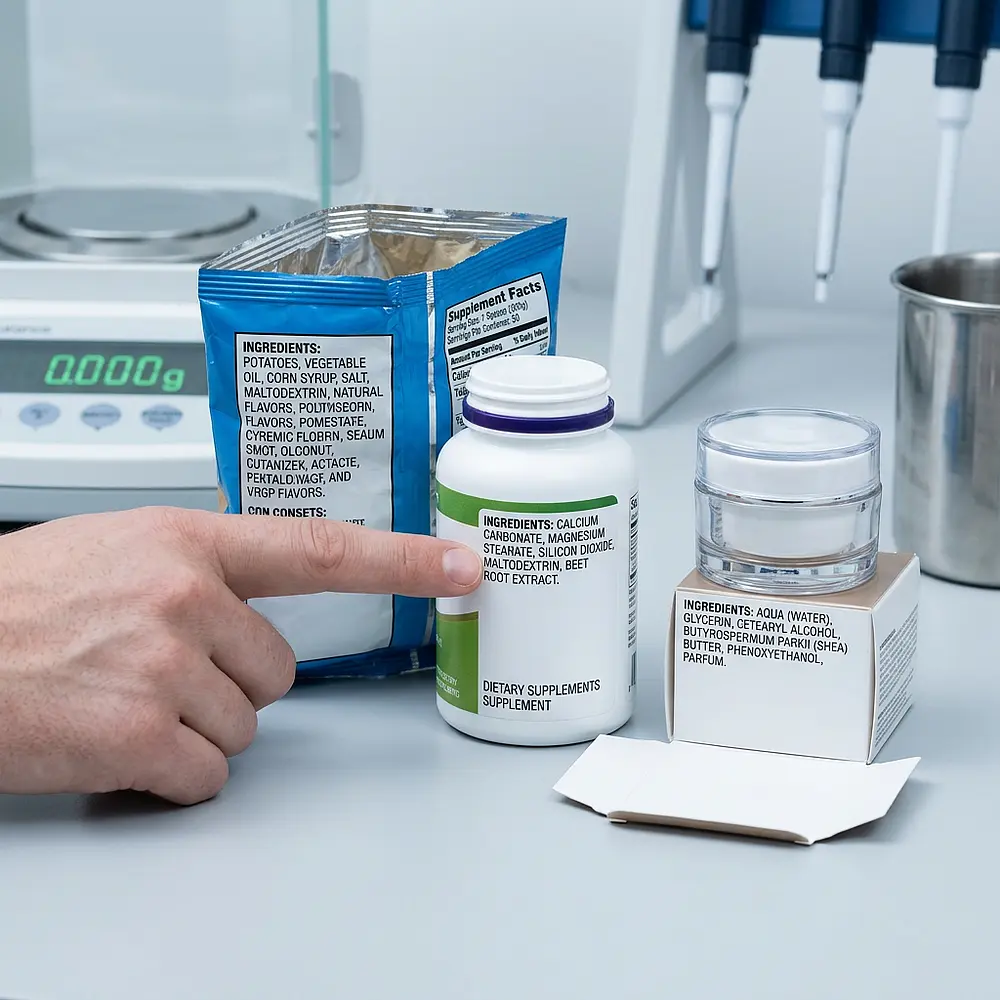
Titanium dioxide is the wording most US consumers will encounter on a food or supplement label. It is the standard plain-language ingredient name.
E171 is the former European food-additive identifier for the same substance when used in food. You are most likely to see it in older articles, legacy labels, or imported product discussions.
CI 77891 is mainly relevant when comparing food uses with cosmetics, pigments, and personal care products. It is useful to know during research, but it should not be treated as a common supermarket food-label term.
Where to Check the Ingredient List
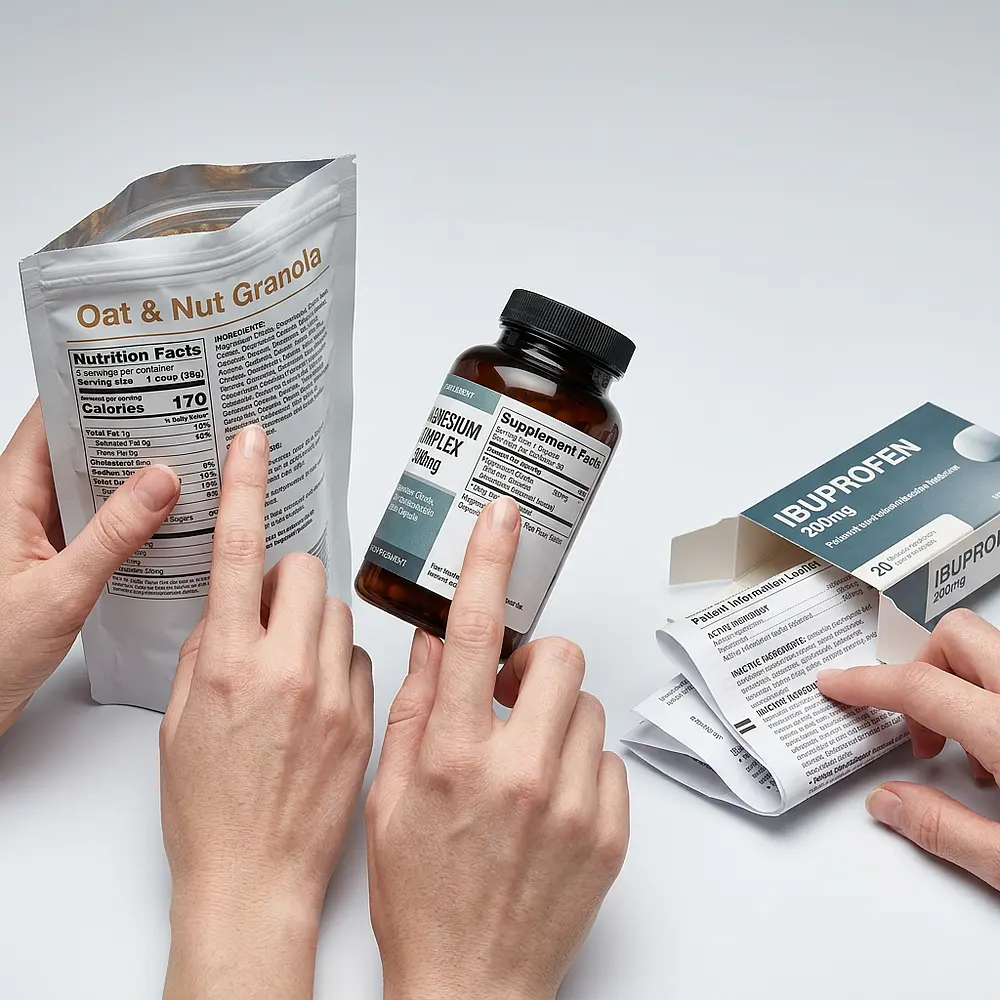
For conventional foods, start with the main ingredients panel. Because the additive is generally used in small amounts, it often appears toward the end of the list rather than near the beginning.
For supplements, inspect the section labeled other ingredients. This is where coatings, fillers, capsule materials, and similar non-active components are usually listed.
For medicines, the relevant place is typically the inactive ingredients section. That is especially important for consumers who are trying to avoid the ingredient across all swallowed products rather than only in snack foods.
Why It May Be Hard to Spot
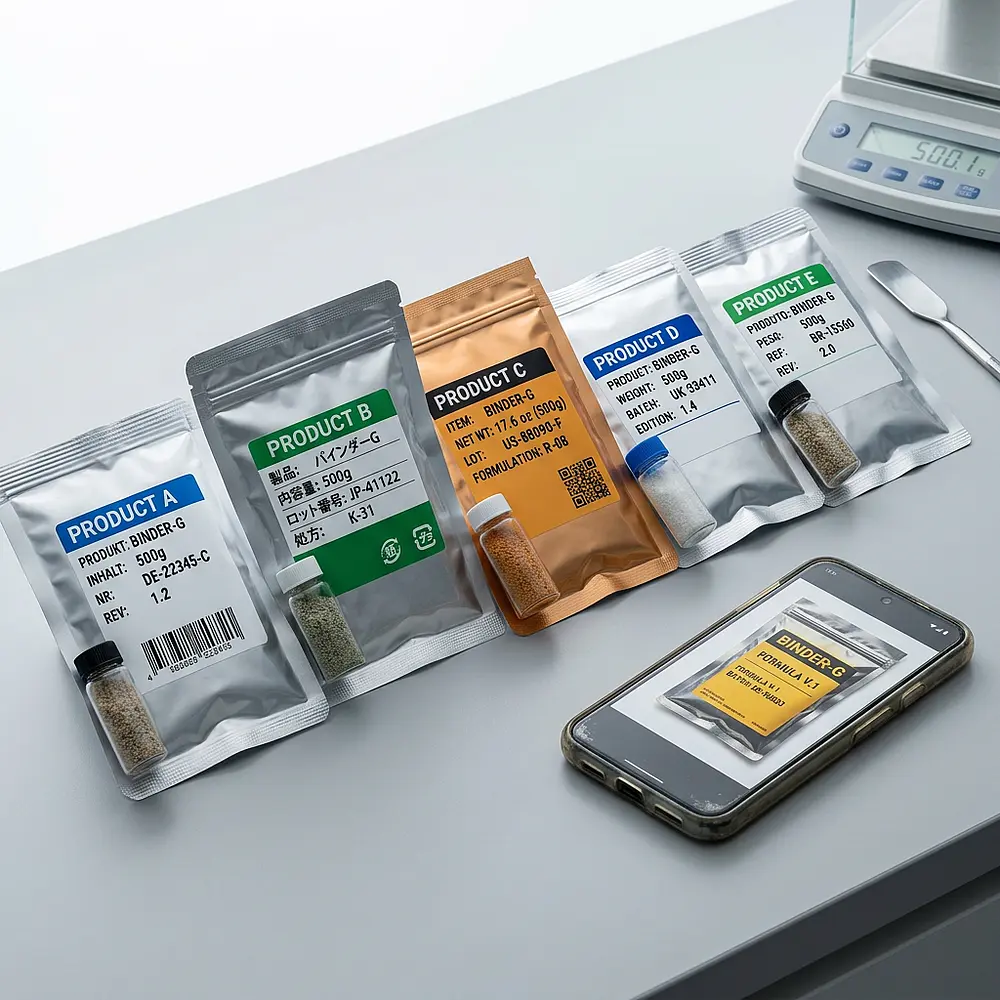
The main reason this ingredient can be hard to track is not secrecy; it is product turnover. Companies reformulate, regional versions differ, and old ingredient photos can continue circulating long after a package changes.
Imported items can add a second layer of confusion because one market may use the plain chemical name while another historically used the E-number. Consumers who do not know that both refer to the same substance can easily miss it.
Depending on the jurisdiction and how an ingredient is carried over or present below certain labeling thresholds, it may also not appear clearly in the way shoppers expect. For label-checking purposes, current packaging is worth more than search-engine screenshots or social-media posts.
Is Titanium Dioxide in Food Safe? What the Science Says

This is the question most readers are really asking: is titanium dioxide safe to eat? The most accurate short answer is that there is no single global authority that has issued a universally accepted final verdict for every jurisdiction. Different bodies assess different questions, and regulators do not all respond to scientific uncertainty in the same way.
A central issue in the modern debate is particle size. Food-grade titanium dioxide is not one perfectly uniform material; it can include both larger bulk particles and a smaller fraction of particles in the nanoscale range, and those differences became important because regulators and scientific assessments do not always treat all particles as toxicologically identical.
The most influential EU scientific review is the 2021 EFSA reassessment of E171, published as EFSA Journal 2021;19(5):6585. EFSA concluded that titanium dioxide used as a food additive could no longer be considered safe because it could not exclude genotoxicity. That is not the same as proving that normal dietary exposure causes illness in humans. It means the agency did not consider the evidence sufficient to confirm safety under the EU framework.
The US has not made the same regulatory move. The FDA continues to permit titanium dioxide as an approved direct food additive under its existing rule. That difference does not automatically mean one side is ignoring science; it reflects different legal standards for how uncertainty is handled.
IARC is often mentioned in this discussion, but its role is different. In IARC Monographs Volume 93, titanium dioxide was classified as Group 2B: possibly carcinogenic to humans based on inhalation exposure, particularly dust exposure in occupational settings. That hazard classification does not directly answer the question of oral exposure from food.
WHO is also relevant through international food-additive review, but it did not establish an acceptable daily intake for titanium dioxide used in food. That helps explain why the global picture remains more nuanced than a simple “safe” versus “unsafe” label. For a deeper breakdown of the broader safety debate, see is titanium dioxide safe.
What the FDA Says
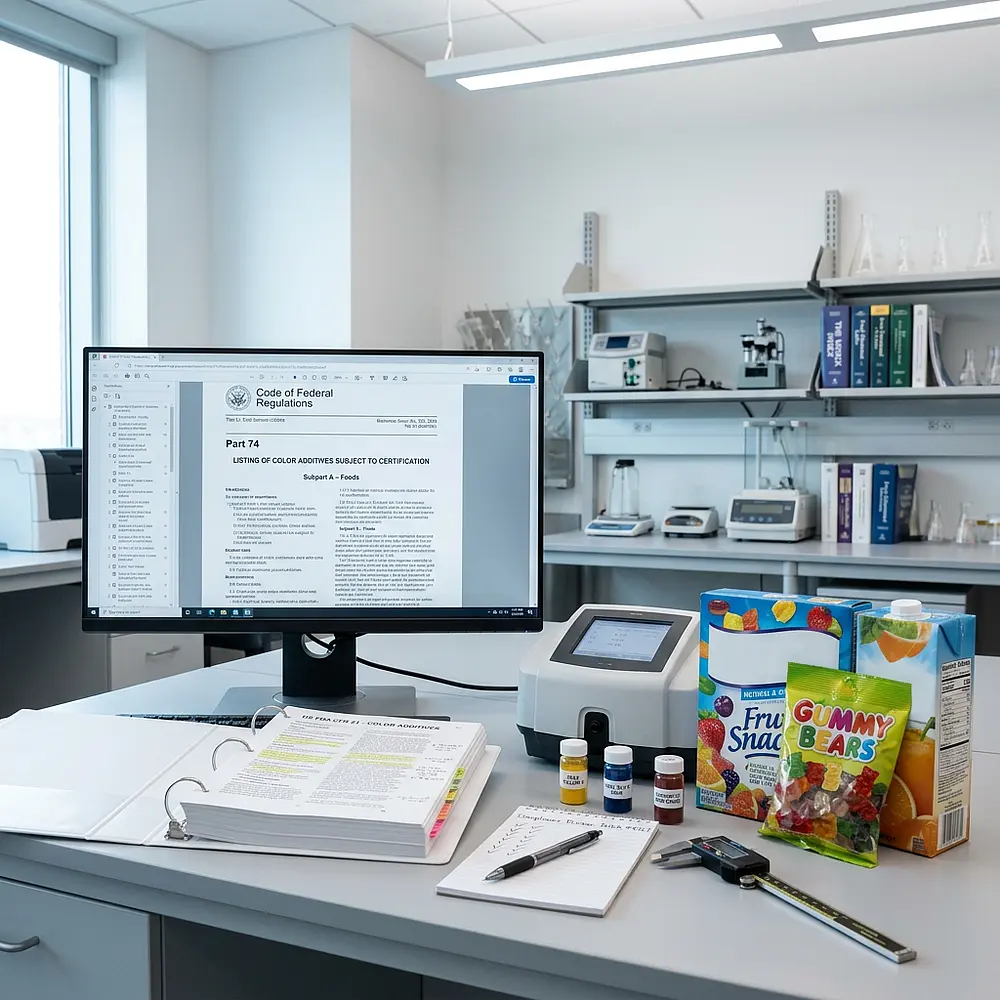
The FDA’s current position is based on an existing color-additive rule rather than a GRAS determination. Under US law, titanium dioxide is an authorized color additive exempt from certification for use in foods, subject to the conditions in 21 CFR 73.575.
The agency has not changed that status following the EU decision on E171. As a result, the ingredient remains lawful in US foods that meet the rule’s requirements.
That does not mean the issue is closed forever. Petitions and ongoing review activity can put additives back under scrutiny, but unless the FDA amends the regulation, the current US legal status remains in force.
WHO, IARC, and How to Read Uncertainty

Consumers often look for one institution that can settle the matter for everyone. In practice, that is not how this topic works. There is no single worldwide body whose conclusion automatically controls US, EU, and other national food laws.
IARC addresses cancer hazard under certain exposure conditions, which is why its titanium dioxide classification relates to inhalation rather than eating. WHO-linked food-additive review is concerned with dietary exposure in an international context. EFSA provides scientific advice for the EU system, while the FDA decides the US legal status under US law.
The key point for readers is that scientific uncertainty sits between two extremes. It is not proof that an ingredient is dangerous at typical dietary levels, but it is also not the same thing as a fully resolved safety question. Different authorities may act differently when the evidence remains incomplete.
Bulk Titanium Dioxide vs. Nanoparticles

One source of confusion is that people often talk about titanium dioxide as if it were one single, identical material in every context. In reality, particle size matters. Larger particles and nanoscale particles can behave differently, and toxicology discussions increasingly focus on that difference.
E171 was not simply a nanomaterial, but it did include a fraction of smaller particles that became more important in later safety evaluations. That is one reason newer assessments looked beyond older assumptions about the ingredient as a purely conventional pigment.
For consumers, the practical takeaway is not that every mention of titanium dioxide means “nanoparticles,” but that particle characterization became central to why the safety debate changed over time.
What EFSA Concluded in 2021

The EFSA opinion from 2021 is the key scientific document behind the EU food decision. After reviewing updated evidence, including genotoxicity studies and data on particle characteristics, EFSA concluded that E171 could no longer be considered safe as a food additive.
The wording is important. EFSA did not announce that ordinary consumption had been proven to cause cancer or another specific disease in consumers. Instead, the panel concluded that the available evidence left too much unresolved concern to support continued authorization in food.
That distinction is why the EFSA opinion is often misunderstood in public discussion. It was a safety reassessment that found the evidence insufficiently reassuring, not a declaration of confirmed harm in the general population.
Why Did Europe Ban Titanium Dioxide in Food?
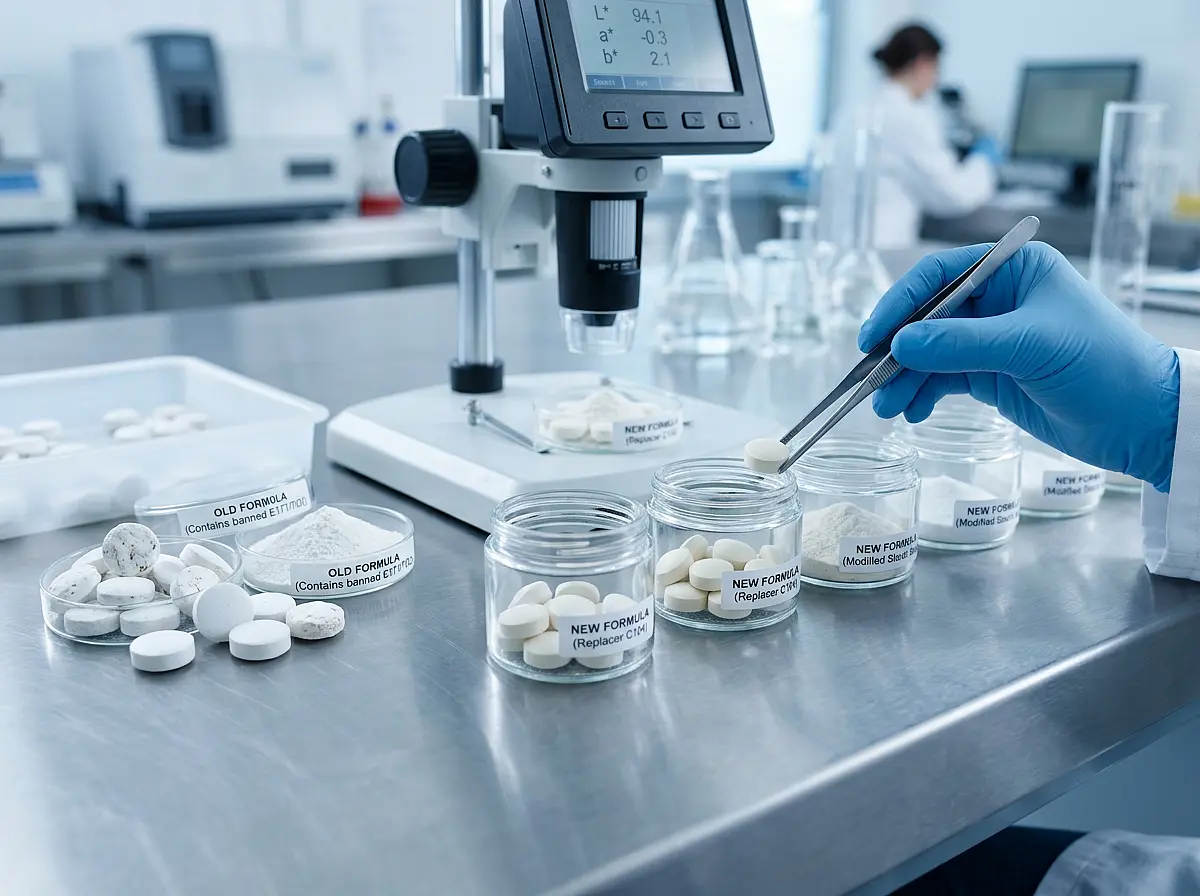
Europe banned titanium dioxide in food because the EU’s authorization system requires a food additive to meet the applicable safety standard. After EFSA’s reassessment of E171, the European institutions concluded that this standard was no longer met.
The scientific trigger was EFSA’s 2021 opinion, which became the core scientific basis for the EU restriction and later ban of E171 in food. The legal step followed through Commission Regulation (EU) 2022/63, which removed titanium dioxide from the Union list of authorized food additives. A transition period was allowed, after which the additive was no longer permitted in food placed on the EU market.
That is why searches for titanium dioxide banned usually refer specifically to Europe’s food-additive decision rather than a blanket worldwide prohibition on the substance in every product category.
The EFSA Opinion Behind the Ban
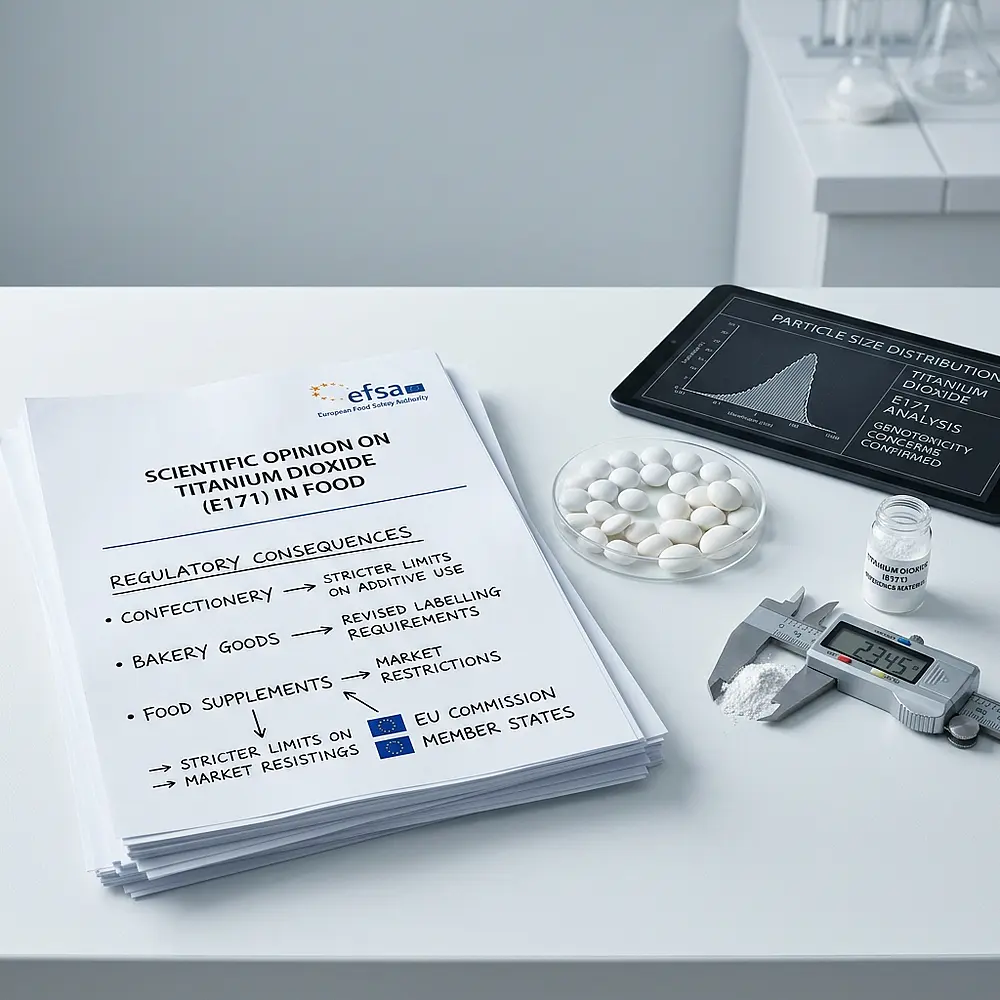
The EFSA reassessment mattered because it changed the regulatory position from one of authorization to one of unresolved safety concern. Once EFSA concluded that E171 could no longer be considered safe as a food additive, the basis for keeping it on the EU list was weakened.
In simple terms, the phrase often quoted from the debate means that the panel was not able to dismiss the possibility of genotoxic effects with enough confidence. That is a narrower and more technical point than saying consumer harm had been definitively demonstrated.
For EU regulators, however, that distinction is enough to matter. A food additive does not need to be proven harmful in people before authorization is withdrawn if the evidence no longer supports continued approval.
How the Precautionary Principle Applies

The EU approach is closely tied to the precautionary principle. In broad terms, this principle allows regulators to act when there is a plausible health concern that cannot be resolved with sufficient certainty.
That legal context helps explain why the EU result was stricter than the US result. The question was not only whether harm had been conclusively shown, but whether the safety case remained strong enough for a food additive that is used mainly for appearance.
So when people ask why Europe prohibited E171 without a universally agreed finding of consumer injury, the answer is that EU law does not require regulators to wait for final proof when the evidence leaves a material safety question open.
Regulation (EU) 2022/63 and the August 2022 Deadline

The European Commission implemented the food ban through Commission Regulation (EU) 2022/63, adopted in January 2022. The regulation removed E171 from the EU list of authorized food additives in Annex II to Regulation (EC) No 1333/2008.
Manufacturers were given a limited phase-out period to sell through or reformulate affected products. That transition ended in August 2022.
After that point, titanium dioxide was no longer permitted as a food additive in the EU. The decision applied across the Union, not only in one country or one product segment.
Is Titanium Dioxide Still Allowed in Food in the United States?
Yes. In the United States, titanium dioxide remains legal for use in food as an authorized color additive exempt from certification under 21 CFR 73.575.
The US rule permits its use for coloring foods generally, provided it does not exceed 1% by weight of the food. The FDA has not issued an EU-style ban, so American consumers may still encounter the ingredient on some labels.
In practical terms, that means the additive can still appear in products such as candies, frostings, decorations, and some coated supplement tablets sold in the US market. Consumers who prefer to avoid it can do so mainly by checking ingredient lists and choosing reformulated alternatives where available.
What 21 CFR 73.575 Says
21 CFR 73.575 is the FDA regulation that governs titanium dioxide in food. It places the substance in the category of color additives exempt from certification, which means it is regulated but not subject to the batch-certification process used for certain other color additives.
The rule authorizes use for coloring foods generally, subject to the conditions set out in the regulation. For consumers, the key takeaway is straightforward: if the ingredient appears on a US food label, its use may still be lawful under current federal rules.
Why the US and EU Reached Different Answers
The US and EU did not simply publish mirror-image judgments on identical legal questions. They reviewed overlapping science through different regulatory systems.
In Europe, unresolved concern was enough to end authorization for a non-essential food additive used mainly to improve appearance. In the United States, the FDA has not concluded that the existing authorization should be revoked.
That is the most accurate way to understand the split. It is not best framed as one side having discovered a proven danger while the other ignored it; it is a case of different legal thresholds for acting on uncertainty.
How US Consumers Can Avoid It if They Want To

If you want to reduce intake, start with the product types that have historically used it most often: coated candies, chewing gum, white icings, cake decorations, and some tablets or capsules.
For conventional foods, read the ingredients panel. For supplements, inspect the other ingredients section. For medicines, check the inactive ingredients list when available.
Many brands have already reformulated some products, so avoidance is often possible without much difficulty. In practice, consumers who take a precautionary approach usually manage it by comparing labels rather than by eliminating entire food categories.
Titanium Dioxide in Food vs. In Cosmetics: Different Rules
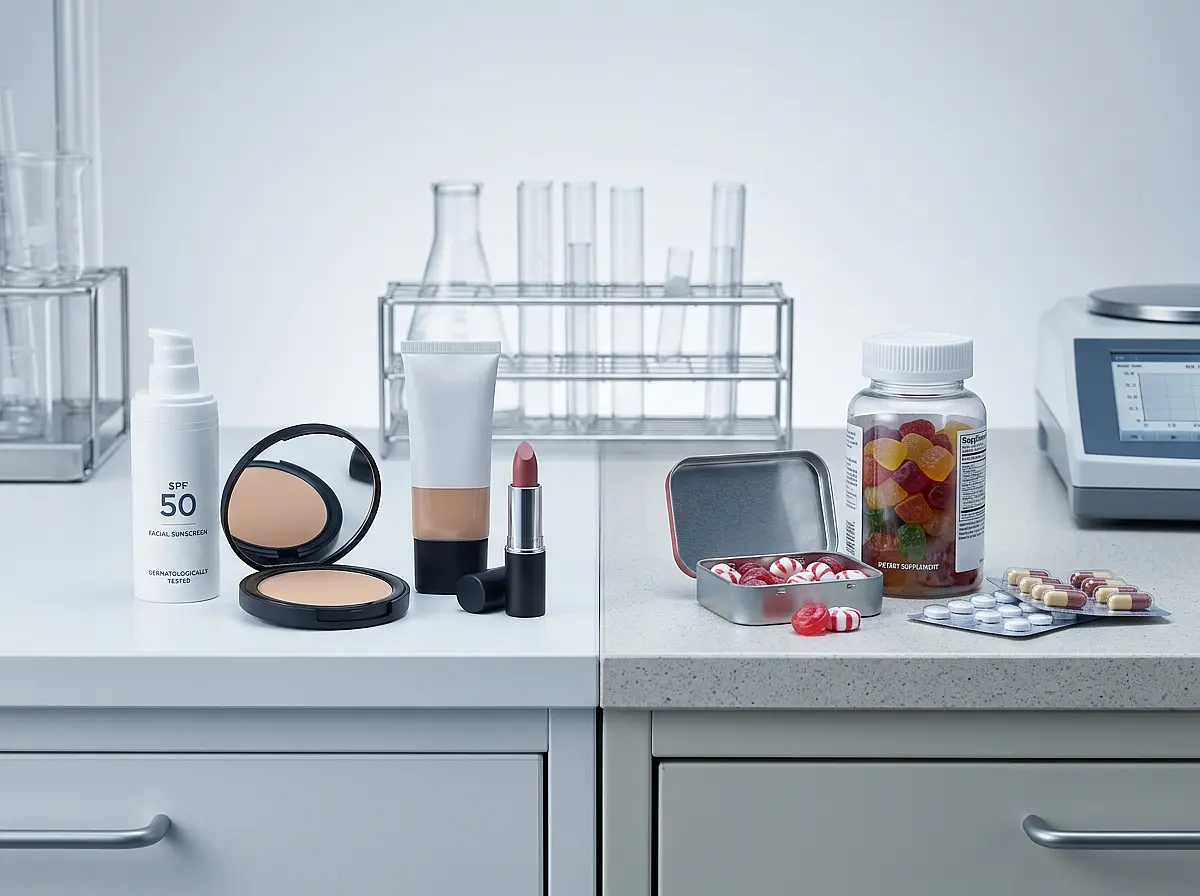
The EU decision discussed on this page applies to food use — specifically the additive known as E171. It does not mean titanium dioxide was banned across all product categories.
In cosmetics, the substance is still widely used as a white pigment. In the SCCS context, titanium dioxide was assessed as a UV filter within the safety evaluation of cosmetic products (UV filter, Entry 27 of Annex VI), and the SCCS conclusions are limited to the inhalation context for aerosol-, spray-, and powder-form products.
That is why a consumer may see it removed from food in Europe while it remains present in lawful cosmetic products sold in the same market. For more on topical-use questions, see titanium dioxide in sunscreen and the broader safety review.
Why the Rules Differ by Product Type

Regulators assess substances by specific use and exposure route, not by chemical name alone. A food additive raises ingestion questions. A sunscreen or makeup ingredient raises a different set of exposure questions. A powder that can be inhaled creates a separate risk profile again.
That is why public discussion can become confusing. People often assume that concern in one setting automatically carries over unchanged to every other use. In regulation, that is usually not how the analysis works.
So the fact that titanium dioxide may face one rule in food and another in cosmetics is not necessarily inconsistent. It reflects different risk assessments for different types of exposure.
What This Means for Sunscreen and Makeup
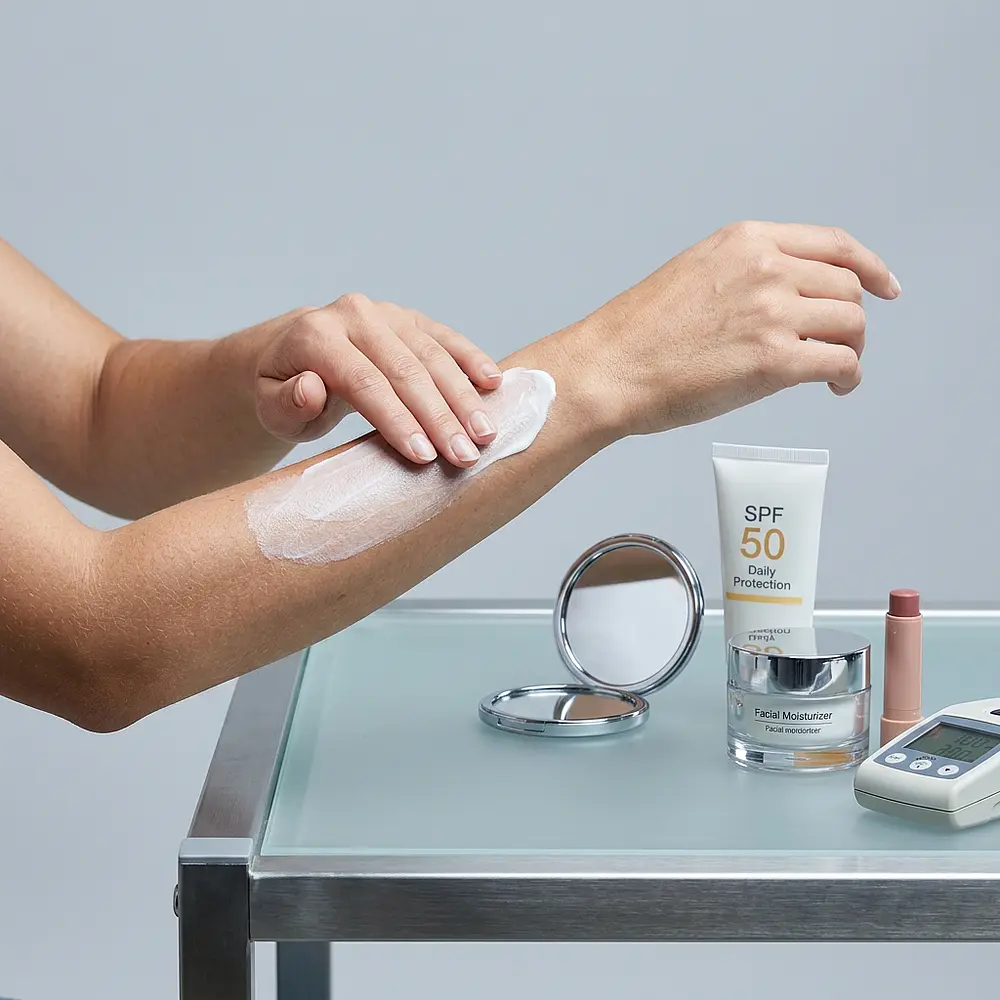
For sunscreen and makeup, the practical point is simple: the European food ban on E171 does not mean titanium dioxide disappeared from personal-care products. It remains a common ingredient in many formulations.
In the SCCS Opinion, the conclusions are limited to the inhalation route for aerosol-, spray-, and powder-form products; for a typical hair-styling aerosol spray product, the SCCS considered pigmentary TiO2 up to 1.4% for general consumers and up to 1.1% for hairdressers to be safe, while 25% in a typical hair spray aerosol product was considered not safe.
If your main concern is what happens when the ingredient is eaten, cosmetic rules do not answer that question directly. For that reason, it helps to keep food, skin application, and inhalation discussions separate rather than treating them as one single safety category.
The Skittles Controversy
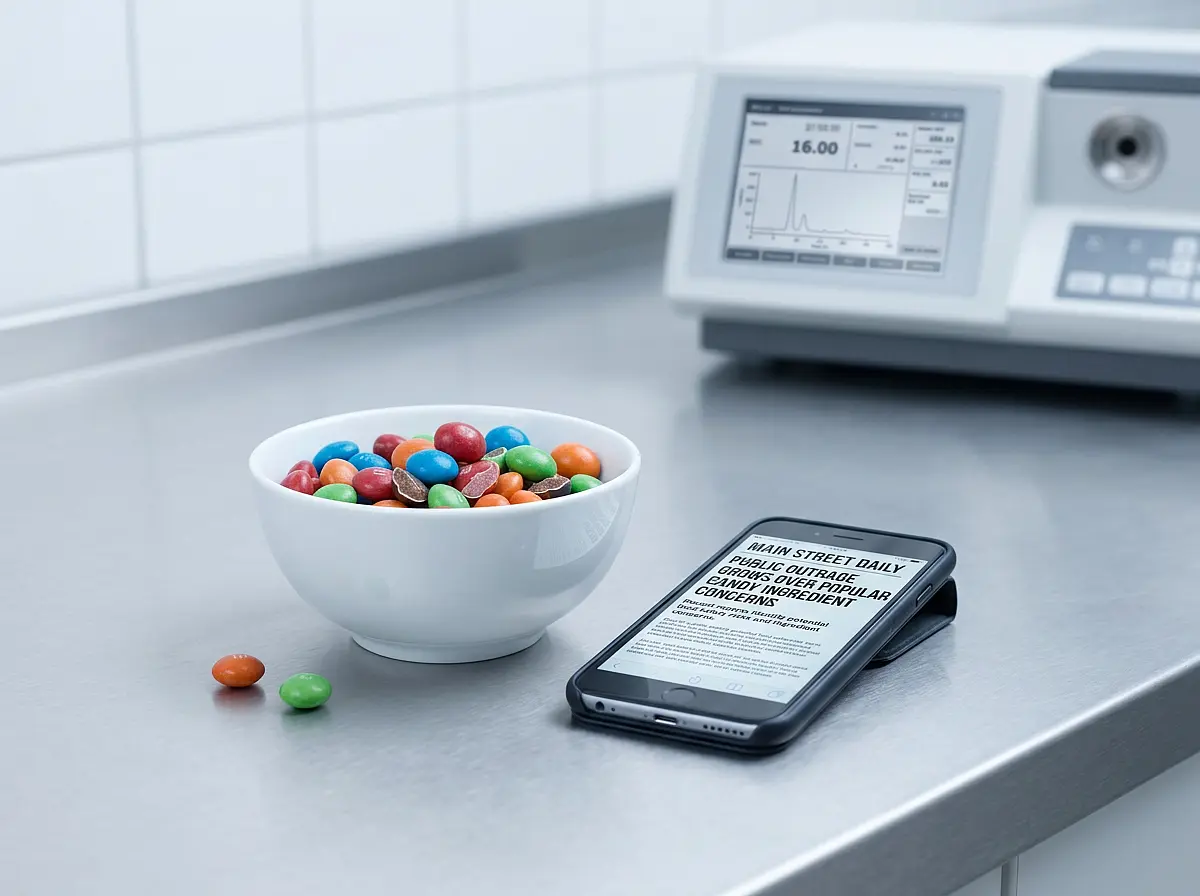
The skittles titanium dioxide story became the best-known consumer example of a technical additive issue turning into a mainstream headline. In 2022, a California lawsuit alleged that Skittles contained titanium dioxide and should not be sold in that form. The filing generated major public attention, but it did not by itself create a new FDA safety determination or a new federal rule.
Mars later said it had removed titanium dioxide from the US formulation of Skittles in 2022. That was a company reformulation step, not the result of an FDA ban.
As a case study, Skittles matters because it shows how one familiar brand can shape public perception far beyond its own ingredient panel.
The 2022 California Lawsuit

The California complaint against Mars argued that Skittles should not contain titanium dioxide and relied heavily on concerns that had already gained attention in Europe. As with any civil lawsuit, those claims were allegations by a plaintiff rather than findings made by a regulator.
The filing helped amplify public awareness, but it did not itself change the legal status of the ingredient in the United States. Federal food-color rules remained the same.
For consumers trying to interpret headlines, the key distinction is between litigation and regulation. A lawsuit can influence coverage and reputation even when it does not establish a scientific or legal conclusion about safety.
Mars and Reformulation in the US

Mars stated that titanium dioxide had been removed from the US formulation of Skittles in 2022. That made the brand one of the clearest examples of voluntary reformulation in response to consumer and market pressures.
This is significant because companies do not always wait for formal bans before changing recipes. They may respond to public scrutiny, retailer expectations, or the practical benefits of aligning formulations across markets.
In that sense, Skittles became less important as a single candy and more important as a case study in how ingredient controversies affect brand decisions.
What the Skittles Case Illustrates

The Skittles episode shows that ingredient debates are shaped by more than toxicology alone. Legal complaints, media attention, brand reputation, and regional regulatory differences can all push a company toward reformulation.
It also shows why consumers should not treat a voluntary ingredient change as a definitive scientific verdict. A company may remove an additive for many reasons, including caution, simplification, or market preference.
The most useful takeaway is practical: high-profile brand controversies are good prompts to learn what an ingredient does and how it is regulated, but they are not substitutes for reading the evidence or understanding the actual legal status.
Regulatory Sources and Related Reading

Use these documents for the primary claims above:
- FDA 21 CFR 73.575 → establishes current US authorization for titanium dioxide as a color additive exempt from certification in food and sets the 1% by weight limit.
- EFSA Journal 2021;19(5):6585 → provides the 2021 scientific reassessment concluding that titanium dioxide as a food additive could no longer be considered safe because genotoxicity could not be excluded.
- Commission Regulation (EU) 2022/63 → removes E171 from the EU list of authorized food additives and implements the EU legal change that took effect in 2022.
- IARC Monographs Volume 93 → classifies titanium dioxide as Group 2B based on inhalation hazard, which is separate from ordinary dietary exposure from food.
Related reading on this site:
- What is titanium dioxide? → basic overview of the substance.
- Is titanium dioxide safe? → deeper safety explainer across uses and exposure routes.
- Titanium dioxide and cancer risk → what the annulled EU classification did and did not cover.
- Titanium dioxide in sunscreen → how titanium dioxide is used in sunscreen and cosmetics.
- Titanium dioxide: the complete guide → homepage for the full resource hub.
Who Does What: FDA, EFSA, European Commission, and IARC

FDA: US regulator responsible for the federal rule that still authorizes this color additive in food.
EFSA: EU scientific risk assessor that re-evaluated E171 and concluded it could no longer be considered safe as a food additive.
European Commission: EU body that adopted the regulation removing E171 from the Union list of authorized food additives.
IARC: International hazard-classification body whose titanium dioxide monograph addresses inhalation exposure rather than eating.
Where to Go Next on This Site
If you want a basic overview of the substance itself, read what titanium dioxide is. If your main concern is the broader safety question, the best next step is is titanium dioxide safe.
For a wider comparison of laws and policies across markets and uses, see the agency-by-agency safety review. For topical applications such as mineral sunscreen, go to titanium dioxide in sunscreen.
To browse all resources on the topic, return to the homepage.
FAQ
Why did EFSA conclude that titanium dioxide can no longer be considered safe as a food additive?
EFSA reached that conclusion because, after reviewing the available studies in 2021, it said a genotoxic risk could not be ruled out for titanium dioxide as a food additive. In plain terms, EFSA did not say harm was proven in people; it said the evidence was uncertain in a way that prevented a confident safety finding. A key issue was concern that some particles, including very small ones, might accumulate in the body and could potentially damage DNA. Because genotoxicity cannot be assigned a safe intake threshold with enough confidence, EFSA concluded titanium dioxide could no longer be considered safe for use in food.
What is the difference between food-grade titanium dioxide and titanium dioxide nanoparticles?
Food-grade titanium dioxide is a food additive made of titanium dioxide particles in a range of sizes; it is not the same as a product made entirely of nanoparticles. However, food-grade material can contain a small fraction of nanoparticles. “Nanoparticles” are extremely small particles, typically under 100 nanometers, and they may behave differently because their size changes surface area and how they interact with tissues. So the key difference is not the chemical substance itself, but particle size and the proportion of very small particles. In practice, food-grade titanium dioxide is a mixed particle material, while titanium dioxide nanoparticles are the specifically nanosized subset.
Can titanium dioxide appear on labels under names other than 'titanium dioxide'?
Yes. Titanium dioxide can appear on food labels under different designations. Besides “titanium dioxide,” wordings such as “titanium dioxide color” are possible; in some countries the additive code “E171” is used instead. Manufacturers sometimes describe colorants less specifically, for example within general terms like “color added,” “artificial color,” or “coloring,” where labeling rules permit this. Anyone who wants to avoid the substance should therefore not search for just one exact spelling, but read the entire ingredient list carefully, keeping an eye out for both the substance name and regional codes or collective terms.
How can I identify titanium dioxide on an ingredient label?
The most reliable way to identify titanium dioxide is to check the ingredient list directly. Look for the term “titanium dioxide”; in some markets the additive code “E171” is used instead. Depending on the country, the substance may be listed by name or as an additive code. It often appears in the coloring section or toward the end of the ingredient list, since it is mainly used for visual appearance. If you are comparing products from different countries, it helps to search for both the English name and “E171.” The practical rule of thumb: if either term appears on the label, the substance is present.
Which foods commonly contain titanium dioxide?
Titanium dioxide has commonly been used in brightly colored or white-appearing processed foods, especially candy, chewing gum, cake decorations, frostings, powdered donuts, cookies, pastries, dessert mixes, coffee creamers, sauces, and some supplements or chewable tablets. It may also appear in products with glossy coatings or very opaque white fillings. In practice, it has been most associated with sweets and snack foods that need a bright white base or a more vivid visual finish. Availability varies by country and date, so older ingredient lists or imported products may still show it more often than newly reformulated products.
What does titanium dioxide do in food products?
Titanium dioxide mainly works as a whitening and opacifying agent in food. It makes products look brighter, whiter, and more uniform, and it can give coatings, fillings, sauces, and candies a more solid, less translucent appearance. Manufacturers have used it to improve visual appeal, help colors appear cleaner or more vivid, and mask natural variations in ingredients. In short, it is used for appearance rather than taste, texture, or preservation. It does not add nutritional value or flavor; its main job is to change how a food looks so it appears more polished, consistent, and visually appealing to consumers.
What does E171 mean on a food label?
E171 on a food label means the product contains titanium dioxide as a food additive. “E171” is the European additive code for titanium dioxide, typically used as a white colorant or to make foods look brighter and more opaque. On labels, it may appear as “E171” or as “titanium dioxide,” depending on the country’s labeling rules. As of 04.07.2026, you’re most likely to see “E171” in older references, imported products, or non-EU contexts, because it is no longer authorized for use in food in the European Union, even though the term is still widely recognized.
Should consumers avoid foods that contain titanium dioxide?
Whether to avoid such products is ultimately a precautionary choice. Anyone who wants to minimize uncertainty can deliberately leave foods containing titanium dioxide out of their shopping, especially since readily available alternatives often exist. This is particularly relevant for heavily processed sweets or products that appear especially white or vividly colored, where the substance mainly serves a visual purpose. At the same time, there is no reason for concern if you have occasionally consumed it in the past. A measured approach makes more sense: check ingredient lists, limit routine consumption, and, where desired, choose products that do without this additive.
Why do the EU and U.S. regulators disagree on titanium dioxide in food?
The main difference lies less in the underlying data available than in the regulatory assessment of uncertainty. The European side placed particular weight on the open question of possible genotoxic effects and drew a precautionary conclusion from it. The US has not legally reassessed the same substance in the same way and maintains the existing approval framework. This does not mean Europe sees a clearly proven danger while the US has found it to be entirely safe. Rather, the different decisions show that regulators can have different thresholds, given incomplete scientific evidence, for when uncertainty is enough to restrict or maintain a use.
How much titanium dioxide is allowed in food in the U.S.?
In the US, a clear maximum applies to titanium dioxide in food: the substance may not exceed 1 percent of the food's weight. In practice, this means manufacturers may only use it in limited amounts, not freely as they choose. This limit refers to the legally permitted usage level as a color additive and is the central quantitative federal standard for its use in food. If this proportion is exceeded, the product would not comply with the relevant US rules for permitted use. The question of the permitted amount is therefore separate from the different debate about how various regulators assess the safety picture.
What does FDA 21 CFR 73.575 say about titanium dioxide in food?
21 CFR 73.575 is the relevant US regulation for titanium dioxide as a color additive in food. It sets out the conditions under which the substance may be used: it is approved as a color additive, must meet certain identity and purity requirements, and may only be used for coloring purposes. The regulation therefore does not describe every conceivable use in general terms, but specifically the legal framework for its use as a color additive in food. Anyone wanting to know why titanium dioxide can still appear on ingredient lists in the US will find the governing federal basis for this use in this regulation.
Is titanium dioxide still allowed in food in the United States?
Yes. As of 04.07.2026, titanium dioxide is still permitted in food in the United States. The FDA continues to allow it as a color additive under federal rules, with a limit that it must not exceed 1% by weight of the food. So it has not been banned nationwide in U.S. foods. However, legal status can vary by state and product reformulations may differ by brand, so some foods may no longer use it even though federal law still allows it. In short: federally, yes—titanium dioxide remains allowed in food in the U.S.
When did the EU ban on titanium dioxide in food take effect?
The ban took effect on August 7, 2022. This date marked the end of the transition period following the EU decision to remove E171 from the list of authorized food additives. From that date, titanium dioxide could no longer be newly placed on the EU market for use in food. However, a sell-through rule applied to products already lawfully placed on the market before the deadline: they could still be sold until their best-before or use-by date expired. As a result, the substance did not disappear from all shelves overnight, even though new authorization ended from that date.
Why did the European Union ban titanium dioxide in food?
The EU banned titanium dioxide in food because its food-safety review concluded that a possible genotoxic risk could not be ruled out. In plain English, regulators decided the evidence was too uncertain to keep considering it safe as a food additive. After the European Food Safety Authority updated its assessment, the European Commission removed titanium dioxide (E171) from the list of permitted food additives. The ban took effect in 2022 and remains in force as of 04.07.2026. So the EU’s decision was mainly precautionary: not proof that it definitely causes harm in food, but a judgment that the safety case was no longer strong enough.
What does 'could not exclude genotoxicity' mean in plain English?
What this means: reviewers saw indications that could point to possible DNA damage, but the data were not sufficient either for a clear finding of harm or for a reliable all-clear. In other words, they could not say with confidence “dangerous,” but also not with confidence “safe.” This uncertainty matters for regulation because, with possible genotoxic effects, the issue is not just the strength of a risk but the open question of whether such an effect can be ruled out at all. So the phrase does not mean genotoxicity was proven, but that the scientific certainty needed to rule it out was lacking.