Titanium Dioxide in Toothpaste: Why It's There and Is It Safe?
You turn over a toothpaste tube, read the ingredients, and notice titanium dioxide — sometimes shown as CI 77891. This white pigment appears in many familiar toothpastes to give the paste a bright, opaque look. Since the European Union stopped allowing titanium dioxide in food, many consumers have understandably asked whether the same issue applies to oral care. This page explains what titanium dioxide does in toothpaste, what normal brushing likely means for real-world exposure, and how regulators in the US and EU currently assess it.
Key Facts
If you want the short version, these are the points most relevant to everyday toothpaste use.
- Purpose: In toothpaste, titanium dioxide is used as a white pigment and opacifying colorant. It is not an active ingredient.
- How much is typically used? Public cosmetic ingredient databases and safety assessments describe toothpaste as a low-concentration use, with typical concentrations generally below 1%.
- Adult exposure: Toothpaste is intended to be brushed with and spat out, so any swallowed amount is usually incidental and limited compared with deliberate dietary intake.
- Children: Swallowing is a bigger consideration for young children because they may not spit effectively; this is one reason pediatric toothpaste amounts are kept small and supervised.
- Regulatory status: The FDA permits titanium dioxide as a color additive under 21 CFR 73.575. In the EU, titanium dioxide remains allowed in cosmetics, including toothpaste, even though E171 is no longer permitted in food.
Why Is Titanium Dioxide in Toothpaste?
Why is titanium dioxide in toothpaste? The simple answer is appearance. It is added to create an opaque, bright white paste, a look many consumers associate with cleanliness and freshness.
That visual role is easy to overinterpret. Titanium dioxide in toothpaste does not provide a specific whitening-of-teeth effect in the way peroxide systems do, and it does not serve as an antibacterial ingredient either. The ingredients that actually affect cleaning or stain removal are typically other components, such as abrasives like hydrated silica or calcium carbonate, while true bleaching claims depend on separate whitening systems.
So if you are asking what titanium dioxide contributes during brushing, the honest answer is mainly how the product looks on the brush and in the sink. For a broader explanation of the material itself, see our explainer on what titanium dioxide is.
Purely Cosmetic: Pigment and Opacity
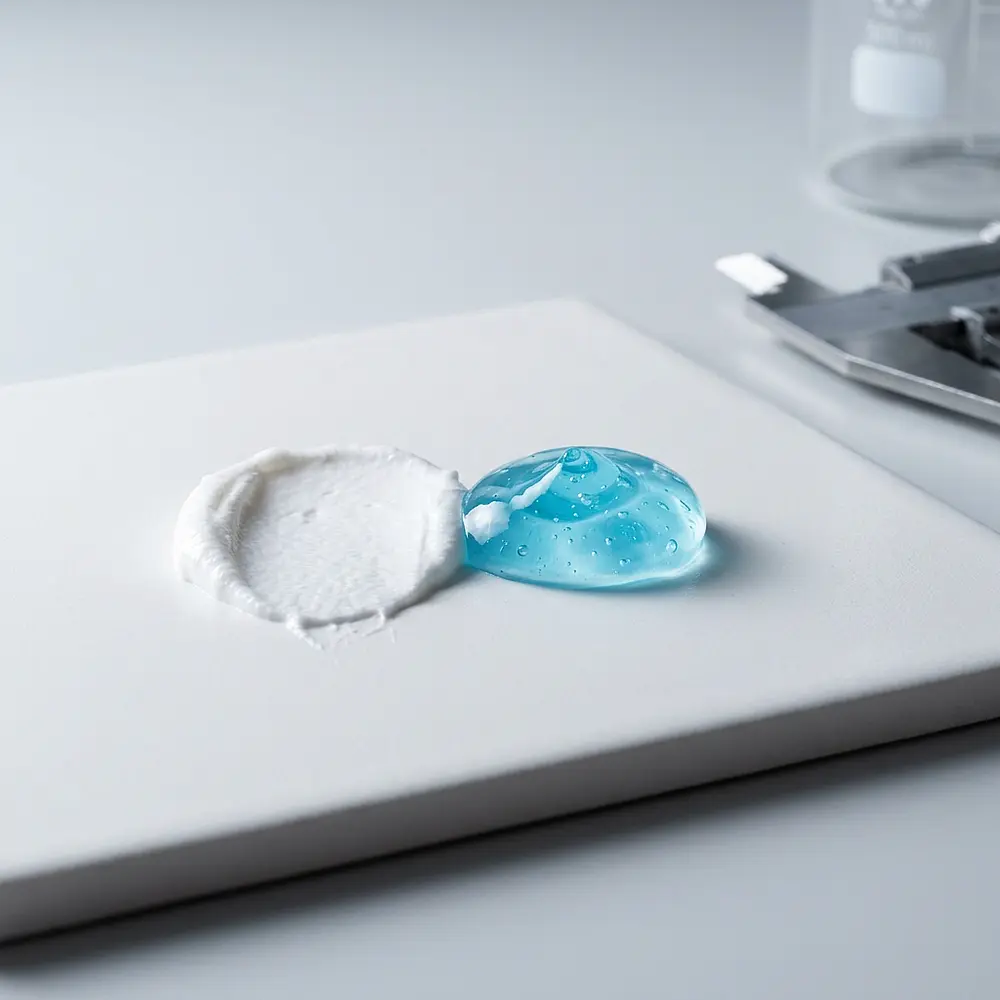
Titanium dioxide works by scattering visible light efficiently, which is why a small amount can make a paste look densely white instead of translucent. In ingredient language, CI 77891 and titanium dioxide refer to the same pigment.
That matters because consumers often read a bright white appearance as a performance cue. In reality, the color tells you more about formulation aesthetics than about cavity protection, tartar control, or sensitivity relief.
Why Opaque White Looks Are Preferred
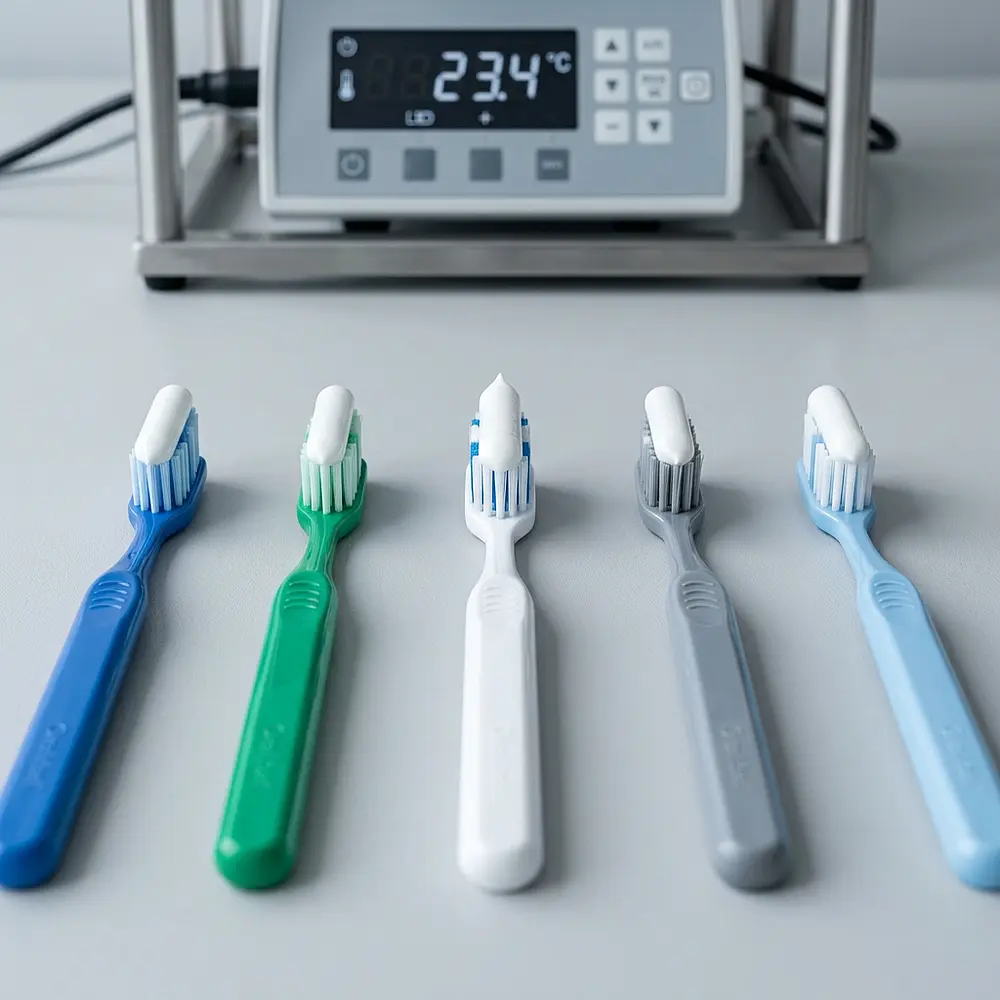
Traditional toothpaste design has long favored a solid white, uniform appearance. That look is familiar, photographs well, and signals consistency from one tube to the next. Titanium dioxide helps manufacturers create that effect reliably, especially in classic paste formats that are meant to look creamy rather than clear.
Separating Appearance From Performance
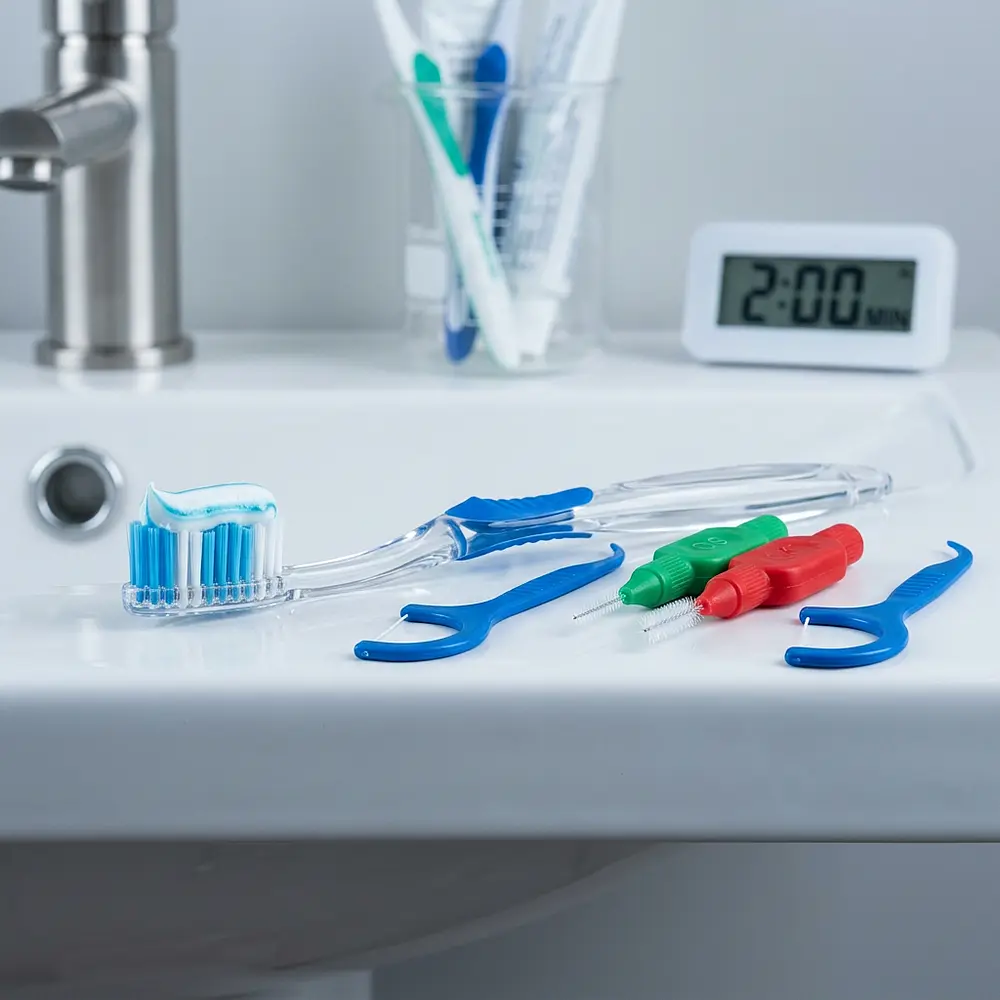
If you want to judge a toothpaste by function, look past the pigment. Fluoride, desensitizing agents, abrasives, and other targeted ingredients determine what the product can actually do for oral health. Titanium dioxide changes the presentation of the formula, not its therapeutic value.
Which Toothpastes Contain Titanium Dioxide?
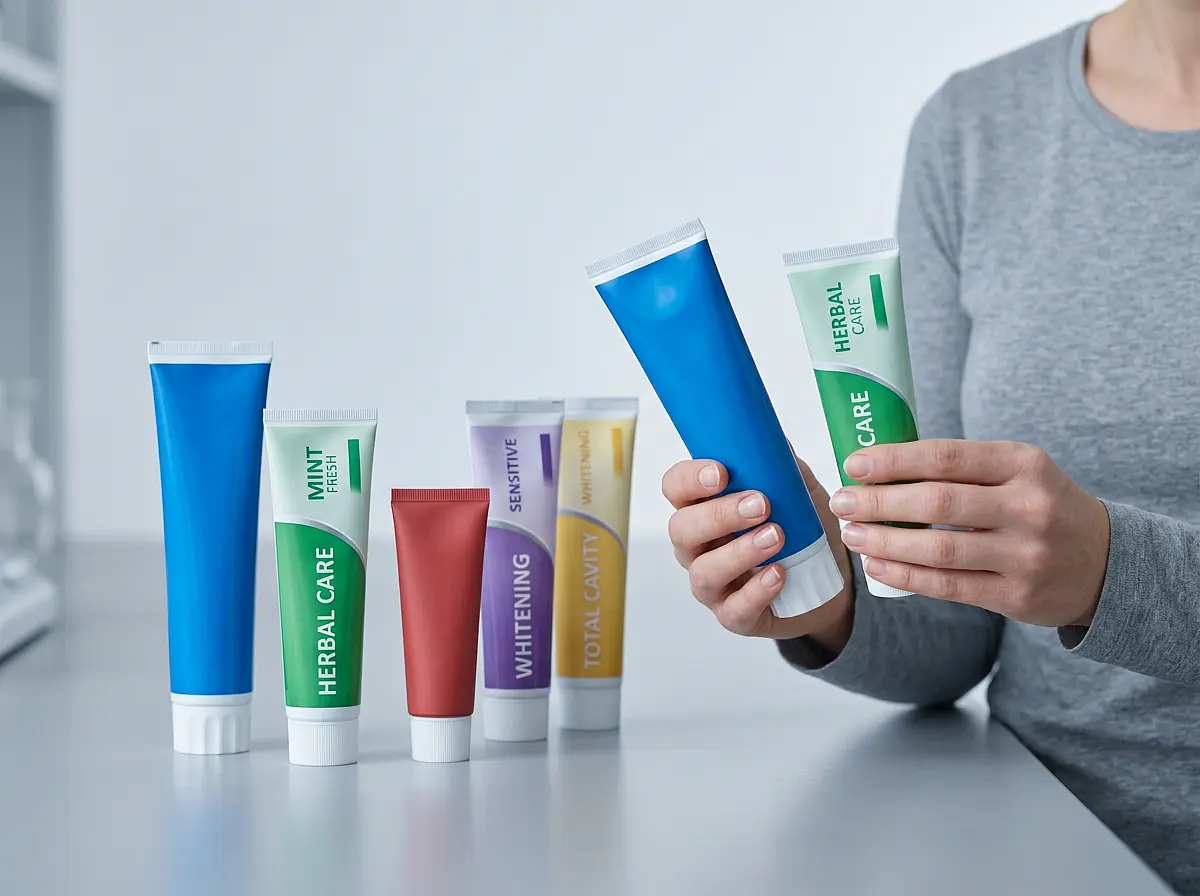
For shoppers, the most reliable question is not “Which brand uses it?” but “How is this exact product labeled in my market today?” Toothpaste formulas often vary by country, retailer pack, flavor variant, and relaunch date. A whitening version may differ from the regular version under the same brand family, and ingredient lists on marketplace sites can lag behind packaging updates.
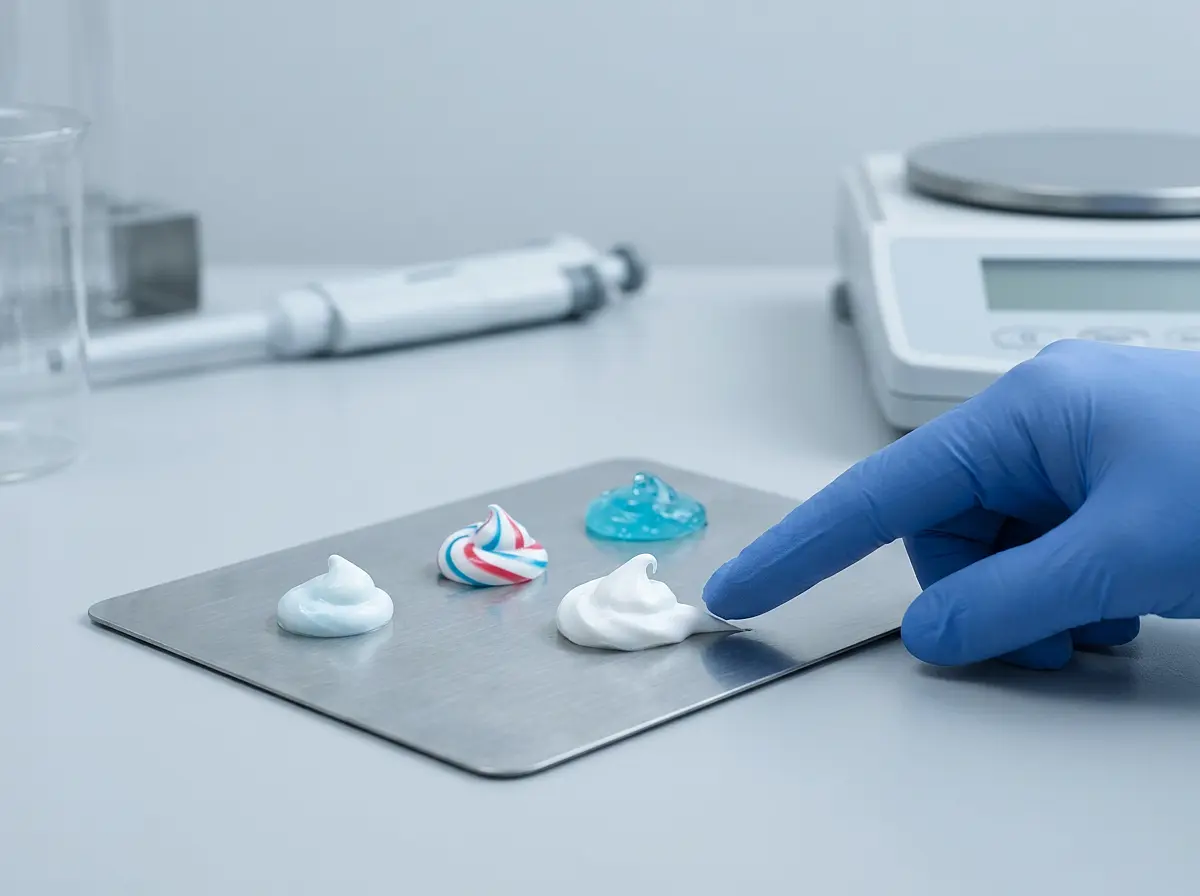
A practical rule is to start with the product style and then confirm on-pack. A classic opaque white paste is more likely to use a white pigment than a transparent gel, but appearance alone is not enough. Some off-white formulas still use colorants; some bright-looking pastes achieve their look differently; and striped products may have one phase that differs from another.
That is why fixed brand roundups are weak consumer guidance. Formulations change, and no article can guarantee which specific products currently contain titanium dioxide in toothpaste across every market. If you want to know whether a toothpaste contains it, label reading on the specific tube or carton is what matters most.
Scan Ingredients for “Titanium Dioxide” or “CI 77891”
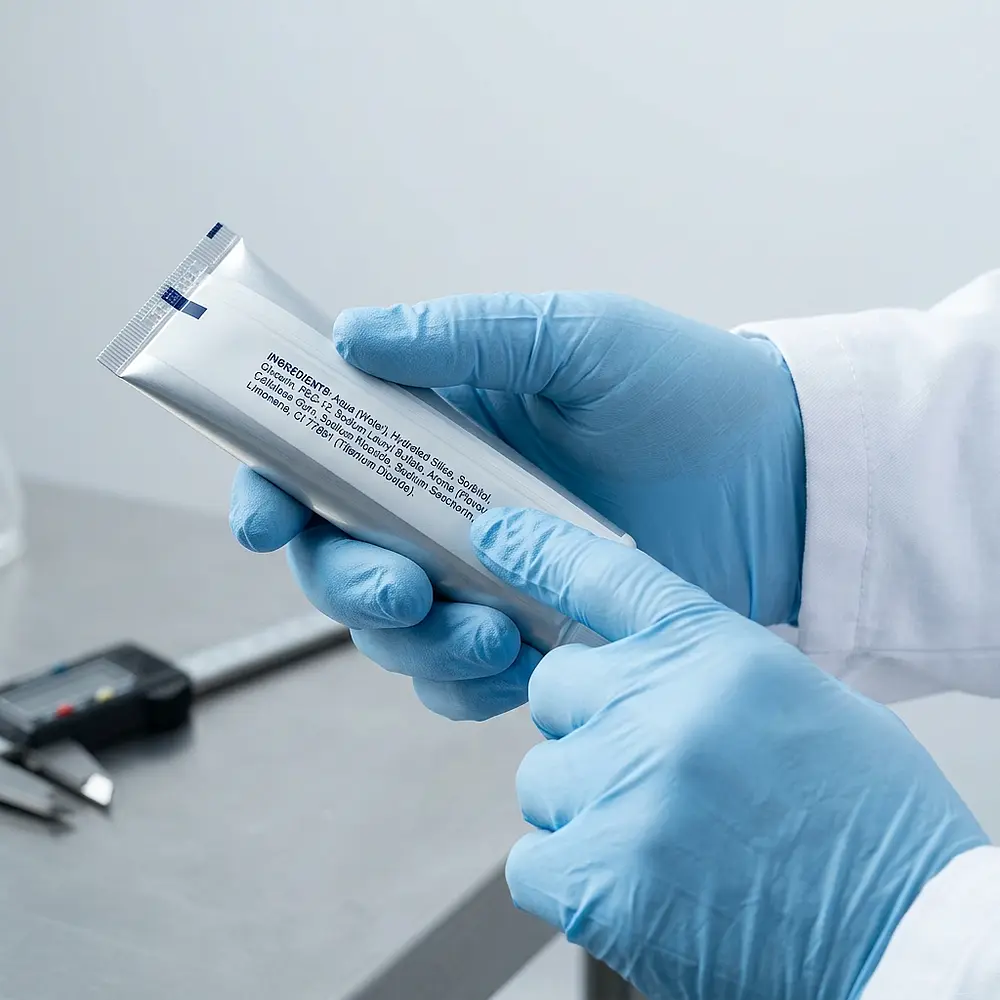
The fastest identification method is the ingredient list itself. Look specifically for titanium dioxide or the color index entry CI 77891. If one of those appears, that version of the toothpaste uses the pigment; if not, it does not.
Where It’s More Likely (and When It’s Often Omitted)
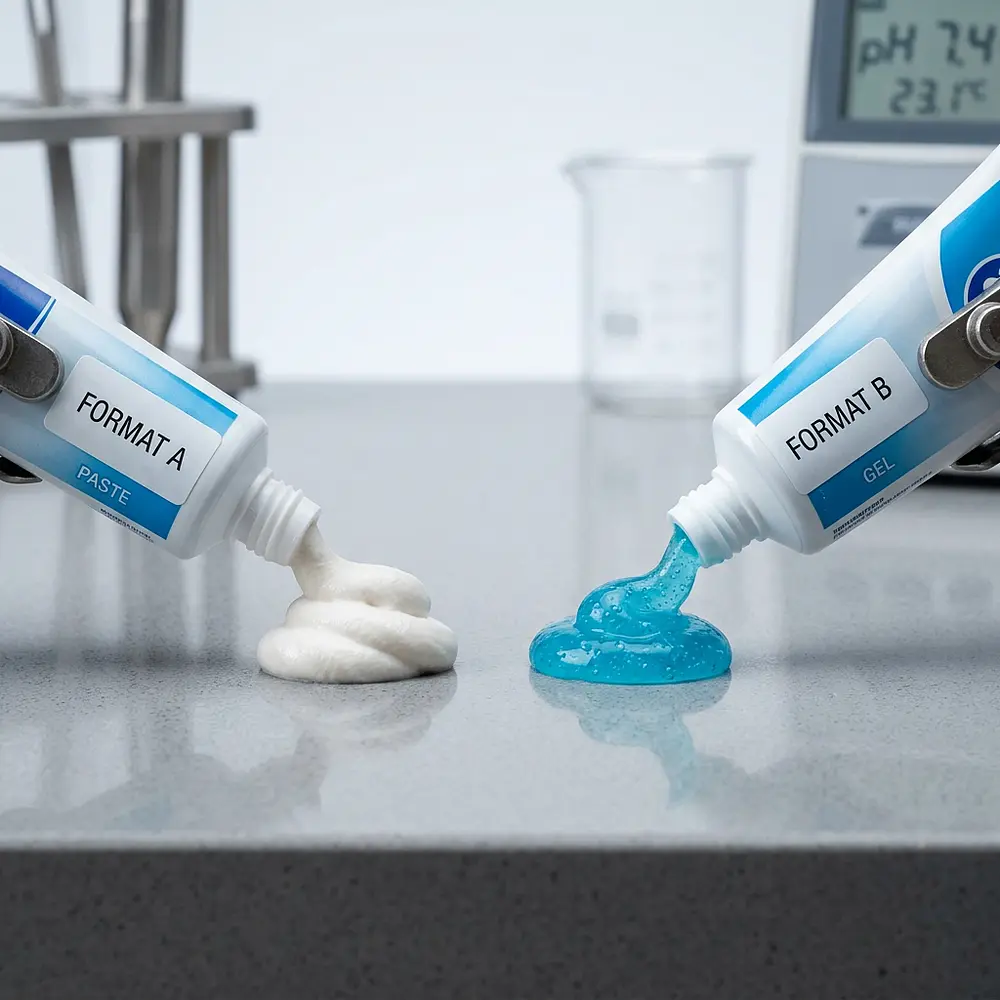
Older-style white pastes, “clean mint” creamy formulas, and some striped products are the formats where it is most commonly encountered. Transparent or semi-transparent gels often leave it out because a strong white opacifier would defeat the visual concept. Some minimalist or “natural” formulas also avoid it, especially when the brand accepts a less bright or less uniform appearance.
Don’t Rely on Old Brand Lists—Check the Current Label
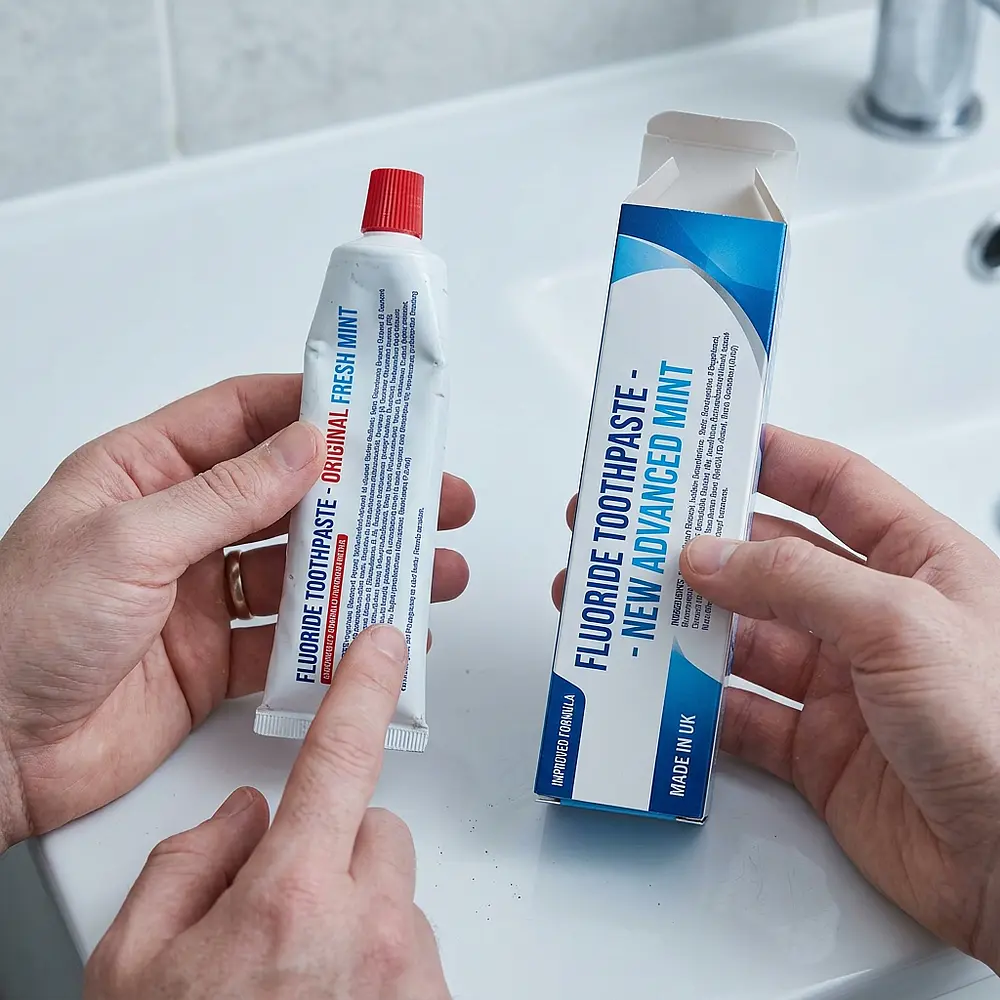
Ingredient accuracy becomes tricky once products are reformulated or sold across borders. The same product name can hide different SKUs, and archived retailer pages may keep outdated lists online for months. For a current answer, trust the packaging in your hand or the manufacturer’s official product page for your region.
Is Titanium Dioxide in Toothpaste Safe?
Is titanium dioxide in toothpaste safe? Current regulatory reviews do not treat toothpaste exposure as equivalent to eating titanium dioxide in food. The relevant SCCS assessment named in the knowledge base is the Final Opinion SCCS/1617/20 of 6 October 2020. In that framework, toothpaste is assessed as an oral cosmetic product with incidental ingestion rather than as a food deliberately consumed in full.
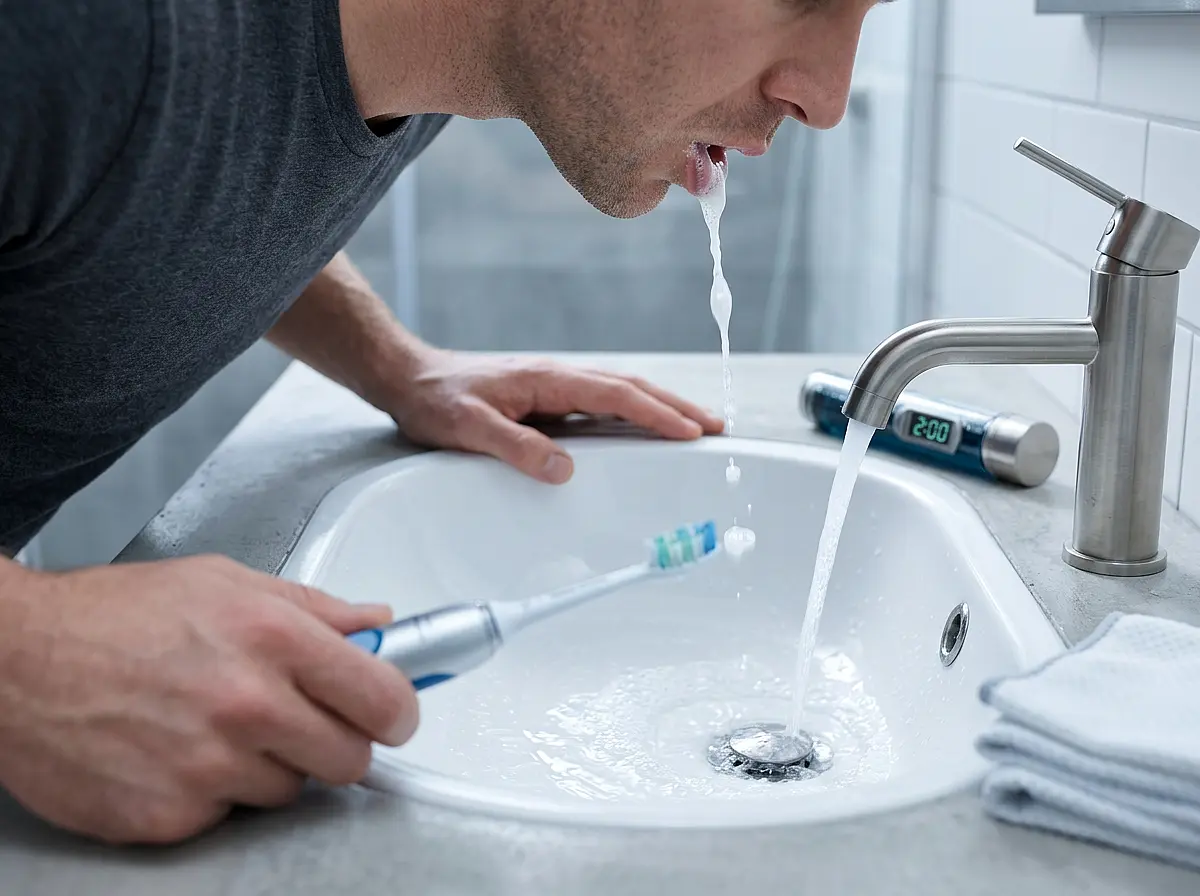
The exposure logic is straightforward. Toothpaste is a rinse-off product: it is placed in the mouth briefly and then expectorated. That means the relevant safety question is not the full amount on the brush, but the small incidental fraction that may actually be swallowed. For adults who spit effectively, the actual intake is therefore low compared with former dietary E171 exposure from products intended to be eaten.
According to the knowledge base, in the SCCS context for other applications involving combined use of different products, a MoS calculation must be carried out and an MoS above 25 must be achieved. The SCCS discussion also makes clear that titanium dioxide can raise different questions in inhalation, aerosol, or powder contexts; toothpaste is relevantly different because it is used as a rinse-off oral paste rather than breathed in as an airborne material.
In the United States, the FDA continues to permit titanium dioxide as a color additive under 21 CFR 73.575, which is why it remains permitted for toothpaste use. In the EU cosmetic framework, titanium dioxide also remains allowed for cosmetic use, and SCCS has specifically reviewed exposure scenarios relevant to oral cosmetic products. If you want the broader context beyond toothpaste, see our page on whether titanium dioxide is safe.
Children deserve separate attention. Young children may swallow more toothpaste because brushing skills are still developing, so the exposure question is more nuanced for them than for adults. That is one reason children’s toothpastes and age-appropriate amounts matter. The American Dental Association advises a smear/rice-sized amount for children under 3 and a pea-sized amount for ages 3 to 6. That recommendation is primarily fluoride-focused, but it also reduces incidental ingestion of non-active ingredients present in the paste.
FDA Approval as a Color Additive (What It Does and Doesn’t Mean)
FDA permission under 21 CFR 73.575 means titanium dioxide remains an authorized color additive in the US within the scope of that regulation. It is a regulatory allowance for specified use, not a claim that route of exposure no longer matters. In practice, the distinction between food intake and incidental toothpaste swallowing is still central to risk assessment.
Children: Higher Swallowing Potential, So Use Age-Appropriate Amounts
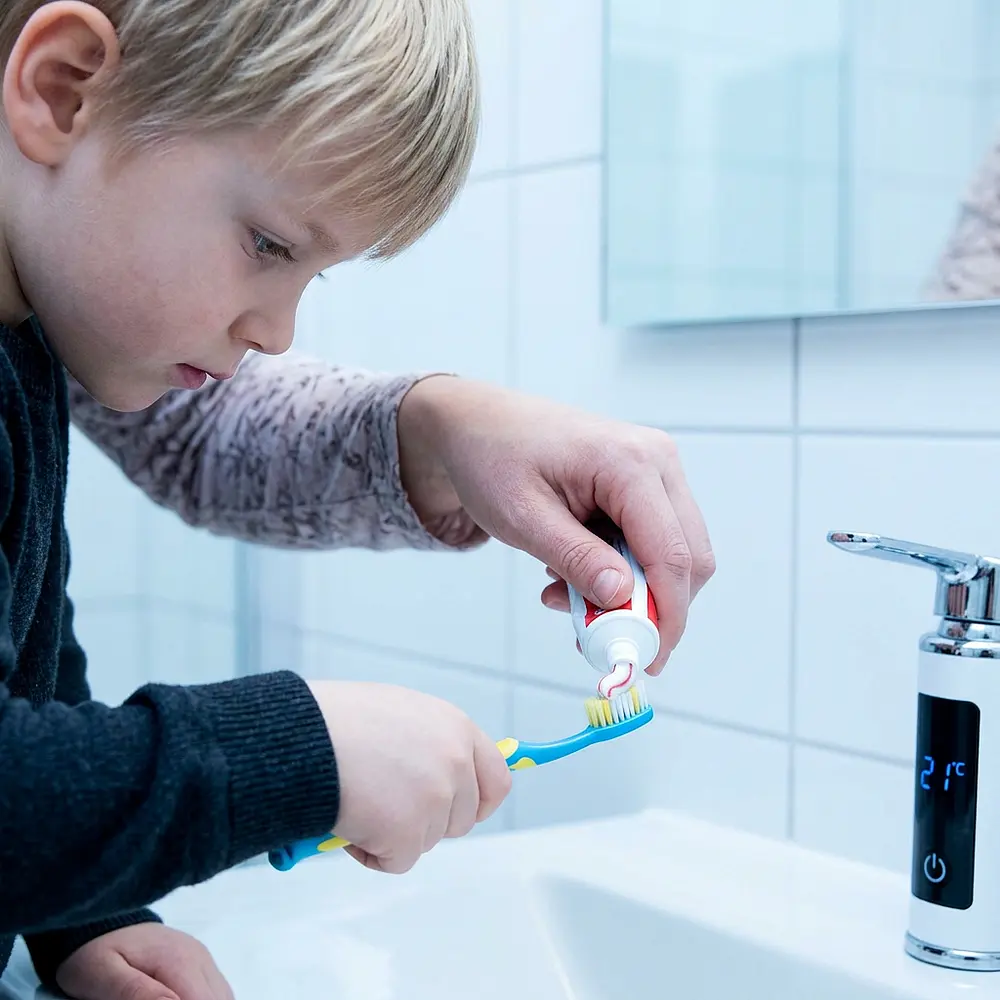
Children are the group for whom swallowing matters most in daily use. A supervised, small amount of toothpaste reduces unnecessary intake while also matching standard pediatric brushing advice. For families comparing formulas, that practical point usually matters more than trying to infer risk from the color of the paste alone.
Rinse-Off Use Means Exposure Is Generally Limited
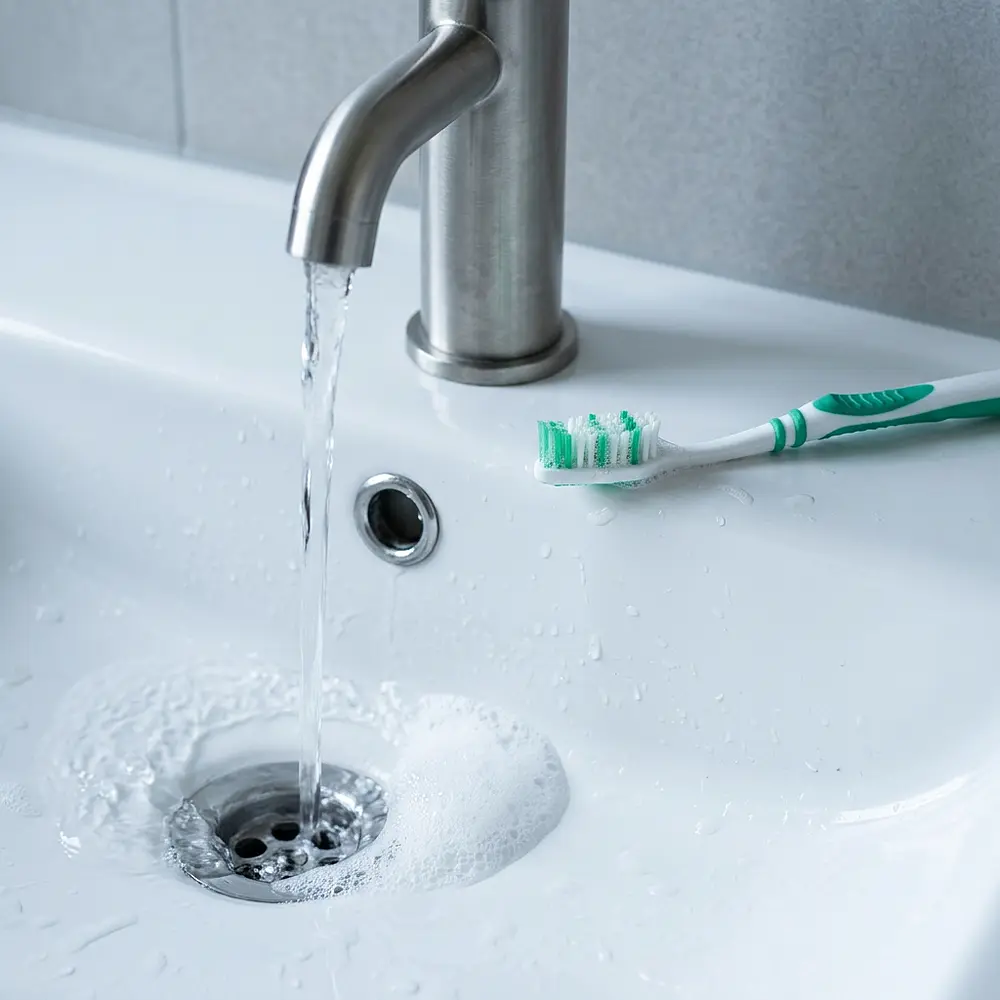
The safety discussion for toothpaste starts with use pattern. A product that is brushed with for a short period and then spat out presents a very different intake profile from a food additive that is intentionally swallowed. Regulators therefore assess oral cosmetics using assumptions tied to incidental ingestion rather than full consumption.
Realistic Intake From Brushing Is Low
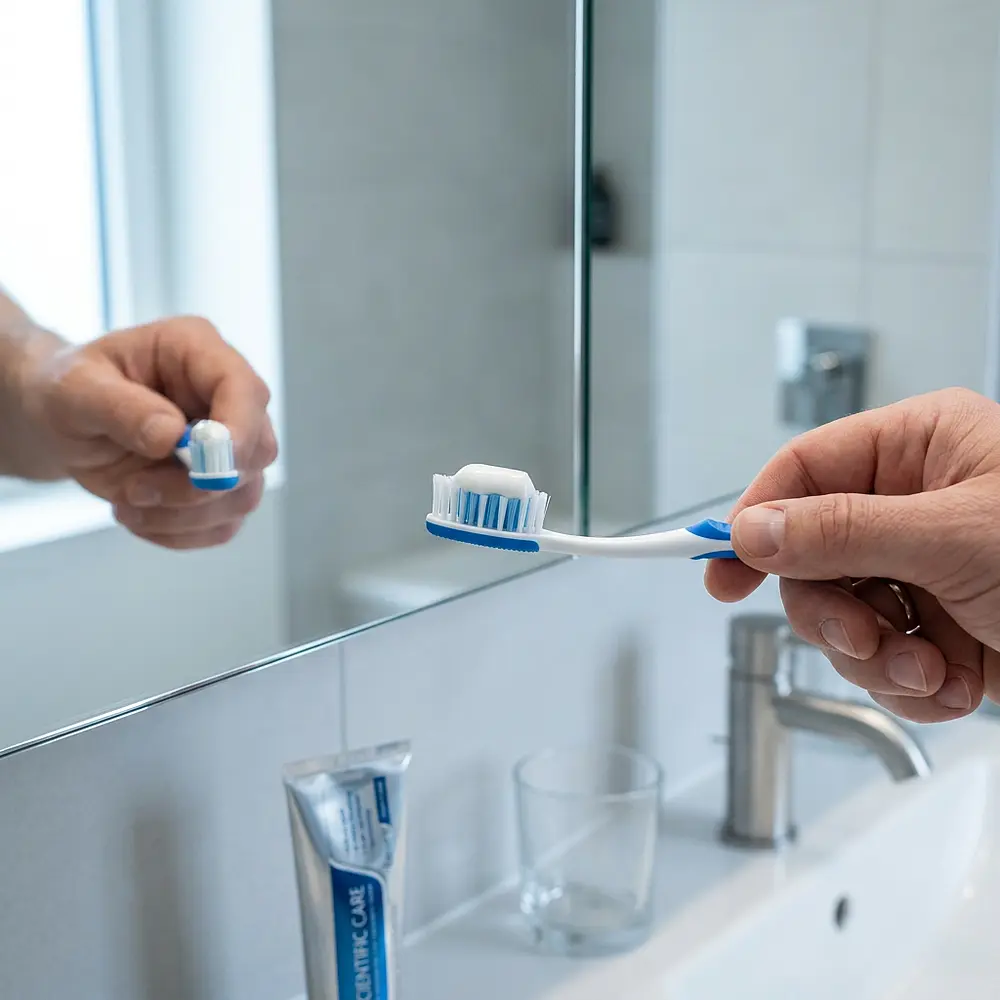
For most adults, the amount that reaches the digestive tract after brushing is only a portion of the toothpaste used. The exact figure depends on brushing habits, product format, and user age, but available regulatory reasoning treats this as a low-exposure scenario rather than a diet-like exposure pattern.
What SCCS (2023) Said for Oral Cosmetic Products
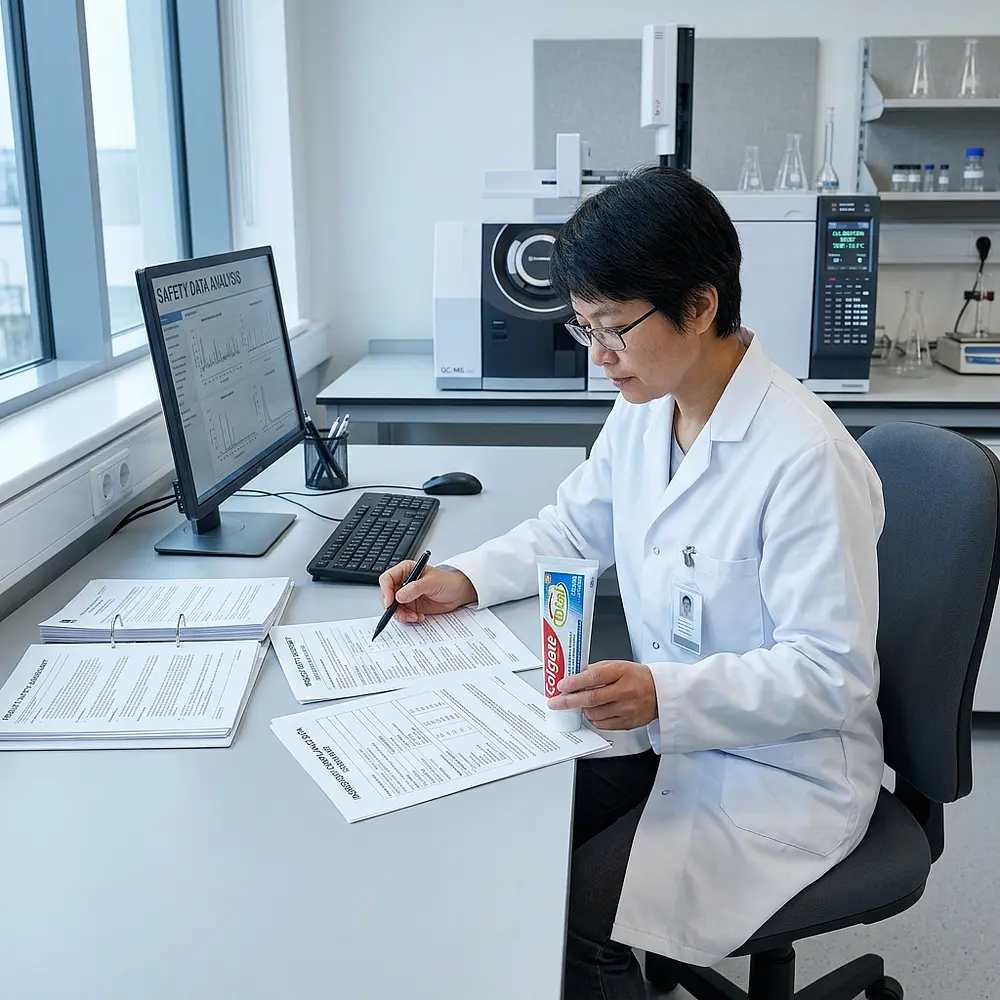
The SCCS opinion is often oversimplified online, so it helps to stay precise about what was actually assessed. The knowledge base identifies the relevant SCCS document as the Final Opinion SCCS/1617/20 of 6 October 2020, and its reasoning does not support a blanket claim that all titanium dioxide uses are the same. Instead, the evaluation depends on the product type, exposure route, and the characteristics of the material under review.
The EU Food Ban and What It Means for Toothpaste
This is the point that causes the most confusion. When people hear that titanium dioxide was “banned in the EU,” they often assume that includes toothpaste. It does not. The ban followed the EFSA 2021 re-evaluation of titanium dioxide as the food additive E171, in which EFSA stated that a concern for genotoxicity could not be ruled out and therefore titanium dioxide could no longer be considered safe as a food additive.
That conclusion applied to food law, not automatically to cosmetics. Toothpaste falls under the EU Cosmetics Regulation, Regulation (EC) No 1223/2009, while food additives are regulated under separate EU food legislation, including Regulation (EC) No 1333/2008. Different legal frameworks reflect different exposure assumptions: food is intentionally consumed, whereas toothpaste is used briefly in the mouth with only incidental swallowing.
For cosmetics, titanium dioxide remains permitted as a colorant in the EU, and the SCCS has assessed oral cosmetic exposure scenarios separately from E171 in food. That does not mean the food decision was irrelevant; it means regulators asked a different safety question. The issue for food was repeated dietary ingestion over time. The issue for toothpaste is much lower oral exposure under a rinse-and-spit use pattern. For the food-specific background, see our page on titanium dioxide in food.
Food vs. Cosmetics: Different Legal Frameworks in the EU
EU law does not treat all uses of the same substance as one category. A food additive and a cosmetic colorant are assessed under different statutes, different committees, and different use assumptions. That is why “banned in food” does not automatically translate to “banned in toothpaste.”
Why Risk Assessments Can Differ
Risk assessment changes when dose, route, frequency, and product design change. EFSA’s concern related to intentional dietary exposure to E171. SCCS looked at cosmetic uses where the product is not meant to be swallowed in full and where safety conclusions are tied to the characteristics of the material assessed.
Toothpaste Without Titanium Dioxide: Alternatives
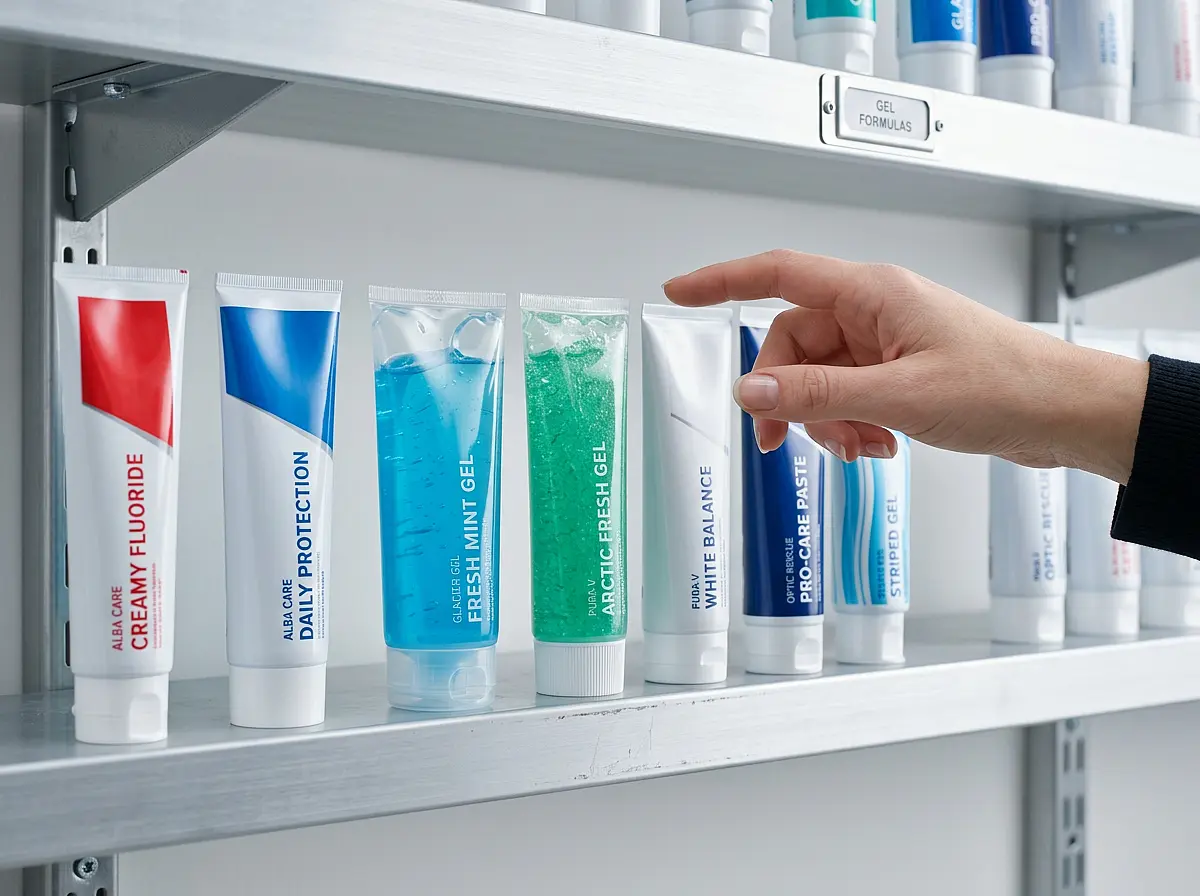
If you would rather buy toothpaste without titanium dioxide, the easiest route is to start with product styles that do not need a bright white pigment. Gel-based, clear, or transparent toothpastes are often the most practical place to look because they typically do not require a white pigment in the first place. From there, check ingredient panels on “minimalist,” “natural,” or explicitly TiO₂-free products, since some brands now market that choice directly.
The trade-off is usually visual, not therapeutic. A toothpaste without titanium dioxide may look less white, slightly beige, more translucent, or less uniform from batch to batch. None of those appearance differences tells you whether the fluoride level, sensitivity claim, or cleaning performance is better or worse. The active oral-care ingredients still matter far more than whether the paste is bright white.
Some manufacturers use other formulation approaches to improve body or opacity, including minerals or polymer systems that create a creamier look without relying on titanium dioxide. Because those alternatives vary widely by brand and market, the practical advice is simple: choose the oral-care benefit you need first, then filter for formulas that omit titanium dioxide if that matches your preference.
That preference is reasonable. Based on current FDA and SCCS positions, however, choosing a toothpaste without titanium dioxide is best understood as a personal precautionary or ingredient-philosophy choice, not a general medical requirement for most adults.
Gel/Translucent Toothpastes Are Often a Simple Route to “TiO₂-Free”
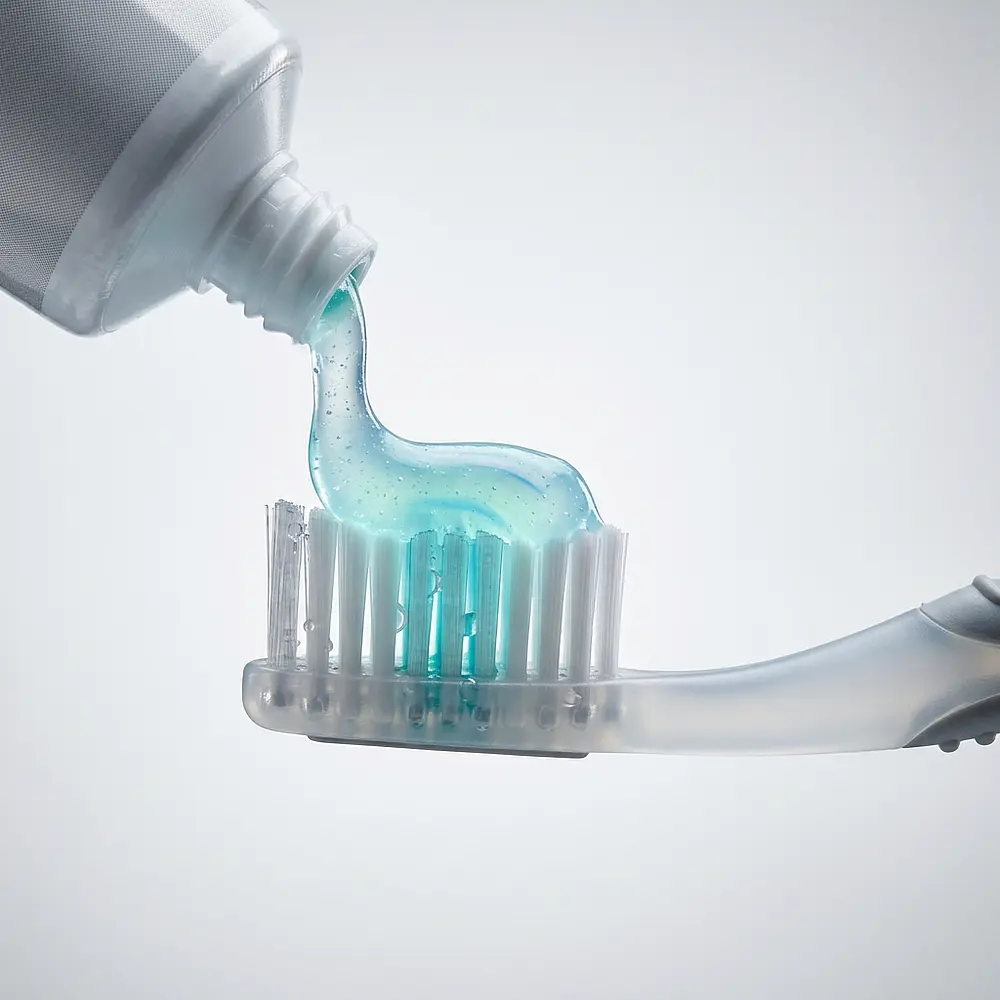
If your goal is speed, start in the gel section. Products designed to be visibly clear or semi-clear usually avoid white opacifiers because opacity would work against the intended look. That does not guarantee a titanium-dioxide-free formula, but it improves the odds before you even read the label.
Look for Different Opacifiers—or Formulas That Accept Less Whiteness
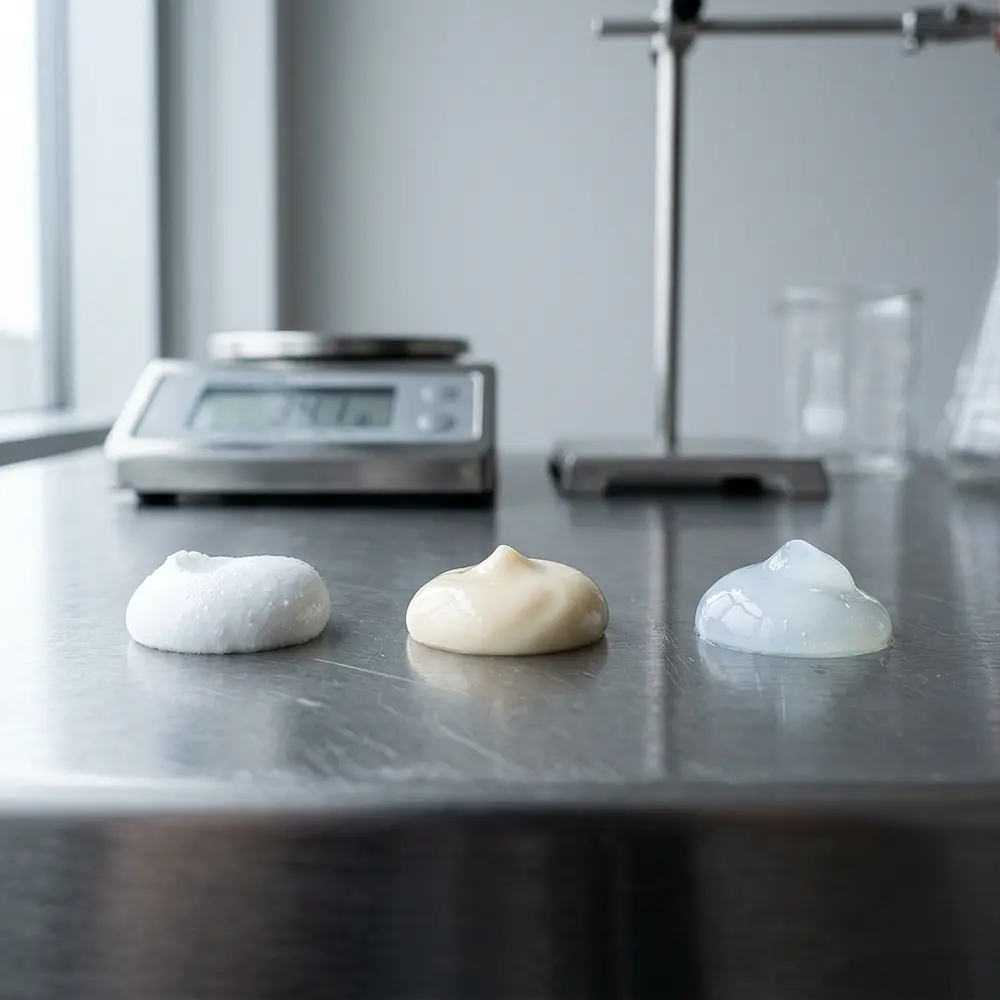
Not every alternative has to be a transparent gel. Some brands simply accept a softer natural color, while others use different opacifying systems to make the paste look creamier. The result may be slightly duller or less brilliant on the brush, but that is mostly an aesthetic compromise rather than a functional one.
A Preference Choice, Not a Medical Necessity for Most Adults
If two toothpastes meet your dental needs equally well, picking the one without titanium dioxide is a valid consumer preference. The current evidence base and current regulations do not require most adults to avoid it categorically, but they do leave room for shoppers who prefer a more precautionary ingredient list.
How to Read Your Toothpaste Label
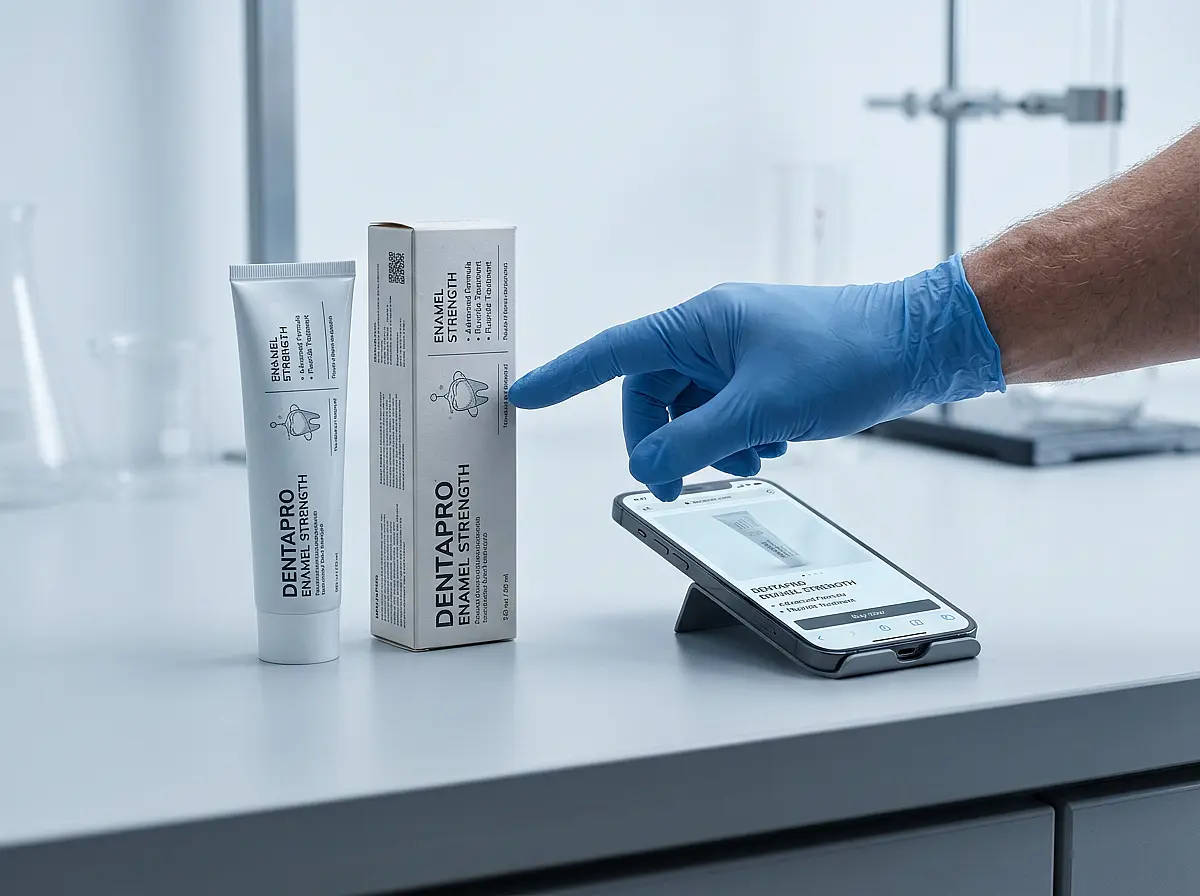
You can usually answer the titanium dioxide question in under half a minute if you check labels in the right order.
- Step 1: Find the ingredient list on the tube or outer carton. If you are shopping online, use the manufacturer’s official product page for your country before trusting a marketplace listing.
- Step 2: Scan the full list for titanium dioxide or CI 77891. If either appears, that formula contains the white pigment.
- Step 3: Separate the active oral-care ingredient from cosmetic support ingredients. Fluoride, potassium nitrate, or similar actives tell you what the product does; titanium dioxide tells you mainly how it is colored.
- Step 4: Re-check the exact variant. “Whitening,” “kids,” “sensitive,” and “gel” versions under the same brand can have different ingredient lists.
This quick scan is more dependable than relying on old ingredient databases or generic brand articles. For related explainers, you can also return to the homepage.
Where to Find the Ingredients List
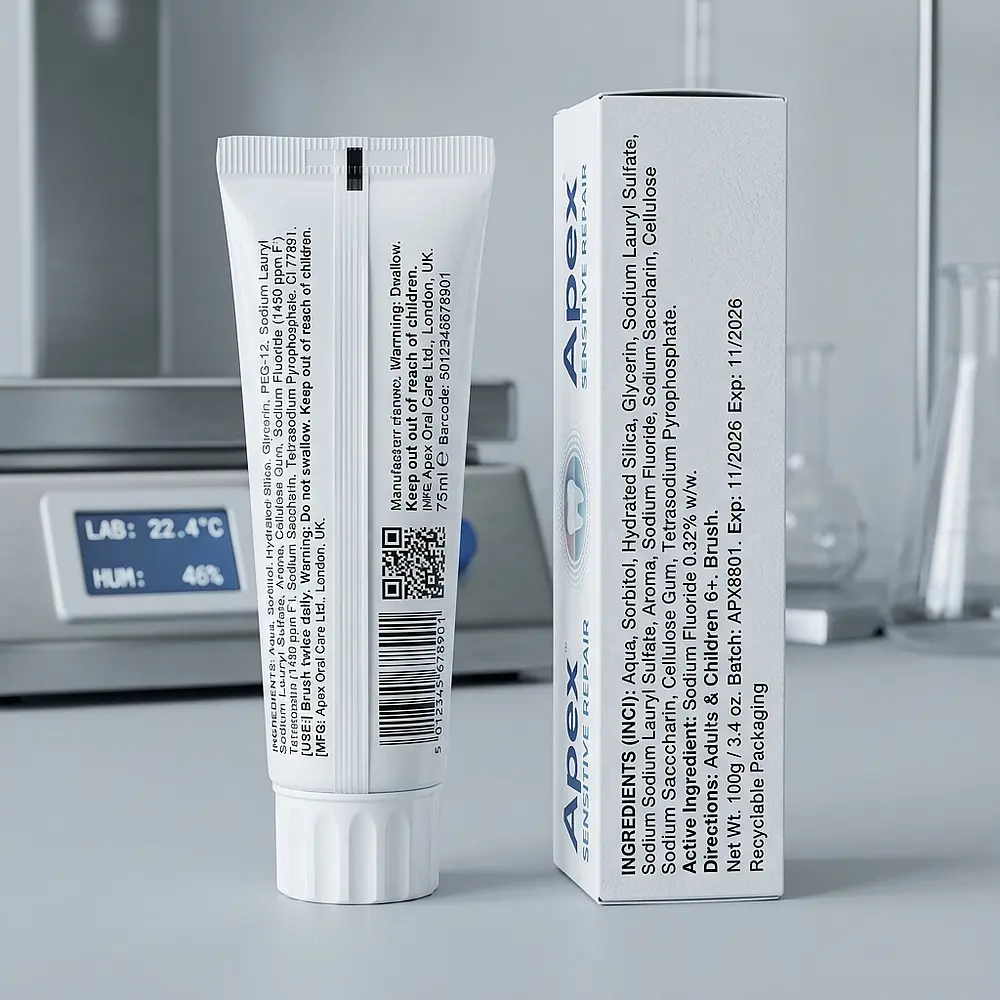
On physical packaging, the ingredients are usually printed on the back or crimped side of the tube, or on the carton if one is included. Online, the safest source is the manufacturer’s own listing for the exact SKU sold in your region.
CI 77891 = Titanium Dioxide
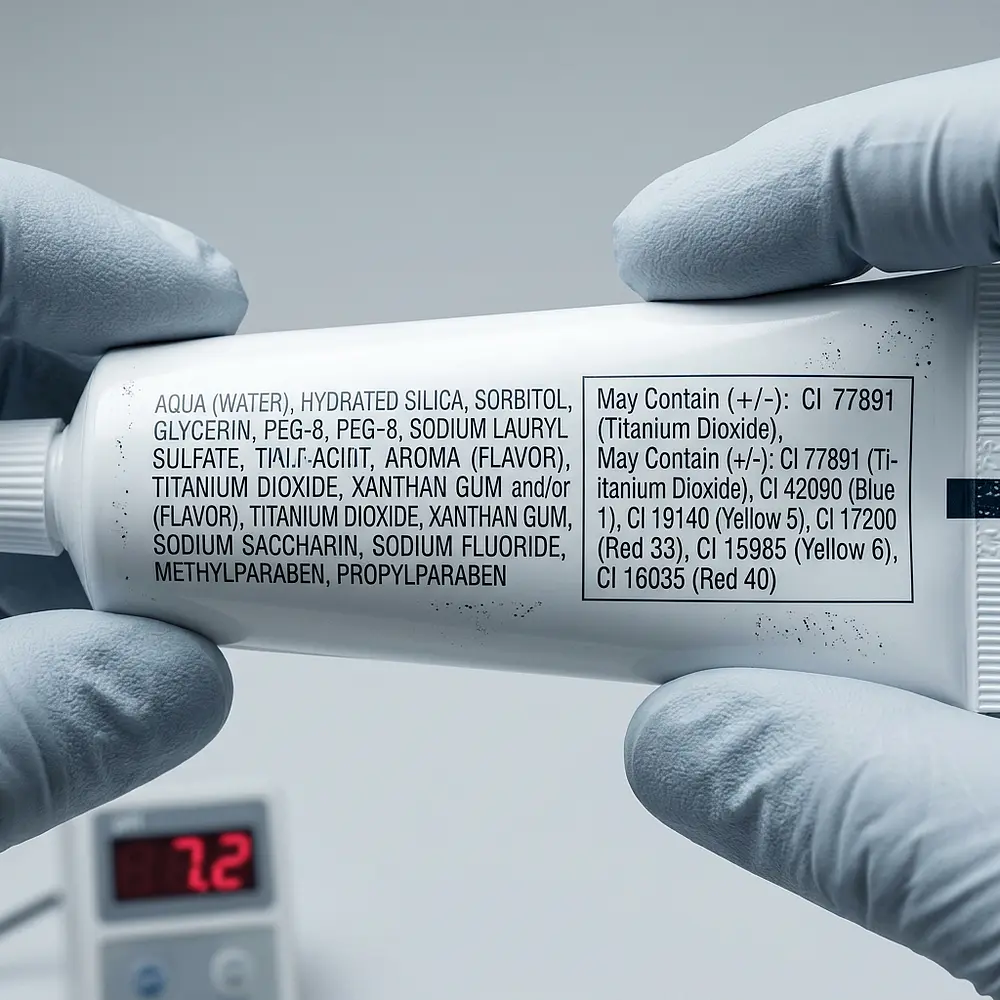
This is the standardized cosmetic color designation used on many labels. If you spot CI 77891, you are looking at titanium dioxide even if the common English name is not written out elsewhere.
The 30-Second Label Check
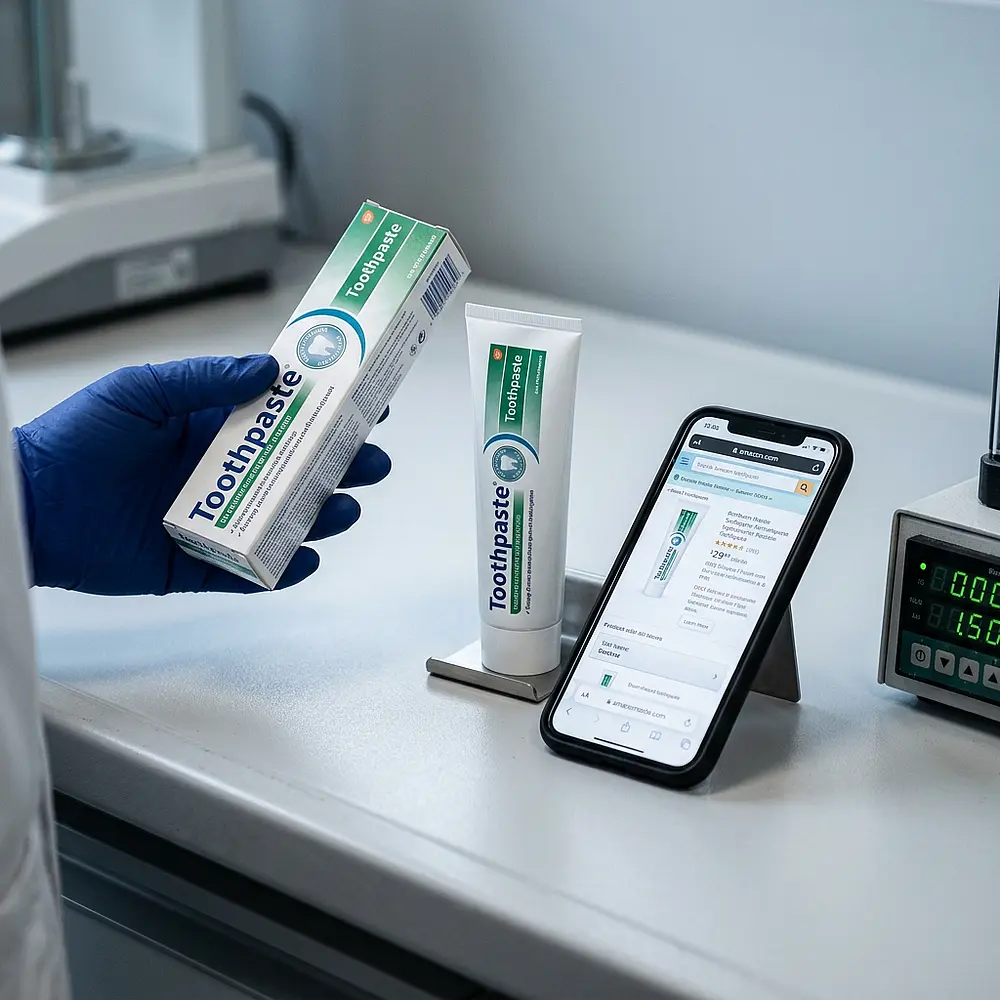
Look at the pack, find the ingredients, search for the pigment name or color code, and confirm that you are reading the exact variant you plan to buy. That four-part check is usually enough to decide whether a toothpaste matches your preference.
FAQ
Which kinds of toothpaste are most likely to be titanium dioxide-free?
Clear or transparent tooth gels are most likely to be titanium-dioxide-free, since they don't need strong white opacity. Toothpaste tablets, tooth powders, and deliberately uncolored or simply formulated products also often get by without this additive. Toothpastes marketed as "natural," "minimalist," or "dye-free" also tend to have a higher chance of being free of it, although that is no guarantee. It is less likely with classic, opaque white cream pastes. Anyone looking specifically for a titanium-dioxide-free product should therefore lean toward transparent items or ones explicitly advertised as such. What ultimately matters is always checking the ingredients list of the specific product.
How can I tell if my toothpaste contains titanium dioxide?
Check the ingredient list on the box or tube. If your toothpaste contains titanium dioxide, it will usually appear as Titanium Dioxide or CI 77891. Some labels list colorants near the end, so scan the full ingredients panel, not just the first few items. On EU-market products, CI 77891 is especially common; on other products, the plain name may be used. If neither term appears, the toothpaste is generally titanium-dioxide-free. A quick shortcut: opaque bright-white pastes are more likely to contain it than clear gels, but the label is the only reliable way to tell.
How much toothpaste do people actually swallow when brushing?
Most people swallow only a small fraction of the toothpaste they use. In adults, the majority is spat out, so actual swallowing during normal brushing is typically low. Children often swallow more, especially younger kids who have not fully learned to spit reliably. That is why a smear for under-3s and a pea-sized amount for older children are commonly recommended. Swallowed amounts also depend on brushing time, foam level, flavor, and how much paste is loaded onto the brush. In short: adults usually ingest very little; children can ingest meaningfully more if too much toothpaste is used.
How much titanium dioxide is typically used in toothpaste?
Titanium dioxide is usually used in toothpaste only in small amounts. It is generally not one of the main components of the formula but rather an additive that provides the desired whiteness and opacity. Exactly how much is used depends on how white, creamy, or opaque a manufacturer wants the product to look, so the proportion can vary by brand and product type. Very clear gels or deliberately reduced formulas often manage entirely without this substance. Consumers usually cannot read the exact amount directly from the ingredients list.
Does titanium dioxide in toothpaste whiten teeth or only the paste itself?
Usually, titanium dioxide in toothpaste makes the paste look bright white and more opaque — it does not chemically bleach or intrinsically whiten teeth. Any “whiter teeth” effect from a toothpaste with titanium dioxide is typically visual and temporary: a little pigment can coat the tooth surface briefly, making teeth appear cleaner or brighter right after brushing. Real tooth whitening usually comes from stain removal by abrasives or from peroxide-based whitening ingredients, not from titanium dioxide itself. So in most toothpastes, titanium dioxide is mainly there to whiten the paste’s appearance, with only a possible short-lived cosmetic brightening effect on teeth.
Why is titanium dioxide added to toothpaste?
Titanium dioxide is added to toothpaste mainly for visual reasons. As a white pigment and opacifier, it gives the paste a bright, opaque, and even appearance that many people associate with cleanliness. It can also help make colored stripes or particles in the product more visible and make the overall look more stable. For actual dental care, however, it is not the decisive ingredient: it does not replace cavity protection or the mechanical cleaning action of other ingredients. In short, the additive mainly serves the product's appearance rather than providing its own central care benefit during brushing.
What is titanium dioxide in toothpaste?
Titanium dioxide in toothpaste is a white mineral pigment used in many toothpastes. Chemically, it is titanium dioxide (TiO₂), and on ingredient lists it may also appear under the color index name CI 77891. In toothpaste, it is mainly a colorant: it makes the paste look bright white and more opaque rather than clear or dull. It is not the active cavity-fighting ingredient and is different from fluoride or cleaning abrasives. In short, titanium dioxide is mostly there for the toothpaste’s appearance and consistency, not because your teeth need it.
How can I switch to toothpaste without titanium dioxide without giving up cavity protection?
The easiest way to make the switch is to look for a toothpaste that is titanium-dioxide-free and still matches your care needs, rather than searching for something "as natural as possible." Make sure the new product offers the same properties that matter to you, such as cavity protection, relief for sensitive teeth, or a pleasant everyday feel. If you are choosing for a child or are prone to cavities, protective performance should take priority over color and appearance. It also helps to test the toothpaste for a few days first: taste, foaming, and mouthfeel all play a role in whether it gets used consistently. Consistent use is what matters most for the benefit.
What ingredients are used instead of titanium dioxide in toothpaste without titanium dioxide?
Toothpastes without titanium dioxide usually rely on other substances to create appearance and consistency. Minerals or powder-based ingredients such as calcium carbonate, hydrated silica, dicalcium phosphate, kaolin, or mica often take on this role. Some formulations also use starches or thickeners to keep the product creamy and easy to spread. Other manufacturers avoid the issue entirely by using clear gel bases and not aiming for a white opacifying effect at all. Importantly, these substitute ingredients are mainly meant to influence appearance or texture. Whether a toothpaste is effective against cavities does not depend on whether it contains titanium dioxide or not.
Is choosing toothpaste without titanium dioxide a medical necessity or a personal preference?
In most cases, choosing a toothpaste without titanium dioxide is more of a personal preference than a medical necessity. For dental health, other properties are usually more important, such as whether the toothpaste is well tolerated and suits individual needs. Some people want to avoid unnecessary additives or prefer as simple a formula as possible; for them, switching makes sense even without medical pressure. The issue can become more practical for young children, since they swallow toothpaste more often. As a general rule, though: those who want to avoid titanium dioxide usually do so out of caution, personal conviction, or comfort — not because it is generally required.
Are there any concerns about nano titanium dioxide in oral care products?
With nano titanium dioxide, any potential concerns mainly relate to the fact that very small particles can behave differently than larger pigment particles. In oral care, what matters most is the product form the substance is used in. In regular toothpaste, it is bound into a moist paste and not present as free-floating dust. Nano-related questions become more practically relevant for products that are sprayed or used as a powder. Anyone who wants to be especially cautious can choose toothpaste without titanium dioxide instead. This can be particularly relevant for families, since children more often swallow some toothpaste while brushing.
Is titanium dioxide still allowed in toothpaste in the EU?
Yes. Titanium dioxide may still be used in toothpaste in the EU. For consumers, the key point is that the substance can therefore still appear on the ingredient lists of European toothpastes, even though many people associate it mainly with the food discussion. At the same time, some manufacturers have already reformulated their products and now offer alternatives without this ingredient. If you are unsure, check the ingredients list directly on the tube or box. There, the substance usually appears under its own name or as CI 77891. In short: it remains permitted in EU toothpaste, but depending on the brand it now appears less often or not at all.
Does the EU ban on titanium dioxide in food also apply to toothpaste?
No. The EU ban on titanium dioxide as a food additive does not automatically apply to toothpaste. The background is that the two product categories are legally treated separately: for food, the issue concerned a substance that is regularly ingested, whereas toothpaste is intended for use in the mouth followed by spitting out. Because of this, the decision made for food cannot simply be applied one-to-one to toothpaste. For consumers, this means a substance can be excluded from food while still being present in toothpaste. Anyone who wants to avoid it can specifically look for products without titanium dioxide, or without CI 77891.
What is the difference between titanium dioxide in toothpaste and titanium dioxide in food?
Titanium dioxide in toothpaste and in food is the same chemical substance, but the key difference is how it is used and regulated. In food, it was used as additive E171 and is meant to be eaten, so regulators assess repeated dietary ingestion. In the EU, E171 is no longer approved in food. In toothpaste, titanium dioxide is used in a cosmetic product, mainly as a white pigment, and toothpaste is intended to be spat out rather than swallowed. So the legal framework and exposure pattern are different: food rules focus on ingestion as part of the diet, while toothpaste is assessed under cosmetic rules and typical brushing use.
Are gel toothpastes less likely to contain titanium dioxide?
Yes, often. Gel toothpastes are usually less dependent on a strongly white, opaque appearance than classic cream pastes. Because of this, many clear or brightly colored gels do not need titanium dioxide as a white pigment. Overall, this makes them a more likely choice for people who want to avoid this substance. However, "gel" is not a reliable exclusion criterion: cloudy, pearlescent, or partially opaque gels can still contain it, and mixed forms between gel and paste are also possible. The better rule of thumb is therefore: the more transparent the product looks, the more likely it is to be free of titanium dioxide — but the label is the only reliable way to know for sure.