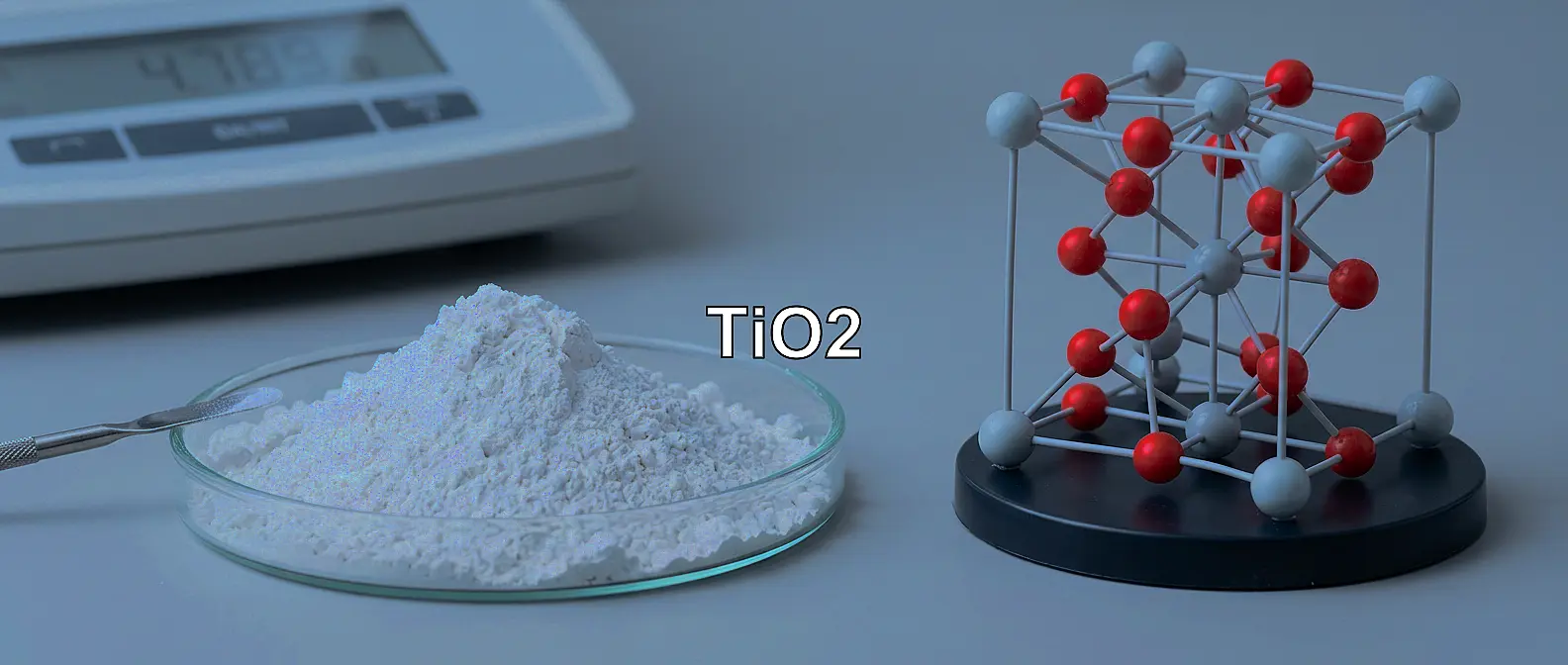
TiO₂ — Titanium Dioxide: Chemical Data, Structure & Industrial Reference
TiO₂, commonly called titanium dioxide and formally designated titanium(IV) oxide, is one of the most important inorganic oxides in modern industry. This page serves as the chemical reference for TiO2: formula, physical constants, crystal structure, manufacturing, grades, applications, safety status, and market context. For a broader non-technical introduction, see the main titanium dioxide overview.
Table of Contents
- Quick Reference: TiO₂ at a Glance
- Chemical Structure & Crystal Forms
- Physical & Optical Properties
- TiO₂ Synthesis & Manufacturing
- Industrial Applications of TiO₂
- TiO₂ Grades: Pigment Grade vs. Nanoscale
- Safety & Regulatory Classification
- TiO₂ in the Market
- Frequently Asked Questions
- Sources and Data Citations
- FAQ
Quick Reference: TiO₂ at a Glance
This quick-reference block summarizes the core identifiers and constants most often needed for technical, academic, and formulation work. Values are cited to named primary sources or standard reference works at the point of use.
Names, Formula and Chemical Identifiers
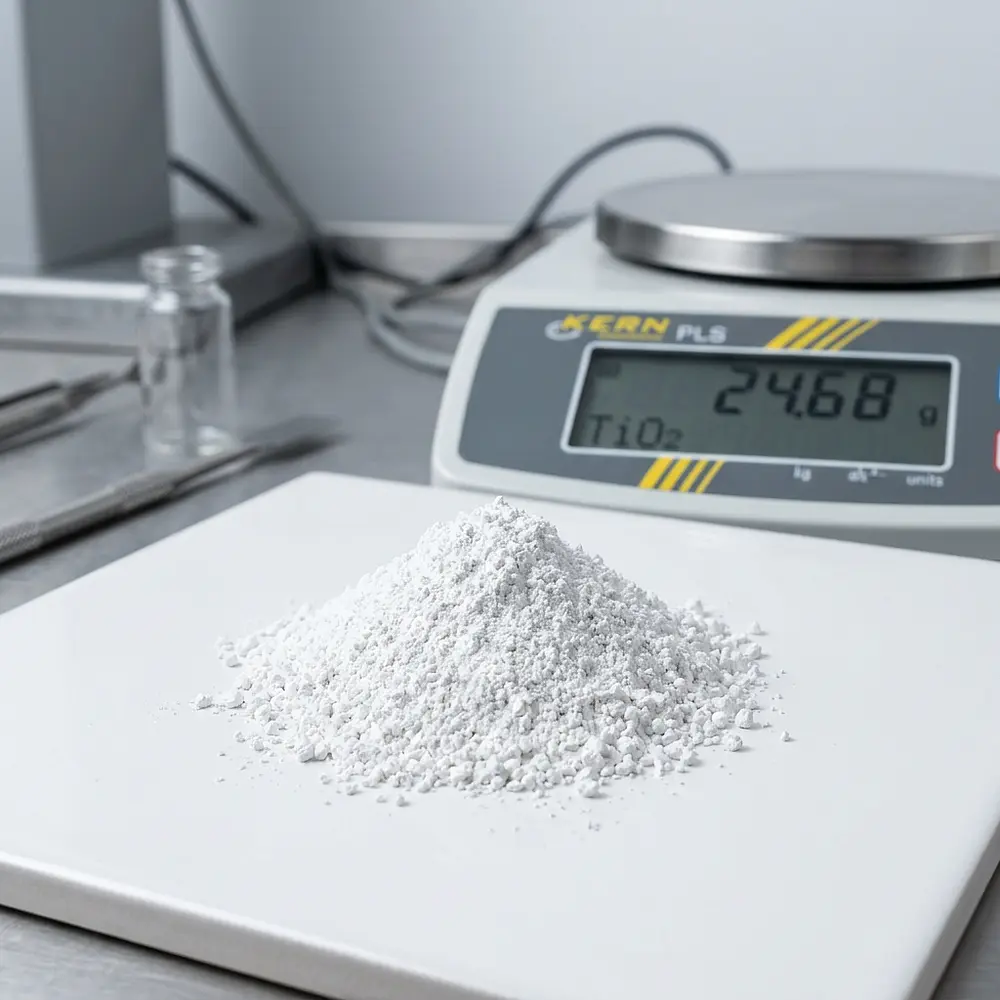
TiO2 and TiO₂ are equivalent notations for the same oxide: one titanium atom and two oxygen atoms. In technical English, the most useful formal name is titanium(IV) oxide, because it makes the +4 oxidation state explicit; in commercial and scientific practice, however, titanium dioxide remains the standard term. Database records may also list alternative naming forms, but for most students, formulators, and industry users, TiO₂, titanium dioxide, and titanium(IV) oxide refer to the same substance.
Quick Reference Data Table
Property: IUPAC/formal name
Value: Titanium(IV) oxide; titanium dioxide
Property: Common name
Value: Titanium dioxide; titanium white
Property: Chemical formula
Value: TiO₂ (titanium dioxide formula; titanium dioxide chemical formula)
Property: CAS number
Value: 13463-67-7; additional phase-specific or trade-context CAS references may also appear in databases, including 1317-80-2 and 1317-70-0
Property: Molecular weight
Value: 79.87 g/mol [PubChem CID 26042]
Property: Appearance
Value: White crystalline powder or fine particulate solid [PubChem CID 26042]
Property: Odor
Value: Odorless [PubChem CID 26042]
Property: Melting point
Value: 1,843 °C [NIST Chemistry WebBook, Titanium dioxide]
Property: Boiling point
Value: 2,972 °C [NIST Chemistry WebBook, Titanium dioxide]
Property: Density
Value: Rutile 4.23 g/cm³; anatase 3.78 g/cm³ [CRC Handbook of Chemistry and Physics; also consistent with crystallographic literature]
Property: Refractive index
Value: Rutile 2.609; anatase 2.561 [CRC Handbook of Chemistry and Physics, sodium D line]
Property: Solubility in water
Value: Practically insoluble [PubChem CID 26042]
Property: Crystal forms
Value: Rutile, anatase, brookite
Property: Band gap
Value: Rutile about 3.0 eV; anatase about 3.2 eV [Diebold, Surface Science Reports 48 (2003); Tang et al., Solid State Communications 87 (1993); values vary slightly with method, temperature, and defect state]
When specifying TiO₂ commercially, formula alone is not enough. Phase, particle size, and surface treatment usually matter more than the base stoichiometry.
Chemical Structure & Crystal Forms
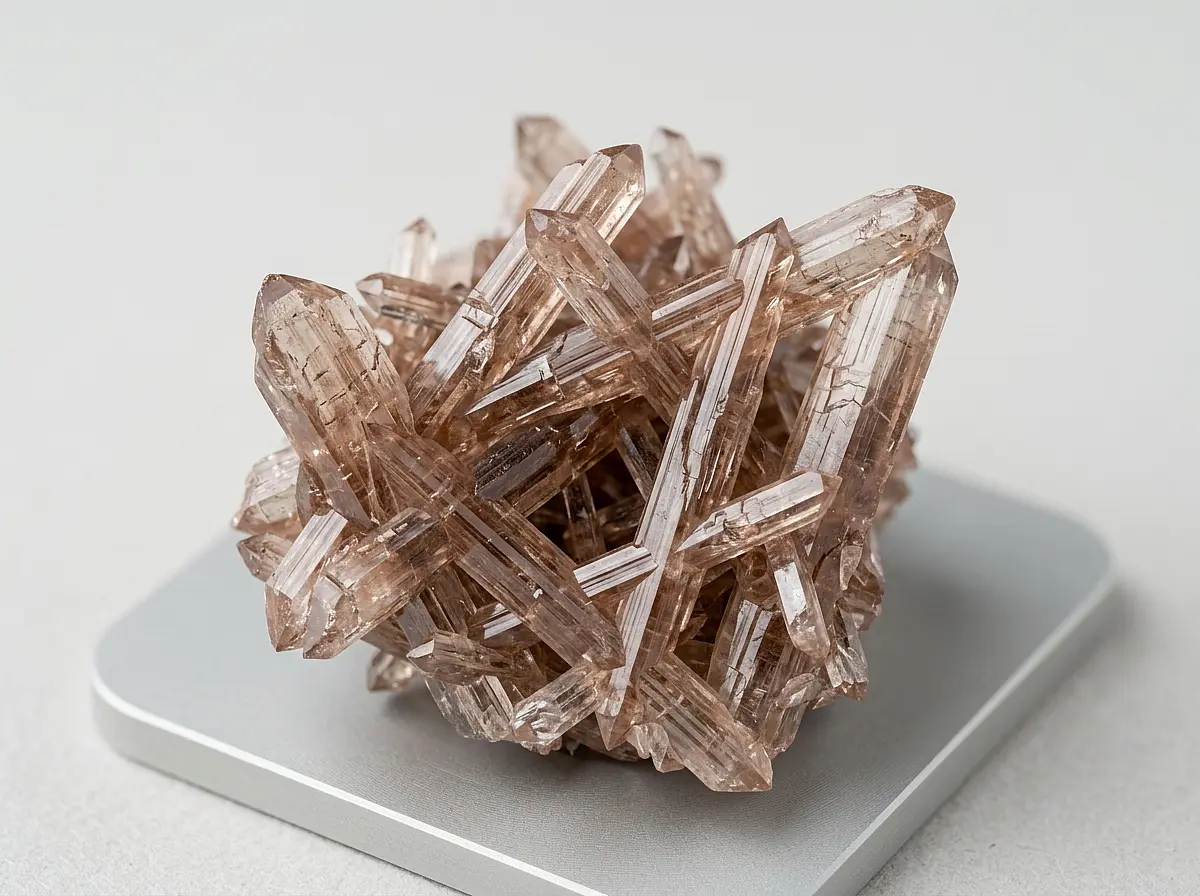
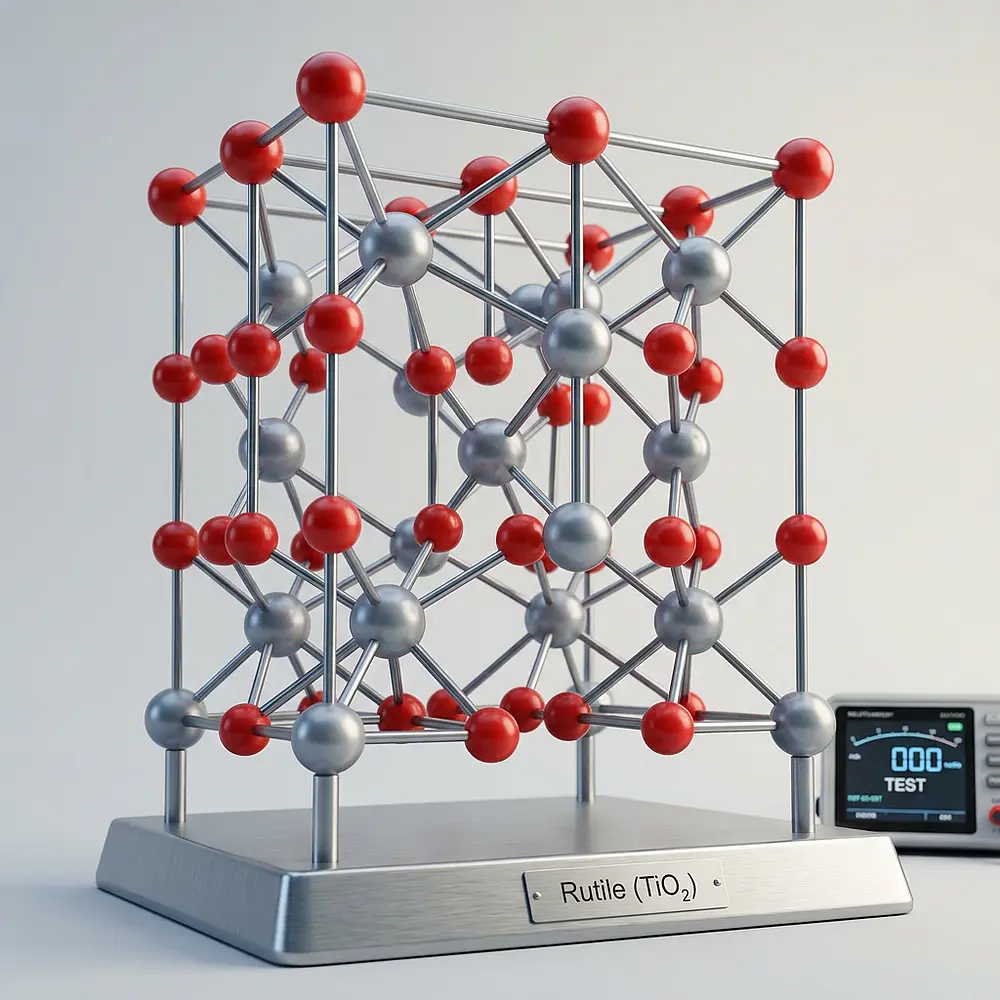
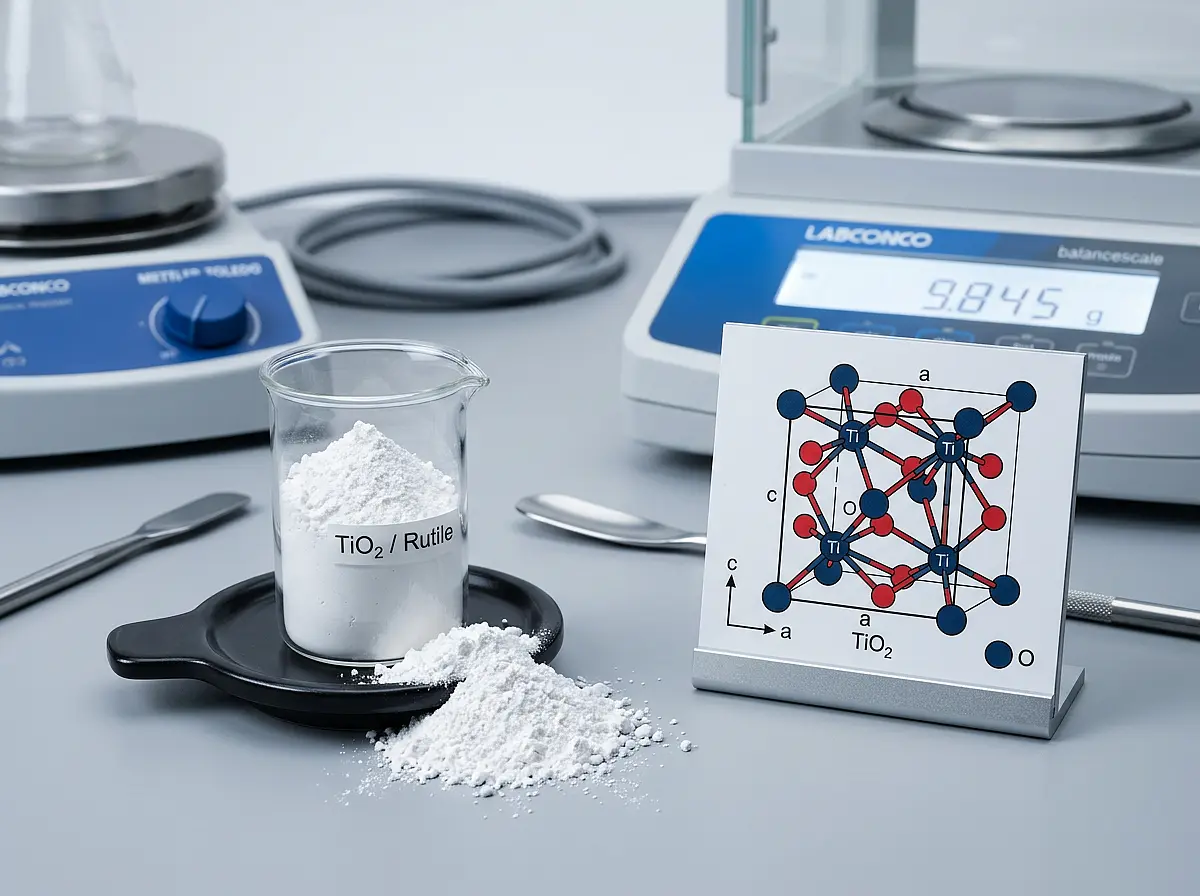
TiO₂ is a polymorphic metal oxide. Its three naturally occurring crystal forms are rutile, anatase, and brookite, all built from TiO₆ octahedra but arranged differently in the lattice.
Rutile is the thermodynamically stable polymorph under ambient conditions and the dominant phase for durable pigment applications. Its compact tetragonal structure gives it the highest density and the highest refractive index of the three forms, which is why industrial white pigments overwhelmingly favor rutile.
Anatase is metastable relative to rutile and usually transforms to rutile on heating, with the transition temperature depending on impurities, particle size, and processing history. It is widely preferred for photocatalysis because its electronic structure and typical high-surface-area morphologies support strong UV-driven reactivity.
Brookite is the rare third polymorph. It is of mineralogical and research interest but has limited direct commercial importance because phase-pure brookite is harder to produce at scale and offers fewer established industrial advantages than rutile or anatase.
For a full phase-by-phase comparison, see rutile vs. anatase.
Rutile: The Thermodynamically Stable Polymorph
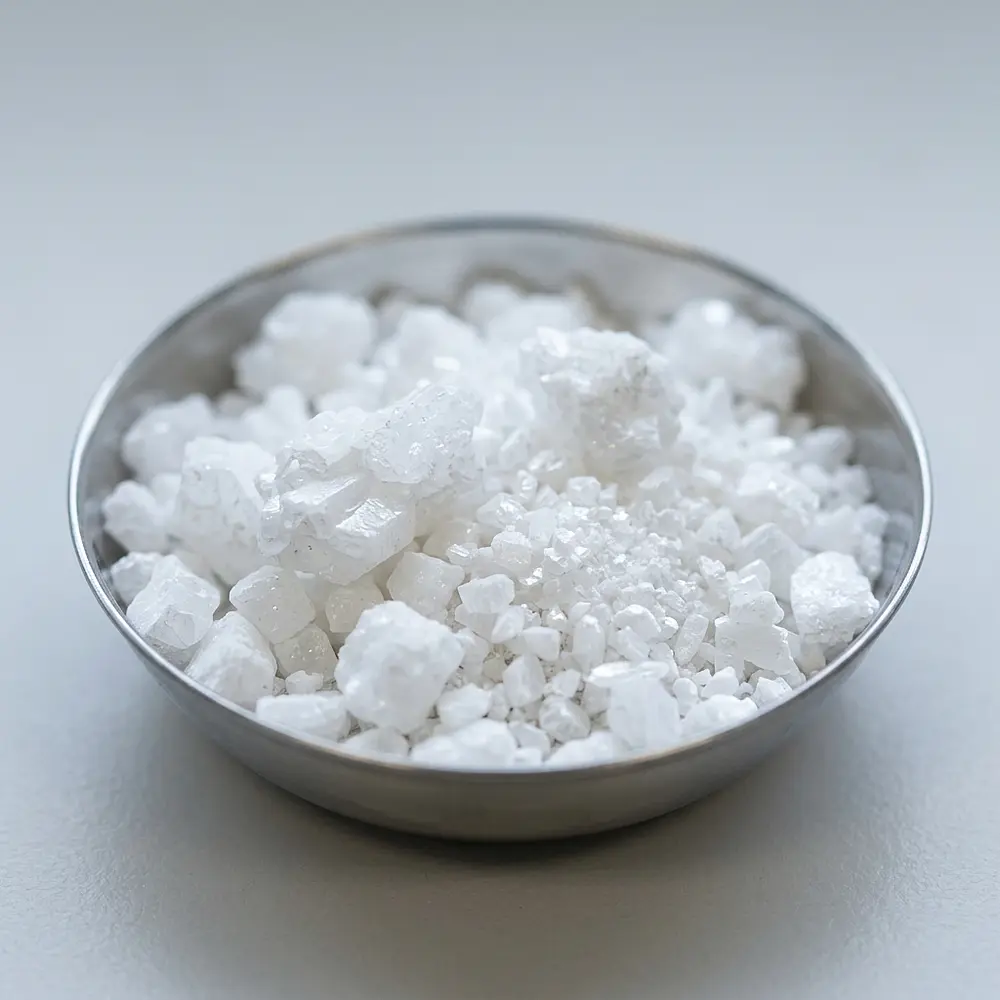
Rutile TiO2 is the equilibrium phase of titanium dioxide and the form most closely associated with mainstream pigment production. It combines structural stability, high density, and a refractive index high enough to deliver outstanding opacity in paints, plastics, and coated materials. Because rutile is less photocatalytically aggressive than anatase and can be surface-treated effectively, it is the preferred choice wherever long outdoor service life matters.
Atomic Structure of TiO₂
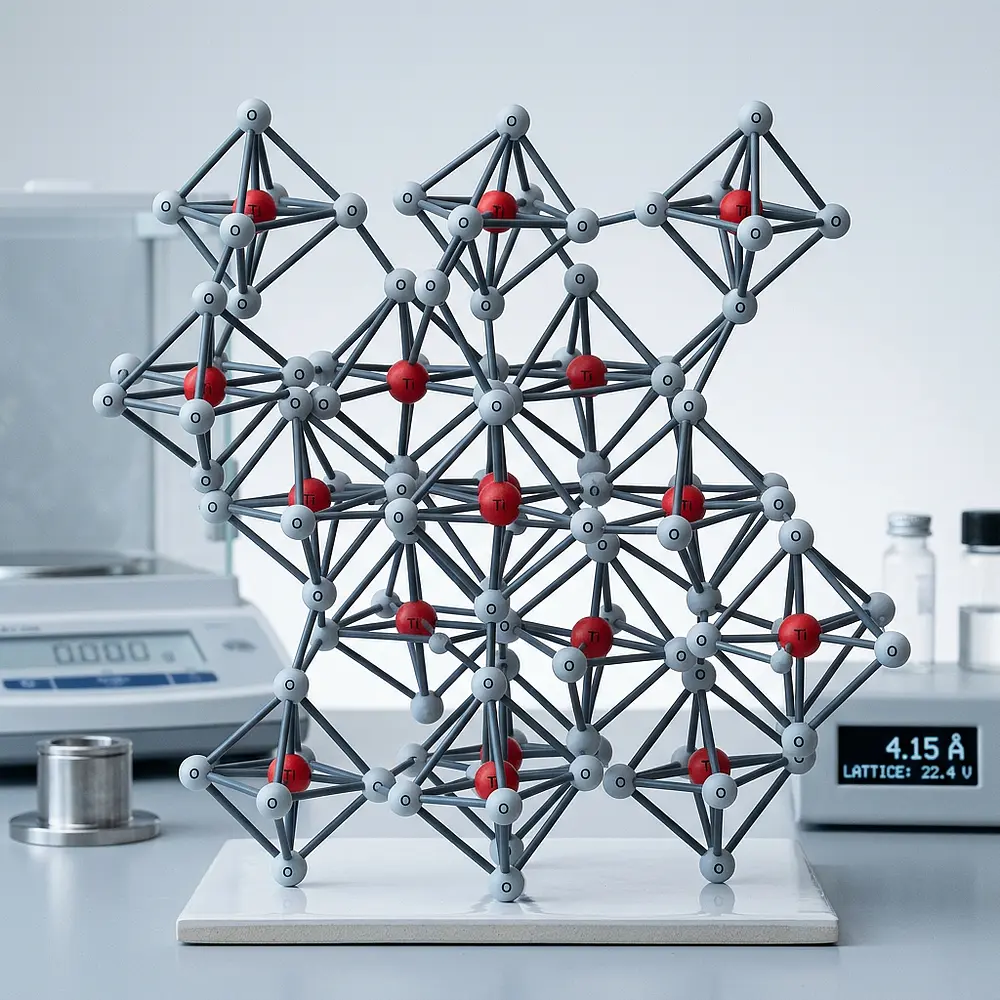
At the atomic level, each titanium atom is coordinated by six oxygen atoms, forming a distorted TiO₆ octahedron. These octahedra share edges and corners in different patterns depending on polymorph, and those differences change the packing density, symmetry, and electronic behavior of the solid. The result is that identical composition does not imply identical performance: lattice architecture directly affects optical constants, thermal stability, and photocatalytic response.
Rutile vs. Anatase: Practical Differences

In practice, the rutile-versus-anatase choice comes down to use case. Rutile is selected when the goal is whiteness, opacity, weatherability, and formulation durability; anatase is selected when the goal is UV-activated surface chemistry. That difference is large enough that phase should always be specified explicitly rather than inferred from the TiO₂ formula alone.
Brookite: The Rare Third Form
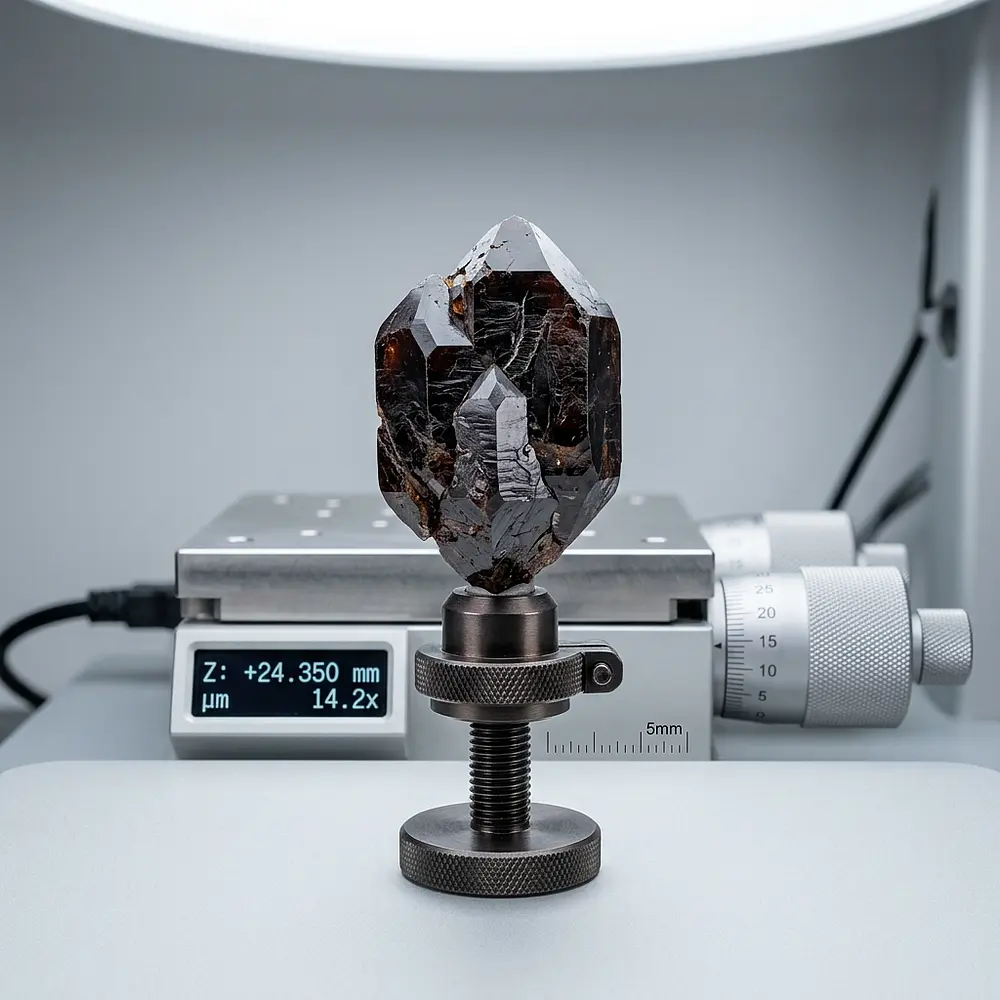
Brookite TiO2 crystallizes in an orthorhombic structure and appears far less often in industrial supply chains than the other two polymorphs. It is mainly discussed in mineralogy and advanced materials research, especially in work on mixed-phase systems and facet-dependent reactivity. For most commercial specifications, brookite is not the target phase.
Anatase: The Preferred Form for Photocatalysis
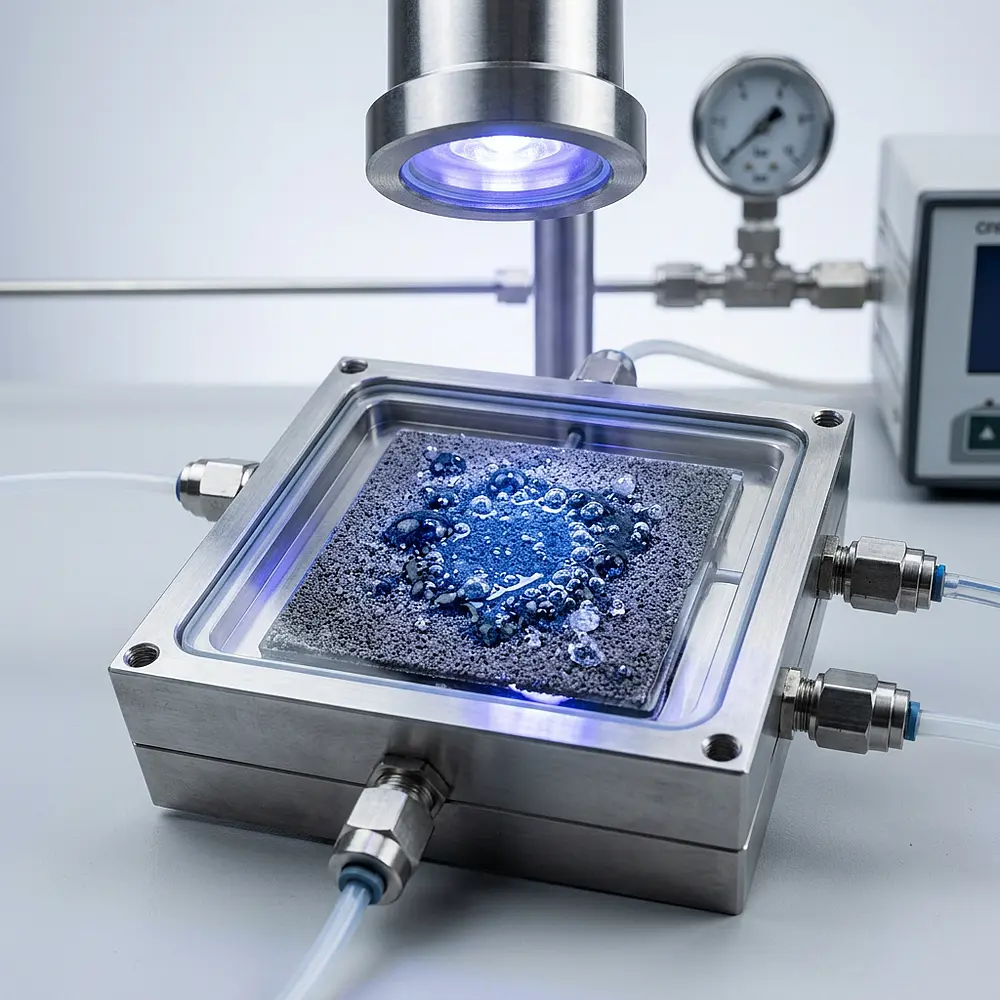
Anatase TiO2 is the most widely used phase in photocatalysis and functional surface chemistry. Under UV irradiation, it generates electron-hole pairs that can drive oxidation reactions at the surface, enabling pollutant degradation, self-cleaning effects, and antimicrobial action. Its industrial role is therefore very different from that of rutile: less about hiding power, more about controlled reactivity.
Physical & Optical Properties
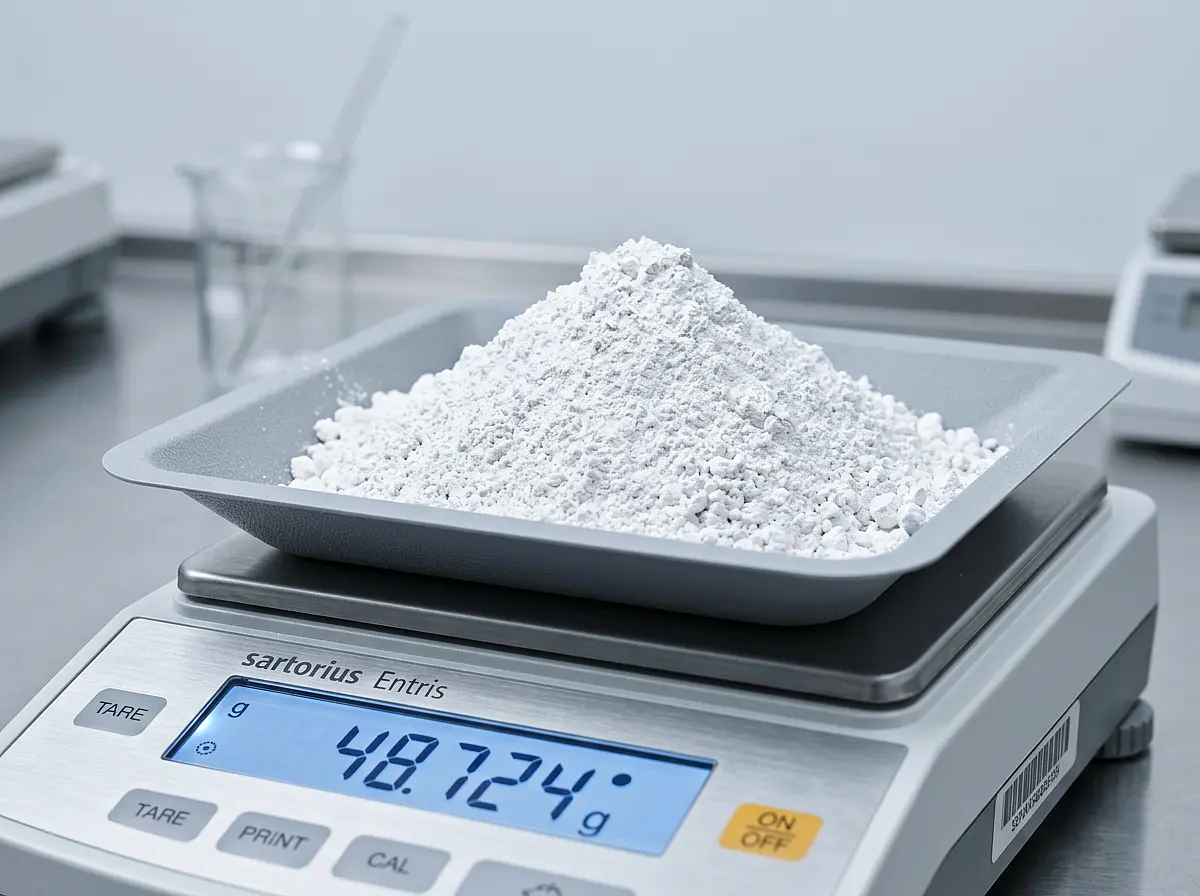
The industrial value of TiO₂ comes from a rare property combination: very high refractive index, strong visible-light scattering, broad UV attenuation, chemical stability, and wide-band-gap semiconductor behavior. Together, these characteristics explain why the same material is used as a white pigment, a UV filter, and a photocatalyst.
Its optical importance starts with refractive index. Rutile at about 2.609 and anatase at about 2.561 exceed the values of other common white minerals by a wide margin, which gives TiO₂ exceptional hiding power when particle size is engineered for light scattering. This is the physical basis of its brightness and opacity in coatings, plastics, and paper.
TiO₂ also absorbs UV radiation because its band gap lies in the near-UV range. That same absorption event can either be beneficial or problematic depending on application: beneficial in sunscreens, self-cleaning coatings, and photocatalysis; problematic in organic binders unless reactivity is suppressed through phase choice and surface treatment.
Refractive Index and Pigment Performance
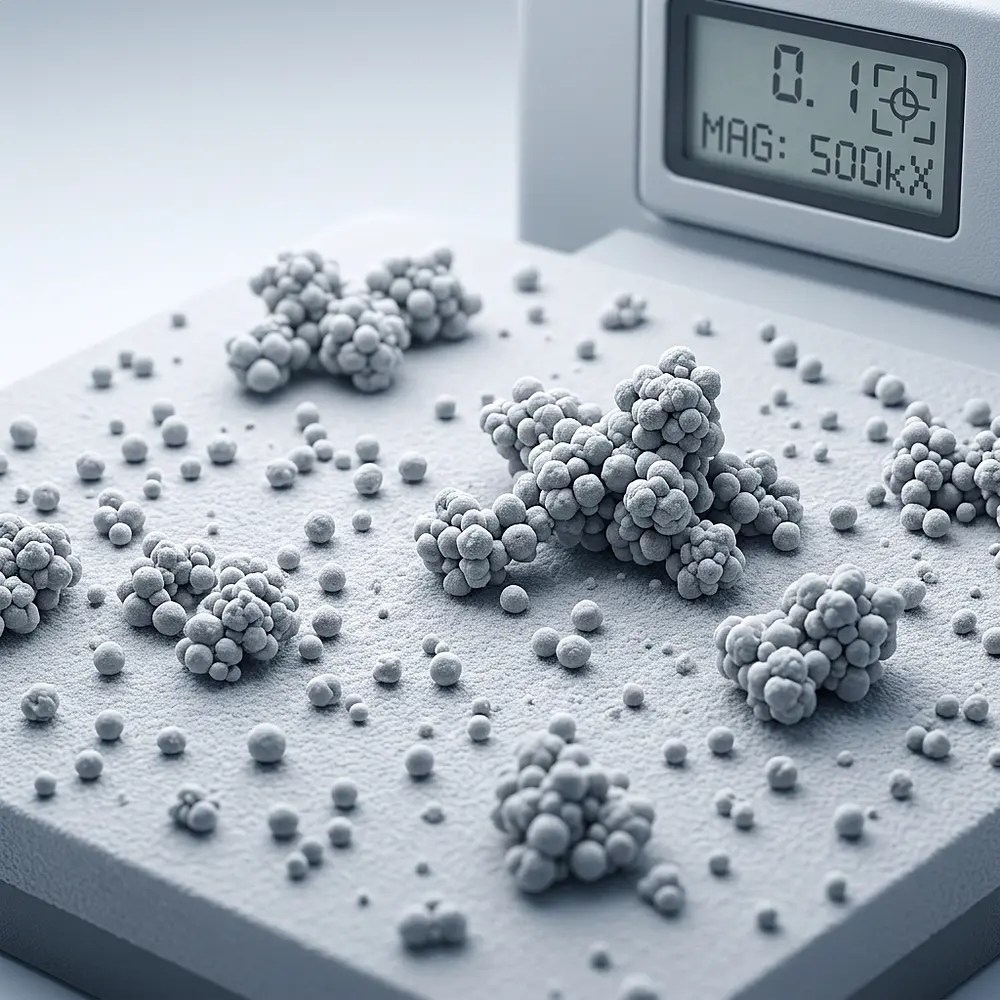
For pigment-grade use, particle engineering is as important as chemistry. Commercial rutile grades are commonly designed around a primary particle size near the Mie-scattering optimum for visible wavelengths, typically around 200–300 nm, so that the intrinsic refractive index is translated into maximum practical opacity. Poor dispersion or heavy agglomeration reduces this effect by making particles behave optically as larger, less efficient scattering units.
Why TiO₂ Delivers Exceptional Whiteness and Opacity
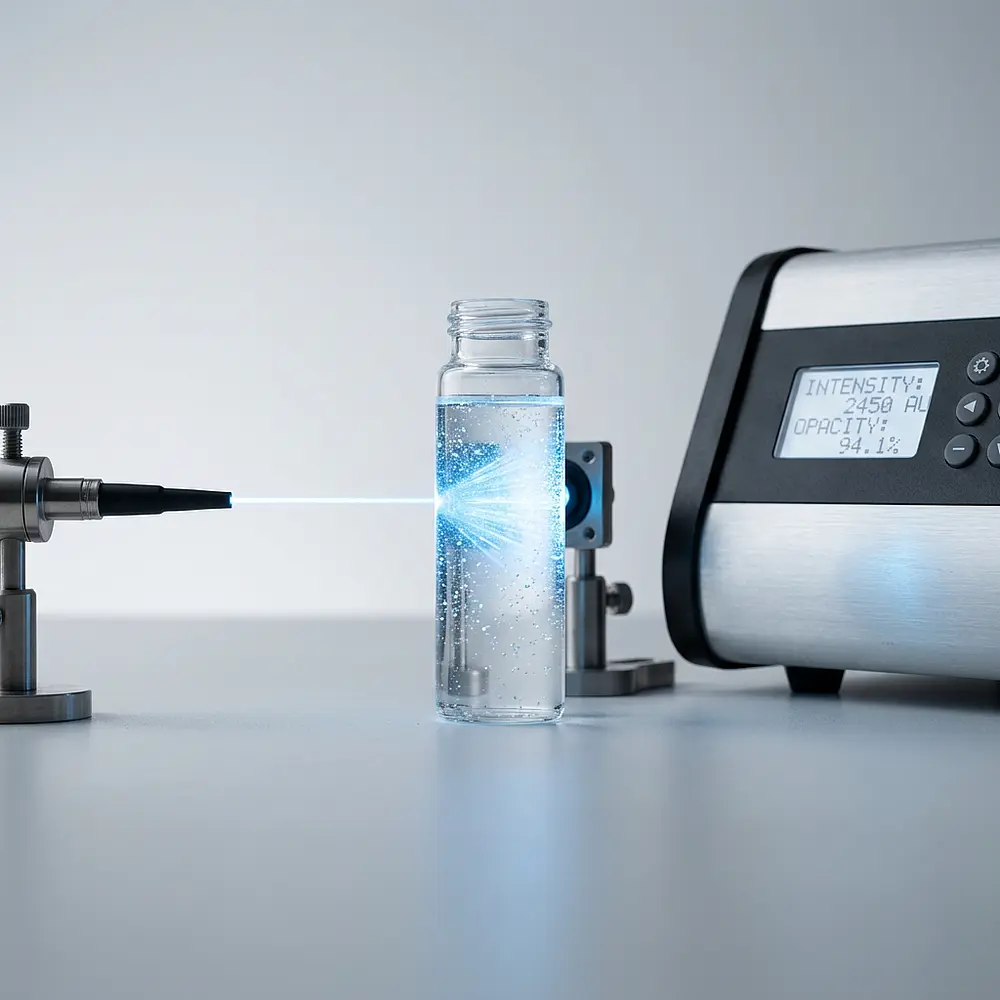
The whiteness of TiO₂ is not a colorant effect in the dye sense; it is a light-scattering effect. When particles are formulated in the correct size range, the strong refractive-index contrast between TiO₂ and the surrounding medium causes highly efficient scattering of visible light, producing brightness, hiding power, and tinting strength that lower-index white pigments cannot match economically.
Photocatalytic Activity
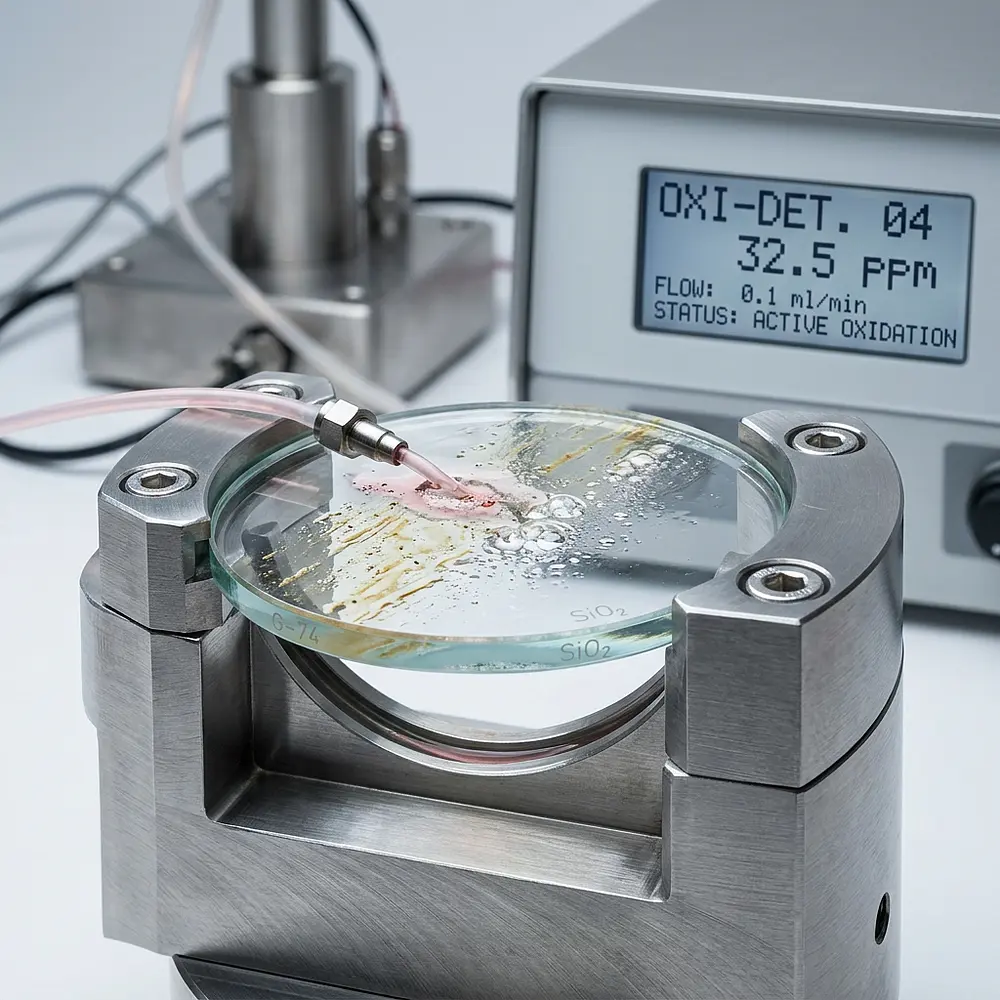
When UV photons excite TiO₂ across its band gap, electrons and holes are created and can migrate to the surface. There they participate in redox reactions that generate reactive species capable of oxidizing organic contaminants. This mechanism underpins self-cleaning glass, air and water purification systems, antimicrobial coatings, and a large body of semiconductor surface-science research. More detail on the crystal forms behind this effect is available in rutile vs anatase.
Band Gap and Semiconductor Properties
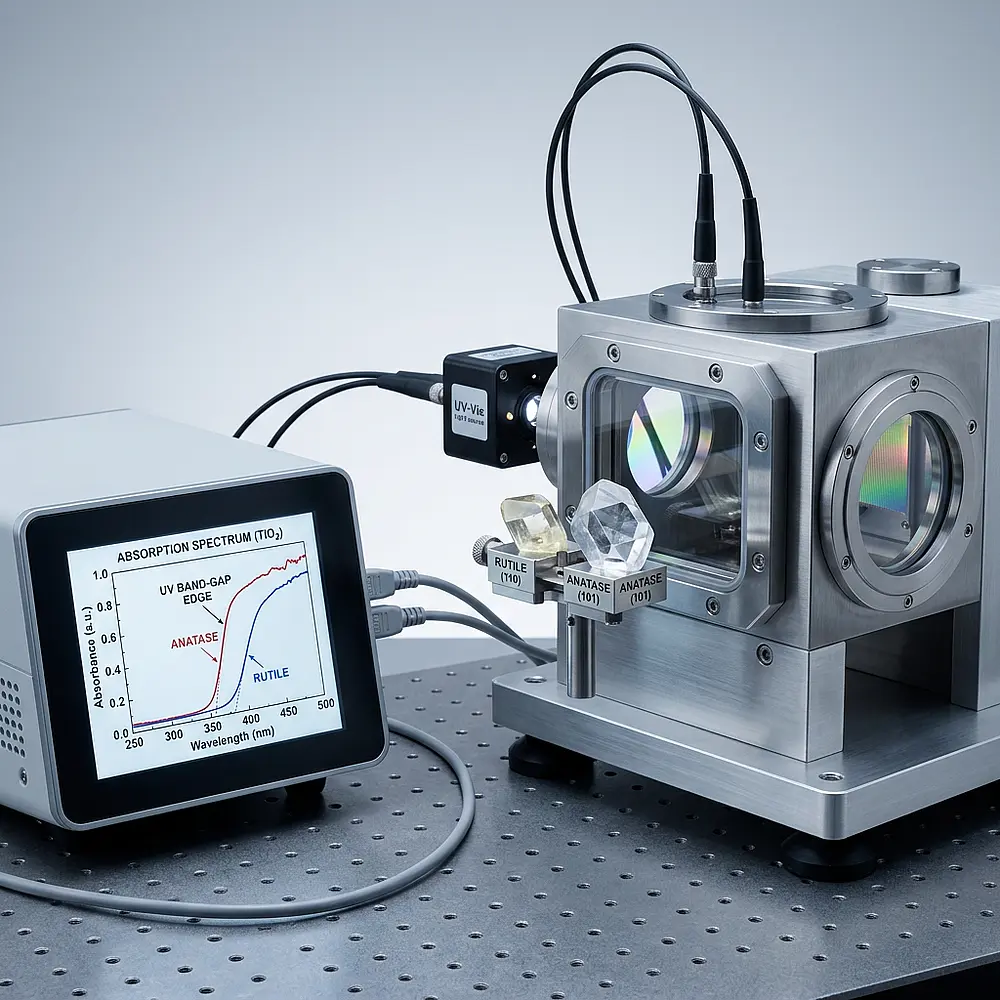
As a wide-band-gap semiconductor, TiO₂ has an absorption edge in the UV rather than the visible region. Reported literature values are typically around 3.0 eV for rutile and 3.2 eV for anatase, but these should be treated as method-dependent reference values rather than immutable single numbers because measurement technique, crystallinity, dopants, and temperature can shift the apparent band gap slightly.
UV Blocking Behavior
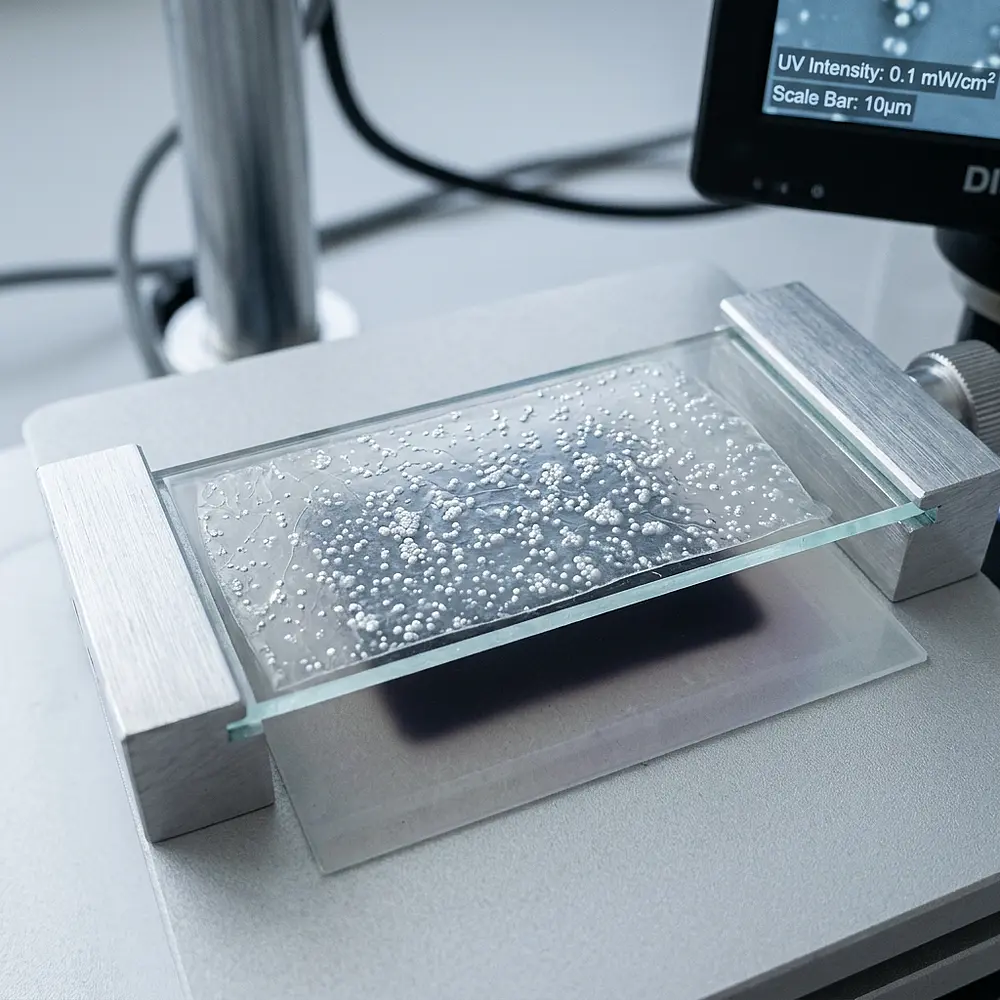
TiO₂ attenuates ultraviolet radiation by absorption and scattering. In sunscreens and weather-resistant coatings, this helps protect skin, polymers, and binders from UV exposure; in functional surfaces, the same absorbed energy can initiate useful photochemistry. Because uncontrolled photoactivity can damage nearby organic materials, many commercial rutile grades are coated with silica, alumina, or related surface layers to reduce surface reactions while preserving UV-screening performance.
TiO₂ Synthesis & Manufacturing
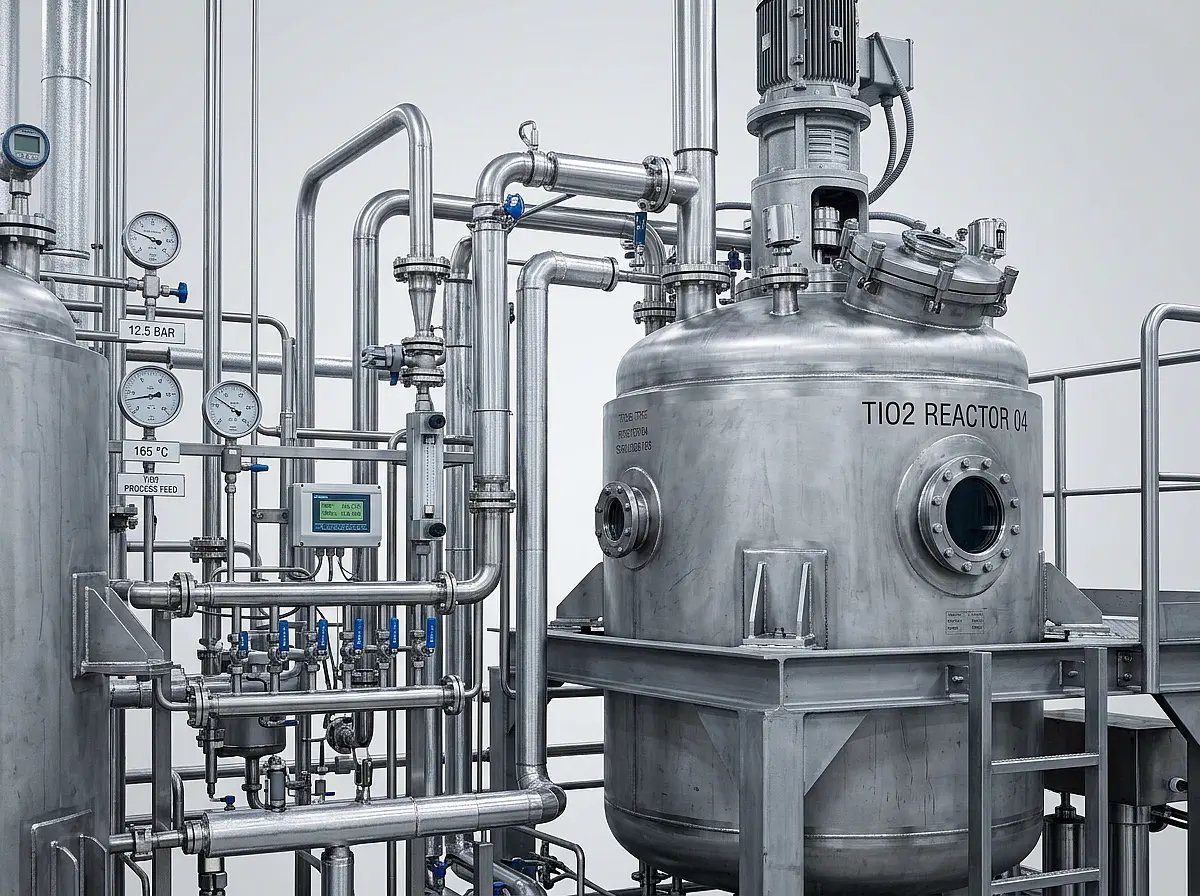
Industrial TiO2 manufacturing is dominated by two routes: the sulfate process and the chloride process. Both convert titanium-bearing feedstocks into purified titanium dioxide, but they differ in chemistry, feedstock flexibility, waste profile, and the grades they most efficiently produce.
The sulfate process usually starts from ilmenite or titania slag digested in sulfuric acid to form titanyl sulfate intermediates. After purification and hydrolysis, hydrated titanium dioxide is calcined and finished into either anatase or rutile grades depending on process conditions.
The chloride process uses high-titania feedstocks such as natural or synthetic rutile. These are chlorinated to titanium tetrachloride, purified by distillation, and then oxidized in the gas phase to produce TiO₂, typically as rutile pigment of very high purity.
For the full process chemistry, see the sulfate and chloride routes on our titanium dioxide pigment page.
The Chloride Process
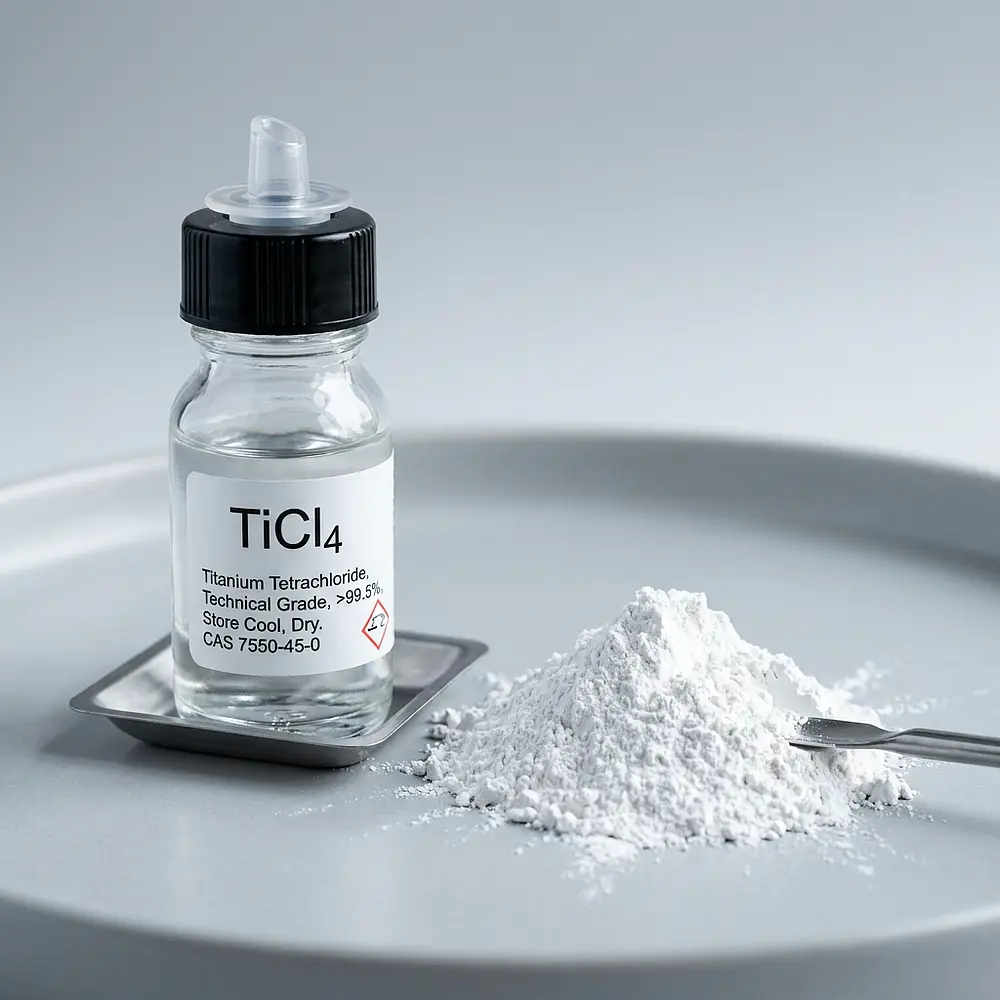
The chloride route passes through TiCl₄ as a volatile purification intermediate. Oxidation of purified titanium tetrachloride at high temperature yields TiO₂ with low trace-metal content and strong consistency, which is why chloride-route product is widely preferred for premium rutile pigments used in high-performance coatings and plastics.
The Sulfate Process
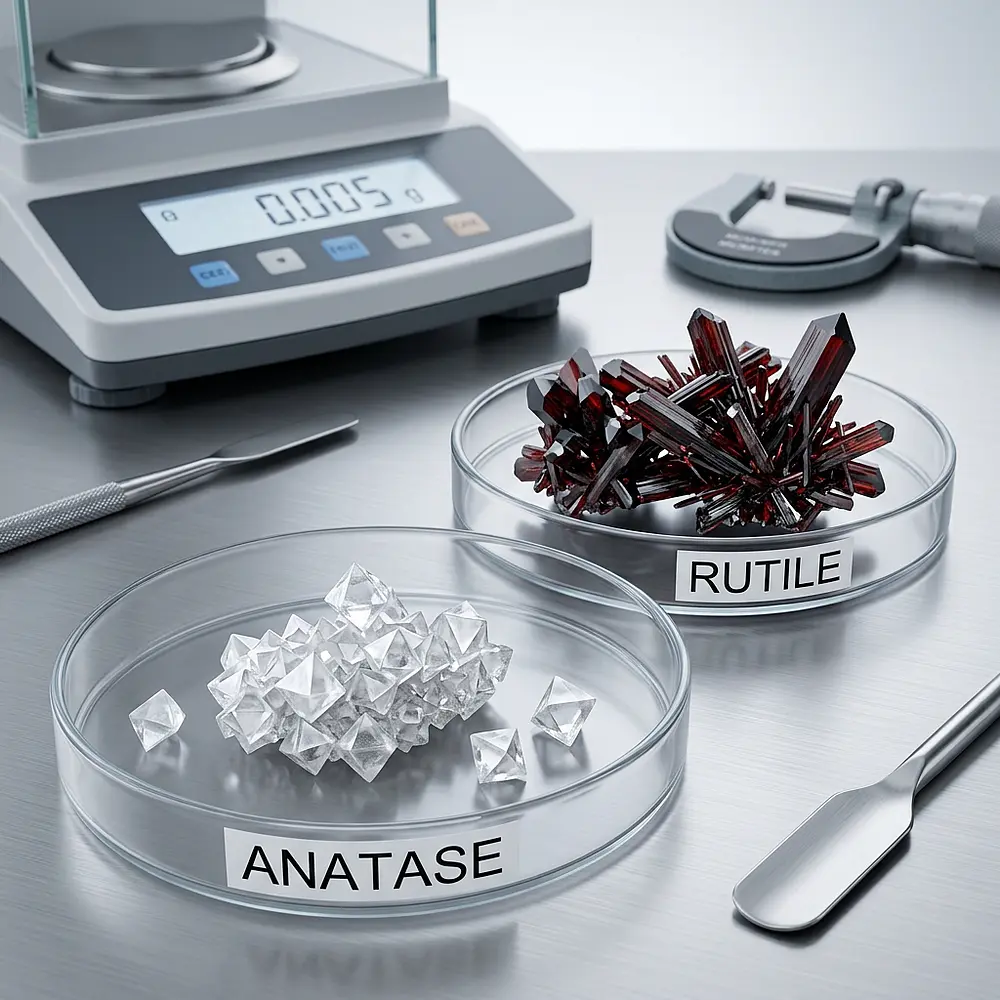
In the sulfate process, titanium values are brought into solution through sulfuric-acid digestion, separated from major impurities, then hydrolyzed to a hydrated oxide precursor. Calcination converts that precursor into crystalline TiO₂, after which milling and surface treatment produce the final commercial grade. One major advantage of this route is flexibility: it can supply both rutile and anatase products.
Feedstocks: Ilmenite, Rutile and Titanium-Bearing Ores
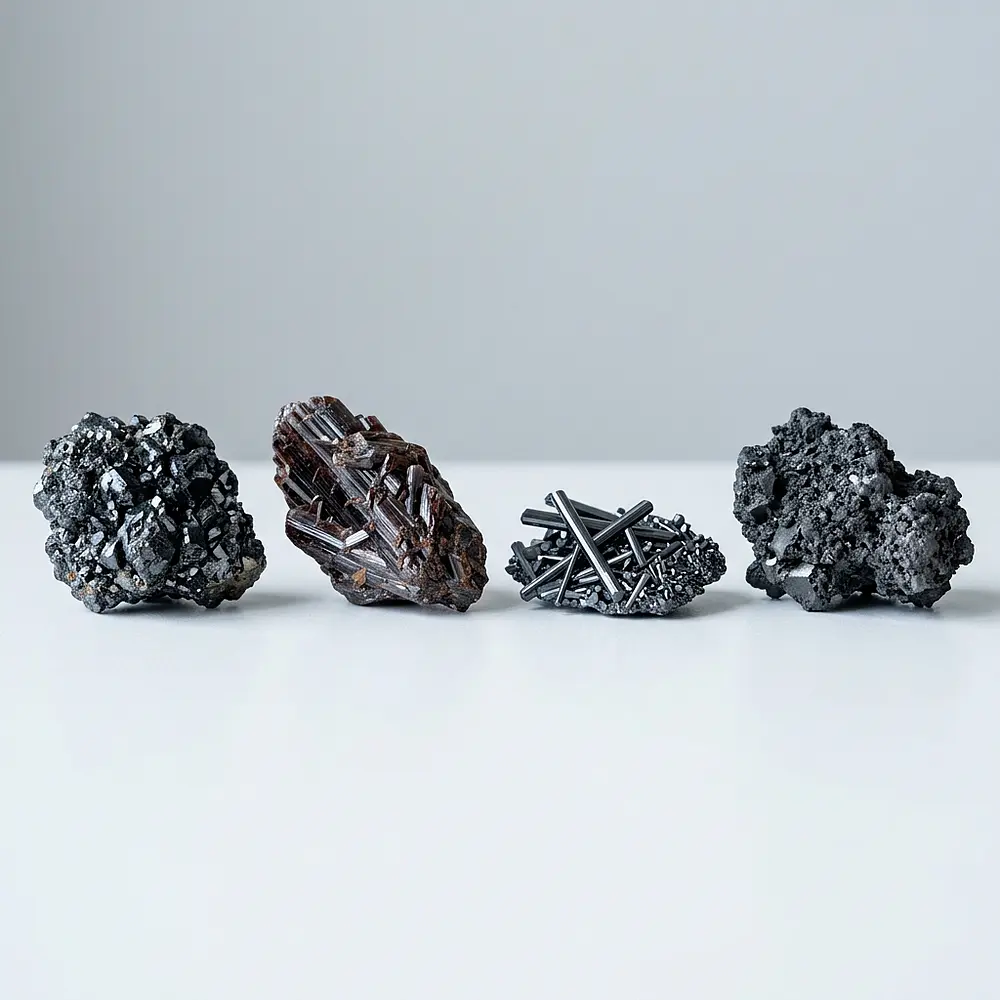
The main titanium-bearing raw materials are ilmenite, natural rutile, synthetic rutile, and upgraded titania slags. Feedstock quality strongly influences process choice: lower-grade, iron-rich ores fit the sulfate route more naturally, while the chloride route depends on high-titania inputs to keep chlorination and purification economical.
Further Reading on Production
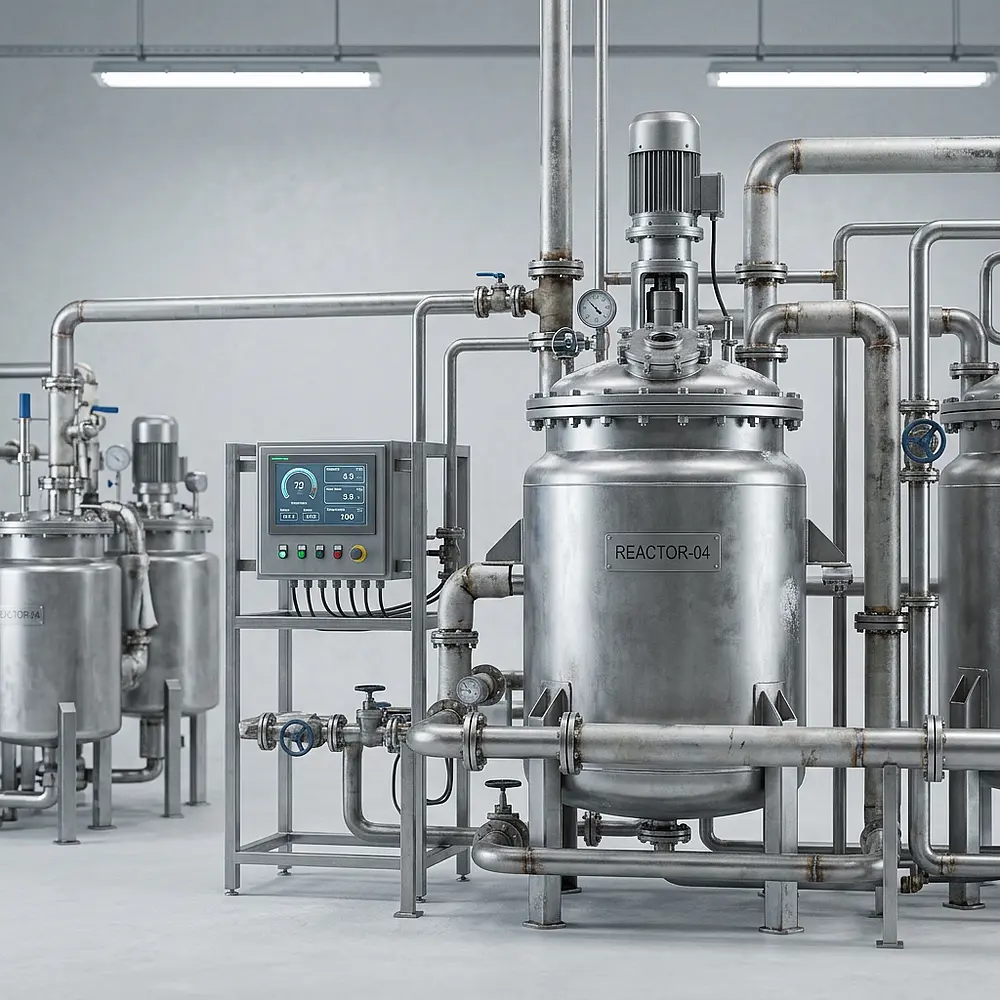
Our titanium dioxide pigment page covers process flow, equipment, feedstock economics, by-products, and finishing steps in greater detail, including the practical differences between sulfate-route and chloride-route commercial material.
Laboratory and Specialty Synthesis Routes
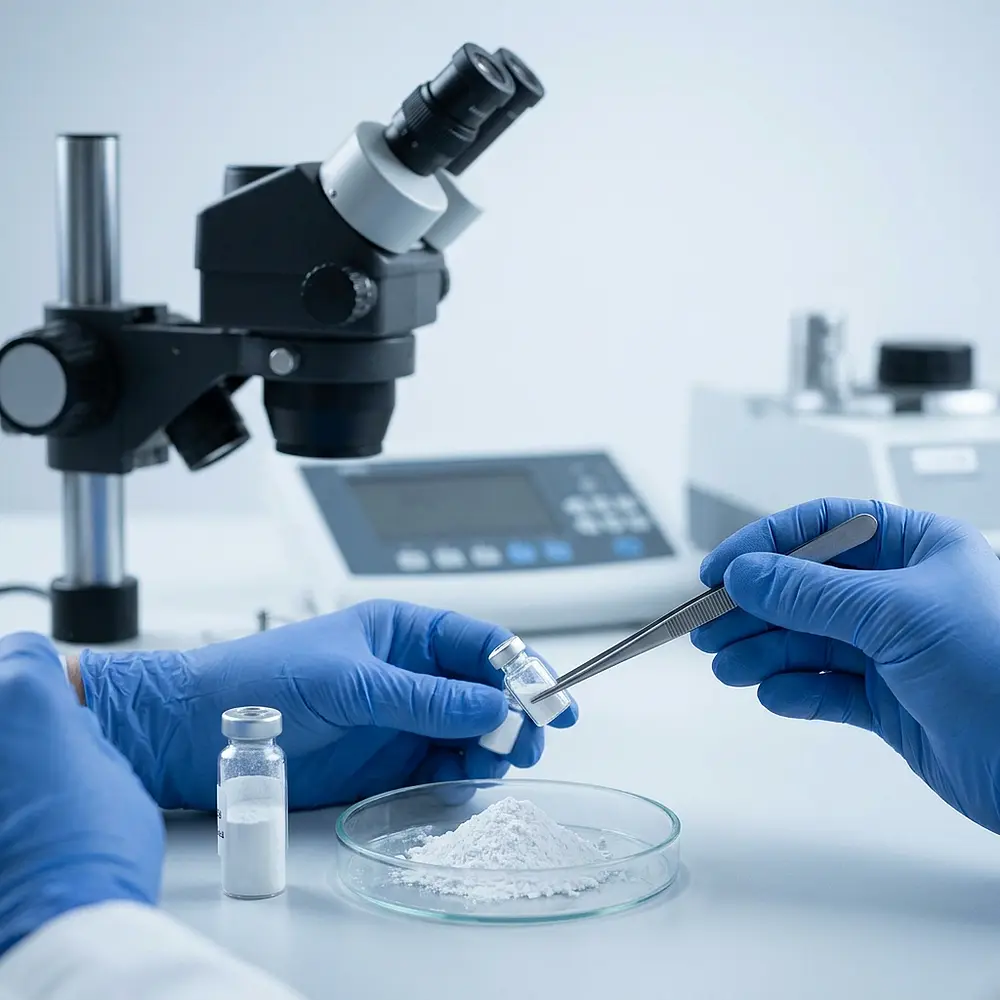
Outside commodity production, TiO₂ is also made by sol-gel, hydrothermal, solvothermal, co-precipitation, aerosol, microemulsion, and molten-salt methods. These routes are used when researchers need tighter control over nanoparticle size, morphology, porosity, crystal phase, or thin-film formation than industrial pigment processes are designed to provide.
Which Industrial Route Produces Which Grades
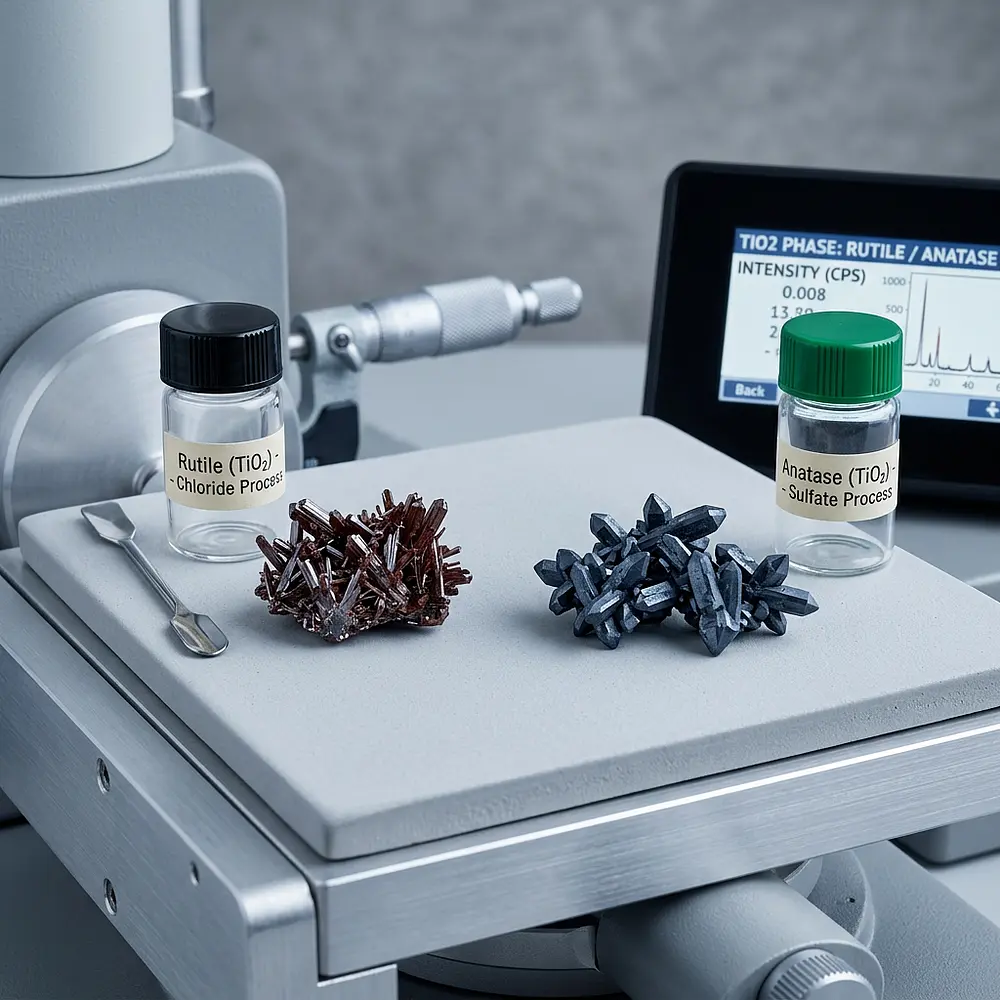
As a rule of thumb, chloride-process output is associated primarily with rutile pigment grades, while the sulfate process can serve both rutile and anatase markets. That distinction matters in procurement because crystal phase, impurity profile, and finishing technology all affect performance in the final application.
Industrial Applications of TiO₂
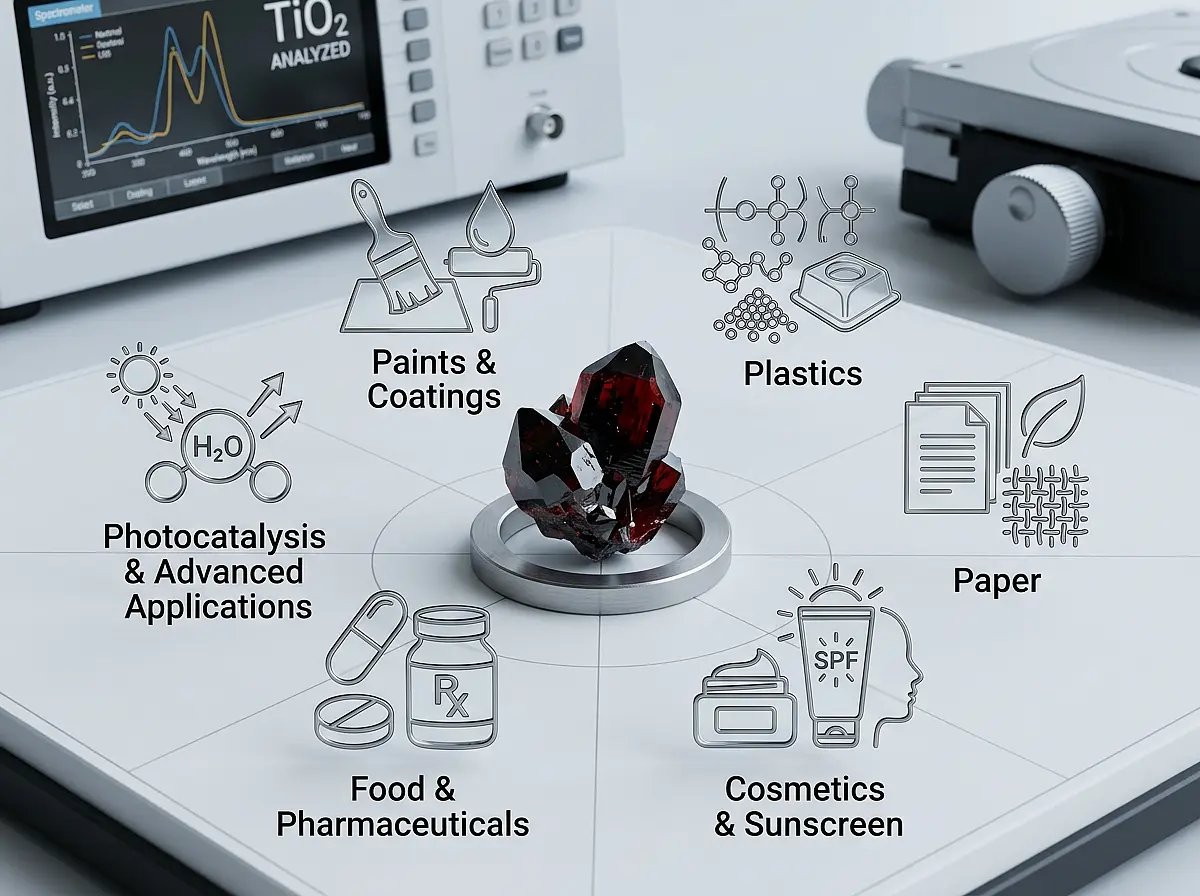
Most global TiO₂ demand is concentrated in a few high-volume sectors, each using the material for a specific property set rather than for chemistry alone. Approximate shares of global consumption are: Paints & Coatings ~60%, Plastics ~20%, Paper ~10%, Cosmetics & Sunscreen ~5%, Food & Pharmaceuticals ~3%, and Photocatalysis & Advanced Applications ~2%.
Across these sectors, the logic is consistent. Pigment applications exploit refractive index and whiteness; sunscreens use UV attenuation; advanced materials use semiconductor and surface-reactivity behavior. A broader use-case map is available at titanium dioxide uses.
Paper (~10%)
In paper, titanium dioxide is used mainly in premium grades where brightness, opacity, and print contrast justify its cost relative to calcium carbonate or kaolin. Its high scattering efficiency is particularly valuable in lightweight sheets where opacity must be achieved with limited mineral loading. Some specialty uses also involve anatase-containing products for delustering or niche optical effects.
Plastics (~20%)

In plastics, TiO₂ is used to create whiteness and opacity while also improving UV resistance in outdoor products such as PVC profiles and polymer construction materials. It is supplied directly into compounds or through masterbatches, with grade choice depending on polymer type, processing temperature, and dispersion requirements. Rutile dominates because of its stability during melt processing and its strong optical efficiency.
Paints & Coatings (~60%)

Paints and coatings are the largest TiO₂ outlet because no other white pigment combines opacity, brightness, and durability as effectively at scale. Rutile grades are standard in architectural paints, industrial coatings, and automotive systems, where they provide covering power and help shield organic binders from UV exposure. Surface-treated pigment is especially important in exterior coatings because it reduces the risk of UV-driven chalking and binder degradation.
Photocatalysis & Advanced Applications (~2%)
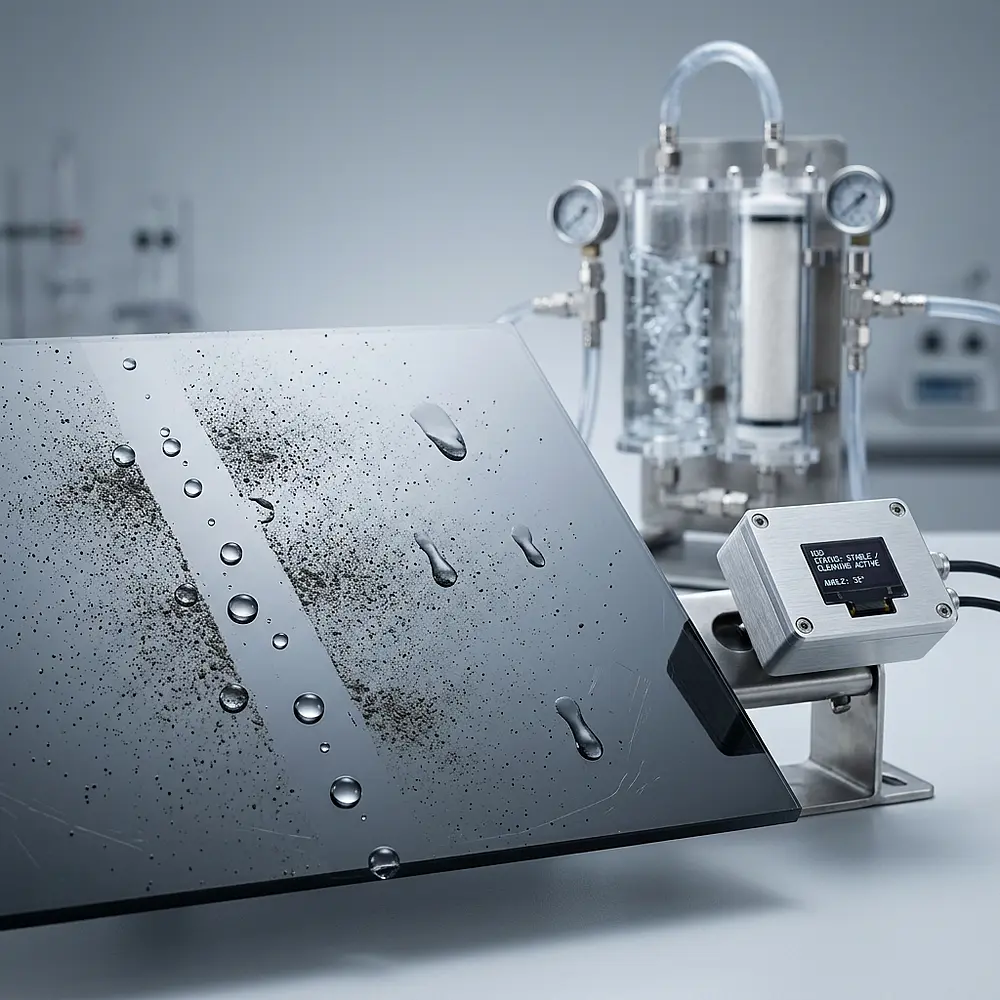
This smaller but technically important segment includes self-cleaning surfaces, air and water treatment, antimicrobial coatings, sensors, and energy-related research. Here TiO₂ is used not as a passive pigment but as an active semiconductor surface. Anatase-rich and mixed-phase materials are especially common in this area because photoinduced charge transfer drives the desired reactions. See how the crystal form governs this activity in rutile vs anatase.
Food & Pharmaceuticals (~3%)
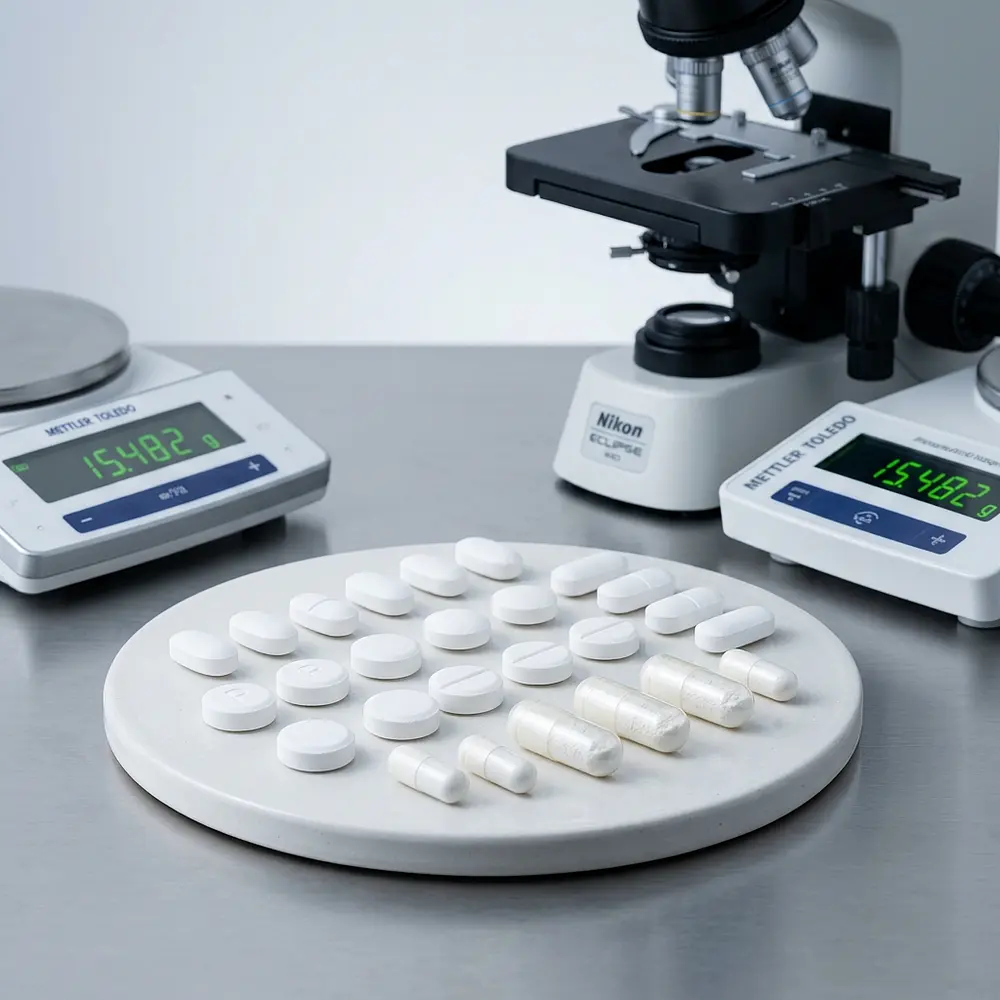
In pharmaceuticals, titanium dioxide has long been used as an opacifier in tablet coatings and capsules to improve appearance and protect light-sensitive actives. In food, its historical use was as a whitening additive, especially under the E171 designation in Europe, but the regulatory position now differs sharply by region. For current status and use limitations, see titanium dioxide in food. The jurisdiction-by-jurisdiction position, including the EU E171 withdrawal and continuing FDA authorisation, is set out at titanium dioxide regulation.
Cosmetics & Sunscreen (~5%)
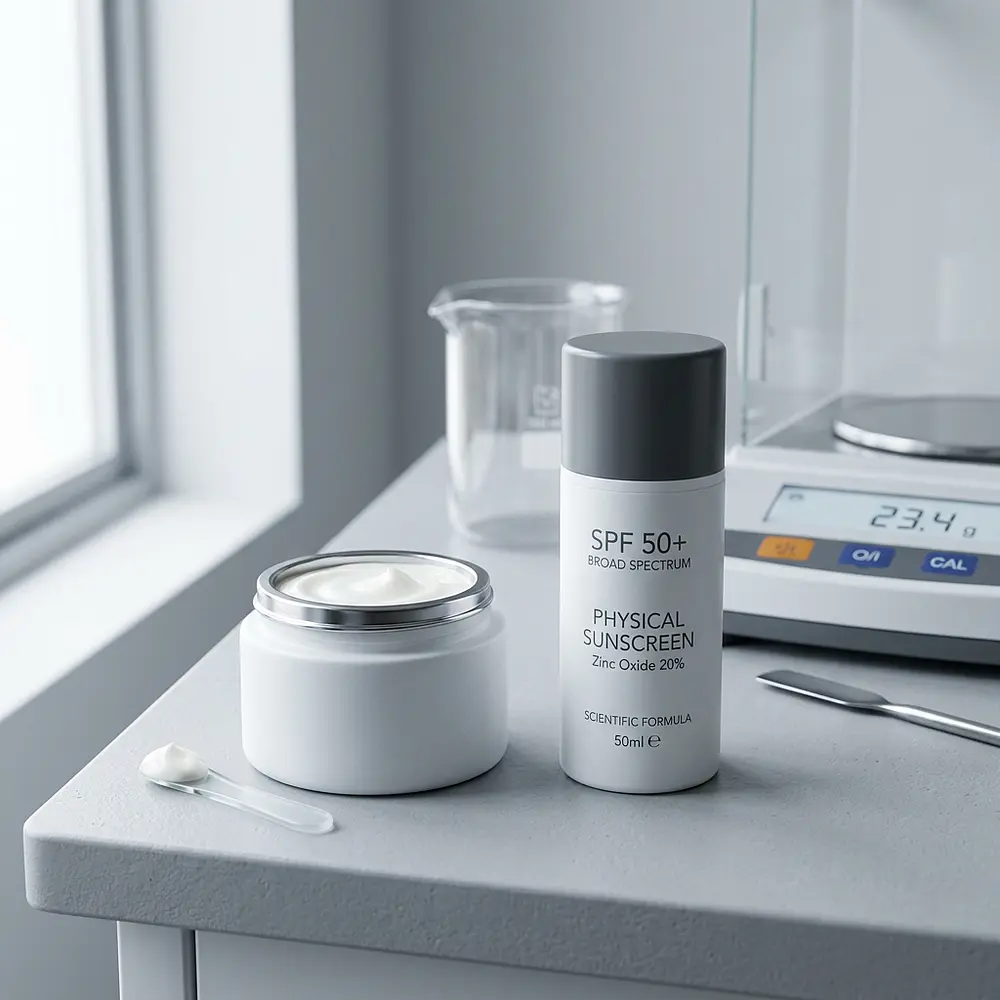
In cosmetics and sunscreens, TiO₂ serves as both an opacifier and an inorganic UV filter. Conventional pigment-sized particles give visible whiteness in decorative products, while nanoscale grades can reduce white cast and remain effective in UV attenuation. Cosmetic-grade material is commonly rutile and usually surface-treated to limit photocatalytic interaction with oils, polymers, and other formulation ingredients. Oral-care products such as toothpaste rely on the same pigment function, and EFSA’s 2021 food-additive opinion expressly left cosmetic exposure of that kind outside its scope. See titanium dioxide sunscreen and how TiO₂ is used in toothpaste.
TiO₂ Grades: Pigment Grade vs. Nanoscale
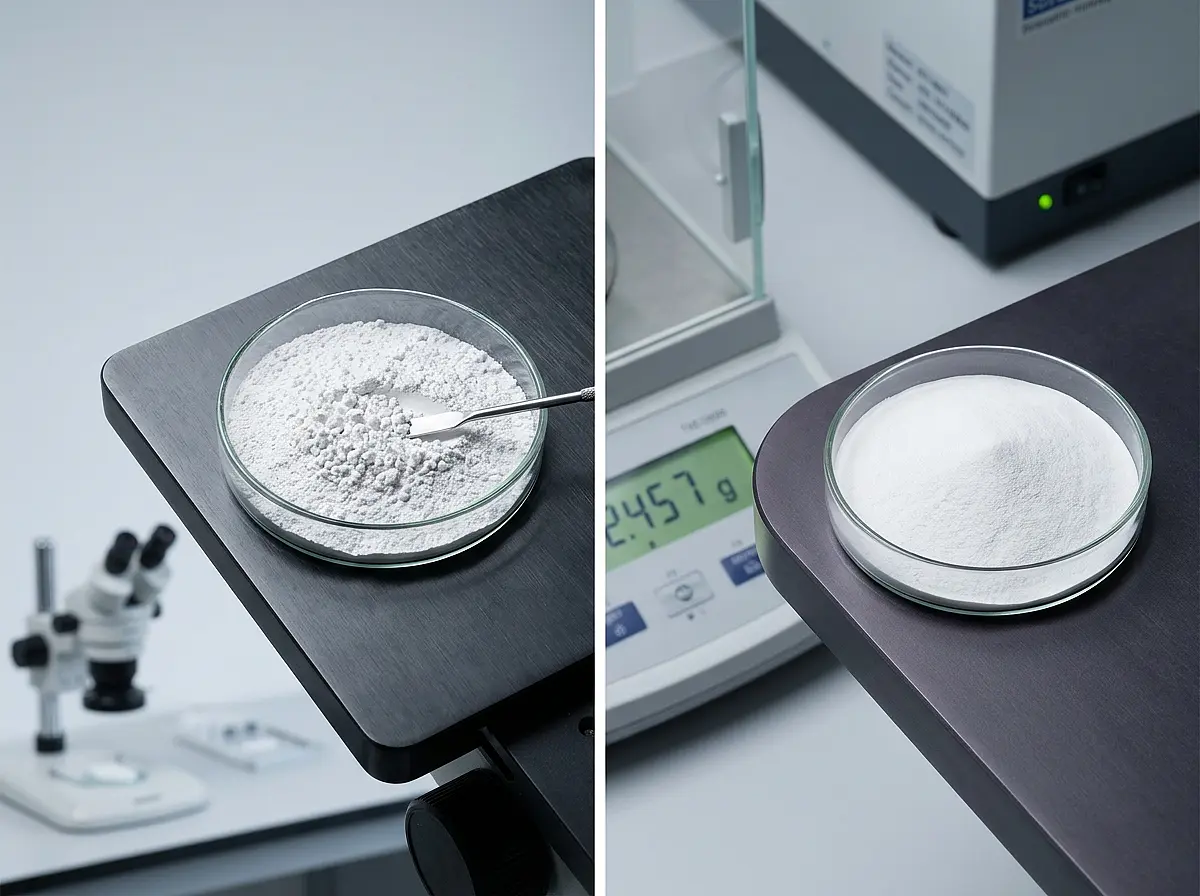
Commercial TiO₂ is often divided into two functional classes: pigment grade and nanoscale TiO₂. The chemistry is the same, but performance differs systematically across four specification axes: particle size, optical effect, surface reactivity, and typical applications.
1. Particle size. Pigment-grade TiO₂ typically uses primary particles around 200–300 nm, while nanoscale material is generally below 100 nm. That difference changes scattering behavior, dispersion challenges, and exposed surface area.
2. Optical effect. Pigment-grade material is designed for maximum visible opacity and whiteness. Nanoscale TiO₂ scatters visible light less strongly and can appear far more transparent in use, which is why it is relevant to clear or low-whitening UV-protective formulations.
3. Surface reactivity. Nanomaterials usually have higher accessible surface area per unit mass, so their interfacial behavior matters more. Reactivity is also influenced by crystal phase, morphology, and surface coating; it should not be attributed to size alone. In practical terms, nanoscale anatase-rich systems are the most photocatalytically active, while coated nano-rutile is the common choice when UV screening is needed with lower reactivity.
4. Typical applications. Pigment-grade TiO₂ is used in paints, coatings, plastics, inks, and paper. Nanoscale grades are used in sunscreens, transparent coatings, photocatalysis, and some advanced materials systems.
Because safety assessment changes with particle form and exposure route, nanoscale TiO₂ is often discussed separately in regulatory and toxicological contexts. The nanoscale case is analysed in our titanium dioxide safety review.
Nanoscale TiO₂ (<100 nm)
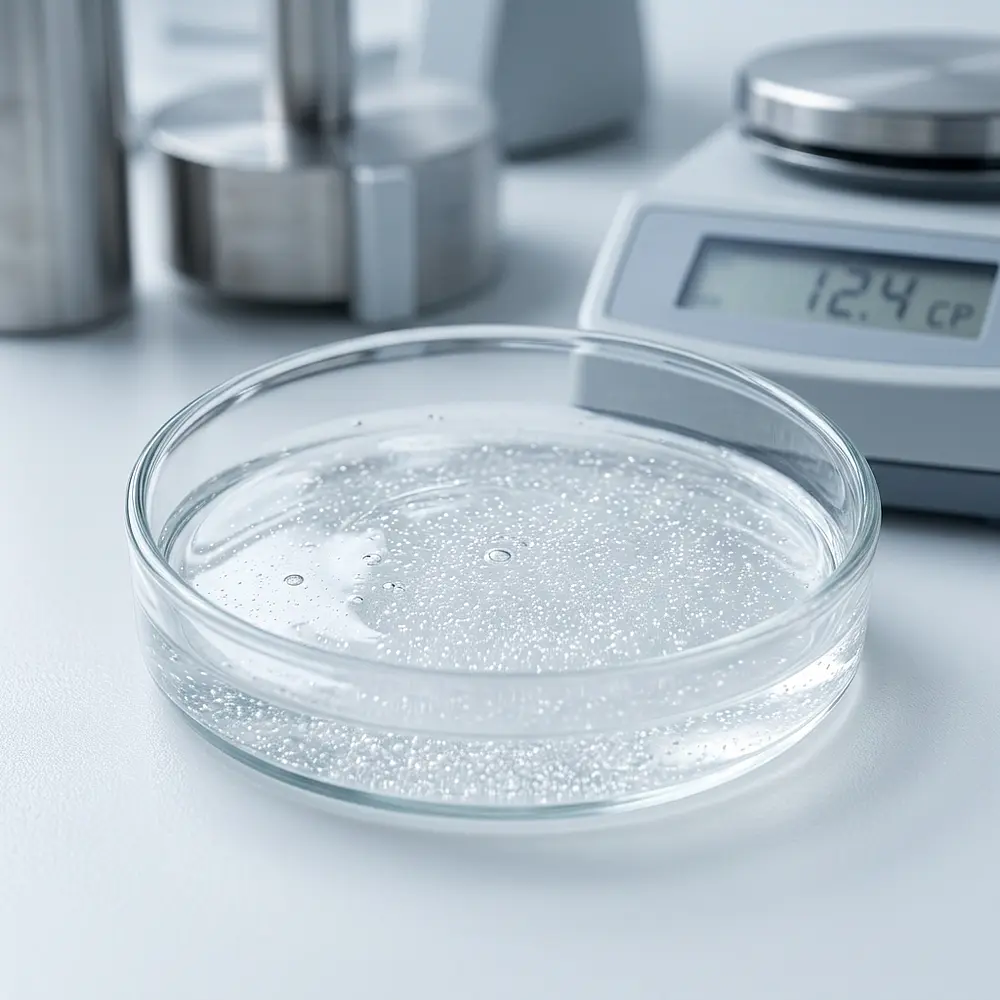
Nanoscale TiO₂ is selected when visible transparency, high interfacial area, or UV-active surface behavior matters more than hiding power. It appears most often in sunscreens, functional coatings, and photocatalytic systems. Surface treatment is especially important at this scale because small changes in coating chemistry can strongly affect dispersibility and photoactivity.
Pigment-Grade TiO₂ (Typically 200–300 nm)
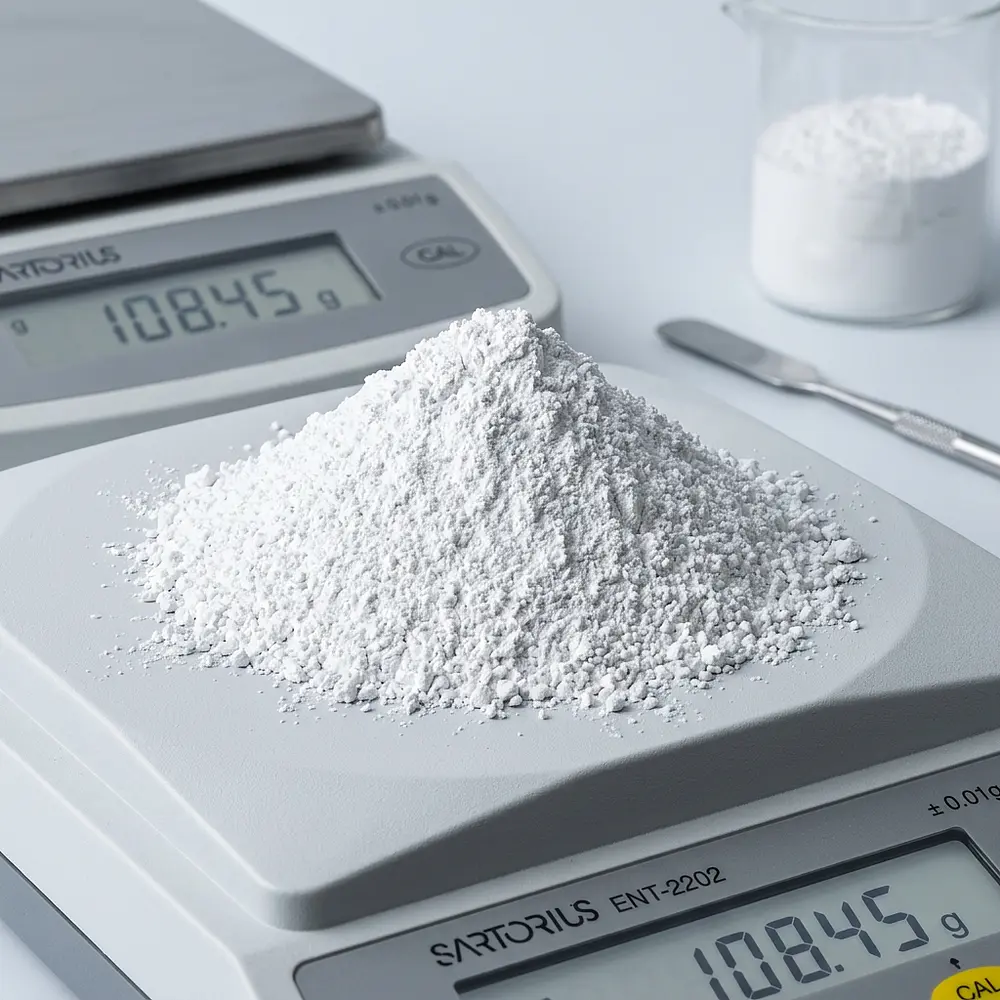
Pigment-grade TiO₂ is engineered for light scattering, not simply milled for convenience. Most high-performance grades are rutile-based and surface-treated to improve dispersion, weatherability, and compatibility with coatings or polymers. Its main value is efficient opacity at industrially practical loadings.
Why Nano-TiO₂ Safety Is Evaluated Differently
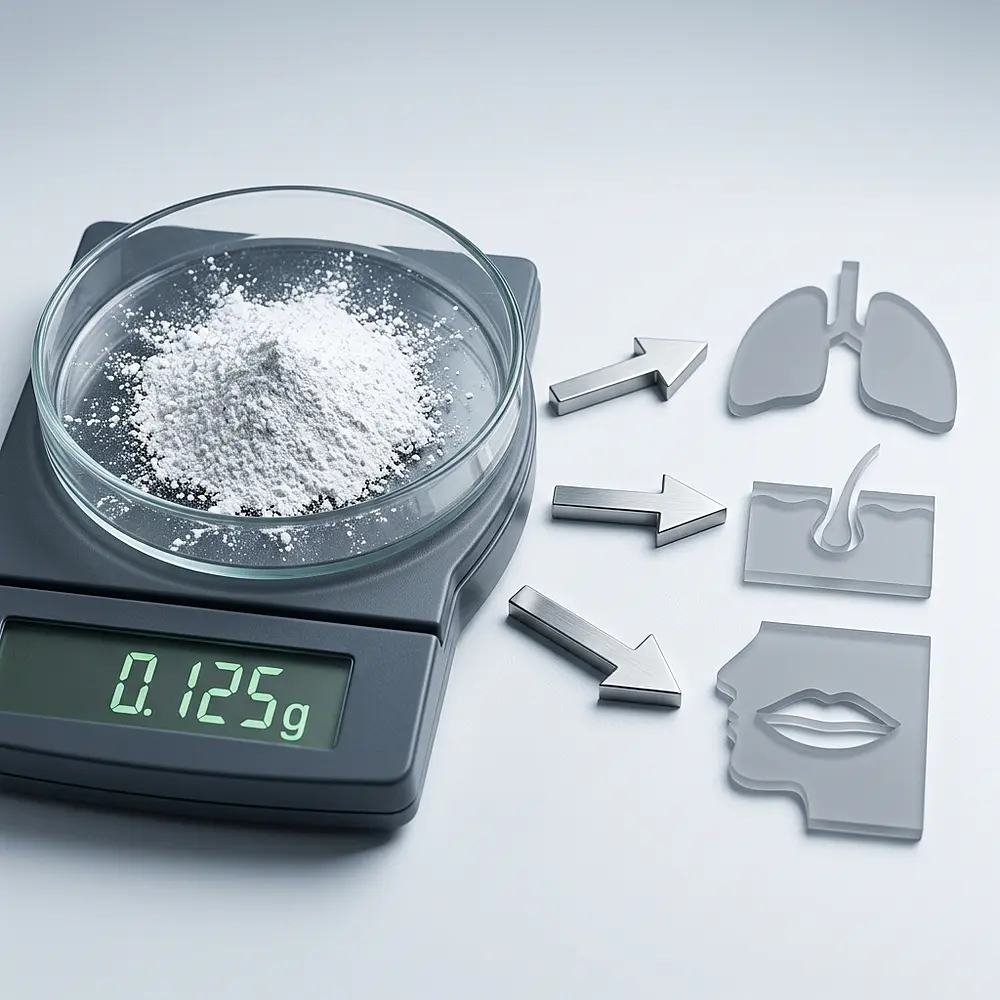
Nano-TiO₂ is evaluated separately mainly because inhalation behavior, exposed surface area, and biological interaction can differ from conventional pigment particles. The relevant questions are route-specific: dust inhalation in occupational settings, dermal use in sunscreens, or incidental oral exposure do not present the same risk framework. For the regulatory view by exposure path, see the safety section below.
How Particle Size Changes Function
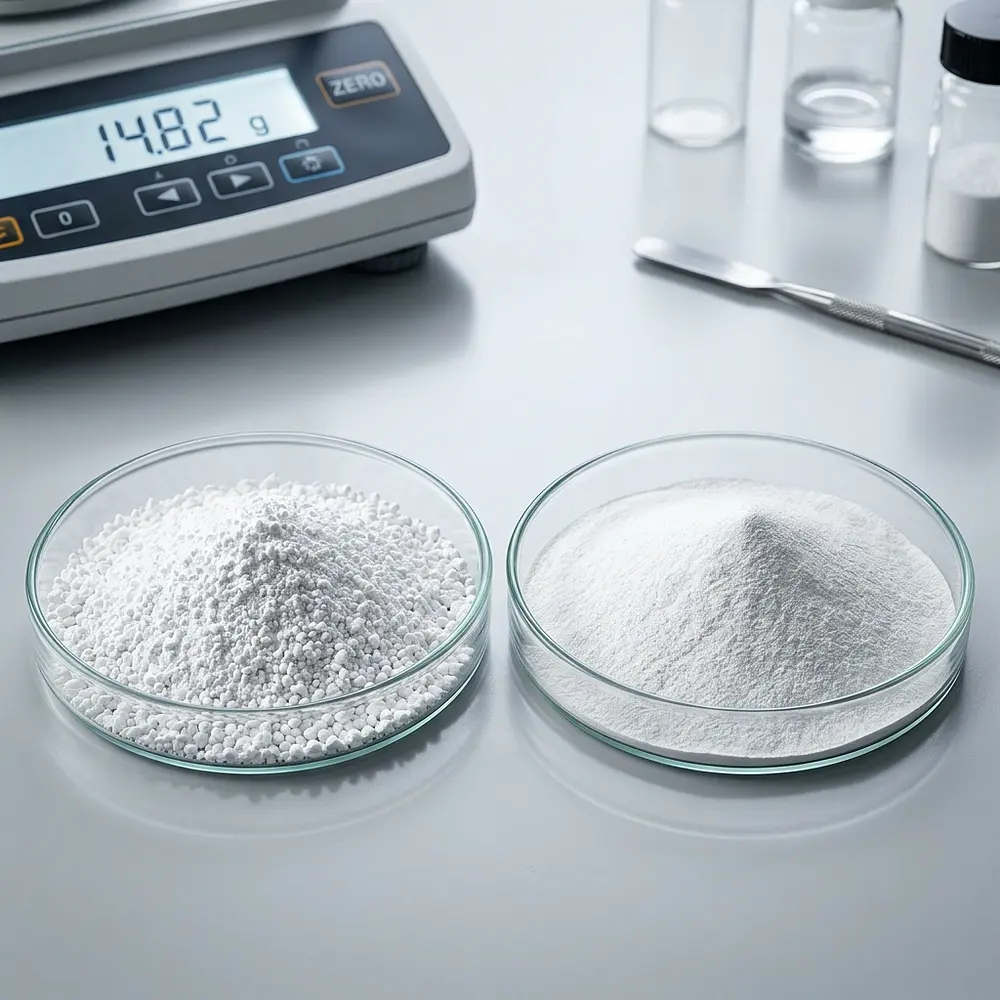
Reducing particle size shifts TiO₂ away from classic white-pigment behavior and toward UV-functional behavior. Larger pigment particles optimize visible scattering; much smaller particles reduce whitening and make surface area-driven effects more prominent. That is why particle-size specification is a core purchasing parameter, not a minor detail.
Safety & Regulatory Classification
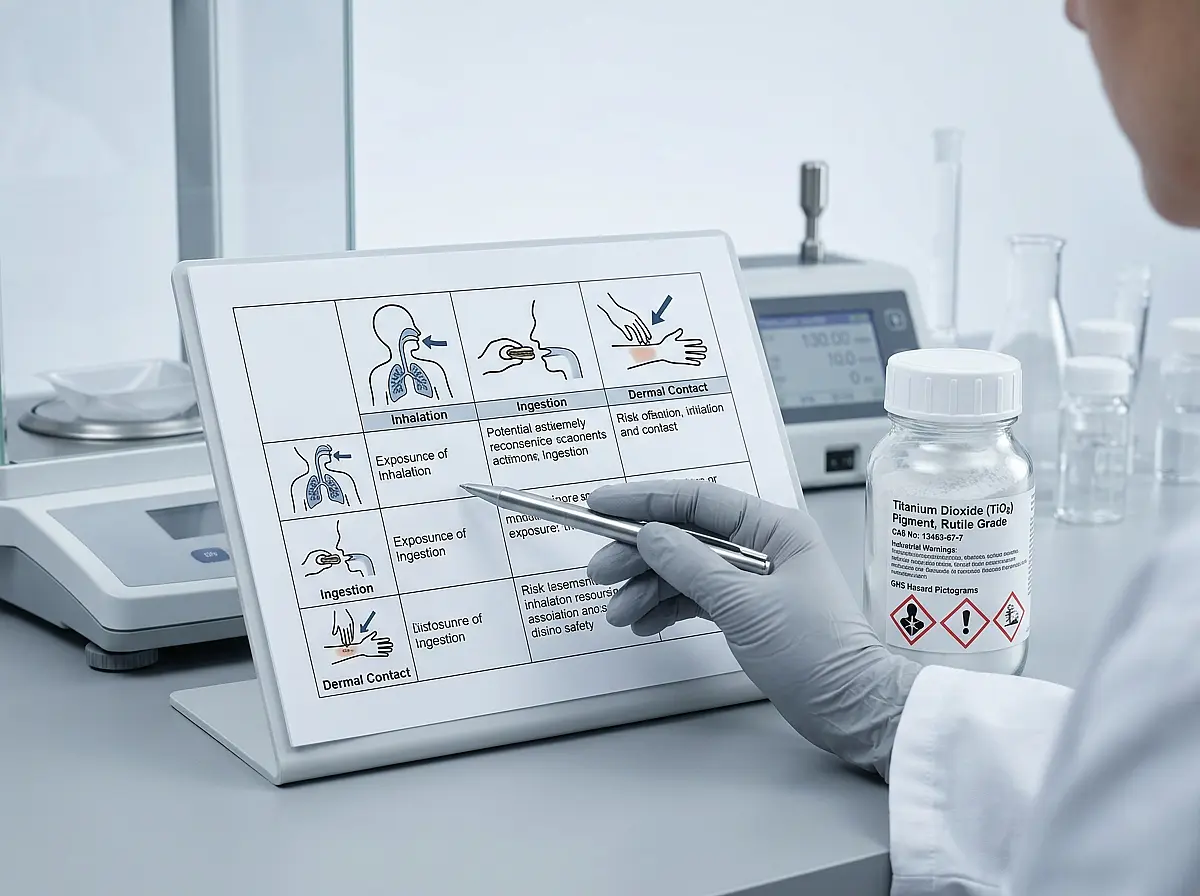
TiO₂ safety is best understood through a simple matrix: exposure route, material form, applicable authority, and practical consequence. The same compound can be treated very differently depending on whether it is inhaled as respirable dust, ingested as a food additive, or used as a bound pigment in a cured coating.
Inhalation / airborne respirable particles / IARC and workplace rules. The International Agency for Research on Cancer classifies titanium dioxide as Group 2B, meaning possibly carcinogenic to humans, based on inhalation evidence for respirable dust. The key scope point is that this classification concerns airborne, inhalable particulate exposure, not every finished product containing TiO₂. For a fuller risk discussion, see is titanium dioxide safe.
Oral exposure in the United States / FDA. The U.S. FDA permits titanium dioxide as a color additive in food under 21 CFR 73.575, with use limited to not more than 1% by weight of the food and subject to specification requirements. FDA-regulated pharmaceutical and sunscreen uses sit in separate regulatory frameworks rather than under a single blanket approval.
Oral exposure in the European Union / EFSA and EU Commission. The EU no longer permits E171 as a food additive following EFSA’s 2021 conclusion that a genotoxicity concern could not be excluded. This decision applies to food use and does not by itself prohibit TiO₂ in coatings, plastics, cosmetics, or all pharmaceutical contexts. The agency-by-agency regulatory picture is covered in is titanium dioxide safe.
California exposure warnings / Proposition 65. California’s Prop 65 listing for titanium dioxide is limited to airborne, unbound particles of respirable size. In practice, that matters most for powder handling, dust-generating manufacturing, and similar occupational scenarios rather than for solid products in which TiO₂ is fixed in a matrix.
FDA Status in the United States
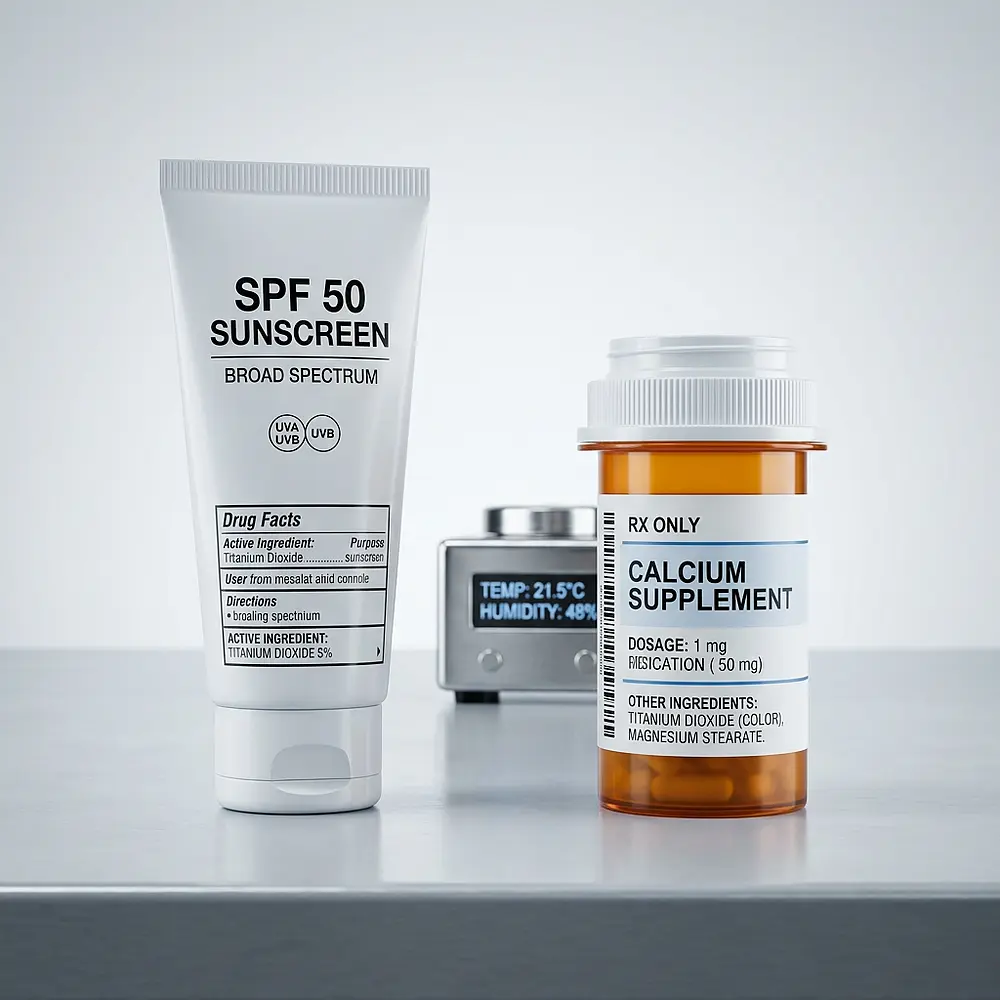
In the United States, TiO₂ remains permitted in food within FDA limits and is also used in approved pharmaceutical and sunscreen contexts under their respective regulatory frameworks. Compliance depends on intended use, concentration, and specification, not on the formula alone.
IARC Group 2B: Inhalable Dust Only
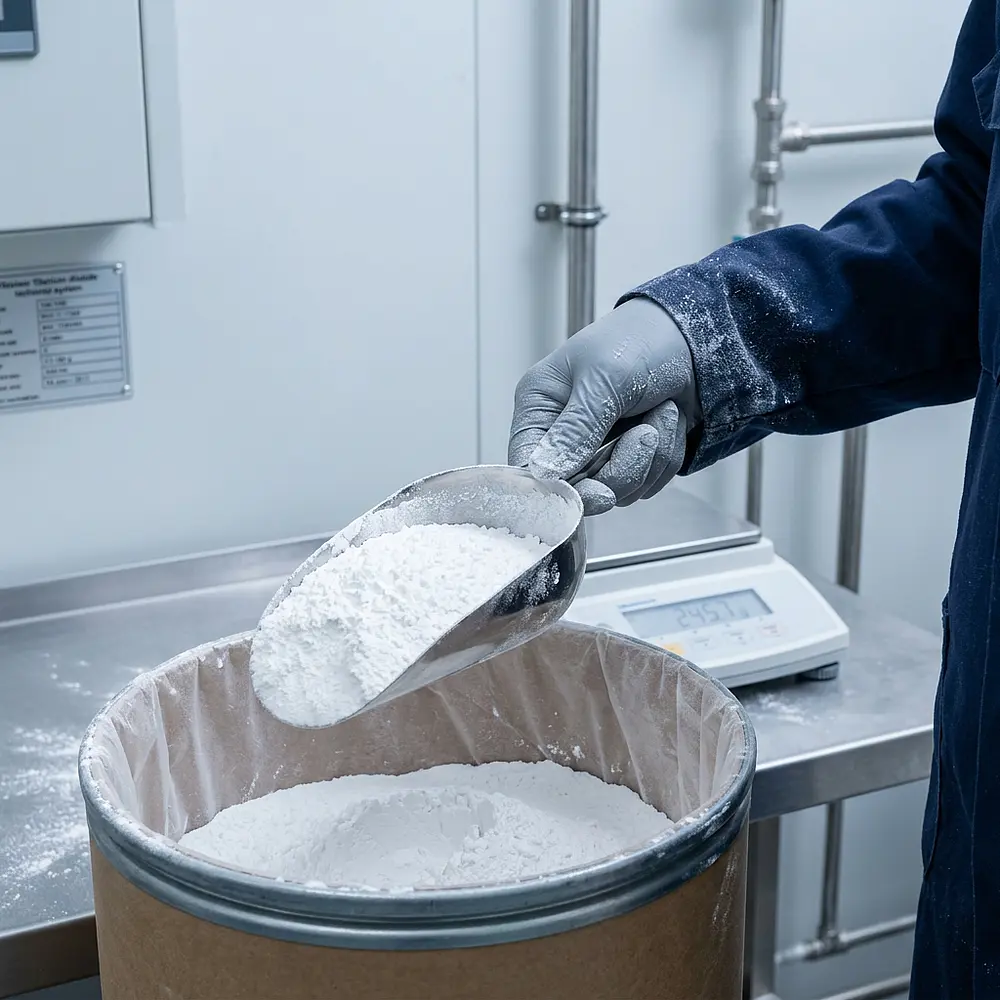
The crucial point in the IARC 2B classification is scope. It addresses inhalation of respirable TiO₂ particles, especially in dust-generating work environments, and should not be read as a universal statement about every consumer or industrial use of titanium dioxide.
California Proposition 65
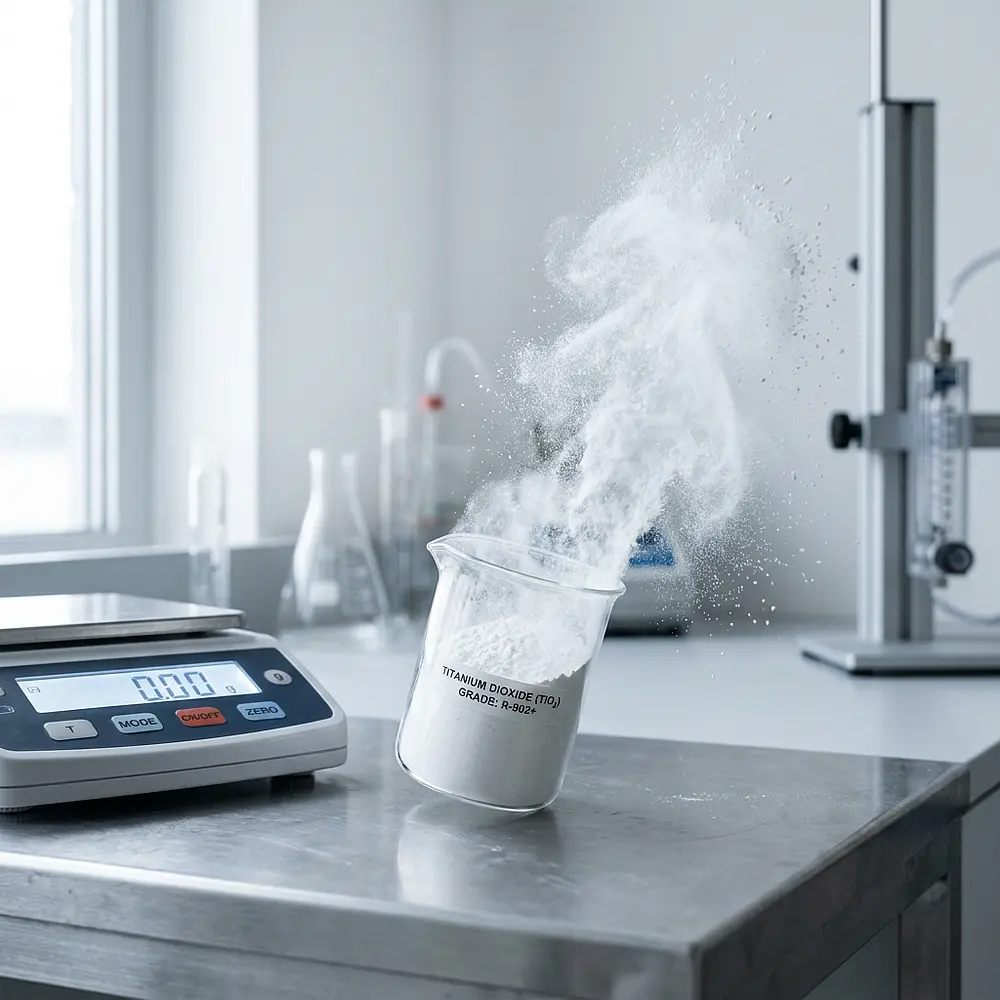
For Prop 65, titanium dioxide is listed only in the form of airborne, unbound respirable particles. This is why warnings are mainly relevant where TiO₂ can become dust in air rather than where it remains immobilized in a coating, plastic, or other solid product.
EU E171 Ban
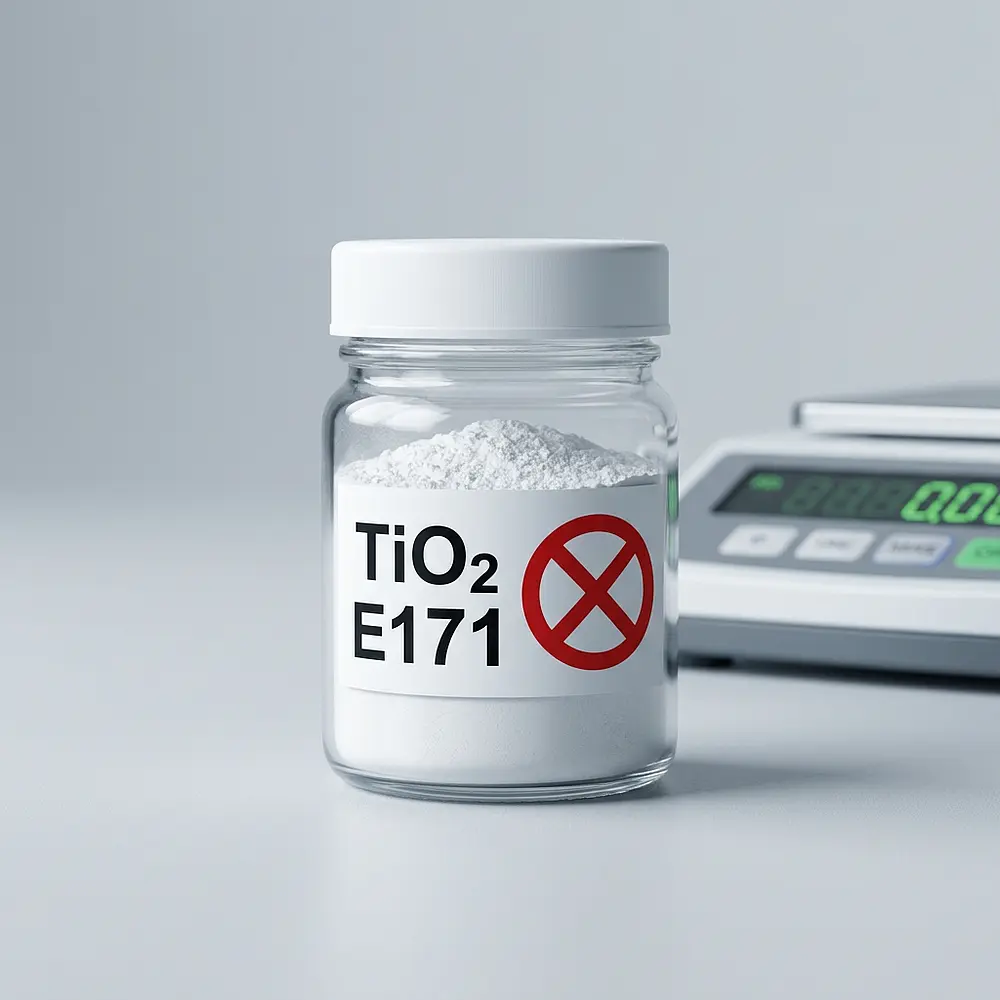
The European Union banned TiO₂ as the food additive E171 from August 2022. That outcome followed EFSA’s assessment that a genotoxicity concern for the food-use material could not be ruled out, particularly in relation to the fine-particle fraction.
TiO₂ in the Market

Global titanium dioxide production is roughly 7 million tonnes per year, making it one of the largest-volume specialty inorganic materials in commercial use. Demand is anchored by coatings and plastics, while paper, personal care, pharmaceuticals, and specialty photocatalytic uses make up smaller but still important segments.
Major global producers include Chemours, Tronox, Venator, and Kronos, alongside substantial Chinese capacity. Pricing depends on route, grade, region, and contract structure, but a broad working range for standard pigment material is often cited around US$1,800–3,500 per tonne, with market cycles causing meaningful movement above or below that band.
Growth is driven mainly by construction coatings, plastics demand, urbanization, and the need for durable white materials with strong UV stability. Production volumes and application-side demand are summarised in our titanium dioxide uses overview.
Major Producers
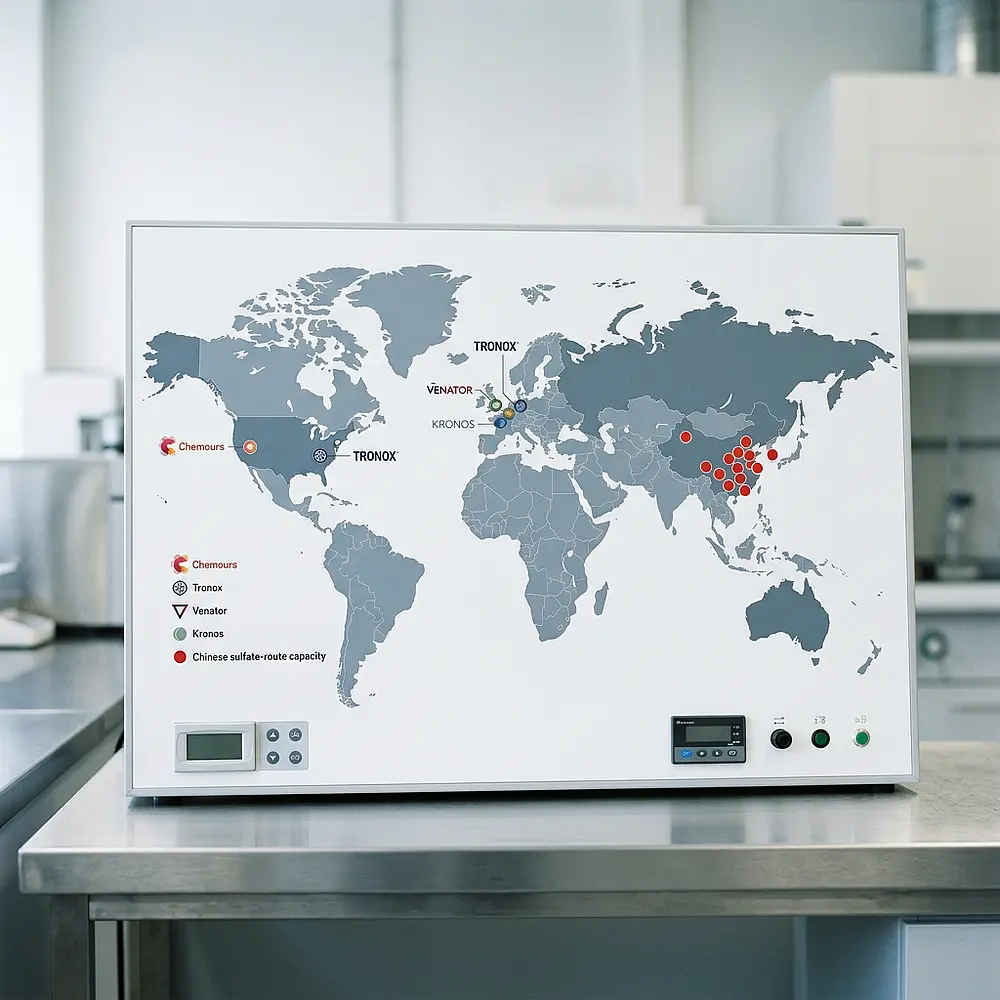
The leading Western producers are Chemours, Tronox, Venator, and Kronos. Chinese producers also represent a major share of world supply, especially in sulfate-route capacity.
Global Production Volume
At about 7 million tonnes annually, TiO₂ sits at a scale that ties it directly to construction, manufacturing, and consumer-goods output worldwide. Its market is therefore cyclical in the short term but structurally resilient over the long term.
Further Market Analysis
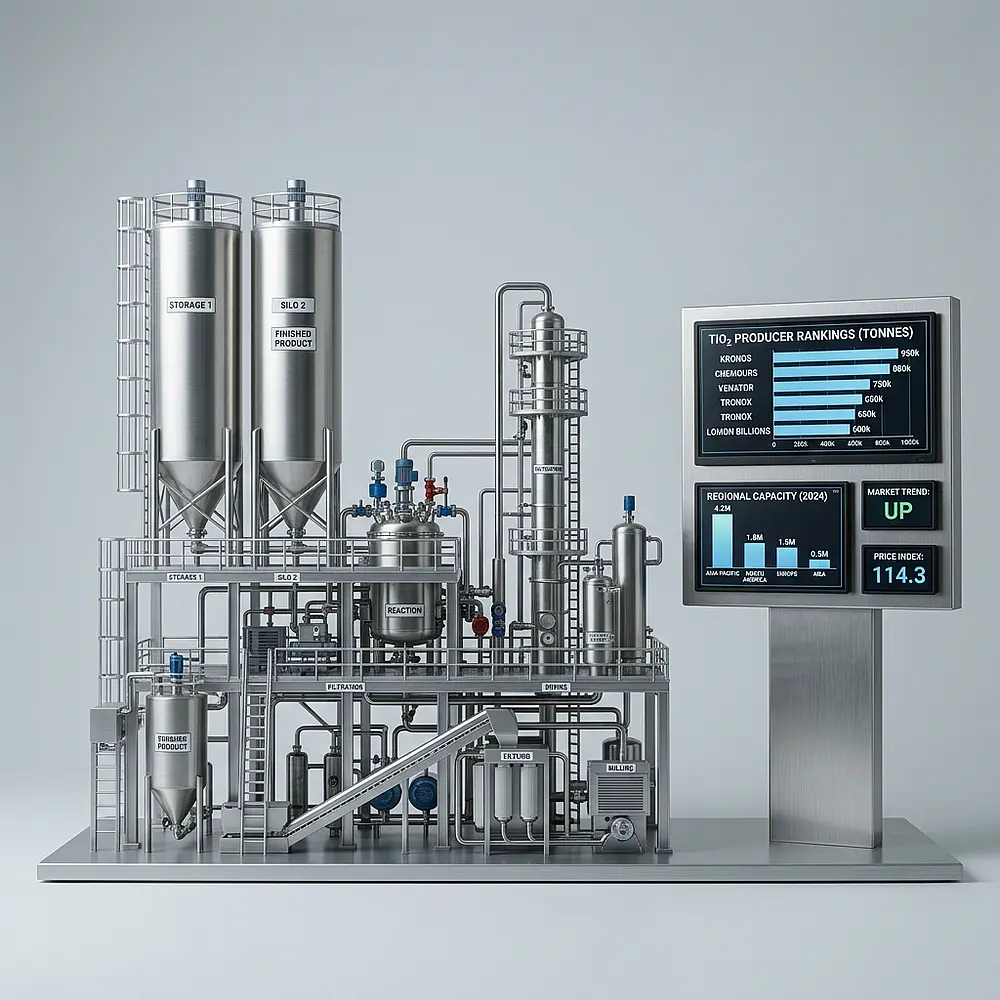
For producer rankings, regional capacity, pricing cycles, and longer-term demand trends, see the market-scale section of our titanium dioxide uses overview.
Market Growth Drivers
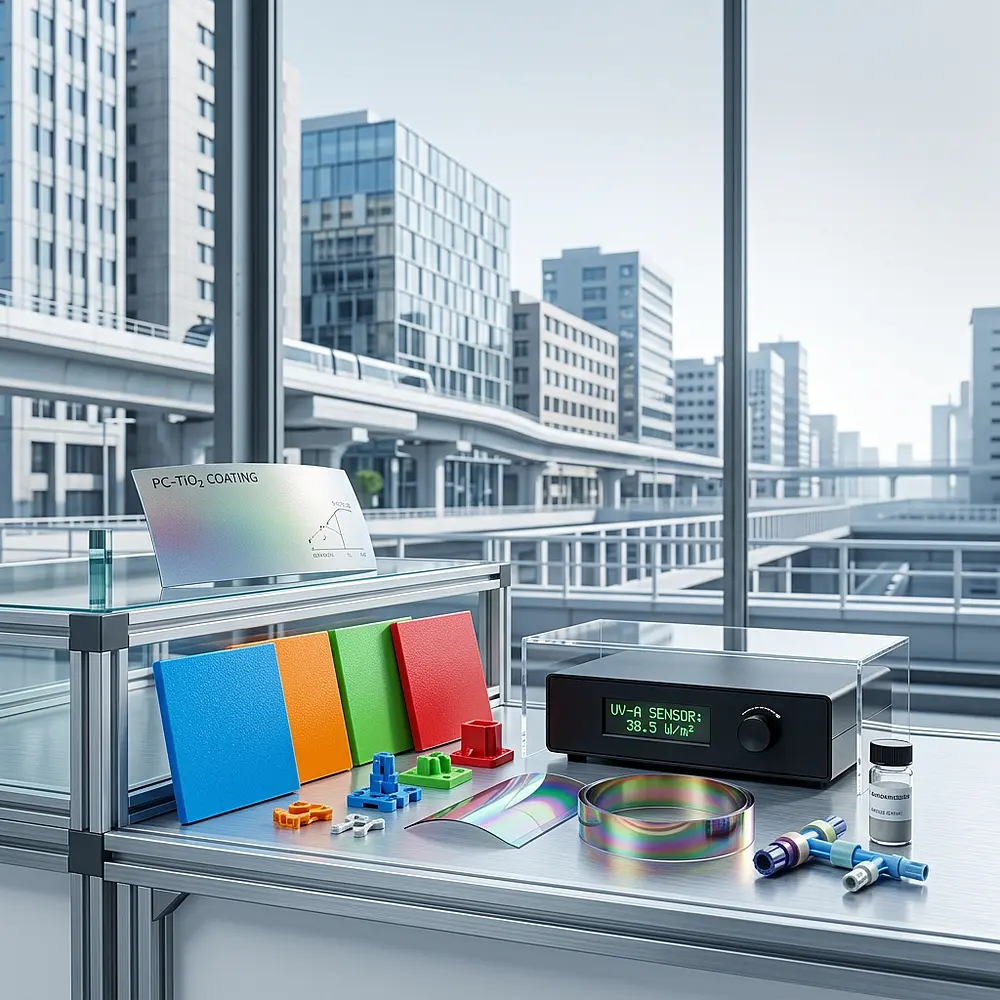
Long-term demand growth comes primarily from architectural coatings, infrastructure, plastics, and urban consumer markets. Secondary growth areas include UV-protective materials and selected photocatalytic technologies, though these remain small compared with core pigment demand.
Typical Price Range
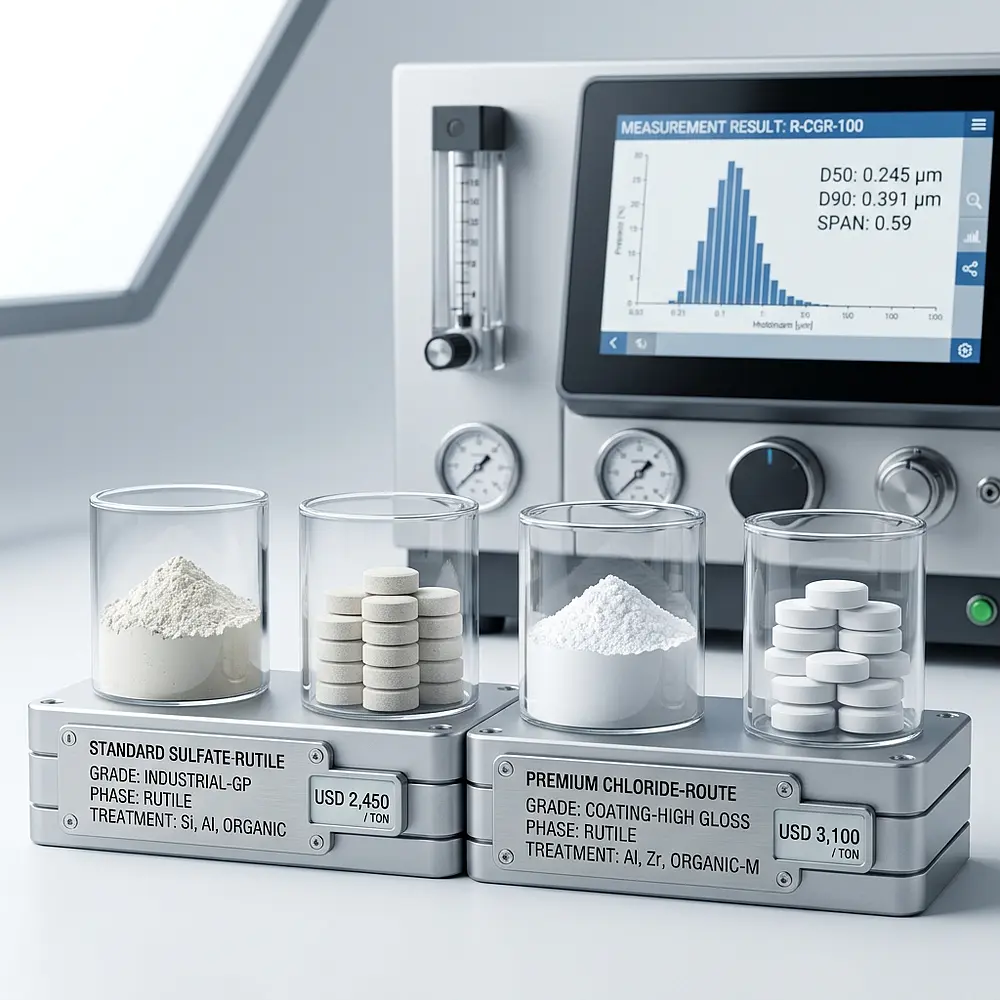
TiO₂ is not priced like a single undifferentiated commodity. Grade, crystal phase, surface treatment, feedstock cost, energy cost, and region all influence the final selling price, which is why premium chloride-route rutile often commands a higher market value than standard sulfate-route alternatives.
Frequently Asked Questions
What does TiO₂ stand for?
TiO₂ stands for titanium dioxide. The formula indicates one titanium atom and two oxygen atoms, and the formal chemical name is titanium(IV) oxide.
What is TiO₂ used for?
TiO₂ is mainly used as a white pigment in paints, coatings, plastics, and paper. It is also used in sunscreens as an inorganic UV filter and in photocatalytic materials as a UV-active semiconductor. See titanium dioxide uses.
Is TiO₂ the same as titanium dioxide?
Yes. TiO₂ is simply the chemical abbreviation and formula for titanium dioxide. In technical documents, you may also see the formal name titanium(IV) oxide.
What is the difference between rutile and anatase TiO₂?
Rutile is the stable phase mainly used for pigments because it offers better opacity and durability. Anatase is more often used in photocatalysis because it is generally more UV-reactive. A deeper comparison is available at rutile vs. anatase.
Is TiO₂ safe?
Safety depends on form and exposure route. The most important distinction is between bound material in finished products and respirable airborne dust, which is the context most relevant to inhalation-based hazard classification. See is titanium dioxide safe.
What is TiO₂ used for?
It is used mainly for whiteness, opacity, and UV control. The largest applications are paints, coatings, plastics, paper, sunscreens, and selected photocatalytic systems.
What does TiO₂ stand for?
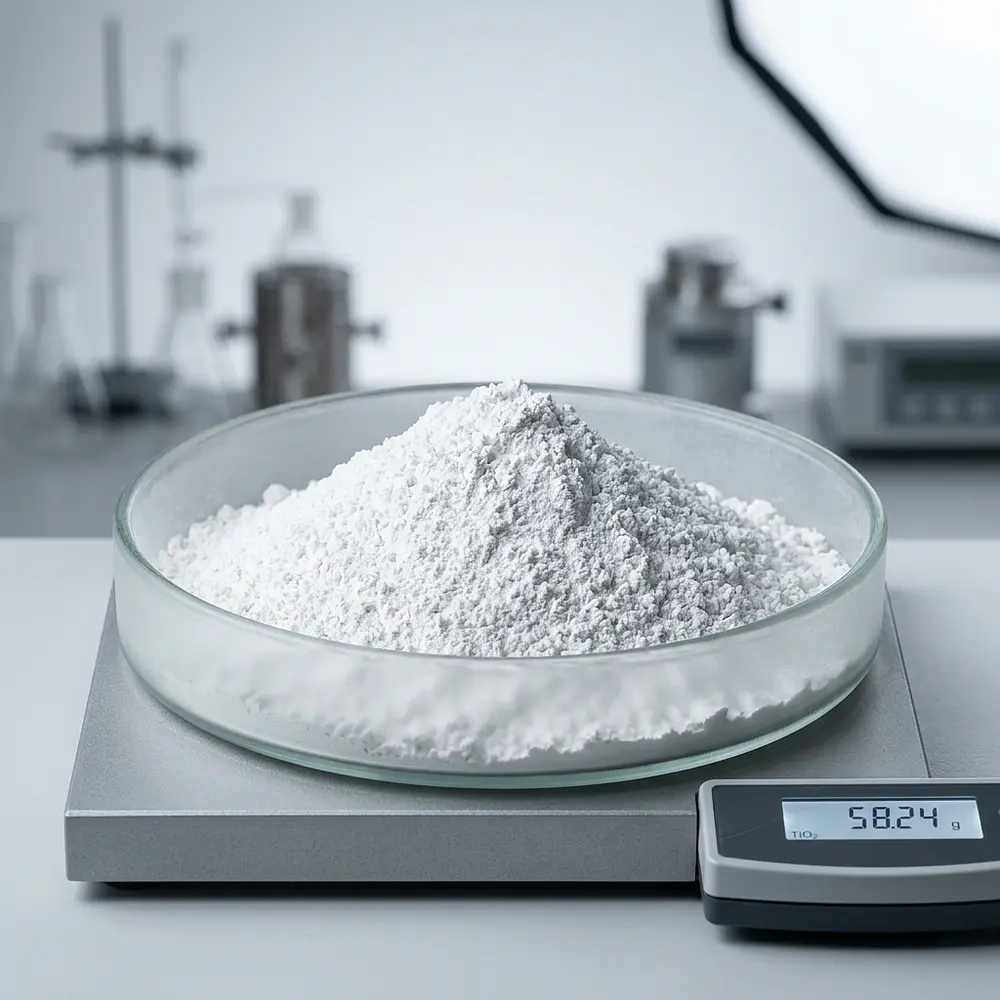
TiO₂ is the chemical formula for titanium dioxide. It is also called titanium(IV) oxide in formal nomenclature.
Is TiO₂ safe?
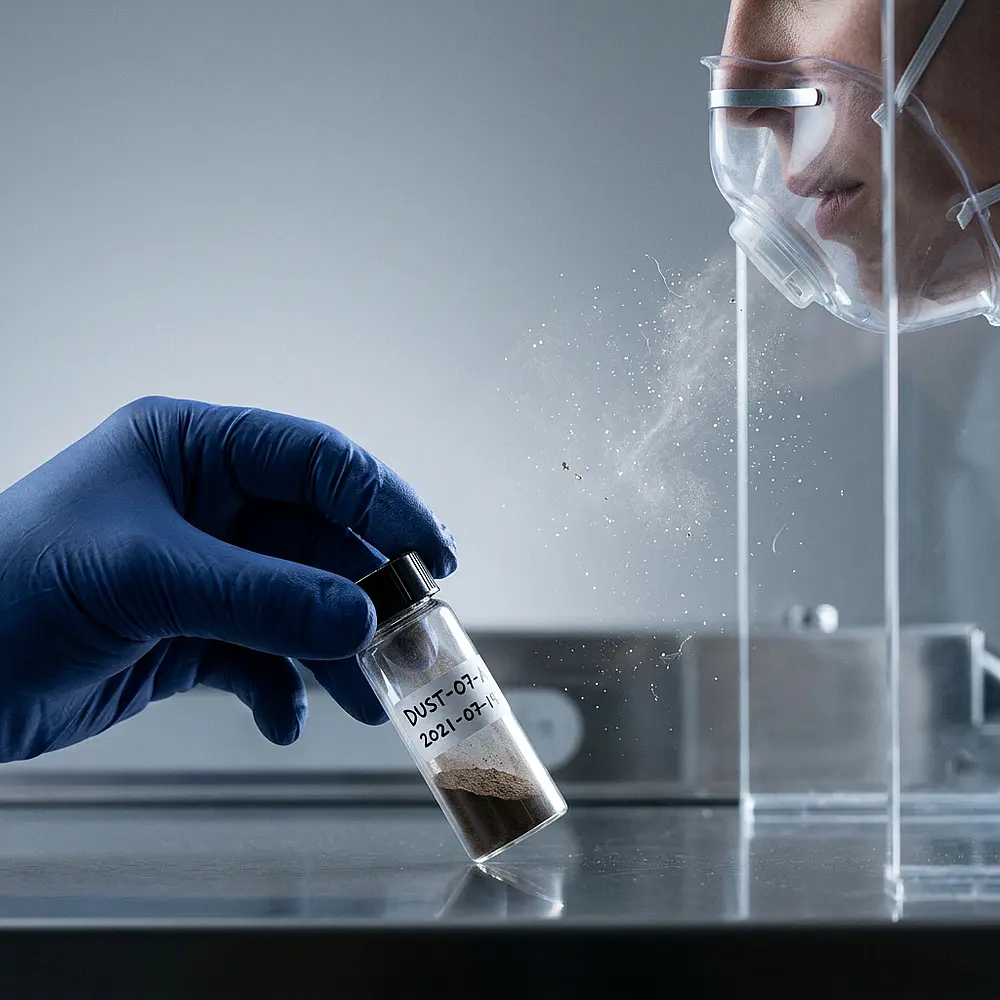
That depends on particle form, size, and how exposure occurs. Inhalation of respirable dust is regulated differently from dermal or bound-matrix uses, which is why safety discussions must be route-specific.
What is the difference between rutile and anatase TiO₂?
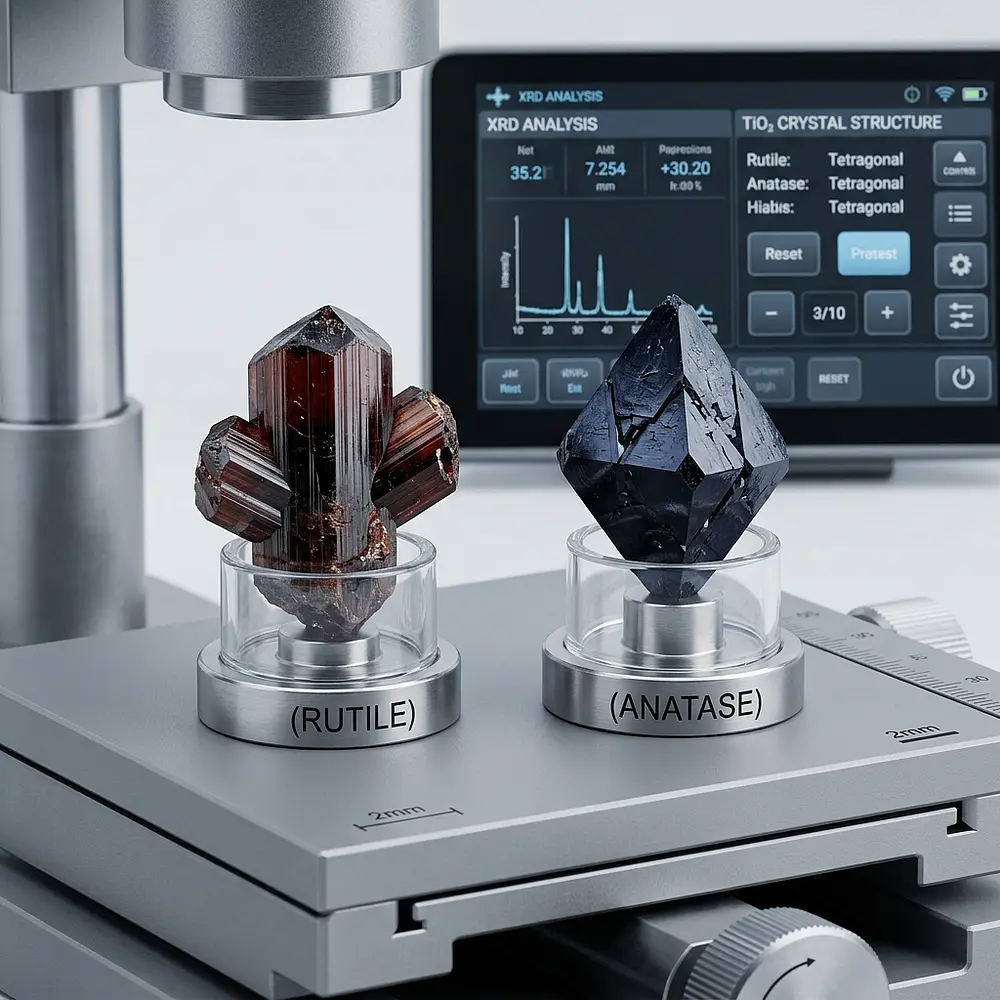
Rutile is preferred for pigment applications, while anatase is preferred for many photocatalytic uses. The difference comes from crystal structure, stability, and electronic behavior rather than from chemical composition.
Is TiO₂ the same as titanium dioxide?
Yes. There is no chemical difference between the two terms; one is the formula, the other the common name.
Sources and Data Citations
Chemical identity and general substance data
- PubChem Compound CID 26042: Titanium dioxide — molecular weight, naming, appearance, insolubility summary, registry identifiers.
- NIST Chemistry WebBook: Titanium dioxide — thermodynamic and physical reference data including melting point and boiling point entries.
Optical and crystallographic constants
- CRC Handbook of Chemistry and Physics — density and refractive-index reference values for rutile and anatase.
- Burdett, Hughbanks, Miller, Richardson, Smith, Journal of the American Chemical Society 109 (1987): structural interpretation of rutile, anatase, brookite relationships.
- Diebold, “The surface science of titanium dioxide,” Surface Science Reports 48 (2003): phase behavior, electronic structure, band-gap reference discussion.
- Tang, Berger, Schmid, Lévy, Burri, “Photoluminescence in TiO₂ anatase single crystals,” Solid State Communications 87 (1993): anatase band-gap literature reference.
Regulatory and safety sources
- IARC Monographs, Volume 93: Carbon Black, Titanium Dioxide, and Talc — basis of Group 2B inhalation classification.
- U.S. FDA, 21 CFR 73.575 — titanium dioxide as a color additive in food.
- EFSA Journal (2021), safety assessment of titanium dioxide as food additive E171 — genotoxicity concern could not be excluded.
- European Commission regulation implementing the E171 food-use prohibition from August 2022.
- California Proposition 65 listing language for titanium dioxide — airborne, unbound particles of respirable size.
Note on data interpretation
Band-gap values for TiO₂ are literature values that can shift with method, temperature, crystallinity, and defect chemistry. Where a single number is shown on this page, it is intended as a standard reference value for comparison, not as a universal constant under all measurement conditions.
Why does TiO2 have such a high refractive index?
TiO2 has a very high refractive index because its electrons are highly polarizable and respond strongly to incoming light. In simple terms, the titanium–oxygen bonds and the dense crystal structure slow and bend light very effectively. The crystal form also matters: rutile TiO2 has a higher refractive index than anatase, which is why rutile is especially valued as a white pigment. This strong light interaction gives TiO2 excellent opacity, brightness, and scattering power. As a result, even small particles can reflect and diffuse visible light very efficiently, making TiO2 highly effective in paints, coatings, plastics, and sunscreens.
What physical properties make TiO2 an effective white pigment?
TiO2 is an effective white pigment mainly because of its very high refractive index, especially in the rutile form. This creates strong light scattering across the visible spectrum, which gives coatings and plastics exceptional whiteness, brightness, and hiding power. Its low absorption in visible light means it reflects rather than tints the material. Particle size is also critical: pigment-grade TiO2 is engineered to maximize scattering efficiency, typically in the submicron range. In addition, TiO2 is chemically stable, resistant to heat and UV light, and durable in many formulations. These properties make it one of the most efficient and widely used white pigments.
Why is anatase TiO2 preferred for photocatalytic applications?
Anatase TiO2 is preferred for photocatalytic applications because it usually shows higher photoactivity than rutile. Its crystal structure supports more efficient generation and separation of electron–hole pairs under UV light, which helps produce reactive species that break down organic pollutants, bacteria, or surface contaminants. Anatase also typically has a higher surface area and more active sites, especially in nano-sized form, which improves catalytic performance. In addition, its band structure is well suited for oxidation reactions. Although rutile is thermodynamically more stable, anatase is often more effective where strong photocatalytic efficiency matters, such as self-cleaning coatings, air purification, and water treatment.
Why is rutile considered the thermodynamically stable form of TiO2?
Rutile is considered the thermodynamically stable form of TiO2 because it has the lowest Gibbs free energy under normal temperature and pressure. In practical terms, this means rutile is the energetically most favorable crystal structure, so other forms such as anatase and brookite tend to transform into rutile over time or when heated. Rutile also has a denser, more compact atomic arrangement, which contributes to its greater stability. Anatase can still be preferred in some applications because of its higher surface reactivity, especially at the nanoscale, but from a purely thermodynamic viewpoint, rutile is the final and most stable phase of titanium dioxide.
What is the difference between rutile, anatase, and brookite TiO2?
Rutile, anatase, and brookite are the three main crystal forms of TiO2. They have the same chemical composition, but their atoms are arranged differently, which changes their properties. Rutile is the most thermodynamically stable and the most widely used industrial form, especially in pigments and coatings, because of its high refractive index, opacity, and durability. Anatase is less stable but usually more photoactive, so it is often preferred for photocatalysis and some UV-related applications. Brookite is the rarest form, less common in commercial products, and mainly of scientific interest. In nanoscale TiO2, these phase differences can become even more important.
What are the main crystal forms of TiO2?
The main crystal forms of TiO2 are rutile, anatase, and brookite. Rutile is the most thermodynamically stable form and is widely used in pigments, coatings, and UV-protection applications because of its high refractive index and durability. Anatase is less stable than rutile but often more photocatalytically active, which makes it useful in self-cleaning surfaces and environmental applications. Brookite is the rarest natural form and is used less often in industry because it is harder to produce and control. In practice, rutile and anatase are the most important commercial phases, while brookite is mainly of scientific interest.
What is the IUPAC name of TiO2?
The IUPAC name of TiO2 is titanium(IV) oxide. It is also commonly known as titanium dioxide, which is the widely used everyday and industrial name. The “(IV)” indicates that titanium is in the +4 oxidation state in this compound. TiO2 is a metal oxide best known for its bright white color, high opacity, and UV-blocking properties. It occurs naturally in mineral forms such as rutile, anatase, and brookite. In technical and commercial contexts, “titanium dioxide” is usually preferred, while “titanium(IV) oxide” is the more formal IUPAC designation.
What is the chemical formula of TiO2?
The chemical formula of titanium dioxide is TiO2. It consists of one titanium (Ti) atom and two oxygen (O) atoms, making it a metal oxide. TiO2 occurs naturally in minerals such as rutile and ilmenite and is commonly found in the crystal forms rutile, anatase, and more rarely brookite. It is widely used because of its bright white color, opacity, and UV-blocking properties. Depending on particle size, TiO2 is used as a pigment in paints and coatings or as a UV filter in sunscreens and cosmetics, with nano and micro forms showing different behaviors.
Is TiO2 the same as titanium dioxide?
Yes. TiO2 is simply the chemical formula for titanium dioxide, a metal oxide made of titanium and oxygen. It occurs naturally in minerals such as rutile and ilmenite and exists mainly in the crystal forms rutile and anatase, with brookite being rarer. In industry, TiO2 is commonly produced from titanium-containing ores, often via the sulfate process. It is widely used as a white pigment in paints, coatings, plastics, and pharmaceuticals, and as a UV filter in sunscreens. TiO2 can exist as micro- or nanoparticles; this matters because nano-sized forms may behave differently in terms of performance, exposure, and safety evaluation.
What does TiO2 stand for?
TiO2 stands for titanium dioxide, a compound made of titanium and oxygen. It is a naturally occurring metal oxide found in minerals such as ilmenite and rutile. TiO2 is best known as a bright white pigment, but it also appears in coatings, plastics, pharmaceuticals, and sunscreens because it can scatter light and block UV radiation. It exists mainly in the crystal forms rutile and anatase, with brookite being less common. TiO2 can be produced industrially from titanium-containing ores, often via the sulfate process. Its properties vary with particle size, so micro- and nano-sized TiO2 are used differently and assessed separately for safety.
Who are the major global producers and market drivers for TiO2?
Major global TiO2 producers include Chemours, Tronox, Venator, Kronos Worldwide, LB Group, and CNNC Hua Yuan Titanium Dioxide, with China playing an increasingly dominant role in both production and capacity expansion. The market is mainly driven by demand from paints and coatings, plastics, paper, and construction materials, where TiO2 is valued for whiteness, opacity, brightness, and UV resistance. Additional growth comes from cosmetics, sunscreens, inks, and selected pharmaceutical uses. Key market drivers also include urbanization, infrastructure spending, automotive production, packaging demand, and shifts toward higher-performance coatings, while energy costs, environmental regulation, and feedstock availability strongly influence global competitiveness.
How is TiO2 classified by regulators such as IARC, FDA, and the EU?
Regulatory classification of TiO2 depends strongly on the exposure route and particle form. IARC classifies titanium dioxide as “possibly carcinogenic to humans” when inhaled, based mainly on animal data for airborne particles. The FDA allows TiO2 in certain uses, including as a color additive in foods, drugs, and cosmetics, within defined limits and specifications. In the EU, TiO2 is not broadly classified as carcinogenic in all uses, but powders containing a high proportion of fine particles carry an inhalation hazard classification. The EU has also taken a stricter approach for food use, while topical cosmetic use remains generally permitted under specific conditions.
Is TiO2 safe for human health?
TiO2 is generally considered safe in many everyday uses, but safety depends on particle size and exposure route. As a pigment or UV filter, micro-sized TiO2 is widely used in paints, coatings, cosmetics, and pharmaceuticals. On intact skin, including in sunscreens, it is generally regarded as low risk because it mostly stays on the surface. Nano-TiO2 needs a more careful assessment, as smaller particles can be more reactive. The main health concern is inhalation of fine dust, especially in industrial settings, where lung irritation may occur. Oral exposure is evaluated more cautiously. Overall, TiO2 is not equally risky in all forms or applications.
What is the difference between pigment-grade TiO2 and nanoscale TiO2?
Pigment-grade TiO2 consists of larger particles, typically in the submicron range, designed to maximize whiteness, opacity, and light scattering in paints, coatings, plastics, and paper. Nanoscale TiO2 uses much smaller particles, usually below 100 nm, which behave differently: they are more transparent in visible light, absorb and scatter UV more effectively, and often show higher surface reactivity. Because of this, nano TiO2 is commonly used in sunscreens, cosmetics, and some technical applications, while pigment-grade TiO2 is mainly used as a white pigment. Safety assessment also differs, especially for inhalation, since nanoscale particles can interact with biological systems differently.
How is TiO2 used in cosmetics and sunscreen?
TiO2 (titanium dioxide) is widely used in cosmetics as a white pigment and opacifier, giving products brightness, coverage, and a smooth appearance. In sunscreen, it acts as a mineral UV filter that reflects, scatters, and partly absorbs ultraviolet radiation, especially UVB and short-wave UVA. Rutile TiO2 is commonly preferred because it is more stable and less photo-reactive than anatase. Particle size matters: larger particles leave a visible white cast, while nano-sized TiO2 improves transparency on the skin. Safety is usually assessed by exposure route; in topical use, TiO2 is generally considered suitable on intact skin, while inhalation of powders requires more caution.
What is TiO2 used for in paints, plastics, and paper?
TiO2, or titanium dioxide, is mainly used as a white pigment and opacifier in paints, plastics, and paper. Its very high refractive index helps it scatter light efficiently, which gives products strong brightness, whiteness, and hiding power. In paints, TiO2 improves color coverage, durability, and UV resistance. In plastics, it adds opacity, brightness, and protection against sunlight-related degradation. In paper, it enhances whiteness, print quality, and smooth appearance. Depending on particle size and crystal form, especially rutile or anatase, TiO2 can also influence gloss and weather resistance, making it one of the most important industrial pigments worldwide.
What is the difference between the sulfate process and the chloride process for TiO2 production?
The two main industrial routes differ in feedstock, chemistry, and by-products. In the sulfate process, ilmenite or titanium slag is digested with sulfuric acid, forming titanium sulfate, which is then hydrolyzed and calcined to TiO2. It can handle lower-grade ores, but it generates more waste acid and iron sulfate. In the chloride process, high-grade rutile or upgraded feedstock is reacted with chlorine (usually with coke) to form titanium tetrachloride, which is purified and then oxidized to TiO2. This route is generally more efficient, continuous, and produces a purer pigment, with less waste, but it requires higher-quality raw materials and more complex equipment.
How is TiO2 manufactured industrially?
Industrial TiO2 is produced mainly from titanium-bearing ores such as ilmenite and rutile using two major routes: the sulfate process and the chloride process. In the sulfate process, ilmenite is digested with sulfuric acid to form titanium sulfate, which is purified, hydrolyzed, and then calcined to yield TiO2. In the chloride process, rutile or upgraded ore reacts with chlorine and carbon at high temperature to form titanium tetrachloride, which is purified and oxidized to TiO2. The final product is milled and often surface-treated to control particle size, brightness, durability, and performance in pigments, coatings, plastics, or UV-protection applications.
What are the melting point and boiling point of TiO2?
Titanium dioxide (TiO2) has a very high melting point of about 1,843 °C (3,349 °F), which reflects its strong thermal stability. Its boiling point is commonly reported at around 2,972 °C (5,382 °F), although in practice TiO2 may begin to decompose or sublime under extreme conditions rather than behave like a simple liquid. These high temperature limits are one reason TiO2 is widely used in demanding applications such as pigments, ceramics, coatings, and industrial materials. The exact behavior can also vary somewhat depending on the crystal form, mainly rutile or anatase, and on purity or particle size.
Is TiO2 soluble in water?
No. Titanium dioxide (TiO2) is generally considered insoluble in water. It does not dissolve like salt or sugar; instead, it remains as solid particles dispersed in the liquid. This is true for both the common crystal forms, rutile and anatase. In practice, TiO2 is often used in suspensions, coatings, sunscreens, and paints precisely because of this low solubility and high stability. However, particle size matters: nano-TiO2 does not become water-soluble, but its much smaller particles can stay suspended more easily and may behave differently in environmental or biological systems than larger, micron-sized TiO2 particles.