Titanium Dioxide Photocatalysis
Coatings that break down dirt, deactivate germs and are said to clean the air around them are usually sold with one simple promise: daylight is enough. The underlying physics behind that promise is genuine. Titanium dioxide is one of the best-characterised photocatalysts in materials science, and the reactions attributed to it really do occur. The difficulty sits one step earlier, at the light itself.
The mismatch behind that difficulty can be stated in a single sentence: titanium dioxide photocatalysis is driven by high-energy photons that sunlight delivers only in trace amounts. The oxide needs short-wavelength radiation to be switched on at all. Everything downstream — the radicals, the self-cleaning window, the impressive percentage figures in the literature — depends on that one gap between what the material can absorb and what the sun actually sends.
What follows is the mechanism rather than the brochure version: what happens inside the crystal when a photon is absorbed, under which lamps the most frequently quoted degradation figures were measured, and why a surface that performs well in a test chamber can remain chemically idle in a hallway. One further contrast runs through the material as a whole — the same compound is engineered to be as photoactive as possible in one industry and as inactive as possible in another.
Table of Contents
- How Titanium Dioxide Works as a Photocatalyst
- The Central Limitation: A UV Catalyst Under a Visible-Light Sun
- Reading Published Degradation Figures Correctly
- A Short History: From Water Splitting to Pollution Control
- Applications: What Photocatalytic TiO2 Is Actually Used For
- The Opposite Engineering Goal: Pigment-Grade Titanium Dioxide
- How to Judge a Photocatalytic Product Claim
- FAQ
How Titanium Dioxide Works as a Photocatalyst
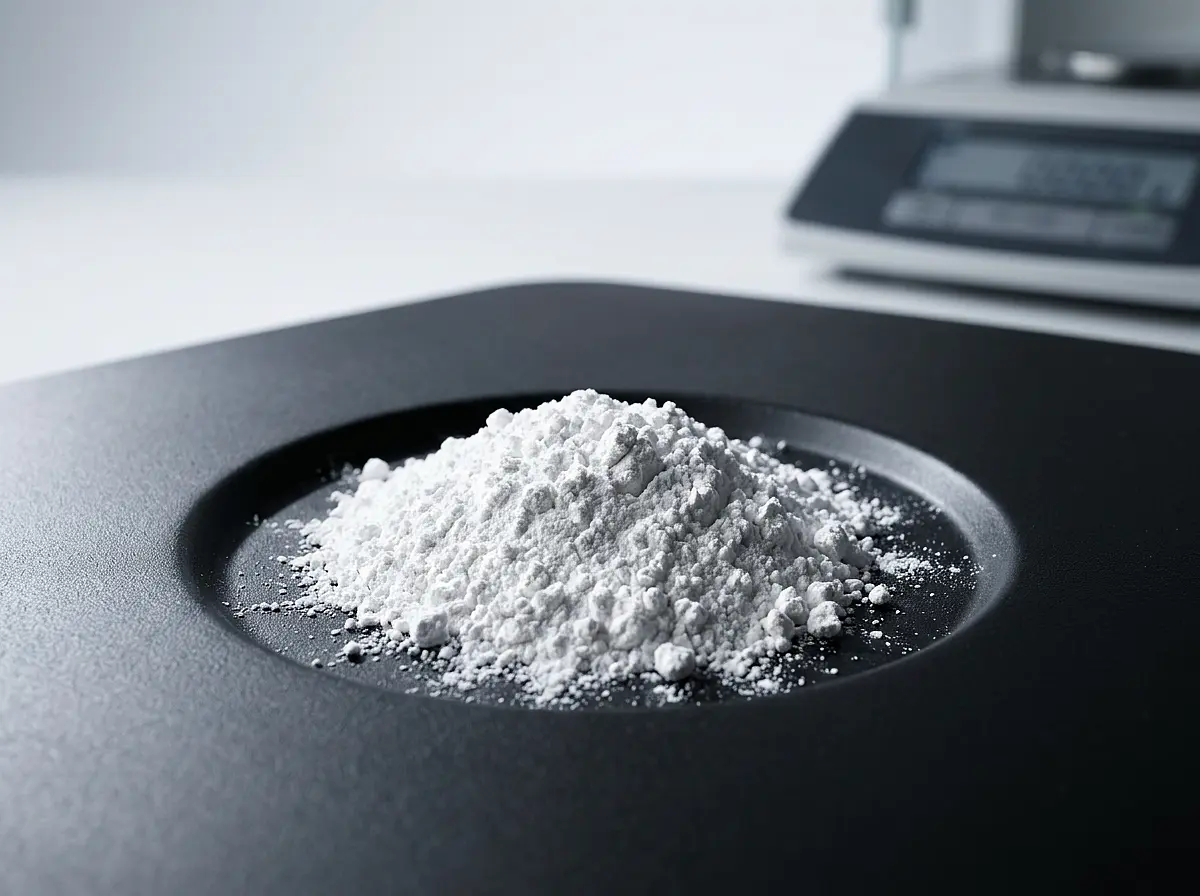
Titanium dioxide photocatalysis starts with a single physical event. A photon strikes the semiconductor, and if it carries enough energy, it lifts an electron out of the valence band into the conduction band. A positively charged vacancy — a hole — stays behind. Two mobile charge carriers with opposite roles now exist. The promoted electron acts as a reductant and can hand its charge to an acceptor such as adsorbed oxygen. The hole acts as an oxidant and pulls an electron out of whatever molecule sits on the surface. The catalyst itself is not consumed; it only mediates the transfer. Competing with this useful path is recombination, the reunion of electron and hole inside the particle, which the section on charge trapping deals with in full.
The review literature organises what follows into four stages: (1) photoexcitation, (2) charge-carrier trapping, (3) radical formation and (4) the oxidation reaction (Catalysts 2020, 10, 804). Stage 1 belongs to the band gap and the light that can drive it, stage 2 to trapping and charge separation, stages 3 and 4 to the reactive species and how they attack organic molecules. All four proceed in the same compound whose chemical identity and crystal structures are documented separately, and none of them starts a moment earlier than the first absorbed photon allows.
One gate condition governs everything downstream: without photons above the band-gap threshold, photocatalytic titanium dioxide performs no step of this chain at all.
Band Gap, Photon Energy and the 400 nm Threshold
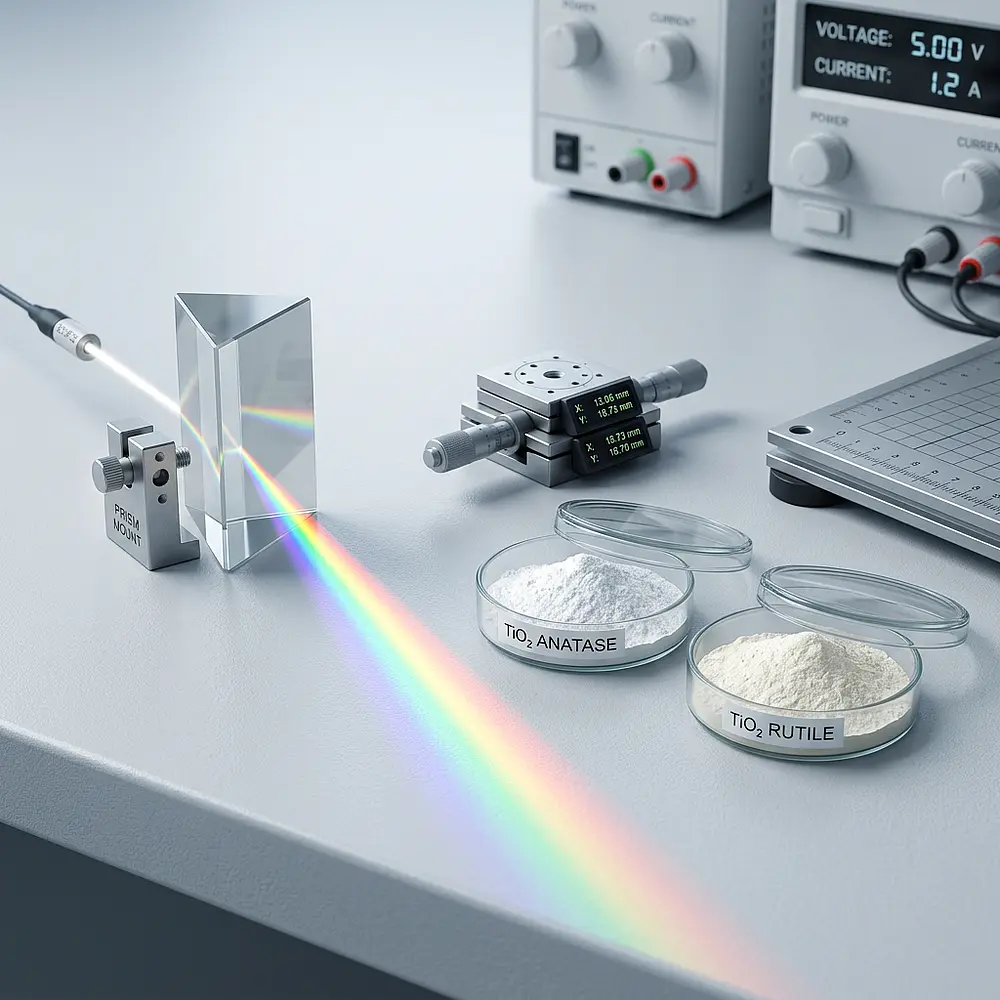
Stage 1 can be stated as a number. Anatase has a band gap of approximately 3.2 eV, rutile approximately 3.0 eV (Catalysts 2020, 10, 804), and because of this wide gap conventional titanium dioxide absorbs only ultraviolet radiation below roughly 400 nm. Band-gap excitation therefore requires photons with hv greater than 3.2 eV, which corresponds to a threshold in the range of roughly 380-410 nm depending on the phase and how the absorption edge is evaluated (Catalysts 2019, 9, 201). The exact position of that edge is one of the reasons behind the comparison of the two main crystal forms and why one of them is more photoactive, since gap width and carrier behaviour do not point in the same direction.
The logic that decides activation is worth spelling out, because it is routinely misunderstood. Absorption across a band gap is a per-photon event: a single photon either carries enough energy to lift a single electron over the gap, or it does not. What decides the outcome is the energy of the individual photon, which is fixed by its wavelength, while the brightness of the source is irrelevant to the question. A 450 nm photon carries about 2.8 eV. Send a hundred of them, or a hundred trillion, and none of them will excite the material; they pass through or scatter, and the surface stays chemically inert. Photons do not pool their energy.
This is why the TiO2 band gap forces you to think in wavelengths and spectra rather than in the vague category of "light". The only meaningful question about a light source here is how much of its output falls below the threshold.
Charge-Carrier Trapping and Why P25 Is the Yardstick
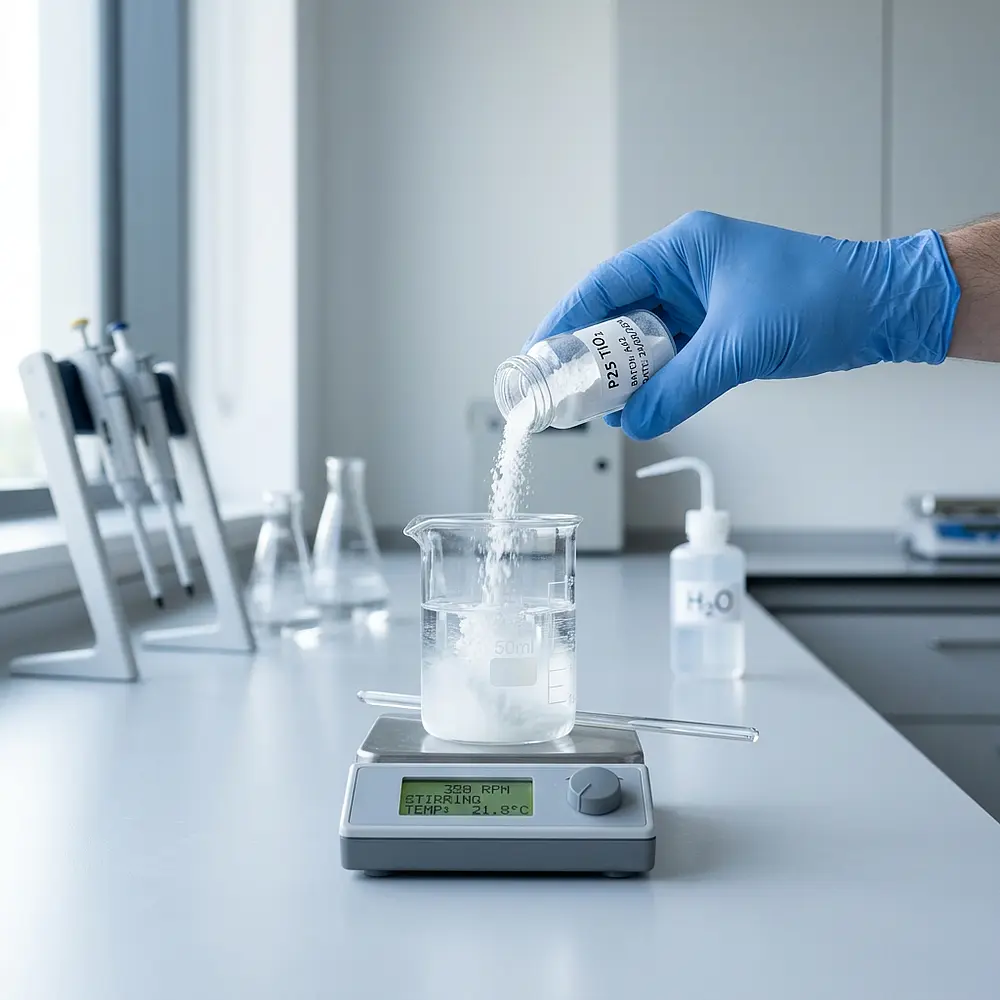
Once an electron-hole pair exists, it does not react immediately, and it may never react at all. Both carriers must first migrate to the particle surface, where they are held in trap states — surface sites, lattice defects and under-coordinated atoms that localise a carrier long enough for it to meet a reaction partner. Trapping is what buys the time a chemical step needs. Against it runs recombination, the direct route by which the promoted electron falls back into the hole and returns the absorbed energy as heat or weak luminescence, leaving no chemical trace whatsoever. The two processes draw on the same carriers, so they are in direct competition, and the competition is decided in the picosecond-to-nanosecond world inside the grain rather than at the surface: a carrier that has to travel far through a poorly crystallised particle meets more defect sites that act as recombination centres, while a small, well-ordered particle offers a short path to the surface. This is why particle size, crystallinity and surface state, not stoichiometry, decide how much of an absorbed photon flux ever becomes chemistry — and it is the first ceiling on the efficiency of titanium dioxide photocatalysis, one that exists even under perfect illumination. Energetically, trapped electrons in nanostructured anatase and in P25 TiO2 (anatase:rutile ratio approximately 80:20) sit roughly 0.25-0.4 eV below the conduction-band edge (Catalysts reprint "Titanium Dioxide Photocatalysis", doi:10.3390/catal8120591), so trapping itself costs part of the driving force gained from excitation.
P25 matters methodologically as well as materially. It has served for decades as the reference material against which a newly synthesised photocatalyst is benchmarked. An activity claim reported without a side-by-side P25 comparison is hard to interpret, because degradation rates depend on lamp power, catalyst loading, reactor geometry and adsorption behaviour, and each of those can be varied until almost any powder looks impressive. Its mixed-phase character is also of physical interest: at the boundaries between the two crystalline forms, carriers can be separated across the interface, one carrier sitting preferentially in each phase, which is exactly the geometry that starves recombination of partners.
The key point of this stage: losses inside the particle already cap what the material can do, before the entirely separate, external question of how much usable light it ever receives is even raised.
Reactive Oxygen Species: What Actually Does the Chemistry
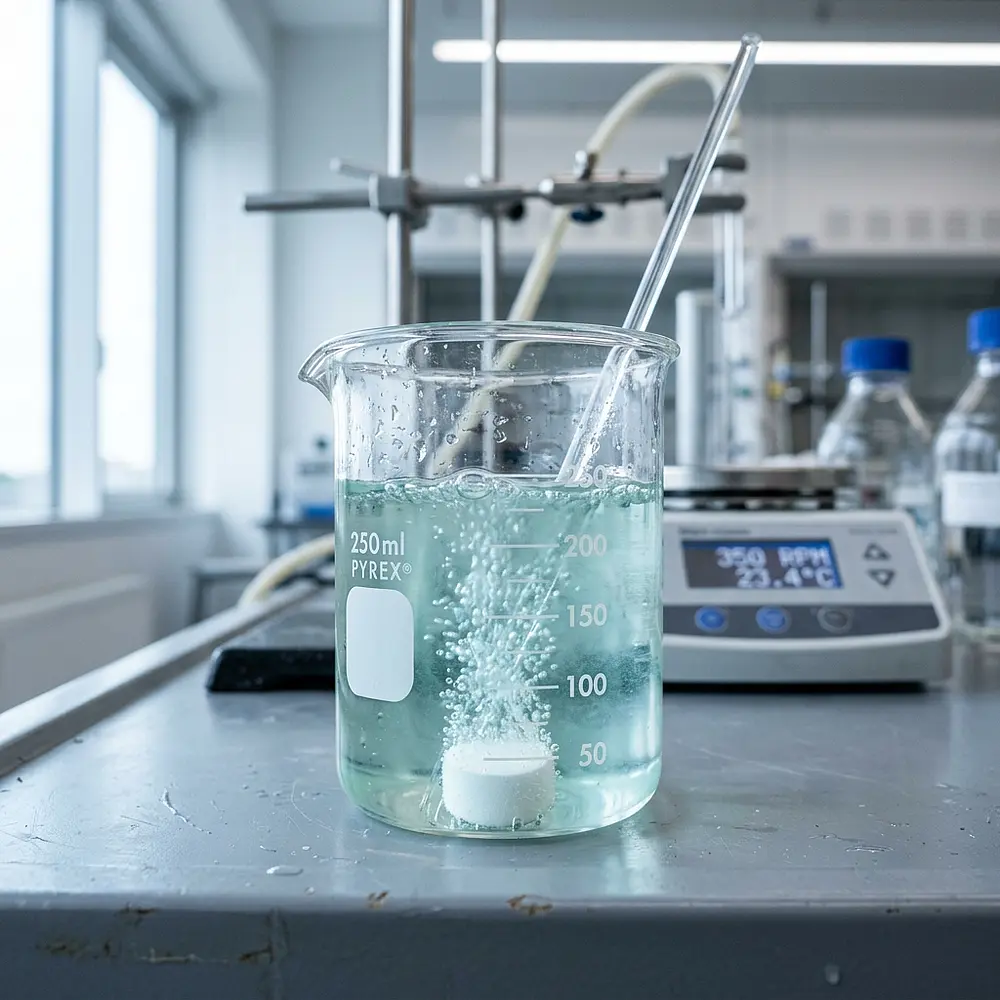
Stages 3 and 4 are where the chemistry finally happens, and they contain a conceptual point that most descriptions blur: the oxide does not consume the pollutant. Trapped holes and electrons transfer their charge to adsorbed water and oxygen, and it is the resulting reactive oxygen species that attack organic molecules. The verified inventory formed on irradiated titanium dioxide comprises superoxide radicals (O2 radical anion), hydroperoxyl radicals (OOH), hydrogen peroxide (H2O2) and hydroxyl radicals (OH) (Catalysts reprint "Titanium Dioxide Photocatalysis", doi:10.3390/catal8120591). These same species are the common chemical basis of water purification, air cleaning, self-cleaning and self-sterilisation — four fields that look unrelated but run on one mechanism, and which are set out separately in the overview of application areas for the material.
The reaction partners named above dictate what the process needs in order to run, and this is the canonical list the rest of the page refers back to: ultraviolet above the band-gap threshold, molecular oxygen at the surface, water or ambient moisture, and physical contact between the contaminant and the catalyst. In dry, oxygen-poor conditions the chain stalls after charge trapping. The last condition makes the process strictly surface-bound: the radicals listed above are short-lived and are destroyed within nanometres of where they form, so a molecule that never adsorbs onto the particle is never reached, which puts adsorption on the same level of importance as light supply.
Finally, the honest reading of results. Measurable disappearance of a substance does not automatically mean full mineralisation to carbon dioxide and water — partial oxidation products can persist. And a concentration drop may equally stem from adsorption onto the catalyst or from direct photolysis by the lamp. Any serious assessment separates these three contributions by control experiments before calling the effect photocatalytic.
The Central Limitation: A UV Catalyst Under a Visible-Light Sun

The threshold now has to be held against the light that actually arrives. Of the sunlight reaching the Earth's surface, only roughly 4-5 % is ultraviolet: Catalysts 2019, 9, 201 puts the figure at 4 %, Catalysts 2020, 10, 804 gives approximately 5 % for the ultraviolet fraction below 400 nm. Two independent reviews, the same order of magnitude. Everything from the visible range upward — which is to say almost all of the solar photons in energetic terms — passes the surface without producing a single electron-hole pair. Titanium dioxide photocatalysis under the open sky therefore draws on the narrowest slice of the spectrum available to it.
This is not an outside criticism of the material. The review literature states it plainly in its own terms: the main drawback of TiO2 photocatalysts remains their inability to absorb and convert visible light. That sentence appears in the field's own summaries of the state of the art, not in sceptical commentary about it.
It is worth being precise about what kind of limit this is. Nothing here is a manufacturing defect, a quality problem or a matter of purity; it follows directly from where the absorption edge of the oxide sits relative to the solar spectrum. Physics, not product. Three consequences follow, and each is treated below: what this means for a coated surface in everyday light, why the material is nevertheless used on a large scale, and how research has responded.
Why a TiO2 Surface Indoors Does Almost Nothing
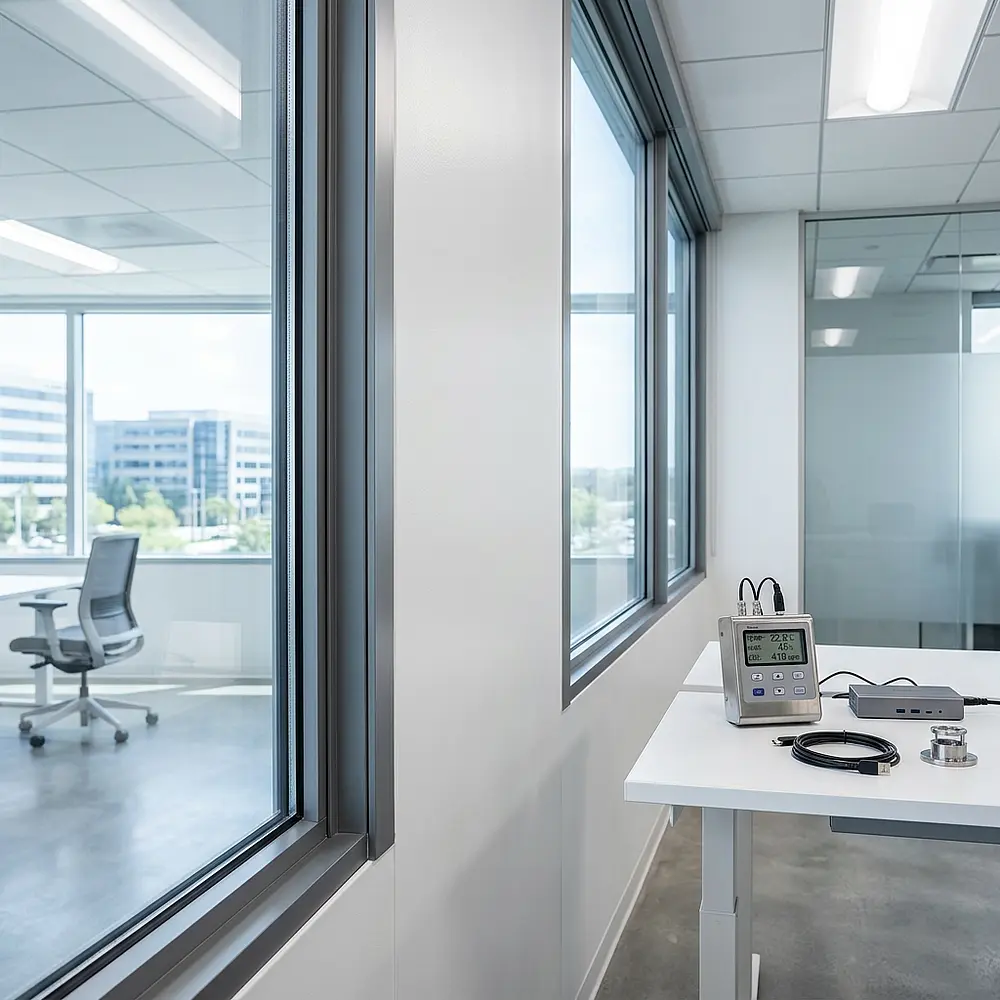
Take an ordinary living room. Its illumination comes from lamps designed to look pleasant to the eye, and eye-pleasing means visible: the output of typical indoor lighting contains virtually nothing below 400 nm. Whatever ultraviolet does reach the room through a window is largely absorbed by the glazing itself. Both statements describe ordinary optical behaviour of lamps and glass rather than findings from the reviews cited on this page, but they decide the outcome: the spectrum arriving at an interior surface is cut off precisely where excitation would begin. The chain then fails at its first link, and it fails completely — no photons above the threshold energy, no electron-hole pairs, and therefore neither the radical chemistry described above nor the switch to a superhydrophilic surface state. A photocatalytic coating under indoor light is an unactivated catalyst, chemically indistinguishable from an inert oxide layer for as long as the ultraviolet is missing.
Outdoors the situation improves without becoming reliable. A passive exterior surface is tied to whatever solar ultraviolet irradiance happens to fall on it — the narrow share quantified in the previous section — so its activity rises and falls with cloud cover, season, time of day, the compass orientation of the facade and any shading from trees or neighbouring buildings. In practice, titanium dioxide photocatalysis on such a surface behaves less like a fixed property of the coating and more like a running function of the local light supply.
What cannot be claimed here is that such coatings measurably improve urban air quality. That is a question of real-world scale and measurement, and the evidence for it is not covered by the sources used on this page.
Why Titanium Dioxide and Not a Visible-Light Semiconductor
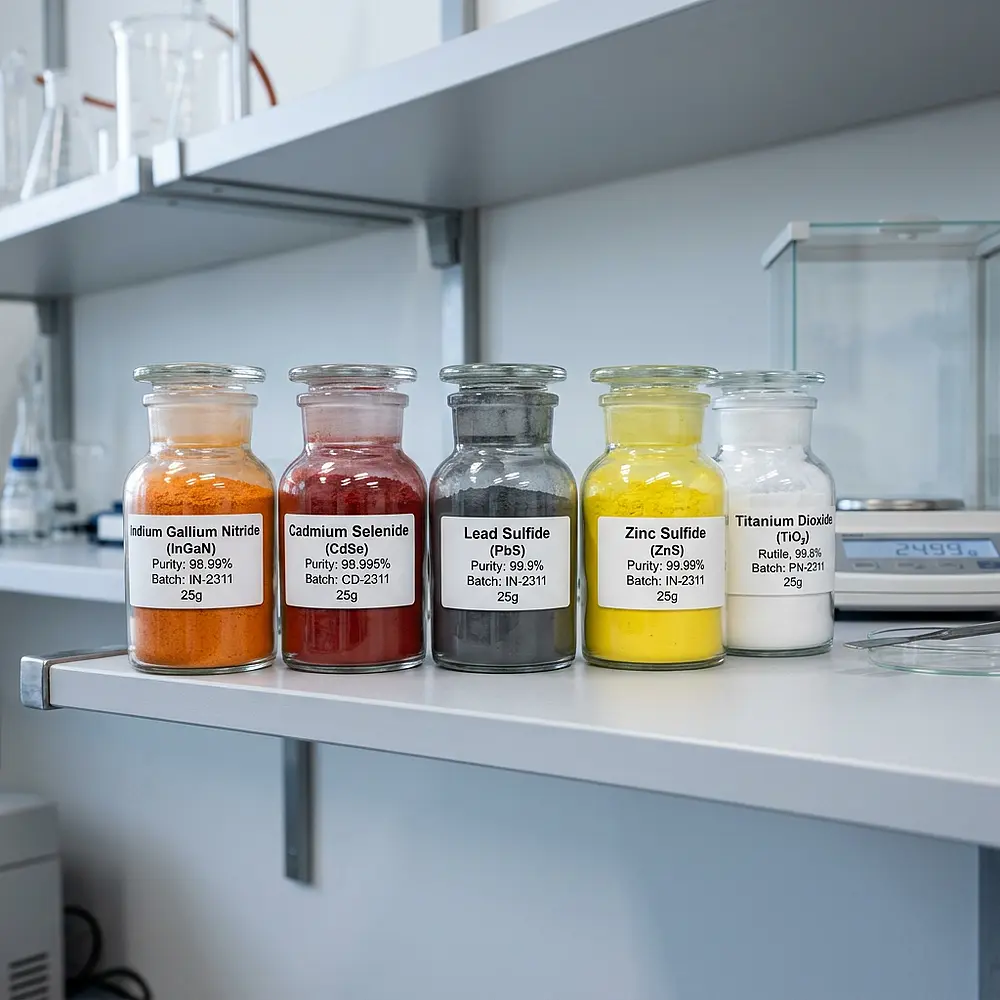
The objection writes itself: if a material can only use a sliver of the solar spectrum, why has it not long since been replaced by something that absorbs across the visible range? The answer is an engineering trade-off rather than a physical one. Titanium dioxide is chemically and photochemically stable in water, comparatively inexpensive, low in toxicity in its bulk form and genuinely abundant — titanium holds the tenth highest Clarke number, which places it among the common elements of the Earth's crust rather than among the rare ones (Catalysts 2019, 9, 201). A photocatalyst has to survive its own chemistry: it sits in water or humid air and generates aggressive oxidising species directly at its own surface, which is exactly the environment in which most materials fail.
And many visible-light absorbers do fail there. Narrower-gap semiconductors can be oxidised or dissolved by the very charge carriers they generate — photocorrosion, a textbook phenomenon of semiconductor electrochemistry rather than one of the figures reported in the reviews above — while others depend on scarce or costly elements, or contain heavy metals that make large-area outdoor use unattractive. Against that background, a material that works reliably on a narrow slice of the spectrum can easily outperform one that absorbs beautifully for a few hundred hours and then degrades. Longevity is a performance figure, not a footnote.
The same properties explain why titanium dioxide photocatalysis has remained the reference system in research as well as in practice. Stability and availability are what make anatase-based powders the preferred substrate for doping, sensitisation and composite strategies, and why modification of the established host material stays more attractive than the search for an entirely different one.
Doping and Composites: The Field's Response, Not a Solved Problem
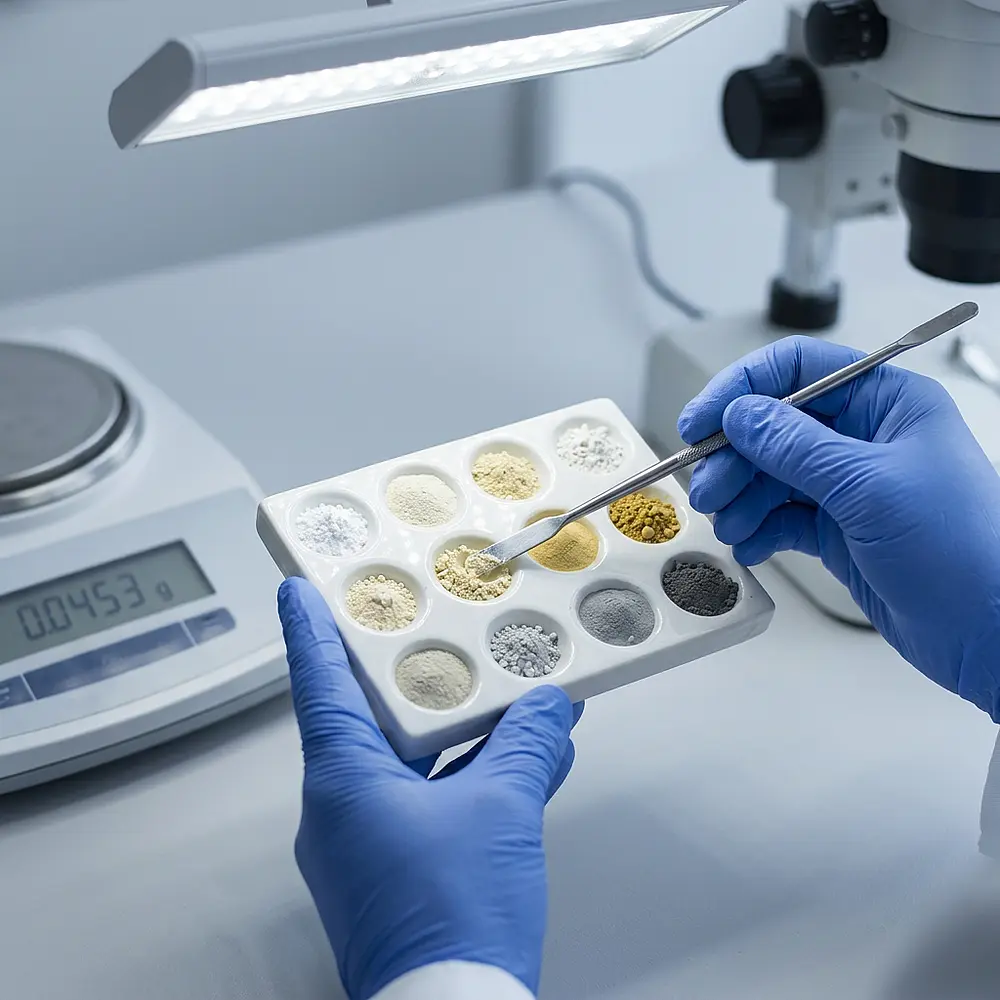
The response of the discipline to this ceiling has been a decades-long effort to move the absorption edge, and it runs along several lines at once. The target quantity is explicit: genuine band-gap narrowing means bringing the anatase gap of about 3.2 eV down far enough for visible photons of two to three electronvolts to become useful. Metal doping introduces cations into the lattice, non-metal doping works with nitrogen, carbon or sulfur on oxygen sites, and defect and oxygen-vacancy engineering deliberately creates sub-band-gap states. Alongside these sit dye and quantum-dot sensitisation, heterojunctions with a second semiconductor, and composite architectures in which the oxide is only one component. A parallel strand is morphological: nanotubes, nanosheets, nanowires and thin films shorten the distance a carrier must travel to reach the surface, which addresses the loss mechanism set out in the trapping section rather than the absorption problem.
All of this is a research direction, and none of it should be read as a finished product available off the shelf. Approaches to visible-light-driven titanium dioxide photocatalysis exist in enormous number in the literature, yet a coating advertised as visible-light-active still deserves the question of what exactly absorbs the light.
That question exposes a distinction marketing routinely blurs. Genuine band-gap narrowing changes the electronic structure of the oxide itself. Sensitisation and surface-complex formation do something else. An adsorbed dye or a newly formed surface species absorbs the longer wavelength and injects a carrier, while the oxide's own absorption edge stays where it was. Both can produce a measurable response beyond the ultraviolet threshold, but they rest on different physics and they age differently. Improved visible absorption is also frequently paid for elsewhere, because dopants and lattice defects can themselves become the sinks described in the trapping section. Sensitisers and narrow-gap partners tend in addition to be the least durable component of the whole system.
Reading Published Degradation Figures Correctly
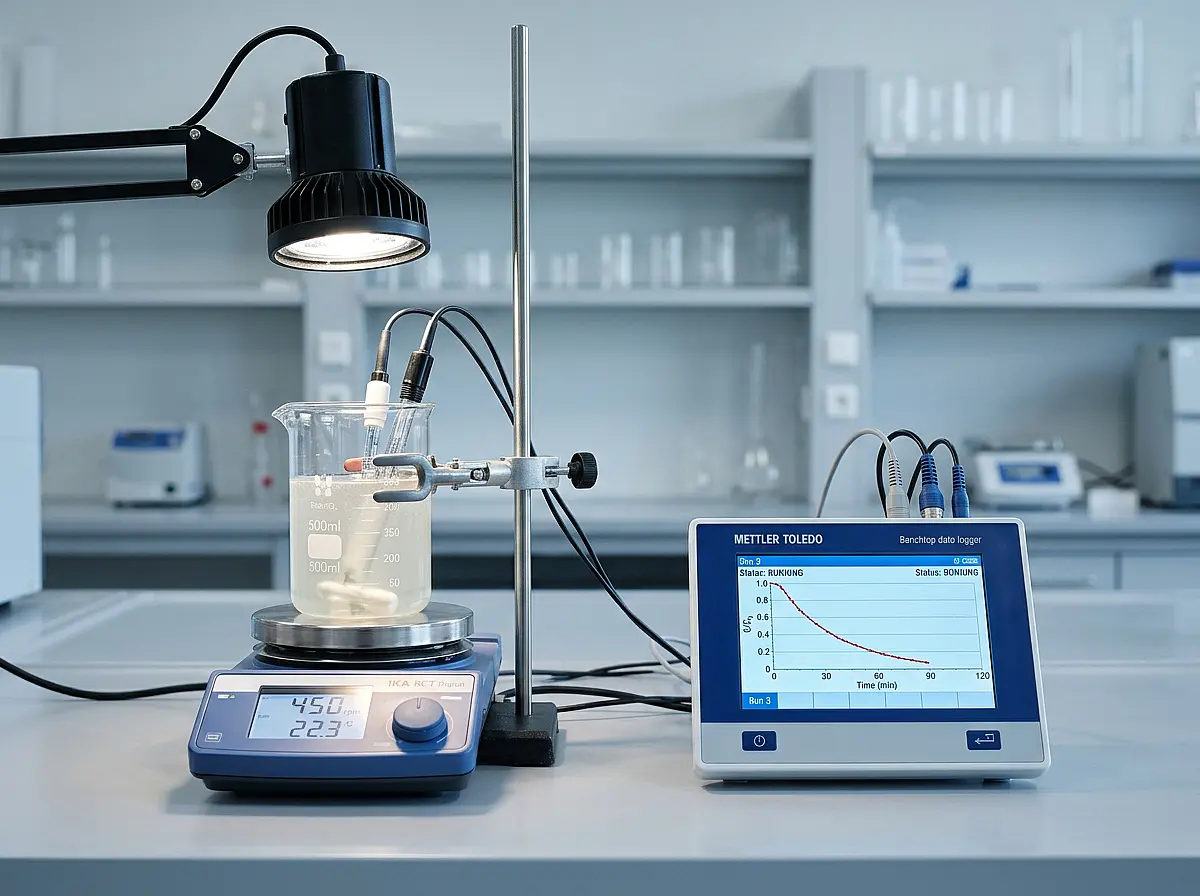
A number like "95 % degradation" looks like a property of a material, in the way that a melting point or a density is. It is nothing of the sort. What such a figure reports is the loss of one model substance under one particular lamp, at one irradiance, with one catalyst loading, one starting concentration and one reaction time, inside a reactor of defined geometry. The percentage characterises that entire arrangement. Remove the powder from the arrangement and the number does not travel with it.
The clearest way to see this is to take one figure and let it describe two incompatible materials. Ninety-five per cent conversion reached after twenty minutes and ninety-five per cent reached after eight hours are the same headline value, but the second run took twenty-four times as long to arrive there. Averaged over the run, the slow system converts a small fraction of what the fast one does per unit time — and yet both are marketed with the identical claim, because the endpoint was quoted and the clock was not. A percentage without a run time is not a weak specification; it is not a specification at all.
The same figure splits a second time along the choice of target substance. Take 95 % of a strongly adsorbing dye and 95 % of a colourless phenolic compound. The dye accumulates on the catalyst surface before the lamp is even switched on, it absorbs visible light itself, and the first oxidative attack on its chromophore is enough to make the solution look treated, long before the carbon skeleton has gone anywhere. The phenolic adsorbs weakly, offers no optical shortcut and is only detectable by analysis. Two runs, one number, two entirely different amounts of chemistry — and the harder case is almost never the one on the data sheet. The two sections that follow take the question apart along its remaining axes: the conditions under which the most frequently quoted figures for titanium dioxide photocatalysis were produced, and why a fixed layer is a different reactor from a stirred suspension.
Reported Laboratory Results and Their Lamp Conditions

The figures most frequently quoted in this context all come from one review (Catalysts 2020, 10, 804), and each of them only means anything together with the lamp that produced it: methyl orange was degraded up to 99 % by TiO2@SiO2 under a 500 W mercury lamp, 4-chlorophenol up to 95 % by Yb/Er/Ce-doped TiO2 under a xenon lamp, and rhodamine B up to 95 % by MoS2/MoO3/TiO2 under a 300 W xenon lamp. The caveat that belongs to every one of these values must be stated in full and without softening: these are laboratory results obtained under high-power artificial lamps in the 300-1500 W range, not under sunlight, and they are not transferable to real-world surfaces.
Why that matters is a question of photon supply. The irradiance and, above all, the ultraviolet content delivered by a mercury or xenon source of that class exceed by a wide margin anything a coated facade, a pavement slab or a window pane ever receives, so the photocatalytic degradation rate recorded in such a run describes an optical situation that does not exist outdoors. The chemistry of the test system is equally favourable: the substrates are clean, single-compound solutions at known concentration, freely accessible to the catalyst surface, whereas a real surface carries a mixed, aged film of soot, grease, mineral dust and biological residue competing for the same active sites. None of the percentages above should be extrapolated to practice; each of them is a description of its own reactor.
From Suspension to Surface: Why Coatings Perform Differently
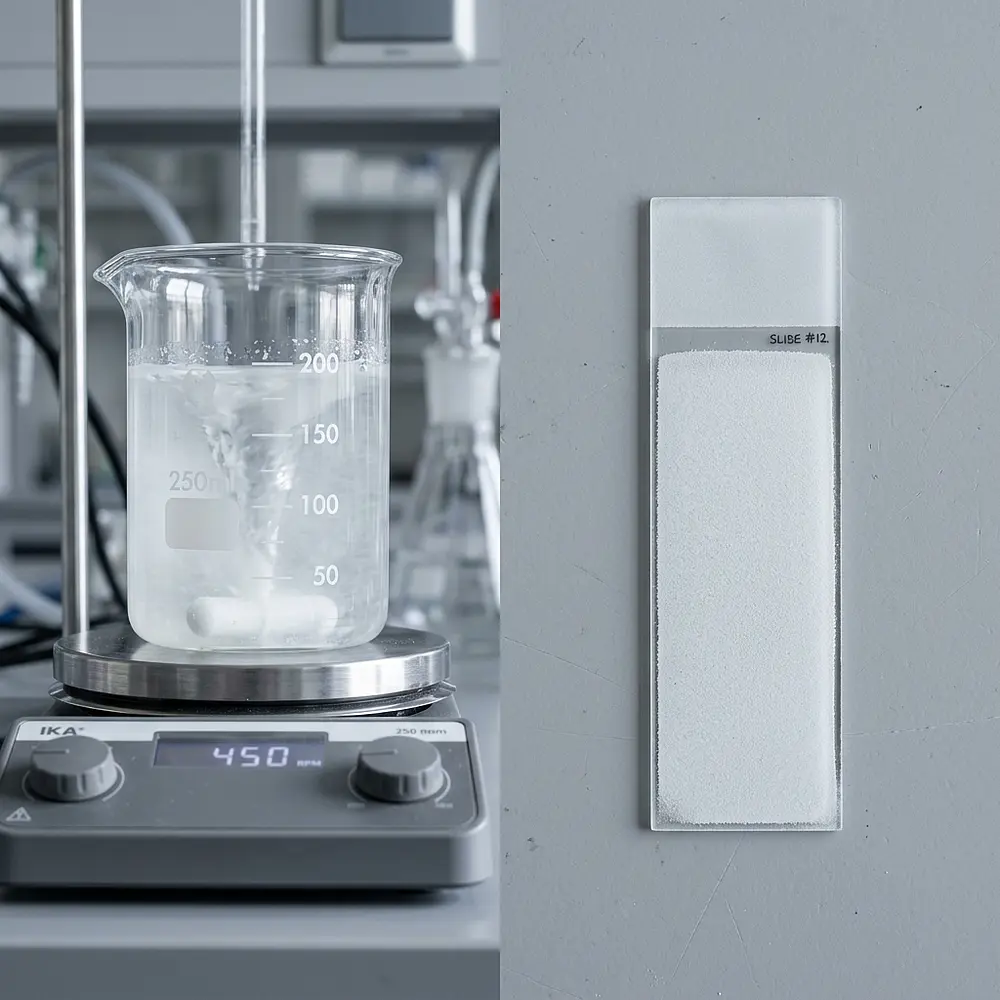
A stirred suspension and a coated wall are two different reactors, not two versions of the same one. Picture the geometry behind the published values: a lamp mounted centimetres from a small illuminated vessel, the powder dispersed so that every particle is surrounded by liquid, the illuminated surface area per unit volume enormous, the stirrer forcing the target molecule against the catalyst thousands of times over a batch that is allowed to run for minutes to hours until the curve flattens. Contact is guaranteed mechanically, and time is granted generously. A fixed layer inverts all of that at once, and the inversion has nothing to do with the quality of the powder.
Start with the optics of a solid layer. Titanium dioxide scatters and absorbs strongly, so the radiation is consumed within the first few particle diameters. Only that outermost skin generates charge carriers; everything beneath it is optically dead material that adds cost, thickness and mechanical anchoring, but no chemistry. Increasing the coating weight past the point of full optical opacity therefore buys abrasion resistance, not activity — which is why layer thickness and catalyst loading have to be read as two separate specifications rather than as one dial labelled "more".
Then the transport problem, which is the part competitor pages almost never name. Because the oxidising species remain, as shown earlier, bound to the place where they are generated, the pollutant has to come to them: it must leave the bulk of the passing air or water, cross the slow boundary layer that clings to any wall in a flow, and adsorb onto an active site. Each of those steps takes time, and time is exactly what the geometry of a facade withholds — a molecule carried past an overflowed surface has a residence time of seconds or fractions of a second, against the hours granted to the stirred batch above. Ambient contamination also arrives far more dilute than the model solutions of a test reactor, so the number of productive molecule-surface encounters per unit time is smaller for two reasons simultaneously. That is ordinary reaction engineering, and it explains why a fixed layer can be perfectly well illuminated and still convert almost nothing: molecular transport becomes the rate-limiting step, independent of photon supply.
Soiling then closes the loop from both ends. A film of dust, soot or biofilm sits on top of the only optically active particle layer and shades it, and the same film occupies the adsorption sites the reaction needs — one deposit disables the light path and the contact path at once, and neither can compensate for the other. Over years of service, mechanical abrasion and photochemical stress on the binder additionally loosen material from that reactive skin, and because what is released is nanoscale and, unlike ordinary dust, still carries an intact photoactive surface, the safety discussion around photocatalytically active nanoparticles is raised specifically for such systems rather than for coatings in general.
A Short History: From Water Splitting to Pollution Control
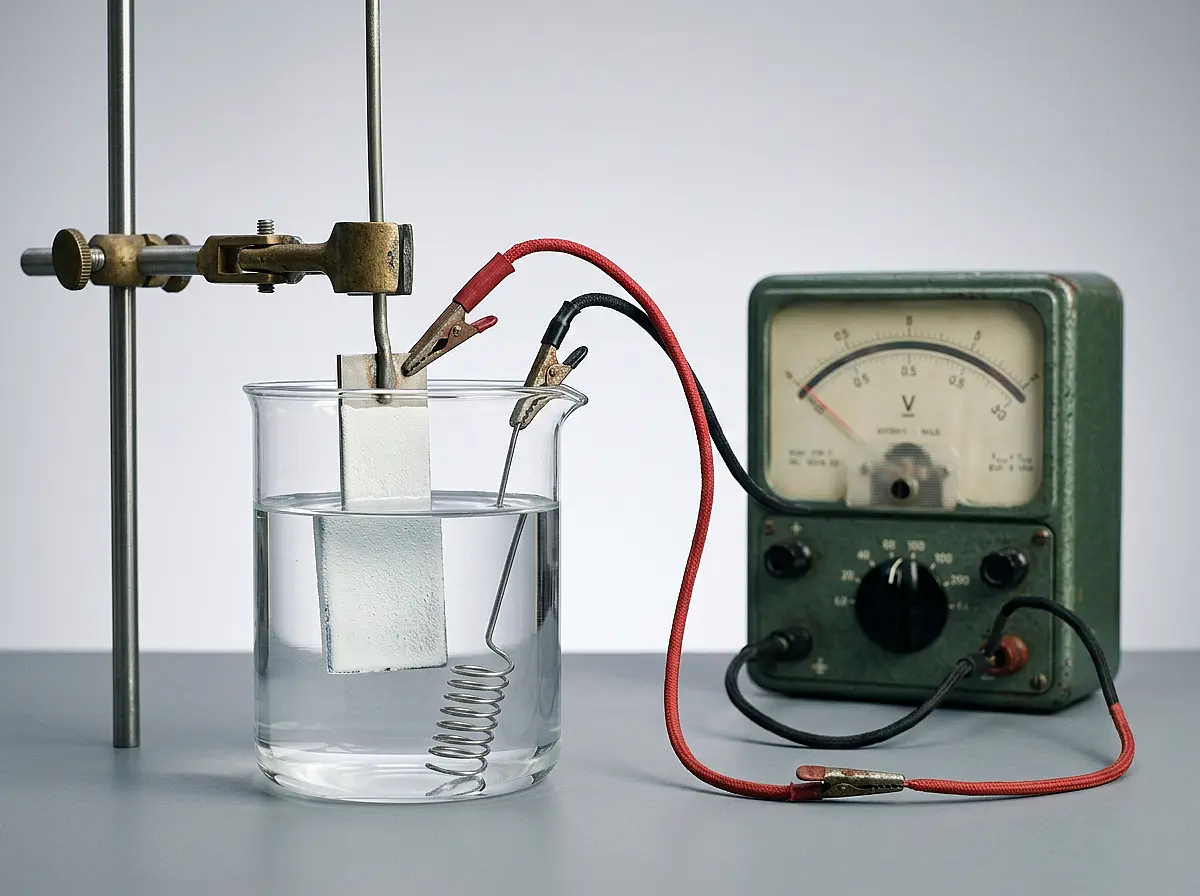
The landmark that anchors the field is Fujishima and Honda, Nature 238 (1972), pages 37-38, reporting photoelectrochemical water splitting on a titanium dioxide electrode: light absorbed by the semiconductor drove the decomposition of water, turning photon energy into chemical energy. Earlier work exists, and a 2019 Catalysts editorial dates the seminal research to 1971; that year should not be read as the publication date of the Nature paper, and no separate citation is claimed for it here. The Fujishima Honda 1972 report remains the reference commonly cited, and it is cited on this page for what it demonstrated physically — that band-gap excitation in an oxide can be harnessed for a useful chemical reaction — rather than for any priority claim.
The move towards environmental use followed within a few years. In 1976, photocatalytic treatment of polychlorinated biphenyls achieved near-complete dechlorination, and in 1977 titanium dioxide was identified as effective for degrading cyanide (Catalysts 2020, 10, 804). Those two steps mark a genuine conceptual shift. The 1972 experiment used the photogenerated carriers to store energy in a fuel; the later work used the same carriers to destroy something, letting the oxidising side of the reaction attack a pollutant instead of producing hydrogen.
Both directions rest on one mechanism. The absorbed photon creates an electron-hole pair; whether the electron reduces water at a counter-electrode or oxygen at a particle surface, and whether the hole releases oxygen or initiates radical chemistry, is a matter of configuration and reaction partners, not of different material behaviour.
Applications: What Photocatalytic TiO2 Is Actually Used For

Sorting this technology by pollutant class explains very little, because the chemistry underneath water purification, air cleaning, self-sterilisation and self-cleaning surfaces is identical in all four. The useful cut runs elsewhere, and it is a question of ownership rather than of chemistry: who controls the light? Three of the operating conditions listed in the section on reactive species can be arranged by whoever designs the system. The first one cannot, unless the system supplies it itself.
That yields two classes with genuinely different engineering logic. Where an artificial ultraviolet source is part of the design, photon supply becomes a specified quantity that can be dimensioned, tested and documented. Passive surfaces are the mirror image: a coated facade, pavement or pane draws on ambient solar ultraviolet, which no specification sheet can guarantee.
The sharpest practical difference shows up when performance drops. In an engineered installation, the cause is diagnosable and the remedy is a defined maintenance event — a lamp is measured, replaced, and the system returns to its commissioned state. On a passive surface there is nothing to swap. Weather is not a maintainable component; a run of overcast weeks or a newly built neighbour that shades the wall reduces the effect, and no service call restores it. Applications of titanium dioxide photocatalysis therefore divide into engineered systems, which can be commissioned against a measurable target and repaired, and opportunistic ones, which can only be described in terms of favourable and unfavourable exposure. The two sections below take each class on its own terms.
Engineered UV Systems: Water Treatment, Air Cleaning, Disinfection
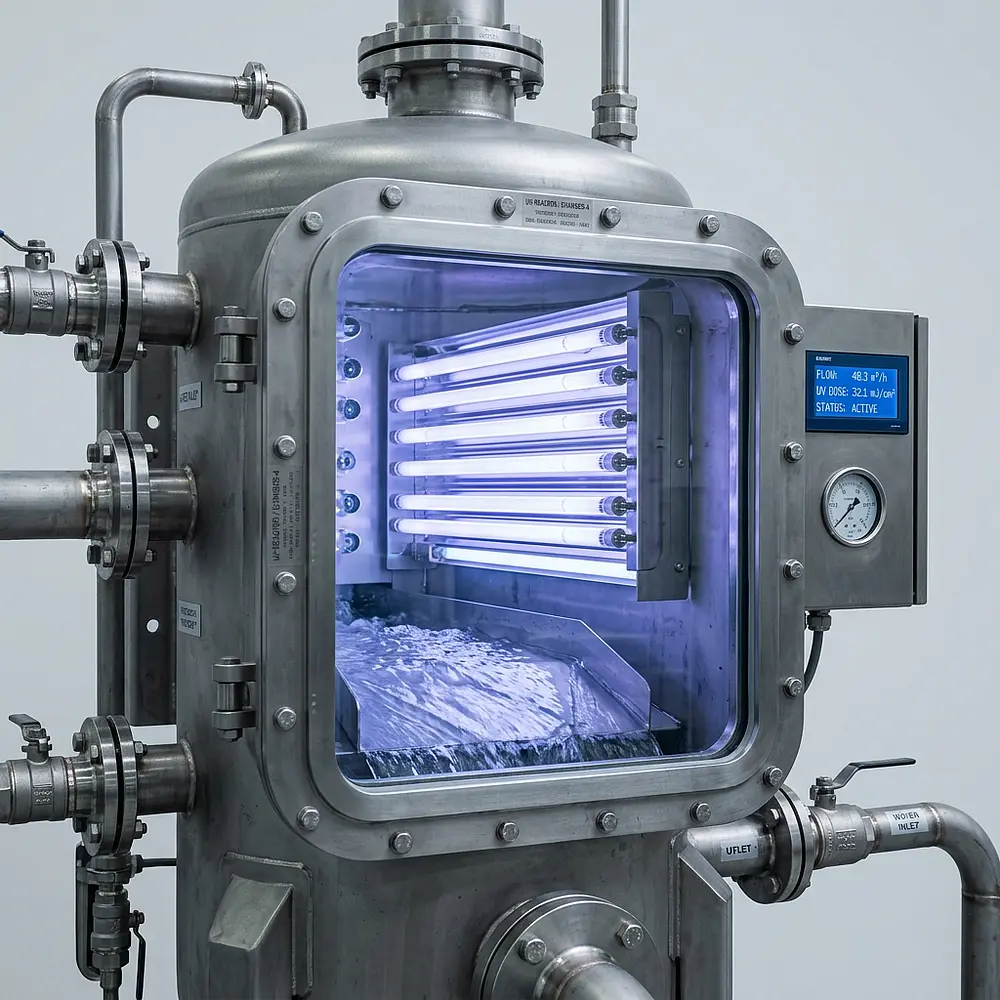
In an engineered system the light stops being a variable and becomes a design parameter. A reactor for photocatalytic water purification holds the catalyst either immobilised on carriers, meshes or channel walls, or suspended as a slurry that is later separated, and an ultraviolet lamp of known spectrum and power sits inside a defined geometry so that every volume element passing through receives a calculable dose. Air-cleaning modules follow the same principle with a gas stream over coated media, and surface disinfection units irradiate a fixed catalyst layer at a fixed distance. Flow rate, residence time, catalyst loading and lamp arrangement are all specified rather than hoped for, and the radical chemistry outlined earlier proceeds under conditions that can be commissioned and monitored.
The equipment behind the percentages quoted further up shows what "light as a design parameter" costs: those sources were chosen precisely because their emission reaches below the excitation threshold, and a technical installation makes the same choice deliberately — the lamp is selected so that the spectrum matches the band gap instead of the other way round. The price is explicit and electrical. Lamps of that order draw continuous power, and the energy budget of the plant is set by the photon demand of the reaction rather than by the pollutant load alone.
Lamp ageing is then the one degradation process that behaves like a proper maintenance item. Ultraviolet output falls over operating hours while the lamp still looks perfectly lit, and the quartz sleeve separating it from the medium slowly fouls, so the dose delivered at the catalyst declines long before anything fails visibly. That decline is measurable, it can be trended, and it translates into a replacement interval stated in operating hours rather than in years — which is exactly the kind of guarantee a passive coating cannot offer.
The remaining constraints are ordinary engineering constraints: accessibility of the catalyst surface to the contaminant, fouling of windows and coatings, and the trade-off between throughput and contact time, since a faster flow means less time per molecule. That last trade-off carries a chemical consequence worth stating on its own. Short residence times favour partial oxidation: an intermediate formed in the first attack can be flushed out of the irradiated zone before the chain has run to completion, and some of those fragments are more polar, more mobile or more toxicologically relevant than the parent molecule. This is why treated effluent and treated air are assessed by residual organic load and by the intermediates actually found, not by the disappearance of the compound that entered.
Self-Cleaning Surfaces: Two Effects, Not One
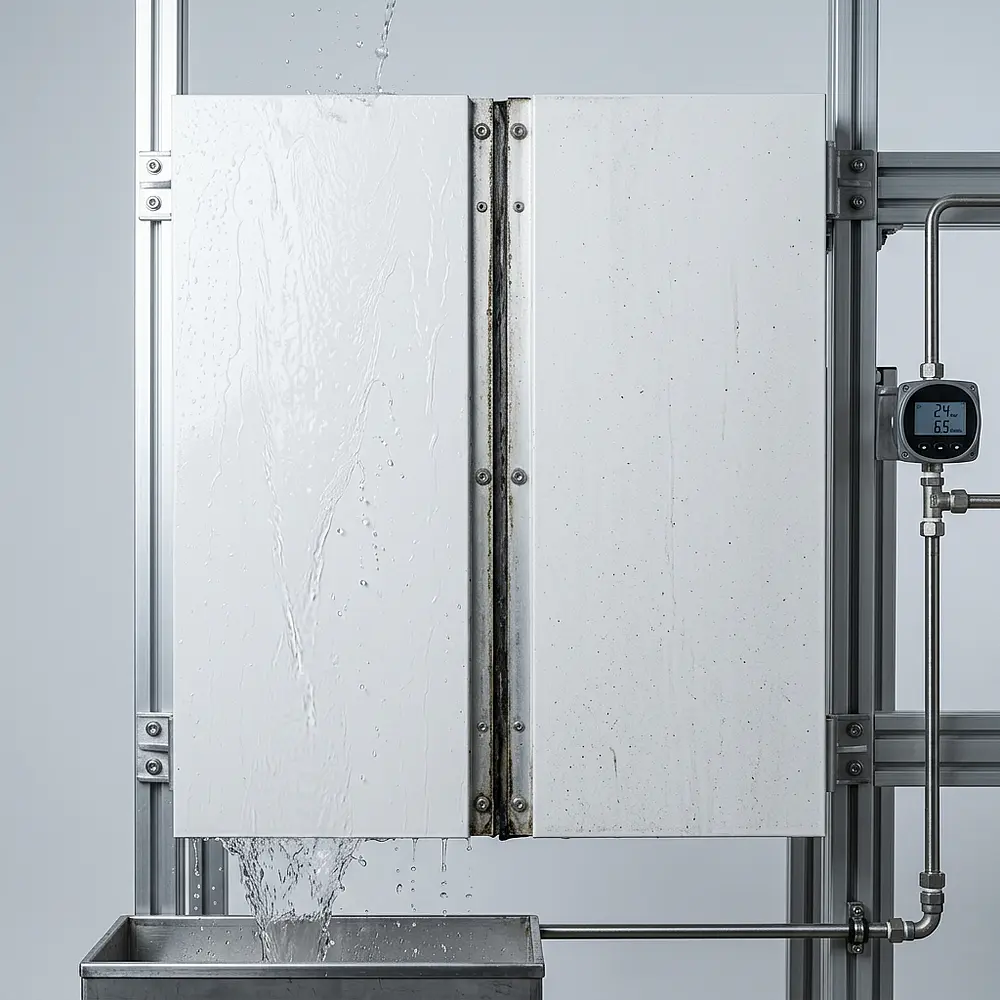
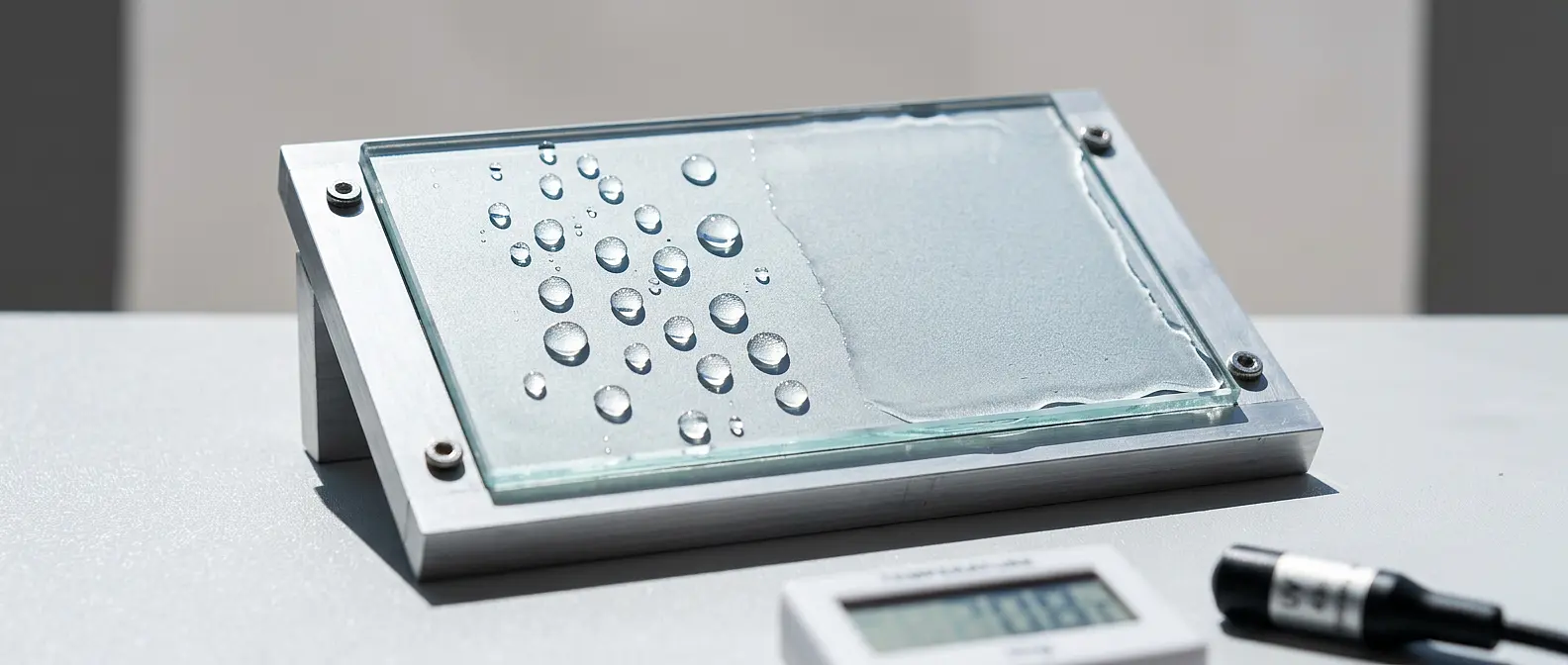
Passive coatings marketed as self-cleaning surfaces work through two physically separate effects that advertising almost always merges into one. The first follows directly from the radical chemistry described above: reactive oxygen species generated under ultraviolet attack the organic film that accumulates outdoors — greasy soot residue, binder fragments, biological growth — and break it down into smaller, more weakly bound pieces. The second effect is unrelated to that chemistry and is usually the one left out. Under irradiation the oxide surface switches into a state of photoinduced superhydrophilicity: instead of beading into droplets, water spreads across the surface with a very small contact angle, so rain runs off as a continuous sheet and carries the loosened dirt with it rather than drying into droplet marks and rings.
The two effects also behave differently in time, and that difference is what separates a test result from an everyday state. Oxidative breakdown is cumulative and irreversible: every hour of irradiation removes a further portion of the organic film, and what has been oxidised does not return when the light goes. Superhydrophilicity is the opposite kind of phenomenon — a light-induced surface state that has to be built up under illumination and that relaxes again in the dark. A pane measured after a long sunny afternoon is at the wetting maximum the data sheet quotes. The same pane at dawn, after a night of dark relaxation, meets the first rain in a partially recovered state, and an east-facing window during a week of low overcast may never reach the specified condition at all. The contact angle of such a glass is therefore a running condition with a history, not a constant that belongs to the product.
Two limits have to be said plainly. Both effects need photons above the band-gap threshold, and a passive surface has nothing to draw on but the narrow ultraviolet share of sunlight quantified earlier, so self-cleaning by titanium dioxide photocatalysis stands or falls with orientation, shading and how much unobstructed sky the surface actually sees. Inorganic soiling — mineral dust, sand, salts, metal oxides — is not chemically destroyed at all; it is only rinsed away by the sheeting water, which makes the effect dependent on rain actually falling. Realistically framed, this means less maintenance under favourable exposure: a surface that stays presentable longer between cleanings, not a pollution-destroying surface.
The Opposite Engineering Goal: Pigment-Grade Titanium Dioxide
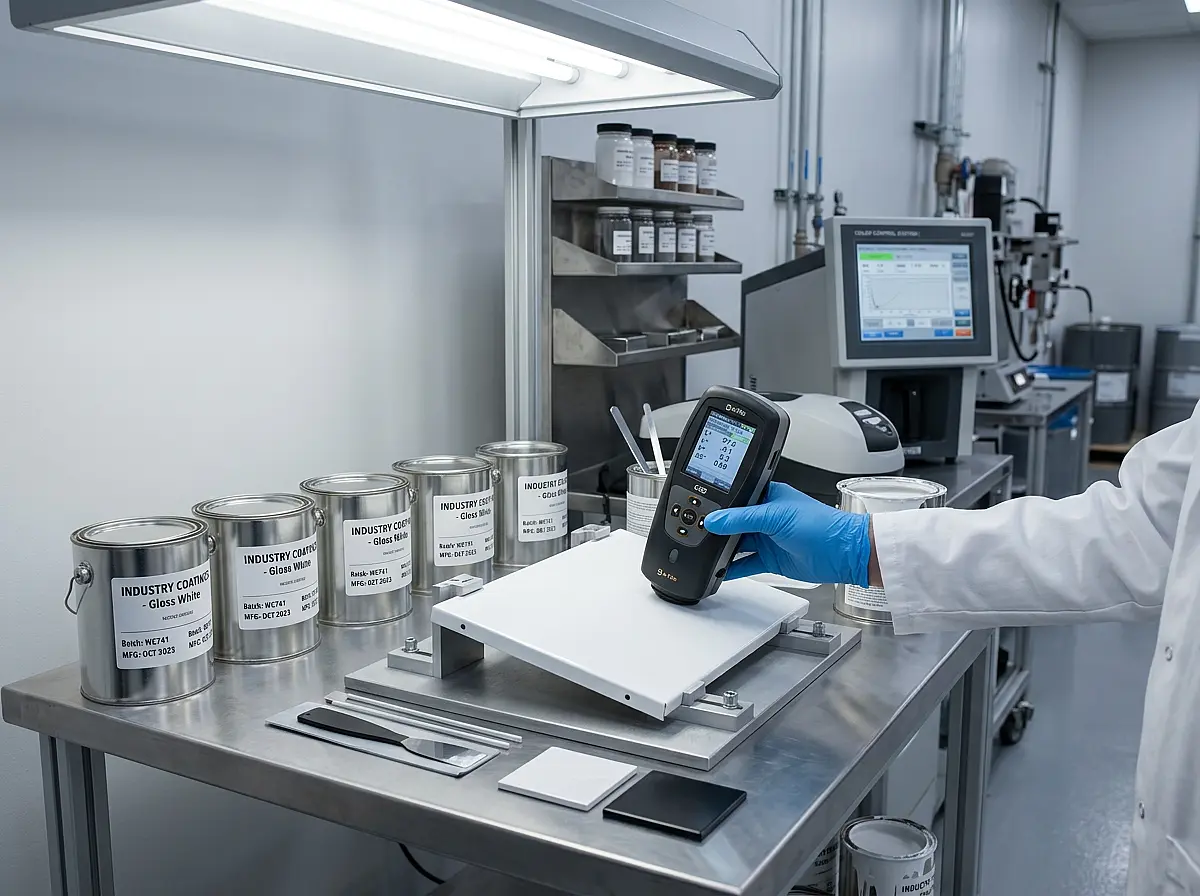
Everything above describes an effort to maximise photocatalytic activity. The white pigment industry spends comparable effort achieving the exact reverse. In a paint film, the same radical chemistry that breaks down soot on a facade also attacks the organic binder holding the coating together, so the film erodes and releases loose pigment — the familiar chalking of aged paint. Manufacturers therefore encapsulate pigment particles in inorganic layers, typically alumina and silica, which shield the surrounding organic matrix from the photogenerated carriers; here the photoactivity is suppressed by design, and the surface-treated pigment form and the chalking problem are documented separately. One compound, two opposite engineering targets: maximum photoactivity where degradation is wanted, minimum photoactivity where durability is.
The conceptual conclusion matters more than the example. Photoactivity is no intrinsic constant of the substance the way its density is; it is a property of particle surface, coating, crystal phase and particle size. It can be engineered up, and it can be engineered almost entirely away. Two consequences follow. A product that contains titanium dioxide is not thereby capable of titanium dioxide photocatalysis — most of the material made worldwide is deliberately passivated pigment sitting in paints, plastics and papers, doing nothing photochemically by intention. And whiteness proves nothing either, since it comes from light scattering, which has no relation to band-gap absorption. What a claim has to be judged on is therefore the specific grade, its surface treatment and the spectrum reaching it in service — never the name of the compound on the label.
How to Judge a Photocatalytic Product Claim
Irradiance, spectral distribution, run time, the parallel run against the reference material and the four operating conditions have all been dealt with in the sections above; the questions below did not come up there. They are the ones that decide whether a claim survives contact with an installed surface rather than with a reactor.
- Reactor type behind the data. Stirred suspension or fixed layer? Only the second says anything about a coating you intend to install, and a supplier quoting suspension data for a wall product has answered a different question from the one asked.
- Control experiments. Are the runs without light and without catalyst reported alongside the main curve? Without them, adsorption and lamp photolysis remain inside the quoted percentage.
- Endpoint of the reaction. Was one named target compound tracked to disappearance, or was the carbon actually accounted for? Ask which intermediates were looked for and with what method, because "not detected" and "not measured" read identically in a summary table.
- Grade of the oxide. Which specific grade sits in the product, in which crystal phase and with which surface treatment — and can the supplier name it without consulting marketing?
- What "visible-light-active" is supposed to mean. True band-gap modification of the oxide, or a sensitiser or surface complex doing the absorbing? Ask which, and ask separately how the answer ages: an adsorbed dye or a narrow-gap partner is typically the first component of the system to fail, while a doped lattice degrades differently and more slowly.
- Service life of the activity. A photocatalyst is not a passive finish; it is asked to run an oxidation reaction for years at the interface with its own binder. Is there activity data at the end of a stated service period, or only at delivery? Dopant migration, sintering of nanostructure, loss of surface area and slow attack on the surrounding matrix all reduce the effect over time, and a warranty on appearance is not a warranty on chemistry.
- Maintenance regime of the layer. How often must the surface be cleaned to keep working, by what method, and with which agents? Deposits block the light path and the adsorption sites together, so an unmaintained layer converges on an ordinary one — while aggressive mechanical cleaning strips exactly the thin outer zone that carries the activity. If nobody can state a cleaning interval, the claimed performance has no operating instructions.
If a claim survives all seven, it is worth taking seriously; if it avoids them, the avoidance is itself the answer. Nothing above argues that the technology does not work. Titanium dioxide photocatalysis is real, well-characterised chemistry with a documented mechanism, decades of literature behind it and genuine value wherever the light is designed rather than hoped for. It also carries a hard spectral ceiling that no formulation, coating quality or marketing language moves: the material is switched on by ultraviolet light, and the sun supplies very little of it. Any claim that ignores that ceiling belongs to advertising rather than to physics.
FAQ
What is P25 titanium dioxide, and why is it used as a reference material?
P25 is a commercial titanium dioxide powder, produced by a fixed process, containing a mixture of anatase and rutile in a ratio of approximately 80:20. It has served for decades as the standard reference material against which newly synthesised photocatalysts are benchmarked. This role exists because degradation rates depend heavily on lamp power, catalyst loading, reactor geometry and adsorption behaviour, factors that can be varied until almost any powder looks impressive; an activity claim reported without a side-by-side P25 comparison is therefore hard to interpret. P25's mixed-phase character is also of scientific interest, since carriers can separate across the anatase-rutile interface, one type preferentially occupying each phase, which suppresses recombination and improves charge separation.
How do hydroxyl radicals and other reactive species break down pollutants?
Once formed, superoxide, hydroperoxyl, hydrogen peroxide and hydroxyl radicals do not attack the pollutant from a distance; they act only where they are generated, at the catalyst surface. A contaminant must first adsorb onto the particle before it can be reached at all. These radicals then oxidise the adsorbed organic molecule, attacking carbon-hydrogen and other bonds, splitting it into progressively smaller fragments and ultimately mineralising it into carbon dioxide, water and simple inorganic ions. In this sense the oxide itself is never consumed; it only mediates the transfer of charge into reactive oxygen species that carry out the actual chemistry.
What reactive oxygen species are produced when titanium dioxide is irradiated?
Once photoexcitation and trapping have occurred, the trapped electrons and holes transfer their charge to adsorbed water and oxygen, generating a verified set of reactive oxygen species rather than consuming the catalyst itself. These are superoxide radicals, hydroperoxyl radicals, hydrogen peroxide and hydroxyl radicals. This inventory forms the common chemical basis for water purification, air cleaning, self-cleaning and self-sterilisation. Their formation completes the radical-generation stage of the mechanism, supplying the oxidising species that subsequently attack organic molecules adsorbed at the catalyst surface, turning captured charge into usable chemical reactivity.
What are the four stages of the photocatalytic degradation process on titanium dioxide?
The mechanism on titanium dioxide is organised into four consecutive stages, as set out in the review literature: (1) photoexcitation, in which an absorbed photon above the band-gap threshold lifts an electron from the valence band into the conduction band, leaving a hole behind; (2) charge-carrier trapping, where electron and hole migrate to surface trap states, competing against recombination; (3) radical formation, in which trapped carriers transfer charge to adsorbed water and oxygen, generating reactive oxygen species; and (4) the oxidation reaction, where those species attack organic molecules at the surface. Each stage depends entirely on the one before it, so none proceeds without a photon of sufficient energy first being absorbed.
What is the difference in band gap between anatase and rutile titanium dioxide?
According to the review data cited on this page, anatase has a band gap of approximately 3.2 eV, while rutile has a band gap of approximately 3.0 eV. This difference of roughly 0.2 eV shifts the absorption edge slightly, corresponding to a threshold in the range of about 380-410 nm depending on the phase and how the edge is evaluated. The exact position of this edge is one factor in the broader comparison between the two crystal forms, since gap width and carrier behaviour (such as trapping and recombination) do not necessarily favour the same phase, and photoactivity depends on more than the band gap value alone.
What is a band gap, and why does it matter for how titanium dioxide is activated?
A band gap is the energy difference between a semiconductor's valence band, where electrons normally sit, and its conduction band, the higher-energy state an electron must reach to become mobile. A photon can only excite an electron across this gap if its individual energy exceeds the gap's width; weaker or lower-energy photons pass through without effect, no matter how many arrive. This matters for titanium dioxide because the width of its band gap fixes the wavelength threshold below which activation is even possible, making stage one of the photocatalytic process a strict energy gate rather than a matter of overall light intensity.
What exactly is a photocatalyst, and how does titanium dioxide qualify as one?
A photocatalyst is a material that accelerates a chemical reaction under light without being consumed itself, mediating charge transfer rather than acting as a reactant. Titanium dioxide qualifies because it is a semiconductor: when a photon of sufficient energy strikes it, an electron is promoted from the valence band into the conduction band, leaving behind a positively charged hole. This electron acts as a reductant and the hole as an oxidant, each capable of transferring charge to molecules adsorbed on the surface. Because the oxide itself is regenerated after each cycle, it fulfils the defining requirement of a catalyst while enabling the redox chemistry that underlies its degradation, disinfection and self-cleaning behaviour.
What research approaches are being explored to extend titanium dioxide's light absorption into the visible spectrum?
Because the anatase gap of about 3.2 eV excludes almost all solar photons, research has pursued several routes to shift absorption toward visible wavelengths. These include:
- Metal doping, introducing cations into the lattice
- Non-metal doping with nitrogen, carbon or sulfur on oxygen sites
- Defect and oxygen-vacancy engineering, creating sub-band-gap states
- Dye and quantum-dot sensitisation, and heterojunctions with a second semiconductor
- Composite architectures combining titanium dioxide with other components
- Morphological approaches such as nanotubes, nanosheets, nanowires and thin films, which shorten carrier travel distance rather than solving the absorption problem
Why is pigment-grade titanium dioxide specifically treated to suppress photocatalytic activity?
The reasoning is the exact inverse of the goal pursued elsewhere on this page. In a paint film, titanium dioxide sits embedded in an organic binder, and the same radical chemistry that is prized for breaking down soot on a facade will just as readily attack that surrounding organic matrix. Photogenerated carriers erode the binder holding the coating together, causing the film to degrade and release loose pigment, the familiar chalking of aged paint. To prevent this, manufacturers encapsulate pigment particles in inorganic layers, typically alumina and silica, which shield the organic matrix from photogenerated carriers. Here photoactivity is suppressed by design, since durability, not degradation, is the engineering target.
What is photoinduced superhydrophilicity, and how does it contribute to self-cleaning surfaces?
Photoinduced superhydrophilicity is a light-induced surface state in which titanium dioxide, once irradiated above the band-gap threshold, causes water to spread across it as a continuous sheet with a very small contact angle instead of forming beaded droplets. It is chemically unrelated to the radical oxidation chemistry: it does not break down organic dirt but changes wetting behaviour. Its contribution to self-cleaning is mechanical rather than chemical: rain sheets across the surface and physically carries away loosened dirt, preventing droplet marks and rings. The effect must be built up under illumination and relaxes again in the dark, so it behaves as a running condition rather than a fixed property.
How was titanium dioxide first used in pollution control during the 1970s?
By the mid-1970s, researchers moved beyond the original water-splitting demonstration and began applying titanium dioxide photocatalysis directly to pollution problems. In 1976, photocatalytic treatment achieved near-complete dechlorination of polychlorinated biphenyls, and in 1977 titanium dioxide was shown to be effective for degrading cyanide. This marked a conceptual shift from using photogenerated charge carriers to store energy toward using those same carriers to destroy pollutants, with the oxidising hole initiating radical chemistry that broke contaminants apart. These early studies established the destructive, decontamination-oriented branch of titanium dioxide research that later expanded into water and air treatment applications.
Who discovered titanium dioxide's photocatalytic properties, and when did the landmark experiment take place?
The landmark experiment is credited to Akira Fujishima and Kenichi Honda, published in Nature 238 (1972), pages 37-38, describing photoelectrochemical water splitting on a titanium dioxide electrode: light absorbed by the semiconductor drove the decomposition of water, converting photon energy into chemical energy. A 2019 Catalysts editorial traces the seminal research back to 1971, but that date should not be mistaken for the Nature publication date. The Fujishima-Honda report remains the reference commonly cited, valued here for demonstrating that band-gap excitation in an oxide can drive a useful chemical reaction, rather than for establishing scientific priority.
Why do laboratory degradation results from mercury or xenon lamps not translate to real-world sunlight performance?
Mercury and xenon lamps used in laboratory tests deliver strong, specifically ultraviolet-rich output that has little in common with the light actually falling on a real facade, pavement, or window outdoors, where only roughly 4-5% of sunlight is ultraviolet at all. Test substrates also differ chemically: clean, single-compound solutions at known concentration with unrestricted catalyst access, whereas real surfaces carry a mixed, aged film of soot, grease, dust, and biological residue competing for the same active sites. Published degradation percentages therefore describe their specific reactor and lamp arrangement, not a transferable material property, and should never be extrapolated to real-world sunlight performance.
Does titanium dioxide still work as a photocatalyst under ordinary indoor lighting?
No, in practice it does almost nothing. Ordinary indoor lamps are designed to produce pleasant visible light and emit virtually no radiation below 400 nm, and any ultraviolet reaching a room through a window is further absorbed by the glazing. Since activation requires photons above the band-gap threshold to begin the process at all, this cuts the mechanism off before any electron-hole pair can form, so neither reactive oxygen species nor the wetting change associated with irradiated titanium dioxide can develop. Under typical indoor lighting, a photocatalytic coating remains chemically indistinguishable from an ordinary, unactivated oxide layer, offering no measurable benefit.
How much of the sunlight reaching Earth's surface is actually usable ultraviolet light?
Only a small fraction of the sunlight reaching the Earth's surface is ultraviolet: the two reviews cited on this page report figures of roughly 4-5 %, with Catalysts 2019, 9, 201 putting it at 4 % and Catalysts 2020, 10, 804 at approximately 5 % for the ultraviolet fraction below 400 nm. Since titanium dioxide can only be activated by photons above the band-gap threshold near that wavelength, everything from the visible range upward, which accounts for almost all solar photons, passes the surface without generating a single electron-hole pair. Titanium dioxide photocatalysis under sunlight therefore relies on the narrowest slice of the available spectrum.