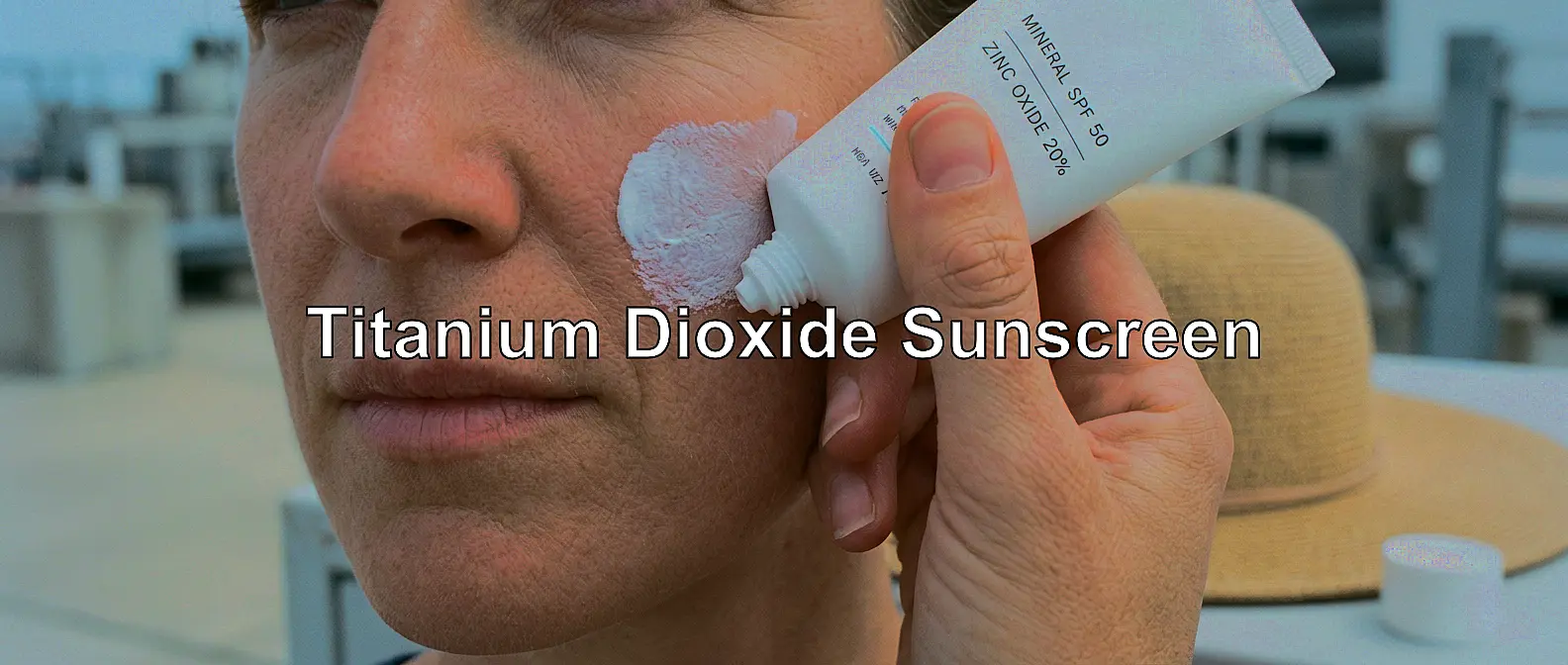
Titanium Dioxide in Sunscreen: How It Works, Safety & What to Look For
Titanium dioxide is one of only two FDA-recognized mineral sunscreen active ingredients for over-the-counter use in the United States, alongside zinc oxide. It has been used in sunscreen for decades because it is photostable, broadly tolerated, and effective at reducing ultraviolet exposure at the skin surface. This page explains how titanium dioxide sunscreen works, what current safety reviews say, and how to evaluate products on the shelf. It also helps answer a common shopping question: when does a sunscreen with titanium dioxide make sense on its own, and when is a blended mineral formula the better choice?
Table of Contents
- Key Facts at a Glance
- What Is Titanium Dioxide in Sunscreen?
- How Does Titanium Dioxide Protect Against UV?
- Titanium Dioxide vs. Zinc Oxide in Sunscreen
- Is Titanium Dioxide Safe in Sunscreen?
- Nanoparticle TiO2 in Sunscreen: What You Need to Know
- Titanium Dioxide Sunscreen for Sensitive Skin
- How to Read a Sunscreen Label: Identifying Titanium Dioxide
- Mineral vs. Chemical Sunscreen: Which Is Better?
- How to Choose the Best Titanium Dioxide Sunscreen
- Application Tips for Better Protection
- Sources, Standards, and Scientific References
- Related Reading on Titanium-Dioxide.com
- FAQ
Key Facts at a Glance
Before getting into product comparisons, here are the core facts about titanium dioxide in sunscreen.
- Type: Mineral or physical UV filter
- U.S. status: Permitted as an OTC sunscreen active under the FDA framework in 21 CFR 352
- How it protects: Reflects, scatters, and also absorbs part of incoming UV radiation
- Maximum U.S. concentration: Up to 25% in OTC sunscreen products
- Skin absorption: Minimal through intact skin based on current evidence
Quick takeaway: Titanium dioxide is a long-established topical sunscreen ingredient with a favorable safety profile in creams, lotions, sticks, and other non-inhaled formats.
What Is Titanium Dioxide in Sunscreen?
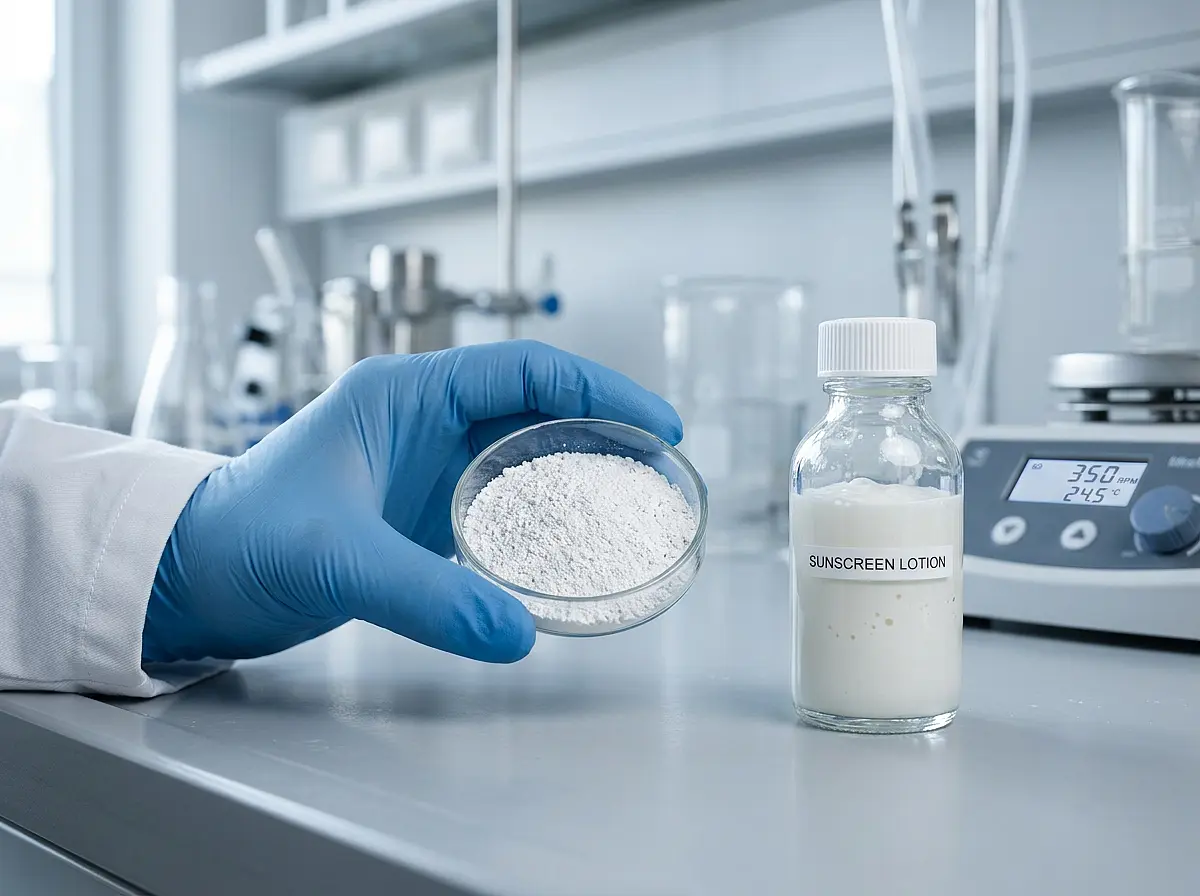
Titanium dioxide is a white mineral used as an active sunscreen ingredient to reduce the amount of ultraviolet radiation that reaches the skin. In consumer terms, it belongs to the mineral sunscreen or physical sunscreen category, which distinguishes it from organic UV filters such as avobenzone and oxybenzone.
It is especially common in face SPF products, baby sunscreens, sensitive-skin formulas, and tinted daily sunscreens because brands often use it when they want a more traditional mineral filter system. If you want a broader introduction to the material itself, see what is titanium dioxide or the more technical overview at TiO₂.
Although many shoppers think of titanium dioxide as something that simply “sits on top of the skin,” that basic idea is directionally correct: in sunscreen use, TiO₂ functions mainly as a particle layer at the skin surface rather than being meaningfully absorbed through intact skin. Whether a given product qualifies as broad spectrum depends on testing of the finished sunscreen, not just the presence of titanium dioxide on the ingredient list.
How Does Titanium Dioxide Protect Against UV?
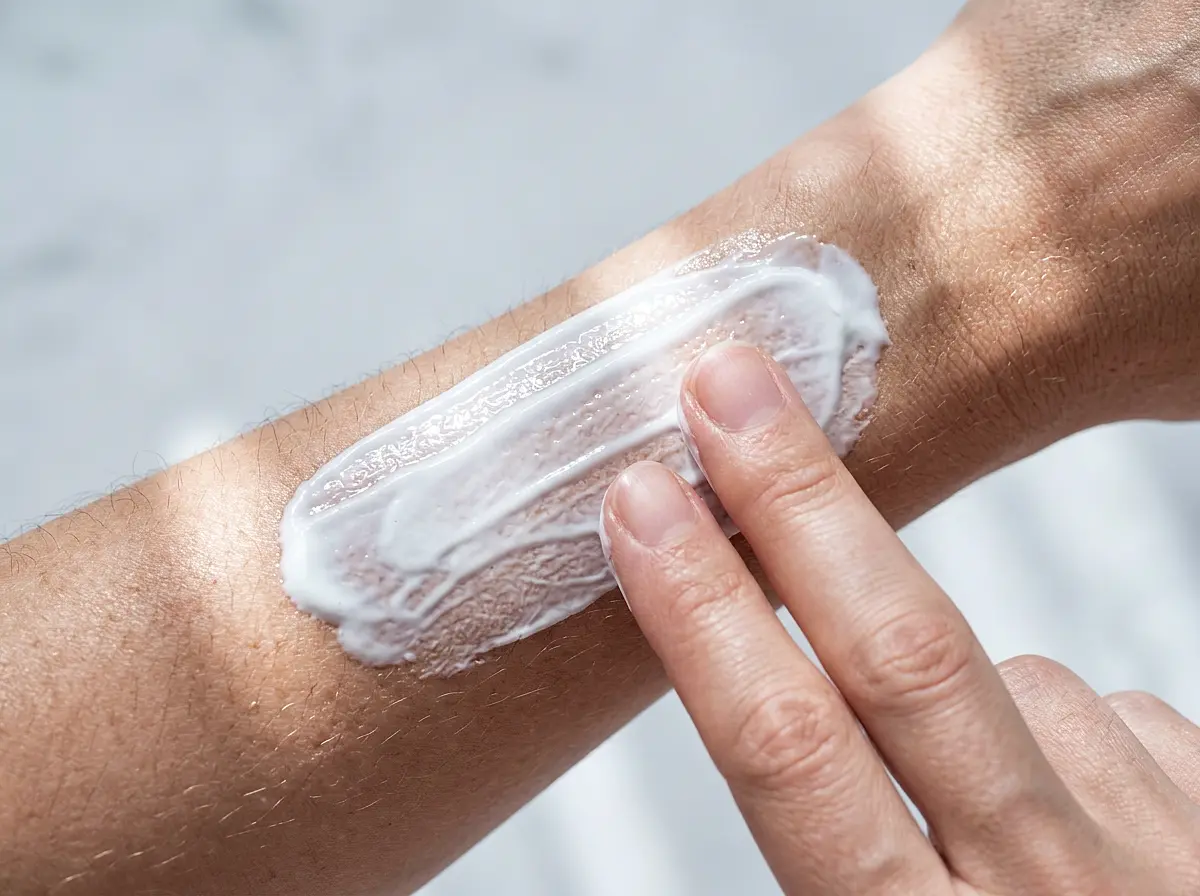
Titanium dioxide protects skin by interrupting ultraviolet radiation before that energy can penetrate as deeply into tissue. The consumer-friendly explanation is that it reflects and scatters UV light. In modern photoprotection science, that shorthand is useful but incomplete, because TiO₂ also absorbs part of incoming UV energy and dissipates it.
Its optical behavior comes from two main properties. First, titanium dioxide has a high refractive index, which allows it to redirect light efficiently. Second, it has a band gap that enables it to absorb high-energy UV photons. In plain language, some ultraviolet light is bounced away, some is dispersed, and some is captured by the particles rather than passing onward into skin cells.
This mechanism is one reason mineral sunscreen with titanium dioxide has remained relevant even as sunscreen technology has evolved. It is typically strongest in the UVB range linked with sunburn, while its UVA coverage is more moderate, which is why TiO₂-only products are often considered more UVB-leaning than fully balanced across the whole spectrum. Formulators may adjust particle size, coatings, and dispersion to influence how the final sunscreen feels and how evenly the protective film forms on skin.
For consumers, the important point is straightforward: titanium dioxide is an effective UV filter, but protection quality still depends on the complete formula, film formation, and proper application.
Reflection, Scattering, and Surface Protection
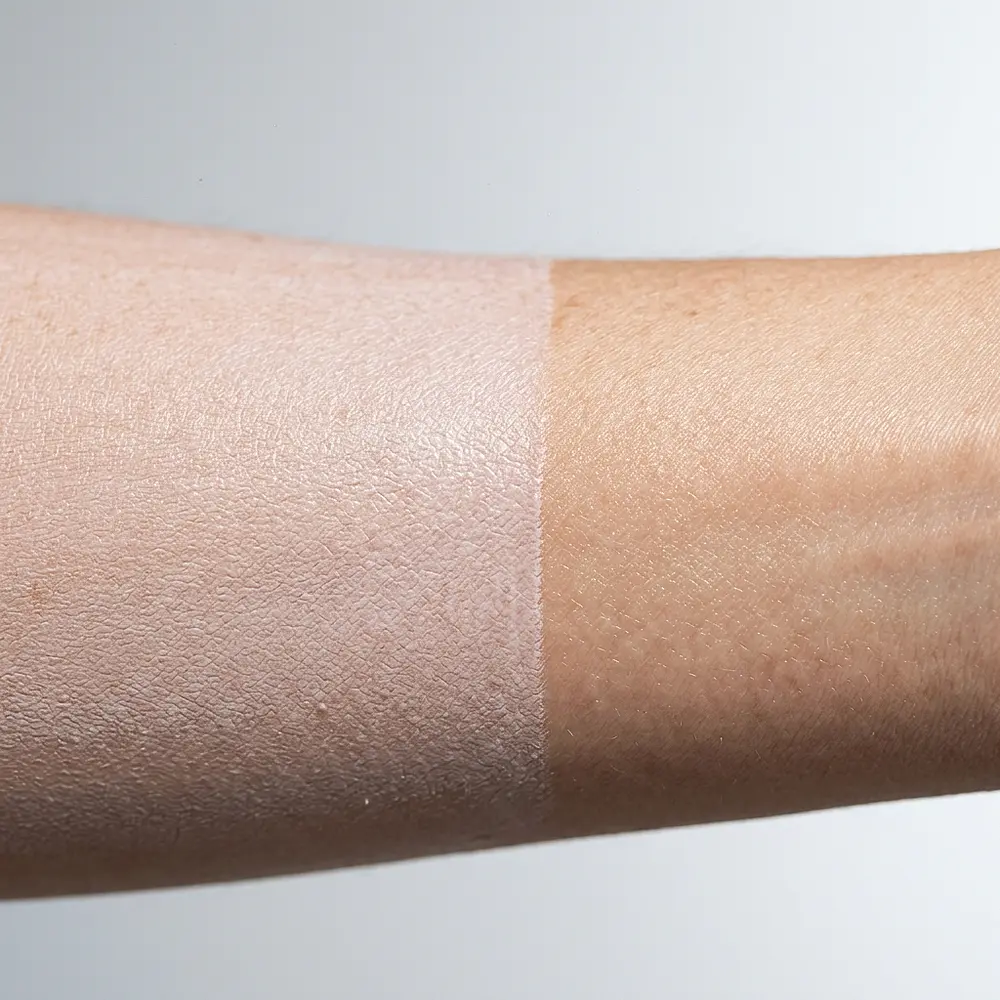
When a layer of sunscreen containing titanium dioxide is spread across the skin, the particles interact with incoming ultraviolet radiation at or near the surface. That interaction reduces the amount of UV energy that continues into living skin layers. This is why TiO₂ sunscreen is commonly grouped with other surface-acting mineral filters.
The practical implication is simple. Coverage gaps matter. A mineral sunscreen only protects the areas where a continuous film is actually applied, which is why thin or patchy application can noticeably reduce real-world performance.
Photon Absorption and Band Gap — In Simple Terms

The phrase band gap sounds technical, but the everyday idea is not difficult. Titanium dioxide can take in ultraviolet photons because its electronic structure is suited to absorb that part of the light spectrum.
That means it does not behave only like a microscopic shield that redirects light outward. It also functions as a material that intercepts UV energy directly. This dual action helps explain why titanium dioxide remains one of the standard mineral sunscreen actives used in modern formulations.
Why Titanium Dioxide Is Often Combined With Zinc Oxide

One mineral filter does not always give formulators the balance they want between spectrum coverage, texture, and appearance. Titanium dioxide is therefore often paired in a zinc oxide and titanium dioxide sunscreen so a product can deliver more complete full-spectrum UVA and UVB protection while still feeling wearable enough for everyday use.
That pairing is especially common in face sunscreens, family sunscreens, and broader-spectrum outdoor formulas. It can also help brands create a product with a more manageable finish than a high-load single-mineral system.
Titanium Dioxide vs. Zinc Oxide in Sunscreen
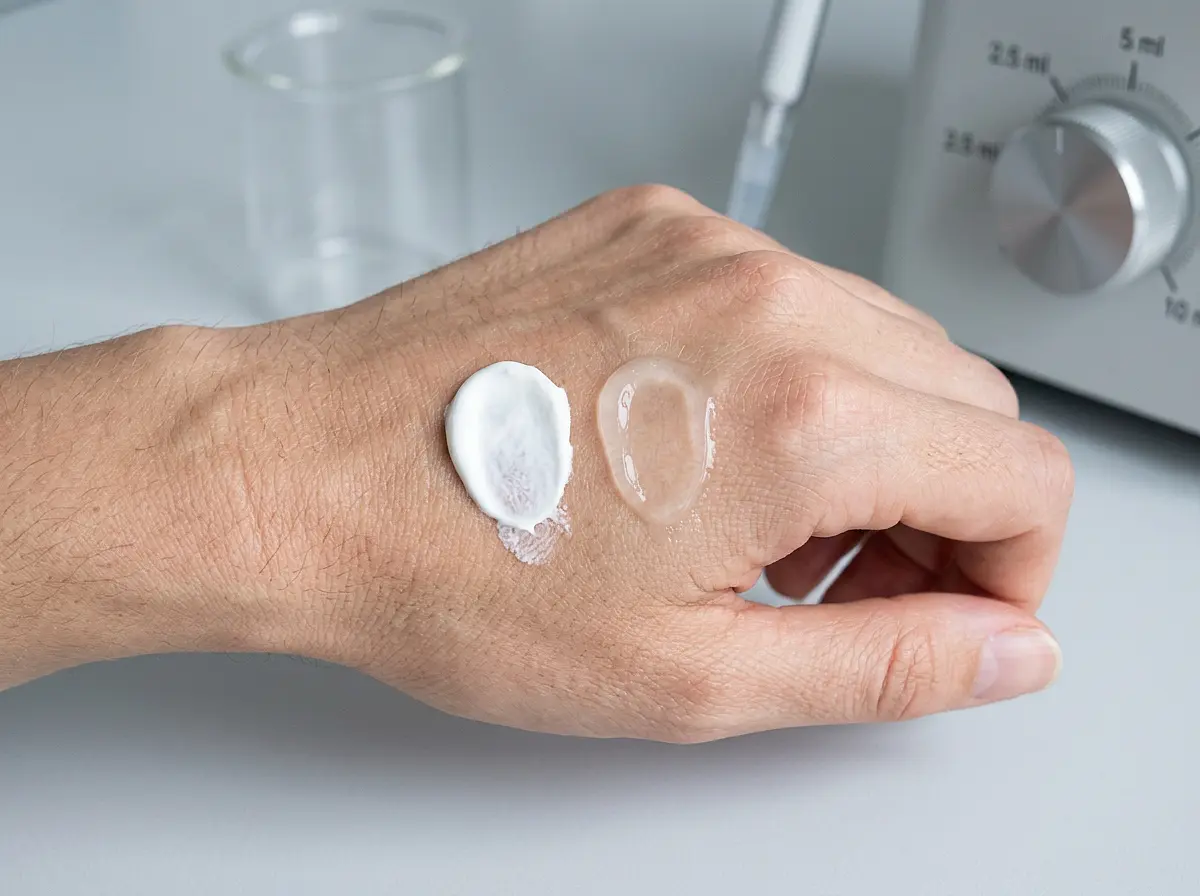
If you are choosing between the two main mineral filters, the most useful question is not which one is universally superior, but which one fits your use case. Titanium dioxide is often selected for cosmetically elegant daily wear, while zinc oxide is frequently favored when shoppers want stronger mineral UVA support. Many products on the market are a zinc oxide and titanium dioxide sunscreen blend, but buying decisions become easier when you look at the trade-offs that show up on skin and during real use.
For example, a city-wear facial SPF under makeup has different priorities than a beach sunscreen, and a tinted product for deeper skin tones has different demands than a baby lotion. Those differences are where ingredient comparisons become practical rather than theoretical. For a deeper ingredient-by-ingredient explainer, visit zinc oxide vs. titanium dioxide.
Comparison Table: Titanium Dioxide vs. Zinc Oxide
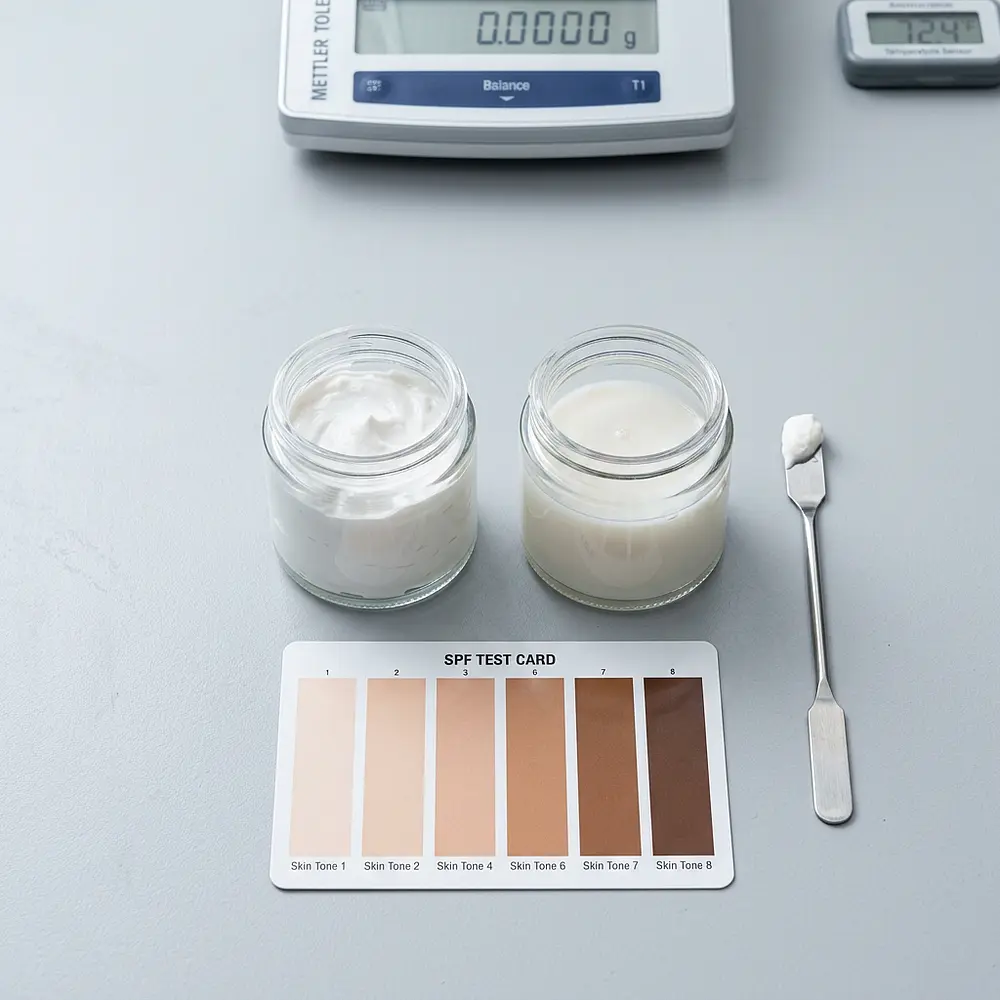
The table below focuses on the attributes consumers actually notice when comparing mineral sunscreen ingredients.
| Factor | Titanium Dioxide | Zinc Oxide |
| UVB coverage | Strong | Strong |
| UVA coverage | Useful but less extensive | Broader overall UVA support |
| White cast tendency | Often somewhat lower than zinc oxide at comparable use levels, but still usually more whitening than purely chemical filter formulas | Often more noticeable, especially in high-mineral formulas |
| Skin feel | Can feel lighter or less draggy in daily facial SPF | Can feel denser, creamier, or more protective in outdoor products |
| Photostability | High; generally considered photostable in sunscreen formulations | High |
| Common concentration range | Commonly used in sunscreen formulas at roughly 5%–25% | Allowed up to 25%; frequently used across a wide range depending on UVA target |
| Best use case | Daily city wear, tinted face SPF, lighter-feel mineral products | Outdoor wear, beach/sport use, formulas built around stronger mineral UVA coverage |
| Sensitive-skin suitability | Excellent | Excellent |
How to use this comparison: If your priority is a more wearable mineral sunscreen with titanium dioxide for commuting, office wear, or layering under makeup, TiO₂-heavy formulas often make sense. If you spend long periods outdoors or want a more UVA-focused mineral profile, zinc oxide becomes more important. If you want one product to cover family use, face wear, and outdoor exposure reasonably well, a sunscreen with zinc oxide and titanium dioxide is often the most flexible compromise.
Is Titanium Dioxide Safe in Sunscreen?
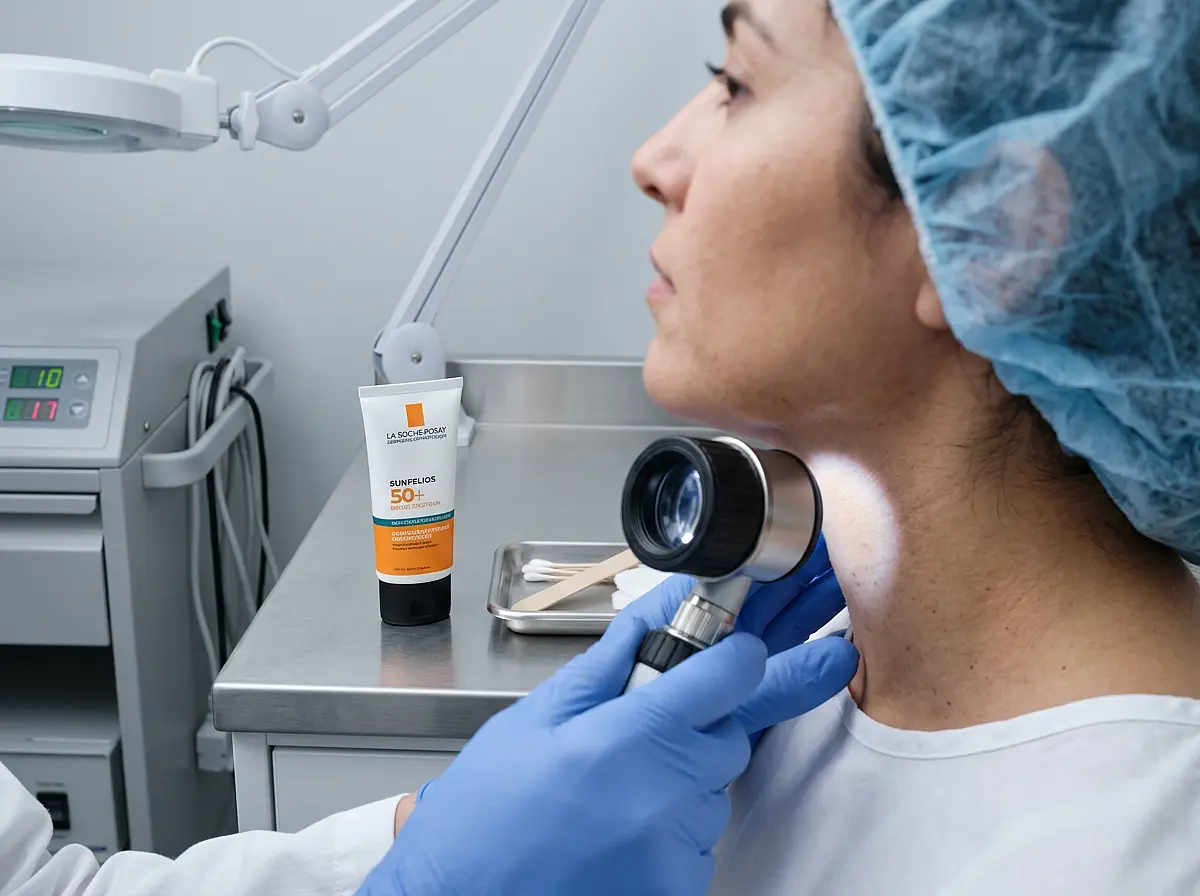
For topical sunscreen use, the evidence is broadly reassuring. Titanium dioxide is included in the U.S. FDA over-the-counter sunscreen regulatory framework as an allowed active ingredient, and dermatologists generally consider it one of the lower-irritation UV filters available. The key safety distinction is exposure route: a lotion or stick on skin is evaluated differently from material that could be inhaled.
The EU Scientific Committee on Consumer Safety (SCCS) concluded in its 2020 Final Opinion (SCCS/1617/20; final version dated 6 October 2020) that its safety conclusions for titanium dioxide are route-specific and particularly distinguish topical use from inhalation contexts. That route-based approach aligns with the broader dermatology literature, which treats titanium dioxide sunscreen as a conventional and acceptable form of photoprotection in standard topical use.
If the question is specifically is titanium dioxide safe in sunscreen, the practical answer is yes for normal use of creams, lotions, and sticks on intact skin. If you want a broader route-by-route review beyond sunscreen products, see is titanium dioxide safe.
Regulatory Status: FDA and EU SCCS

In U.S. regulation, the sunscreen rule many references still point to is 21 CFR 352, which covers FDA-recognized OTC sunscreen actives including titanium dioxide within its monograph framework. In Europe, the SCCS opinion cited here distinguishes especially by route of exposure, with conclusions specifically limited to the inhalation route for aerosol, spray, and powder-form products rather than treating all product formats as having the same risk profile.
That distinction matters for consumers because it prevents a common misunderstanding: hazard language tied to airborne exposure should not be copied over to topical creams without context.
What Skin Penetration Research Shows

Skin-penetration studies address one of the most common consumer concerns: whether sunscreen particles pass through skin in meaningful amounts. For titanium dioxide, the overall evidence indicates that particles remain primarily in the outermost skin layers rather than moving into viable tissue to a toxicologically relevant degree.
This conclusion includes the nano forms assessed by regulators for topical use. The important point is not that penetration is impossible in an abstract sense, but that the observed dermal exposure under realistic conditions has not altered the topical safety assessment for standard sunscreen application.
Topical Creams vs. Spray Inhalation Risk
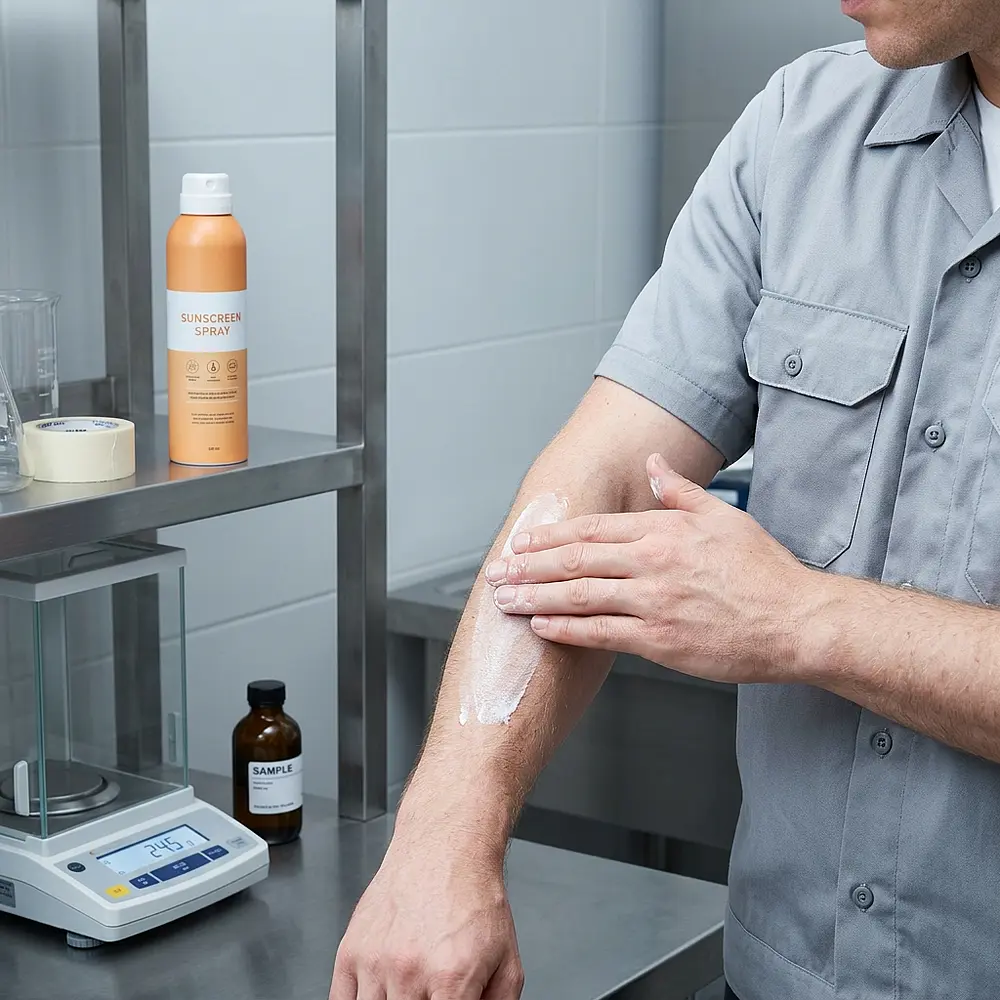
Sprays raise a different question from creams because they may create airborne particles during use. That makes inhalation the critical issue for spray products, especially if they are used directly on the face or in poorly ventilated areas.
Consumers who want the clearest safety margin can choose non-spray formats such as lotions, creams, sticks, or pump products. That choice does not reflect a problem with ordinary skin application; it simply avoids the separate inhalation pathway altogether, and it aligns with the way SCCS safety conclusions are more limited or cautious in inhalation-related use contexts such as sprays, aerosols, and powders.
Nanoparticle TiO2 in Sunscreen: What You Need to Know

“Nano” titanium dioxide refers to very small particles, typically with at least one dimension below 100 nanometers. Brands use these smaller particles mainly to improve cosmetic performance. Larger mineral particles scatter visible light more strongly, which is why older mineral sunscreens often looked chalky; smaller particles can make a sunscreen with titanium dioxide appear smoother and less visibly white on the skin.
That matters because a sunscreen that blends more easily is often more acceptable for daily use, especially on the face or on medium-to-deep skin tones. In other words, nano-sized titanium dioxide is usually a formulation choice driven by appearance and wearability rather than by a different sun-protection concept.
Regulators do not treat all nano materials as automatically unsafe. They look at particle characteristics, coatings, concentration, and route of exposure. In the EU, precautionary restrictions or limits can apply to nano-TiO₂ in certain spray or aerosol-type sunscreen forms because inhalation changes the safety question. In the U.S., there is no equivalent consumer-facing nano declaration rule on sunscreen labels that matches the way EU cosmetics identify nanomaterials.
Why Brands Use Nano Titanium Dioxide
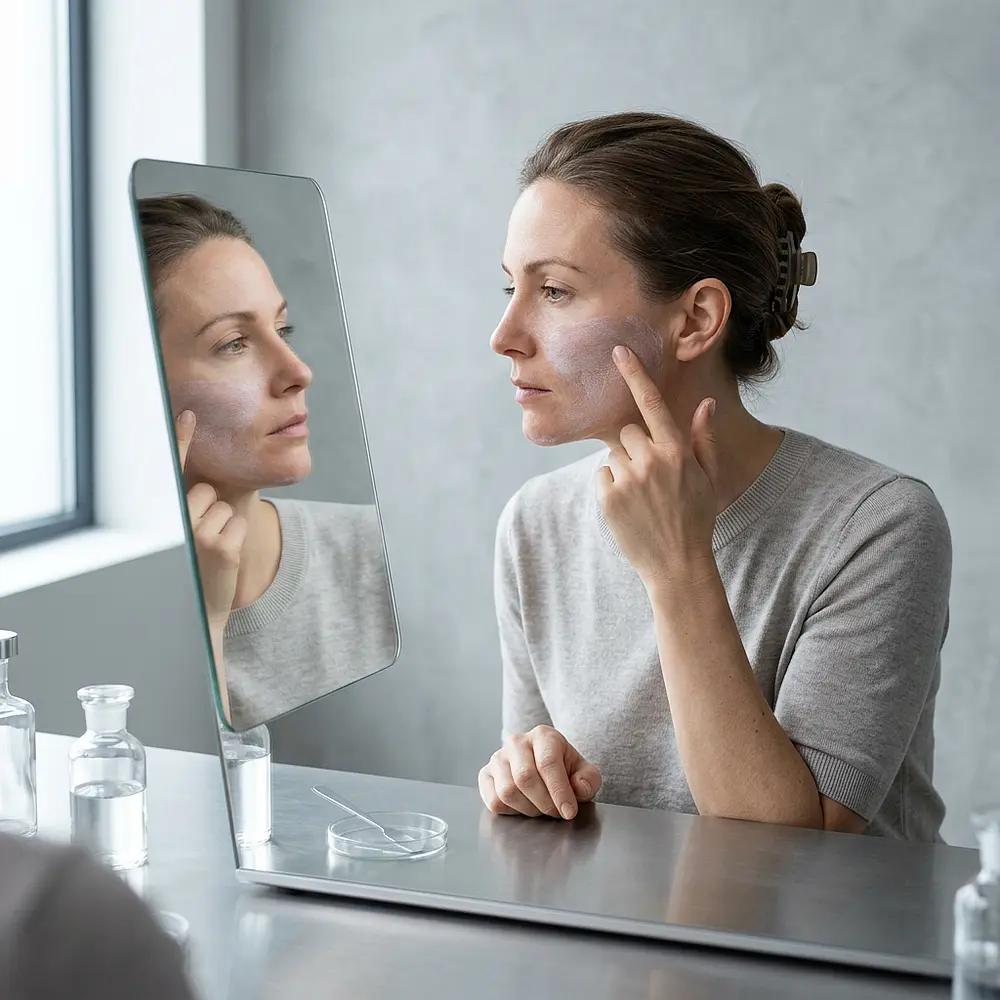
The biggest advantage is cosmetic elegance. Smaller particles are less likely to leave a stark white residue, which helps mineral sunscreen work better across more skin tones and makes daily wear more realistic for many users.
Nano-sized TiO₂ may also improve spreadability in lighter face formulations. That can be especially useful in tinted products and in mineral sunscreens designed to layer under makeup rather than feel like a traditional beach cream.
Current Rules on Nano TiO2 Sprays and Labels

In the EU, nanomaterials must be identified in the ingredient list, so consumers may see titanium dioxide (nano) on packaging. EU safety discussions have also placed tighter limits on nano-TiO₂ in products with inhalation potential, which is why spray formats receive closer scrutiny than creams or lotions.
In the U.S., particle size is not consistently disclosed on front-of-pack sunscreen labeling. If particle size matters to you, the most practical approach is to review the full ingredient information on the brand website or choose a non-aerosol sunscreen format.
Titanium Dioxide Sunscreen for Sensitive Skin
Mineral sunscreens are often recommended for sensitive or reactive skin, and titanium dioxide is one reason why. It is not known as a common skin sensitizer, has a low irritation profile, and is widely used in products intended for children or people who do not tolerate some organic UV filters well.
This makes titanium dioxide for skin especially relevant for people with rosacea-prone skin, eczema-prone skin, post-procedure skin, or eyes that sting with certain sunscreens. Dermatologists also commonly recommend mineral sunscreens for babies and young children because the ingredients are well established and typically well tolerated in topical use.
The full formula still matters. A product can contain a gentle UV filter and still be irritating if it includes fragrance, essential oils, drying alcohols, or a base that does not suit your skin barrier. For that reason, ingredient simplicity often matters as much as the choice of UV filter itself.
Who May Benefit Most From TiO2-Based Formulas
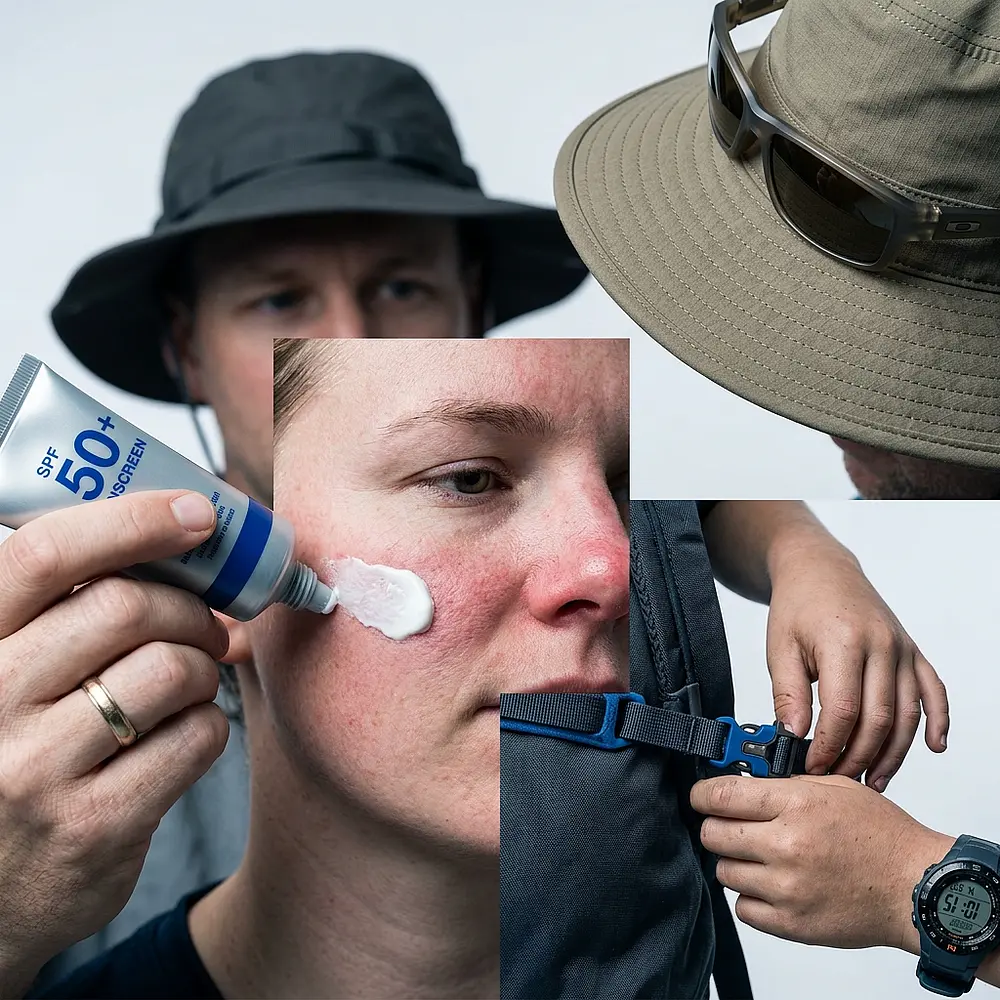
People most likely to benefit from a sunscreen with titanium dioxide include those with redness-prone skin, users who dislike the sting of some chemical sunscreens, children who need a simple mineral option, and adults who want a low-reactivity facial SPF. It can also be a good fit for anyone who prefers a more traditional physical sunscreen profile.
If visible residue has kept you away from mineral products in the past, tinted versions may be worth considering. For more on how TiO₂ appears in complexion products, see titanium dioxide in makeup.
How to Read a Sunscreen Label: Identifying Titanium Dioxide
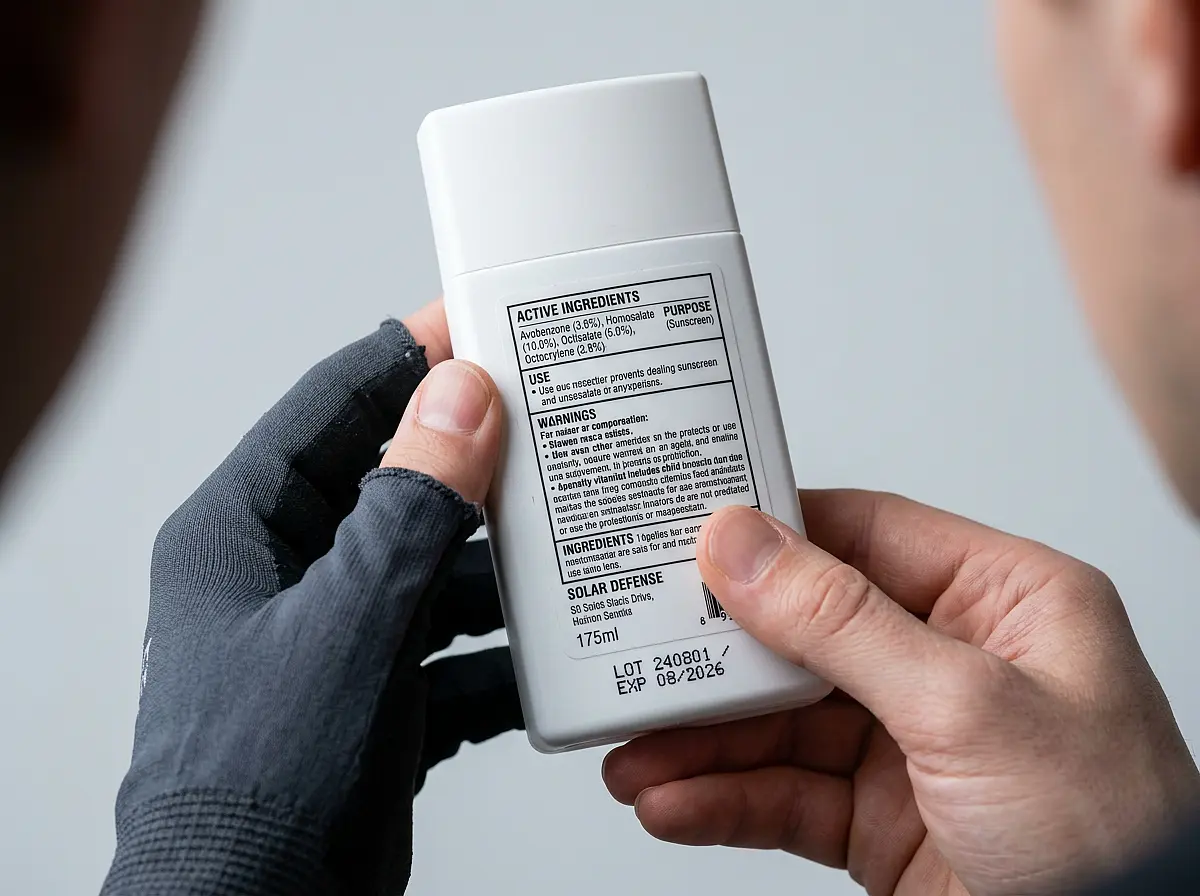
If you are shopping in the United States, start with the Drug Facts box. Titanium dioxide will appear under Active ingredients with a percentage next to it, such as 4%, 7%, 10%, or another listed level. That is the primary place to confirm that you are looking at a true sunscreen with titanium dioxide rather than a cosmetic product that merely contains the pigment elsewhere in the formula.
The term CI 77891 is different. It is a Color Index identifier used in cosmetic ingredient systems and is more relevant to European or INCI-style ingredient lists, while U.S. OTC labels generally use the plain name titanium dioxide; if you only see CI 77891 in a cosmetic product without a Drug Facts sunscreen panel, do not assume it functions as the primary sun-protection active.
Concentration also needs context. U.S. rules allow titanium dioxide up to 25% in OTC sunscreens, but many formulas on the market use it somewhere in the broader practical range of about 5% to 15%, with some products lower or higher depending on formula design. A higher percentage does not automatically mean a better sunscreen, because SPF, UVA performance, spreadability, and water resistance come from the complete tested product.
As for performance expectations, TiO₂-only formulas can deliver useful everyday SPF, especially in facial products, but blended formulas often provide a more balanced mineral profile. If you are comparing products quickly, the ingredient percentage is useful background information; it is not a shortcut for calculating protection quality on your own.
What SPF and Broad-Spectrum Claims Usually Mean

On the front or side panel, the claims that deserve attention first are Broad Spectrum, SPF, and Water Resistant. SPF mainly reflects UVB protection, while Broad Spectrum indicates that the finished sunscreen met the required UVA standard for its labeled category.
For most adults, SPF 30 is a practical minimum for daily use. SPF 50 can make sense for high-exposure days, very fair skin, outdoor work, or situations where you know your application amount may be less than ideal.
What on the package really counts, in order:
- 1. Broad Spectrum — confirms the final sunscreen was evaluated for UVA support
- 2. SPF 30+ — a practical baseline for routine protection
- 3. Water Resistant 40 or 80 minutes — especially important for sweating, sports, or swimming
- 4. Active ingredient blend — tells you whether the product uses titanium dioxide alone or combines filters such as zinc oxide and titanium dioxide
- 5. Finish and skin fit — matters because a sunscreen you dislike is less likely to be used correctly
Ingredient Names and Technical Identifiers
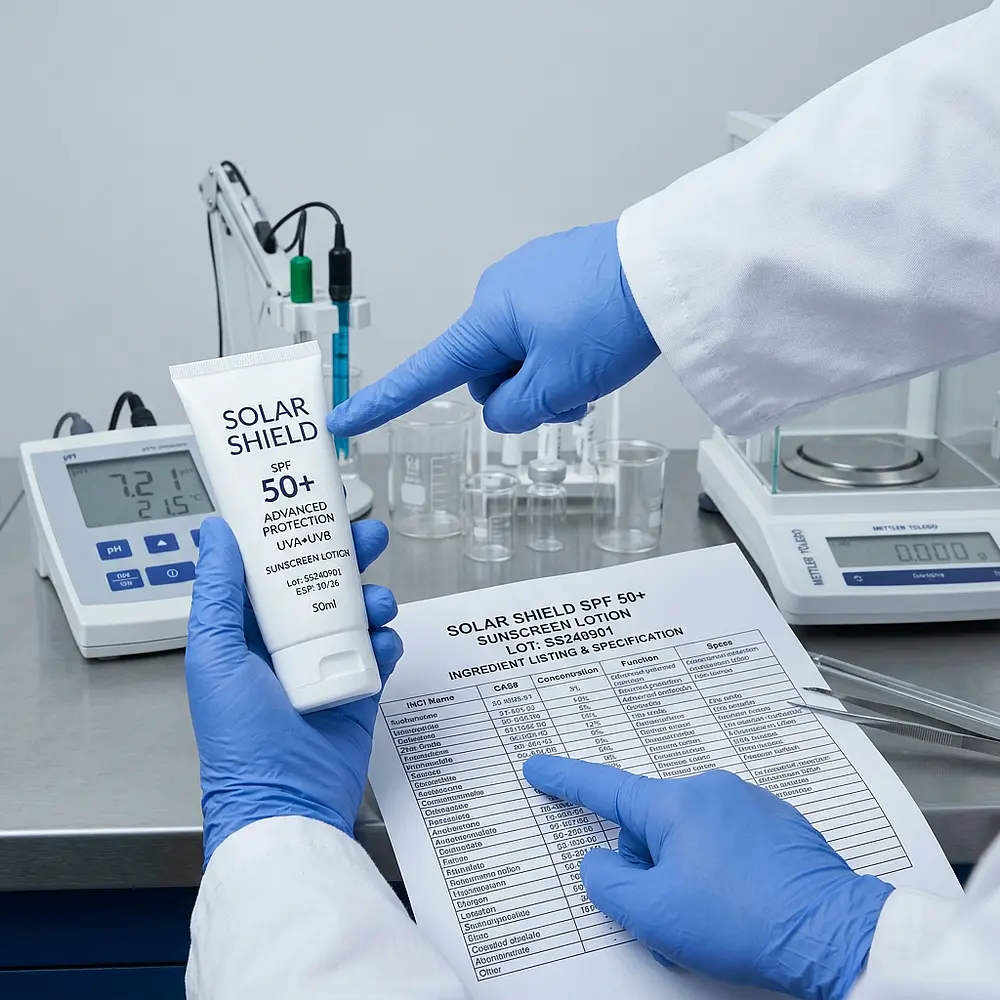
On a U.S. sunscreen, look for the plain-language name titanium dioxide in the Drug Facts section. That is the clearest sign that the ingredient is serving as a regulated sunscreen active. In technical ingredient and safety documentation, titanium dioxide may also be identified by CAS 13463-67-7, which can help when cross-checking raw material or regulatory references.
That distinction helps when reading tinted moisturizers, primers, or foundations that imply sun protection. The presence of CI 77891 alone does not tell you the product functions as a sunscreen in the OTC sense.
Mineral vs. Chemical Sunscreen: Which Is Better?
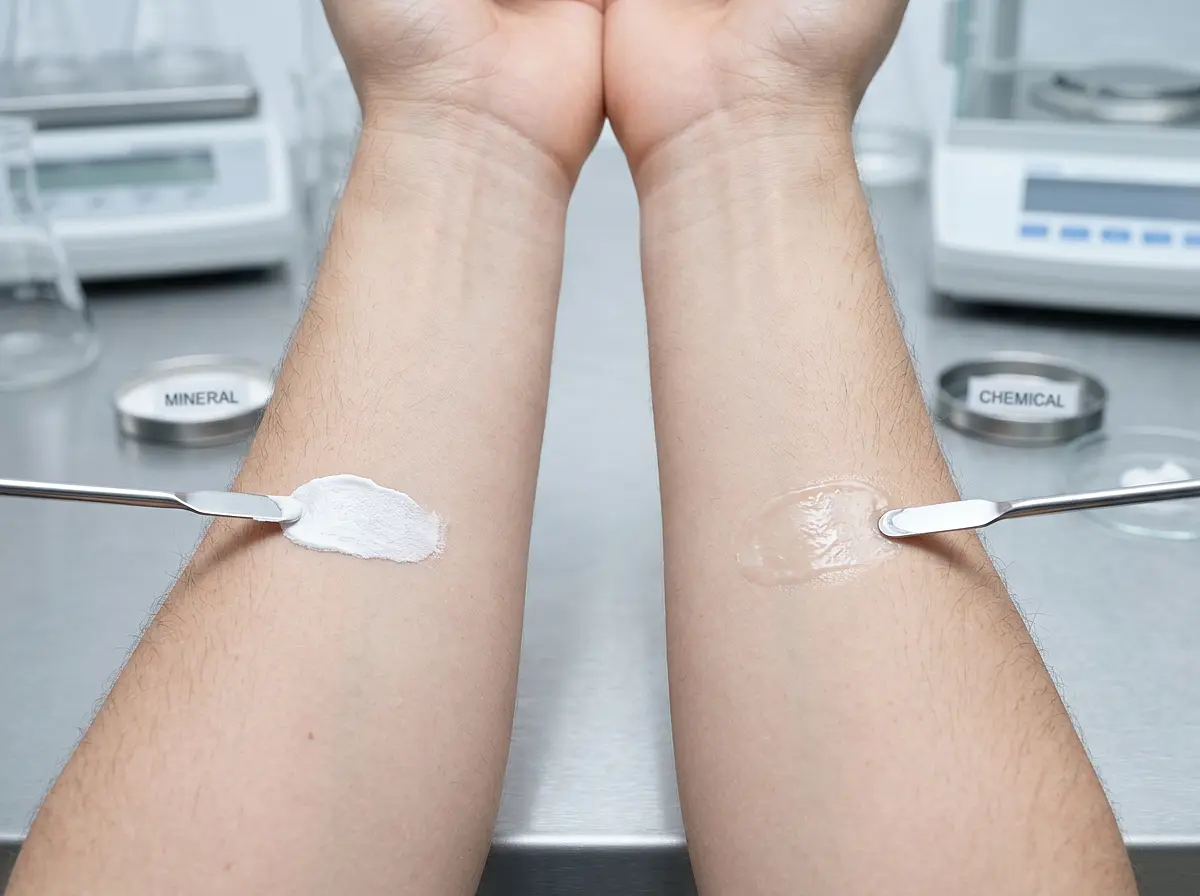
The strongest evidence base starts with regulators and dermatology literature, not social media shortcuts. Under the established U.S. sunscreen rule in 21 CFR 352, mineral and organic sunscreen actives have been addressed within the FDA over-the-counter framework, and dermatology reviews consistently emphasize that sunscreen effectiveness depends heavily on correct use, application amount, and reapplication. The SCCS provides additional route-specific safety analysis in Europe, especially relevant to nanomaterials and inhalation questions.
From a consumer standpoint, the mineral-versus-chemical decision comes down to trade-offs you can actually feel and see on skin. Mineral formulas, including titanium dioxide sunscreen, are often preferred by people who want filters that remain mainly at the skin surface, who have reactive skin, or who are sensitive to eye sting. Chemical sunscreens often offer a more transparent finish, lighter spread, and easier reapplication over the course of a long day.
Here is the practical comparison:
- Immediate wearability vs. potential residue: Chemical formulas are often more invisible; mineral formulas are more likely to leave a cast, especially on deeper skin tones.
- Surface-residing preference vs. cosmetic elegance: Some shoppers prefer mineral filters because of their topical profile; others choose chemical filters because they disappear more easily under makeup.
- Eye sting potential: Mineral products are often better tolerated around the eyes, though the base formula still matters.
- Reapplication comfort: Sheer chemical fluids can be easier to reapply during workdays; thicker mineral creams may feel heavier after multiple layers.
- Formulation flexibility: Chemical filters give formulators more options for clear sprays, gels, and invisible finishes; mineral systems excel in sensitive-skin creams, sticks, and tinted SPFs.
- Sensitivity fit: Mineral sunscreen is often the first option dermatologists suggest for reactive skin, children, or post-procedure use.
EWG is sometimes cited in consumer discussions because it applies a precautionary lens and often favors mineral filters such as zinc oxide and titanium dioxide. That perspective can be useful as a shopper’s reference point, but it should not be treated as equivalent to FDA monograph standards, SCCS opinions, or peer-reviewed dermatology literature.
If your main concern is irritation or eye comfort, mineral sunscreen usually has the advantage. If your main concern is a transparent finish that you will happily reapply, chemical sunscreen often wins. Neither category is inherently “better” in all situations.
When a Mineral Sunscreen Makes More Sense
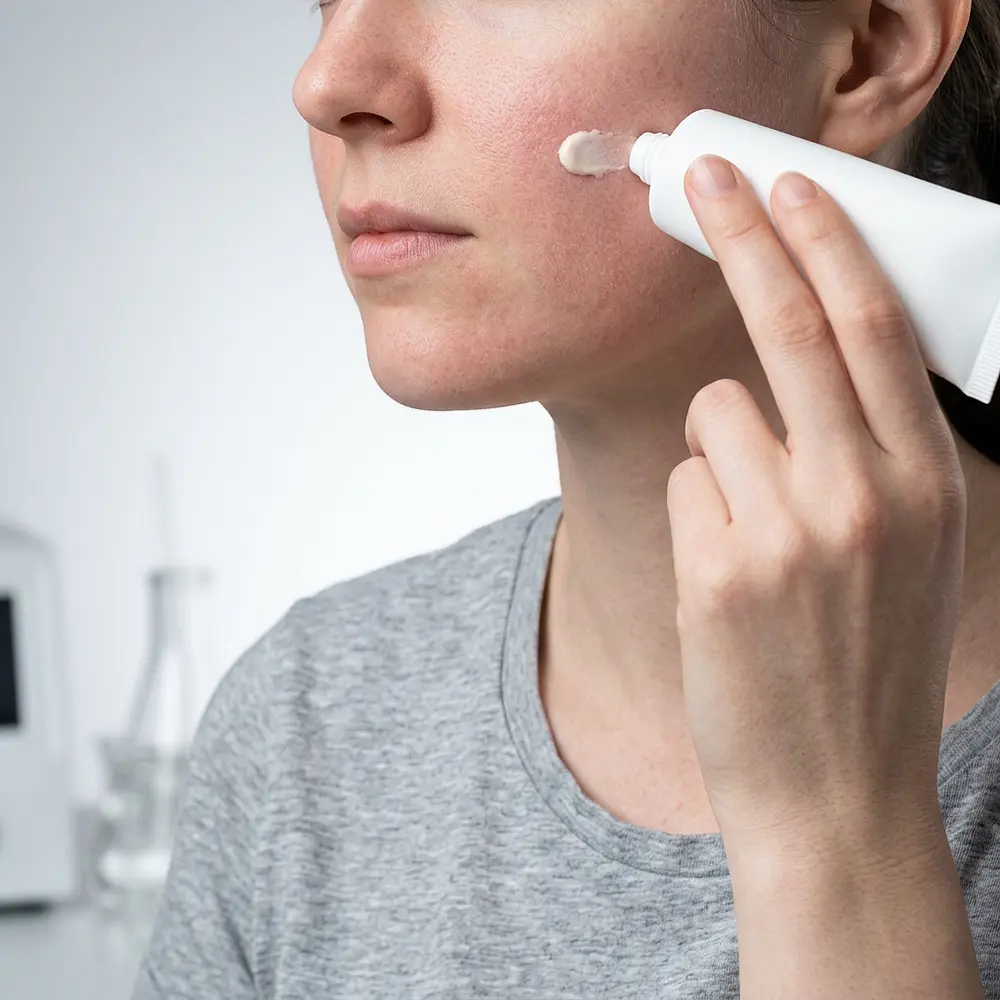
A mineral sunscreen makes the most sense when you are shopping for sensitive skin, children, rosacea-prone skin, post-procedure care, or a product that is less likely to sting around the eyes. It can also be a strong option for people who specifically want a physical sunscreen or prefer filters with minimal skin penetration through intact skin.
Mineral products are also common in tinted facial SPFs, where iron oxides and pigments can help offset visible cast. For many users, that combination improves daily wear enough to make consistent use realistic.
When a Chemical Sunscreen May Be the Better Fit
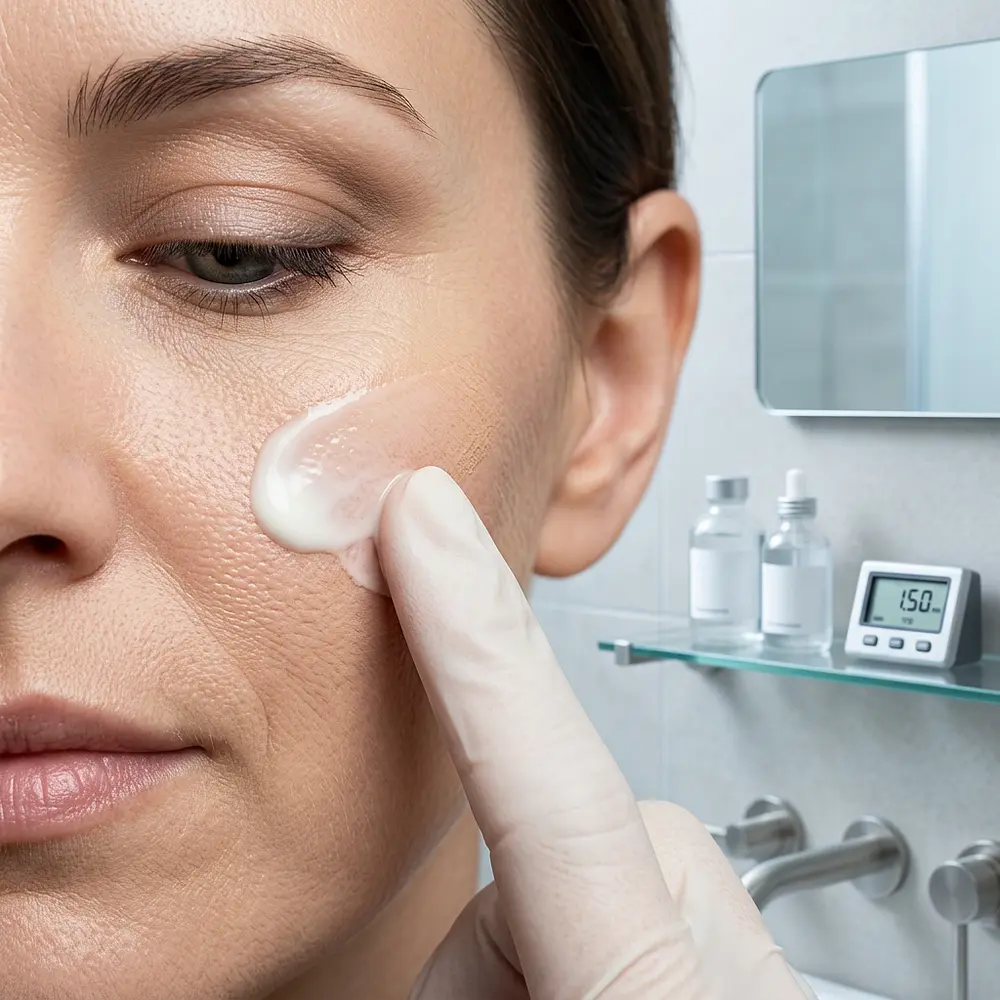
A chemical sunscreen may be the better fit if you want the lightest possible finish, a nearly invisible film on deeper skin tones, or easier layering over moisturizer and under makeup. It can also be more comfortable for repeated application during long outdoor days if you dislike the buildup feel of richer mineral creams.
For some people, the deciding factor is not ingredient philosophy but behavior: the best sunscreen is often the one you will apply generously and reapply without resistance.
How to Choose the Best Titanium Dioxide Sunscreen
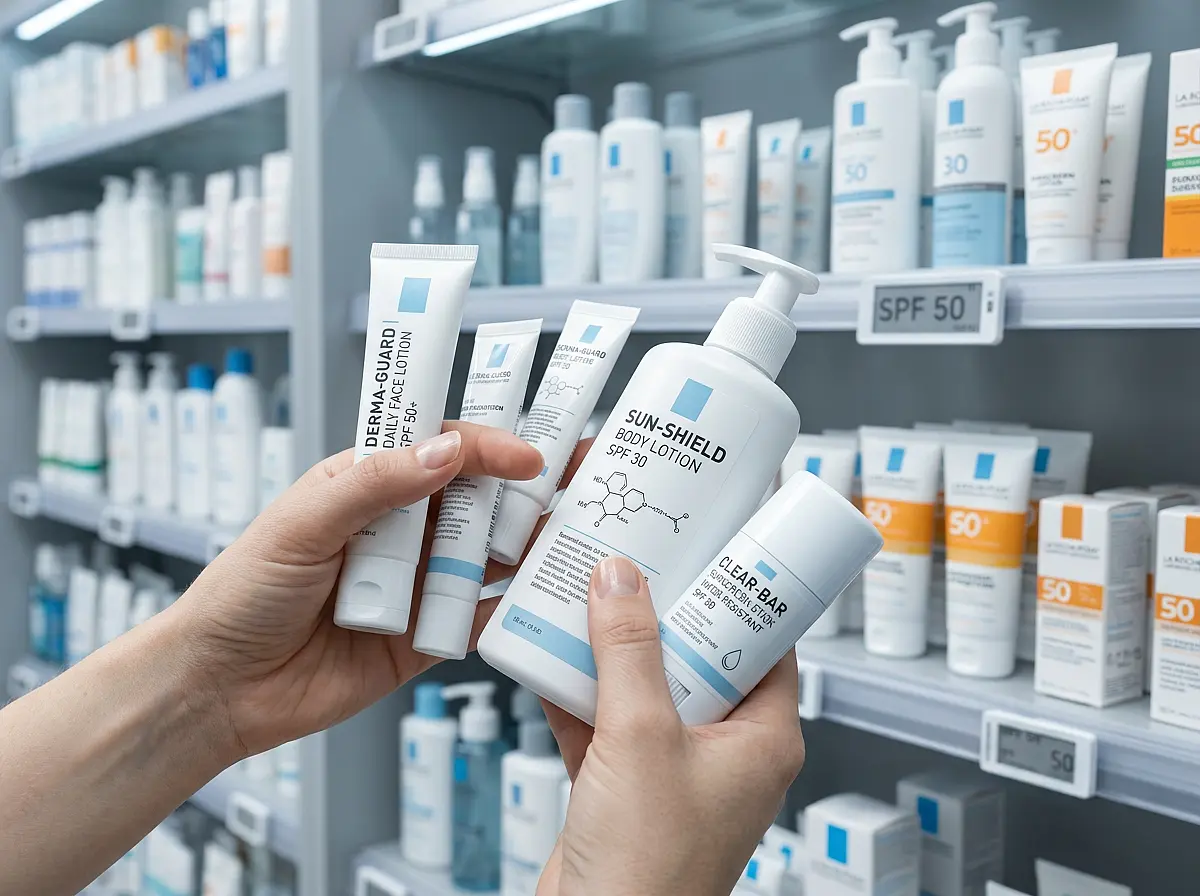
Choosing a good titanium dioxide sunscreen is easier when you shop by scenario instead of by ingredient hype. Start with the non-negotiables: Broad Spectrum, SPF 30 or higher, and a format you will use in the correct amount. Then match the formula to where and how you plan to wear it.
Selection matrix by use case:
| Use case | What to look for | Best fit |
| Everyday facial SPF | SPF 30+, lightweight texture, good wear under skincare or makeup | A mineral sunscreen with titanium dioxide, often tinted or in a fluid/lotion format |
| Outdoor / sport SPF | SPF 50 optional, Water Resistant 80 minutes, durable film | A richer sunscreen with zinc oxide and titanium dioxide or another robust broad-spectrum formula |
| Sensitive-skin SPF | Fragrance-free, simple formula, low eye sting potential | A non-spray sunscreen with titanium dioxide in cream, lotion, or stick form |
| Tinted mineral SPF | Shade match, less visible cast, daily facial comfort | A tinted TiO₂-containing facial sunscreen, often blended with other mineral filters and pigments |
| Kids / family SPF | Broad Spectrum, easy spread, durable but gentle base | A lotion or stick mineral sunscreen; non-spray is often the simplest choice |
Thresholds that make shopping easier:
- SPF 30 is a solid everyday baseline
- SPF 50 is worth considering for beach days, sports, high UV exposure, or very fair skin
- Water Resistant 40 minutes is reasonable for light activity
- Water Resistant 80 minutes is the better target for sports, sweating, or swimming
- Non-spray formats are the most straightforward choice if you want to avoid inhalation concerns
If you are deciding between a TiO₂-only product and a blend, think in terms of comfort versus coverage style. A titanium-dioxide-forward face sunscreen may be ideal for commuting and office wear. A blended sunscreen with zinc oxide and titanium dioxide may be a stronger all-rounder for outdoor weekends, family use, or longer exposure days.
Checklist for Product Selection
If you want a fast buying filter, use this order:
- 1. Broad Spectrum
- 2. SPF 30+ for daily use, SPF 50 if exposure will be high
- 3. Water resistance matched to your activity
- 4. Non-spray format if you want to avoid inhalation questions
- 5. Finish that matches your skin tone and tolerance for residue
That screening method is more useful than marketing phrases such as “clean,” “reef-friendly,” or “dermatologist inspired,” which often tell you less about real performance.
Application Tips for Better Protection

Even an excellent sunscreen underperforms if too little is applied. SPF testing is based on 2 mg per cm², which is more product than most people naturally use. For the face, many dermatologists use the “two-finger” guideline as a practical approximation, although packaging and formula thickness can change how that looks.
Mineral sunscreens begin protecting as soon as they are spread evenly, but they still need complete coverage to perform well. Reapply every two hours during ongoing sun exposure, and sooner after swimming, sweating, or towel drying. A water-resistant label helps the product hold up better, but it does not eliminate the need to reapply.
If you wear makeup, a cosmetically elegant sunscreen is more likely to be used consistently. Titanium dioxide also appears in many complexion products, but makeup should be treated as a secondary layer rather than your primary SPF strategy. For more on that topic, see titanium dioxide in makeup.
Sources, Standards, and Scientific References

This page is grounded in current sunscreen regulation, EU safety opinions, and peer-reviewed dermatology literature. Key authority sources include the legacy U.S. sunscreen citation 21 CFR 352, SCCS opinions on titanium dioxide nanomaterials for European dermal safety assessment, and dermatology and photoprotection reviews addressing mineral sunscreen performance, tolerability, and UVA/UVB coverage.
Together, those sources support the central consumer takeaway: titanium dioxide remains a well-established topical sunscreen active, especially in lotions, creams, sticks, and other non-inhaled formats. For more background, see is titanium dioxide safe, what is titanium dioxide, and TiO₂.
Related Reading on Titanium-Dioxide.com

If you want to go deeper, the pages below are grouped by topic so you can quickly find the next step that matches your question.
Safety and regulation
Is Titanium Dioxide Safe? — A broader route-by-route safety review covering skin contact, inhalation context, and common consumer concerns.
Ingredient comparison
Zinc Oxide vs. Titanium Dioxide — A more detailed side-by-side comparison for shoppers deciding between the two mineral sunscreen actives.
Cosmetic use
Titanium Dioxide in Makeup — How TiO₂ functions in foundation, powder, tinted SPF, and complexion products.
Basics
What Is Titanium Dioxide? — A foundational explainer for readers who want the material science and everyday uses in one place.
Technical deep dive
TiO₂ — A more technical page covering terminology, chemistry, and shorthand references used in scientific and industrial contexts.
Start here
Titanium-Dioxide.com Homepage — The main hub for all ingredient, safety, and application guides on the site.
FAQ
Is titanium dioxide safe in sunscreen?
For normal topical use in creams, lotions, and sticks, current evidence and regulatory reviews are generally reassuring. Concerns are more specific to inhalation exposure from sprayable products, not standard dermal application on intact skin.
Which is better: titanium dioxide or zinc oxide?
Neither is universally better. Titanium dioxide is often chosen for lighter-feeling daily mineral sunscreen, while zinc oxide is often preferred when stronger mineral UVA coverage is the goal; many well-designed products use both together.
FAQ
Is mineral sunscreen with titanium dioxide a good choice for sensitive skin?
Yes—mineral sunscreen with titanium dioxide is often a good choice for sensitive skin because it's generally well tolerated and stings or burns less often than many other sunscreen types. People prone to redness or with easily irritated skin often reach for it for this reason. What matters, though, isn't just the UV filter itself but the whole formulation: fragrances, preservatives, or a rich base can also affect tolerability. For sensitive skin, simple, moisturizing, and preferably fragrance-free formulas are usually the most comfortable. If you're very reactive, patch-test a new product on a small area first.
What are the risks of inhaling titanium dioxide in spray sunscreen?
The main risk with titanium dioxide in spray sunscreen is inhaling the spray mist. If fine or ultrafine particles reach the airways, this can unnecessarily burden the lungs and irritate the respiratory tract. So the issue isn't the UV filter on the skin, but the airborne application. That's why you should never spray directly onto the face, should avoid inhaling the mist, and shouldn't use the product in tight, poorly ventilated spaces. It's safer to spray into your hands first or to choose lotions and sticks instead. For children and people with asthma or sensitive airways, non-spray formats are usually the better choice.
Are nanoparticle forms of titanium dioxide in sunscreen safe on intact skin?
Yes—based on current evidence, nanoparticulate titanium dioxide in sunscreen is generally considered safe on intact skin. The key point is that, according to current knowledge, these particles do not penetrate healthy skin to a relevant degree. They remain mainly on the surface or in the outermost layer of dead skin cells. Nano forms are used mainly because they improve cosmetic properties: they look more transparent, reduce white cast, and often spread more pleasantly. This doesn't change the fact that nano forms undergo their own separate safety assessment. On severely damaged or freshly treated skin, extra caution is still advisable.
Does titanium dioxide sunscreen sit on top of the skin or get absorbed into it?
Titanium dioxide sunscreen stays mainly on the skin's surface and in the outermost horny layer, rather than being taken up to a meaningful extent into deeper, living skin layers. That's why it's usually described as a surface-acting UV filter. In practice, it forms a protective film that sits on the skin; small particles can accumulate in skin folds, pores, and the upper layer of dead skin. However, this is not the same as relevant systemic absorption. For the actual protective effect, this behavior is exactly what's desired: the filter is meant to remain as an even film on the skin and block UV radiation there.
Why is titanium dioxide often combined with zinc oxide in mineral sunscreen?
Titanium dioxide is often combined with zinc oxide in mineral sunscreens because their protection profiles complement each other well. Titanium dioxide is especially strong in the UVB range and at shorter UVA wavelengths, while zinc oxide covers a broader part of the UVA spectrum, including longer UVA wavelengths. Together, this allows for more balanced broad-spectrum protection than titanium dioxide alone. For formulators, the combination is also practical because it can better balance protective performance and everyday usability. That's why both filters are often found together in mineral products intended for daily wear, sensitive skin, or extended time outdoors.
Does titanium dioxide sunscreen protect against both UVA and UVB rays?
Yes—titanium dioxide protects against UVB rays and also against part of the UVA spectrum, mainly the shorter UVA range. It is especially effective against the UV portion most strongly linked to sunburn. For truly balanced coverage across the full UVA/UVB spectrum, though, it's not just this one filter that matters, but the performance of the entire formulation. When choosing a product, don't rely on the ingredient name alone—check the product labeling instead. If you want reliable protection against sunburn and light-induced skin aging, a product explicitly labeled "broad-spectrum" is the most sensible choice.
Is titanium dioxide safe in sunscreen for everyday use?
Yes—titanium dioxide is generally considered safe in sunscreen for everyday use on intact skin. Current safety assessments up to 11.07.2026 support its use in topical products, with the key distinction that skin application is treated differently from inhalation exposure. Regulatory reviews in the EU have assessed titanium dioxide as safe in cosmetic use up to 25% in relevant product contexts, while concerns focus mainly on aerosolized or powder forms that can be breathed in. For daily use, creams, lotions, and sticks are the lower-risk choice. If you want extra caution, avoid spray sunscreens and don’t apply any sunscreen to broken or severely damaged skin.
How does titanium dioxide sunscreen differ from chemical sunscreen filters?
Titanium dioxide sunscreen is a mineral filter, while chemical sunscreens use organic UV filters. In practice, titanium dioxide mainly works at the skin’s surface by blocking, scattering, and partly absorbing UV, whereas chemical filters absorb UV energy and convert it into heat. Titanium dioxide is often preferred by people with sensitive skin because it is generally less irritating. However, it usually gives stronger UVB and shorter-UVA coverage than full UVA coverage, so formulas may need other filters to achieve broad-spectrum protection. Chemical sunscreens often feel more transparent and lightweight on skin, while titanium dioxide formulas can leave more visible white cast.
Is titanium dioxide for skin considered non-irritating and non-sensitizing?
Yes—titanium dioxide is generally considered non-irritating and non-sensitizing in topical sunscreen formulations. That's why it is often chosen for people with sensitive, reactive, or delicate skin. This doesn't mean every product is automatically problem-free: intolerance reactions more often come from the rest of the formulation than from titanium dioxide itself, for example fragrances, preservatives, or the product's base. Sunscreen can also feel uncomfortable around the eye area or on already-damaged skin. If you react very sensitively, look for simple, fragrance-free formulas and patch-test a new product before regular use.
What should you look for when choosing a good titanium dioxide sunscreen?
For a good titanium dioxide sunscreen, first look for broad-spectrum protection and at least SPF 30. Also check the active-ingredient listing to confirm titanium dioxide is actually included as an active UV filter. Depending on your skin type, it's worth looking at the formulation: sensitive skin often benefits from simple, fragrance-free formulas, while tinted versions can reduce white cast. Texture and spreadability also matter for everyday use, since a pleasant product is more likely to be applied in sufficient amounts and reapplied regularly. If you swim or sweat heavily, choose a water-resistant sunscreen. Overall, it's not just the filter that counts, but how well the whole product fits your use case.
Is sunscreen with zinc oxide and titanium dioxide better than titanium dioxide alone?
Often, yes—sunscreen with zinc oxide and titanium dioxide can be better than titanium dioxide alone, especially when the goal is well-balanced protection across UVB and UVA. The advantage is that the two mineral filters bring different strengths and complement each other well. That doesn't mean every combination is automatically superior, though. How well a product actually protects still depends on the full formulation, the labeled SPF, broad-spectrum performance, texture, and the amount actually applied. A product labeled broad-spectrum with titanium dioxide alone, used regularly in sufficient amounts, can still be a very good choice.
How stable is titanium dioxide in sunlight compared with other sunscreen ingredients?
Titanium dioxide is considered very photostable, meaning it does not break down easily in sunlight the way some older organic UV filters can. That makes it a reliable sunscreen ingredient during UV exposure. In practice, formulators often use surface-treated titanium dioxide to further reduce photocatalytic activity and help keep the formula stable. The rutile form is generally preferred in sunscreens because it is more UV-stable than anatase. Still, overall sunscreen performance depends on the full formula, packaging, and wear conditions, not just one filter. So compared with many sunscreen ingredients, titanium dioxide is among the more sunlight-stable options.
Can titanium dioxide alone provide broad-spectrum sun protection?
Titanium dioxide alone can contribute to protection against UV radiation, but it doesn't always provide the most balanced coverage across the full relevant UVA spectrum. As a sole filter, it may or may not be sufficient depending on the formulation. What matters is whether the finished product actually meets broad-spectrum requirements. In practice, titanium dioxide is therefore often combined with other UV filters to specifically strengthen UVA protection. If comprehensive protection matters to you, don't assume the ingredient name alone tells the whole story. The product's explicit broad-spectrum labeling is the more reliable indicator.
What concentration of titanium dioxide is typically used in sunscreen products?
Titanium dioxide is typically used in sunscreens at concentrations of roughly 2% to 25%, depending on the product type, formulation, and market. Many products fall in the mid-single-digit to low double-digit range, while some mineral sunscreens use higher levels to support their labeled protection. However, the percentage alone says little about how well a product actually protects. Particle properties, how the filter is distributed in the formulation, and how evenly the sunscreen forms a film on the skin also matter. To judge protective performance, it's more reliable to look at SPF and broad-spectrum labeling than at the percentage figure alone.
How can you identify titanium dioxide on a sunscreen label?
Look at the Drug Facts or active ingredients panel first. If the sunscreen contains titanium dioxide, it is usually listed exactly as “Titanium Dioxide” with a percentage next to it, such as 3%, 5%, or higher. In ingredient lists outside the active panel, it may also appear as titanium dioxide or CI 77891, especially in tinted formulas. Some labels also note “mineral sunscreen” or “physical sunscreen,” but the most reliable sign is the active ingredient name itself. If you want to be extra precise, some product documentation may also reference the CAS number 13463-67-7, though this is uncommon on consumer packaging.
Why do some sunscreen formulas use nano titanium dioxide instead of larger particles?
Nano titanium dioxide is used mainly to improve the cosmetic properties of a sunscreen. Smaller particles appear more transparent on skin, reduce the typical white cast, and often give a smoother, lighter feel. This helps manufacturers create products that spread more pleasantly and are more likely to be applied in sufficient amounts in everyday use. High-protection formulations can also often be achieved more elegantly this way. So the main reason for using nano forms is appearance and wearability, not that nano forms inherently protect more strongly. That's also why regulators assess them as a separate material category.
Can titanium dioxide sunscreen be used on children and babies?
Yes—titanium dioxide sunscreen can be used on children and is often preferred for its good skin tolerability. Extra caution applies to babies, however: for infants under six months, shade, clothing, a hat, and avoiding direct sun usually come first. If protection on small, uncovered areas of skin is occasionally needed, a mineral product recommended by a pediatrician can make sense. For older babies and children, look for a broad-spectrum sunscreen that spreads evenly and fits the situation. For sensitive skin, fragrance-free formulas are often more comfortable, and a patch test beforehand can be helpful.