Is Titanium Dioxide Safe? What the Science Actually Says
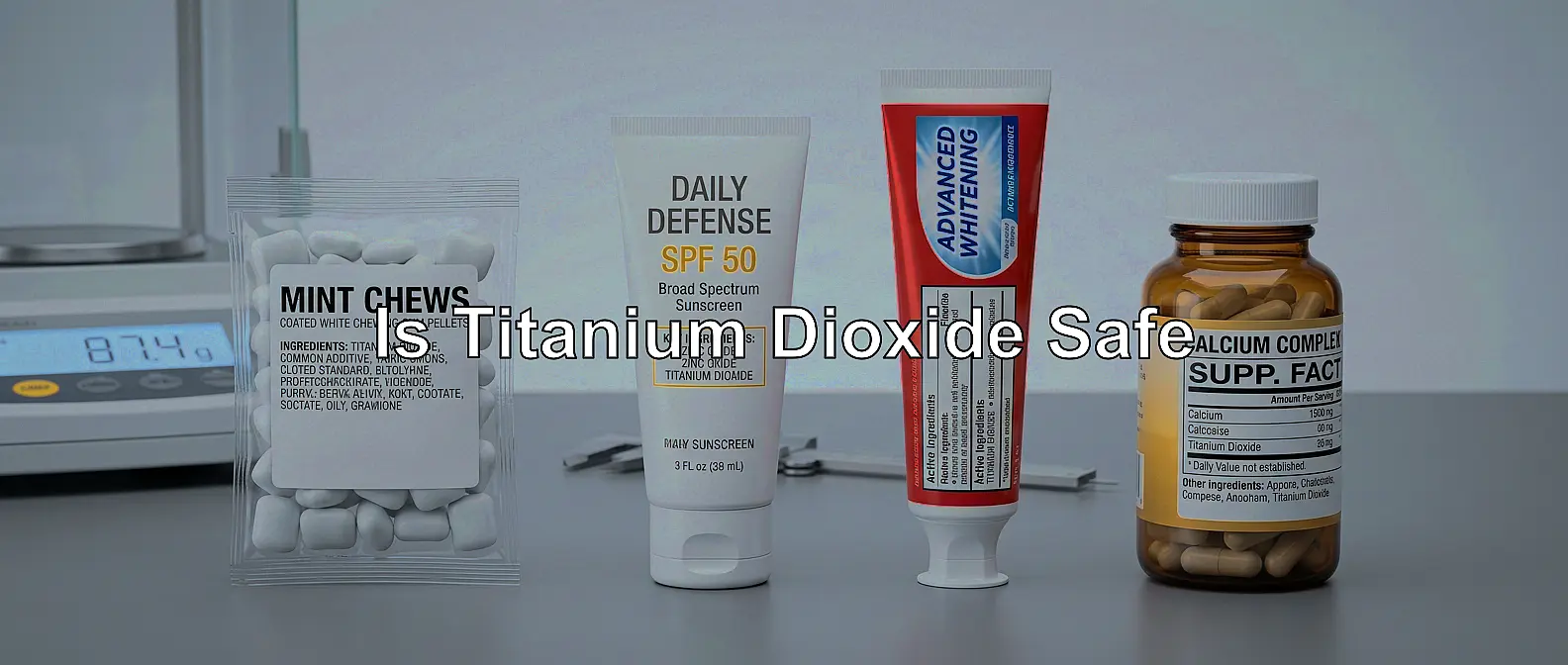
If you have seen titanium dioxide on the label of candy, sunscreen, toothpaste, or a supplement capsule, asking whether it is safe is entirely reasonable. The same substance appears in very different products, and that often leads to confusion when headlines mention food bans, cancer classifications, or nanoparticles. A useful answer depends on three variables: form, dose, and route of exposure. This page looks at titanium dioxide in food, on skin, and in air separately so the evidence can be interpreted in the right context.
One clarification matters from the start: “titanium” and “titanium dioxide” are not interchangeable terms in toxicology. This article is about titanium dioxide, also written as TiO₂, not elemental titanium metal. For a plain-language overview of the material itself, see what titanium dioxide is.
The goal here is not to reassure reflexively and not to amplify risk beyond what the evidence supports. Instead, this page summarizes the positions of named sources including the FDA, EFSA, IARC, NIOSH, the SCCS, and peer-reviewed literature indexed through NCBI/PubMed. Where the science is settled, that is stated clearly; where uncertainty remains, that is stated clearly too.
Table of Contents
- Quick Verdict by Exposure Type
- The Short Answer: It Depends on How You're Exposed
- What Is Titanium Dioxide, Exactly?
- Is Titanium Dioxide Safe to Eat?
- Is Titanium Dioxide Safe in Sunscreen and Cosmetics?
- Is Inhaled Titanium Dioxide Dangerous?
- Titanium Dioxide Nanoparticles: A Special Case
- What Do Regulatory Agencies Say?
- Titanium Dioxide Side Effects: What Research Shows
- Should You Avoid Titanium Dioxide?
- Bottom Line
- Sources and Medical Review Information
- FAQ
The Short Answer: It Depends on How You're Exposed
A simple yes-or-no answer would be misleading. Titanium dioxide can be swallowed in food or medicines, placed on the skin in sunscreen or makeup, or breathed in as airborne dust in manufacturing or powder-handling settings. Each pathway exposes different tissues to different amounts of material, which is why agencies do not treat all titanium dioxide uses as one single safety question. That is also why a person asking is titanium dioxide bad for you may encounter very different answers depending on whether the source is discussing food additives, mineral sunscreen, or occupational dust exposure.
Particle size is the second major variable. Regulators distinguish between larger particles and nano-sized particles because the latter have a higher surface-area-to-mass ratio and may interact differently with biological systems. This issue became especially important in the European food review because EFSA found that food-grade E171 contains a fraction of particles below 100 nm and therefore applied its nanotechnology guidance when reassessing safety (EFSA Journal 2021;19(5):6585). So when people ask is titanium toxic, the scientifically accurate response is to ask first: which form, which route, and what level of exposure?
Quick Verdict by Exposure Type
Food / ingestion: In the United States, titanium dioxide remains permitted as a color additive in food up to 1% by weight under FDA 21 CFR 73.575. In the European Union, EFSA concluded in 2021 that E171 could no longer be considered safe because a genotoxicity concern could not be excluded, and the EU food ban took effect on 7 August 2022 (EFSA Journal 2021;19(5):6585; Commission Regulation (EU) 2022/63).
Skin / topical use: Titanium dioxide is permitted in cosmetics in the US and is an approved OTC sunscreen active ingredient in FDA sunscreen monograph materials. The key qualifier is that the reassuring safety profile applies mainly to intact skin; the SCCS and published reviews report that dermal penetration of TiO₂ particles through intact skin is negligible or absent, but inhalable sprays and some powders require separate consideration (FDA sunscreen monograph framework; SCCS Opinion on Titanium Dioxide).
Inhalation: IARC classifies titanium dioxide as Group 2B, possibly carcinogenic to humans, based mainly on animal inhalation studies with airborne particles (IARC Monographs Vol. 93). That classification is most relevant to occupational dust exposure, not to ordinary non-aerosol consumer use; workplace guidance comes from NIOSH Current Intelligence Bulletin 63.
Nanoparticles: Nano-sized TiO₂ is assessed separately because smaller particles can behave differently from larger ones, including higher surface reactivity. EFSA’s 2021 E171 assessment specifically considered the nano-fraction present in food-grade material, and regulators continue to review nano-TiO₂ by use case rather than treating all forms as interchangeable (EFSA Journal 2021;19(5):6585; SCCS Opinion on Titanium Dioxide).
Is Titanium Dioxide Safe to Eat?

The core reason is not that the agencies reviewed completely different science. It is that they operate under different legal frameworks and may act differently when evidence leaves a meaningful safety question unresolved. EFSA judged that the genotoxicity database did not allow it to rule out concern for food use, and because of that it could not derive an ADI (EFSA Journal 2021;19(5):6585). The EU then made a risk-management decision to ban E171 in food.
The US approach remains based on the existing FDA color-additive regulation for food use. That does not mean the US has declared all possible questions settled; it means the authorization under 21 CFR 73.575 remains in force. Another practical reason comparisons are difficult is that studies do not always characterize particle size, crystal form, coatings, or nano-fraction in the same way. When the tested material is not described consistently, agencies can reasonably differ in how strongly they interpret the same body of evidence.
What Is Titanium Dioxide, Exactly?
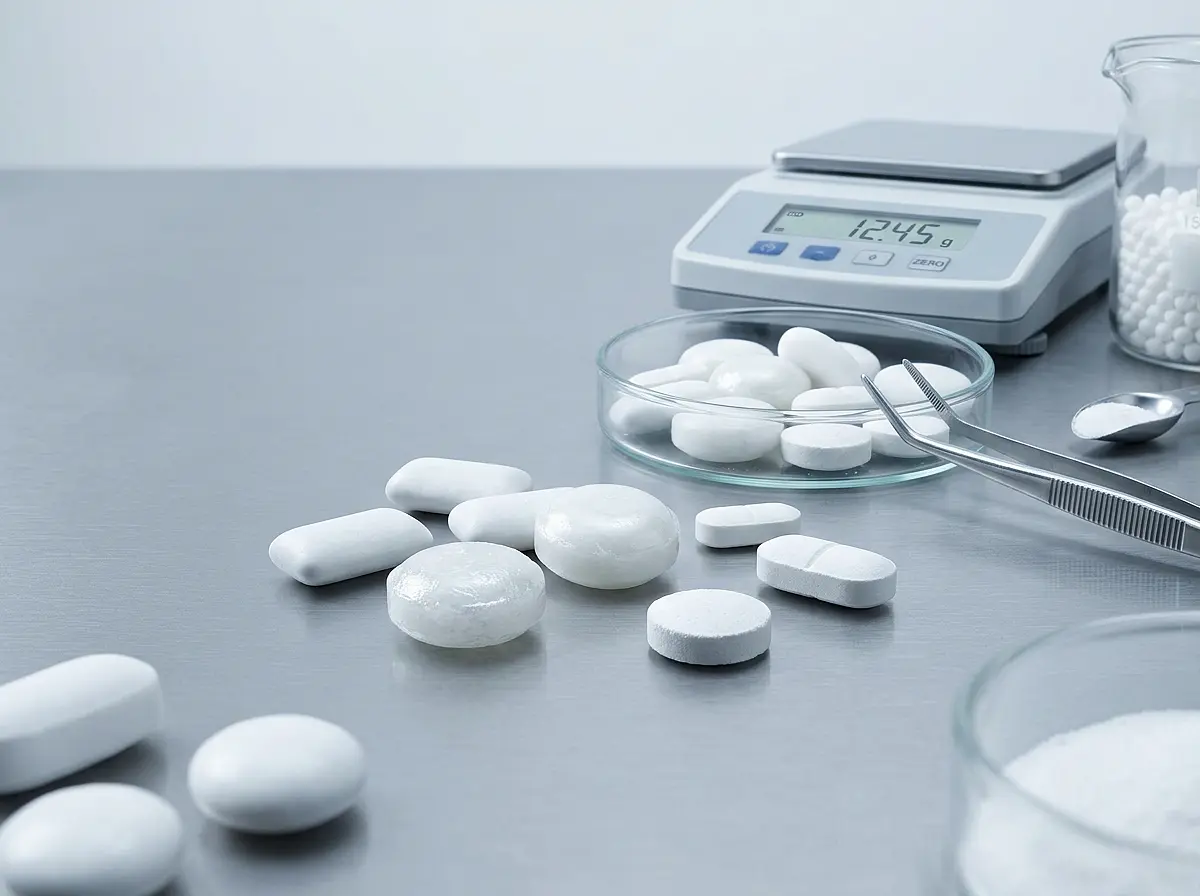
In food, titanium dioxide has been used as a whitening and opacifying color additive. Historically, it has appeared in products such as candy, chewing gum, bakery decorations, sauces, soups, spreads, supplements, and tablet coatings. In the United States, this use remains permitted under FDA 21 CFR 73.575, which allows titanium dioxide for direct addition to food for human consumption provided it does not exceed 1% by weight of the food. That is a color-additive authorization, not a GRAS designation (FDA, 21 CFR 73.575).
The European assessment reached a different endpoint. In 2021, the European Food Safety Authority published a re-evaluation of E171 and concluded that titanium dioxide “can no longer be considered as safe when used as a food additive” because a concern for genotoxicity could not be ruled out. EFSA also stated that it was not possible to establish an acceptable daily intake for E171 from the available evidence (EFSA Journal 2021;19(5):6585). Following that opinion, the European Union prohibited E171 in food, with the ban applying from 7 August 2022 (Commission Regulation (EU) 2022/63).
The difference between the US and EU does not mean one side found clear proof of harm and the other found clear proof of safety. The main divide is how each system handled remaining uncertainty. EFSA’s concern centered on genotoxicity data that did not allow the agency to exclude DNA-related risk with enough confidence for continued approval. The FDA has not made the same regulatory move and still permits food use under its color-additive rule. In practical terms, consumers in the US may still see titanium dioxide on labels, while compliant EU foods should no longer contain E171.
For consumers, the takeaway is straightforward. If you want to reduce dietary exposure as a precaution, the most useful places to check first are sweets, gum, frosted or decorated baked goods, creamy sauces or soups, white spreads, supplements, and coated tablets. Ingredient labels may list it as titanium dioxide, and older international references may use E171. For a category-specific breakdown, see titanium dioxide in food.
Why the US and EU Reached Different Conclusions
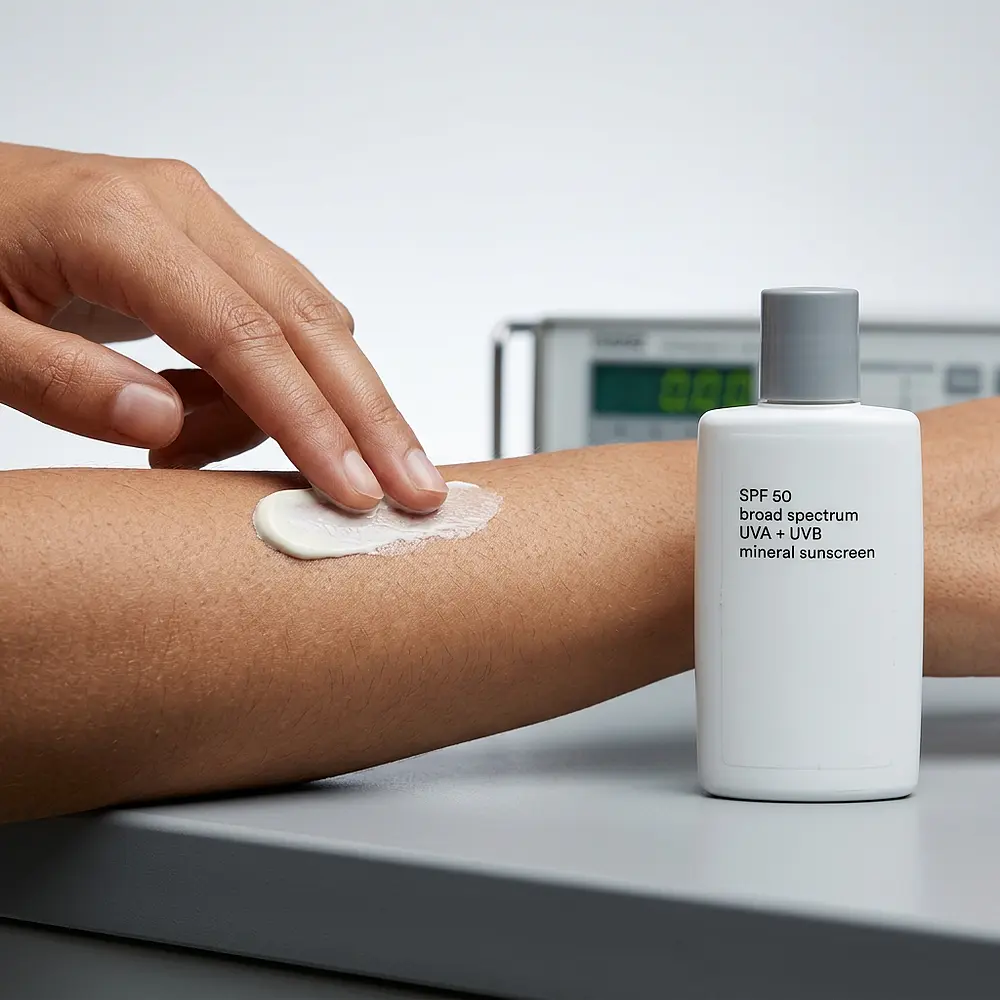
The safety picture is more reassuring for topical use on intact skin than it is for oral ingestion in food. In the United States, titanium dioxide is permitted in cosmetics and is also used as an approved OTC sunscreen active ingredient under FDA sunscreen rules. In cosmetics, it may appear in mineral sunscreen, foundation, pressed powder, concealer, lipstick, and some toothpastes as a pigment or opacifier (FDA cosmetic and sunscreen regulations).
The most important scientific question here is whether TiO₂ particles cross the skin barrier in meaningful amounts. Reviews considered by the Scientific Committee on Consumer Safety and published studies on intact human or animal skin generally find that titanium dioxide particles remain on the skin surface or in the outer stratum corneum and do not reach living tissue to a meaningful extent (SCCS Opinion on Titanium Dioxide; Smijs and Pavel, Nanotechnology, Science and Applications, 2011). That is the main reason dermatologists and regulators assess sunscreen use differently from food use.
There are, however, important caveats. This lower-concern profile applies primarily to intact skin. It should not be generalized to every product format. Spray sunscreens, aerosolized cosmetics, and loose powders can create an inhalation pathway, which is a different risk question from skin application and is assessed more cautiously by regulators (SCCS Opinion on Titanium Dioxide). EU cosmetics law also distinguishes by form and exposure potential rather than giving one blanket judgment for every titanium dioxide use.
Toothpaste needs a separate note. It is often discussed alongside topical products because it contacts the oral surfaces locally, but it is not identical to sunscreen on skin. Some toothpaste is partly swallowed, especially by children, so it sits closer to an oral-contact exposure than a purely dermal one. That does not make toothpaste equivalent to E171 in food, but it does mean consumers should avoid assuming all “cosmetic” uses have exactly the same exposure profile.
For people choosing sun protection, the public-health context matters. The risk of inadequate UV protection is well established, whereas current evidence on titanium dioxide in well-formulated topical sunscreen on intact skin remains broadly reassuring. If you want a focused review of this use case, see titanium dioxide in sunscreen.
Is Titanium Dioxide Safe in Sunscreen and Cosmetics?
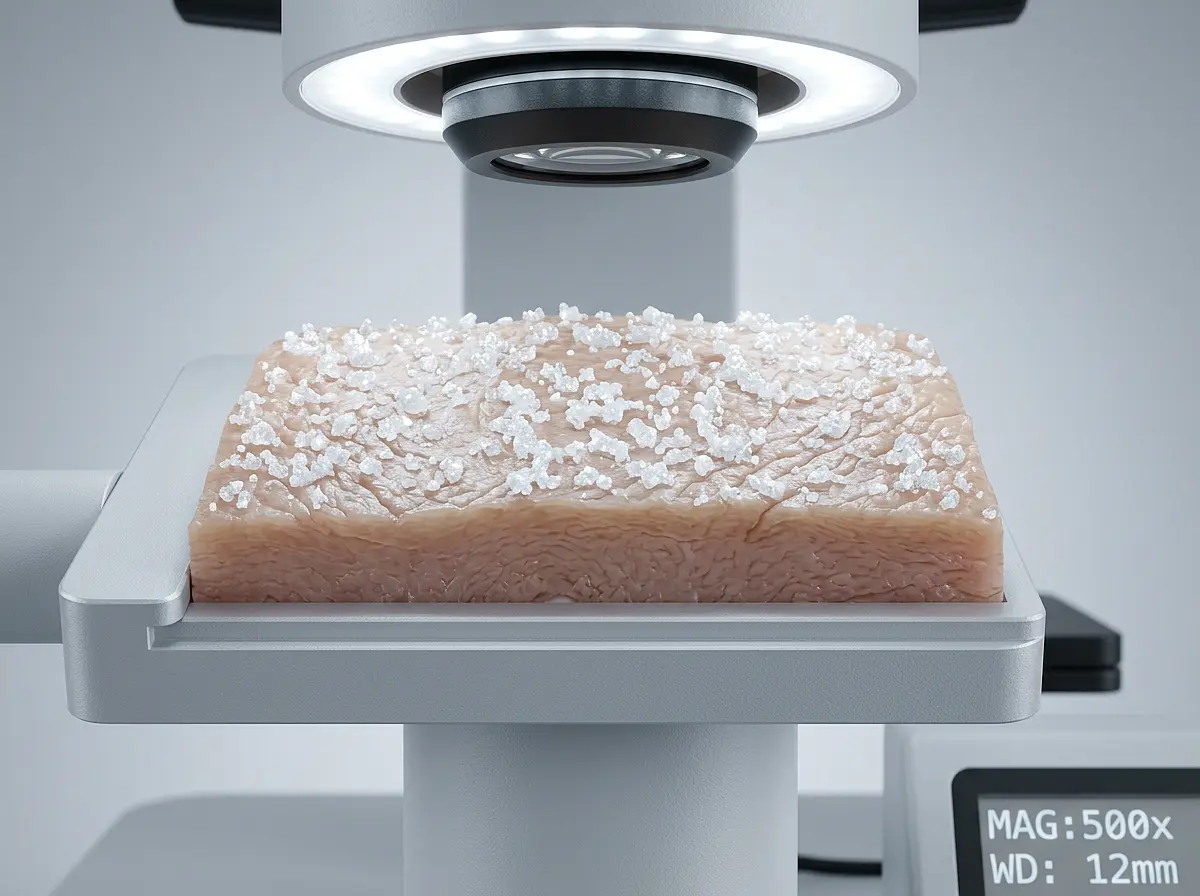
Available evidence indicates that nano-TiO₂ does not significantly penetrate intact skin. The SCCS has repeatedly reviewed dermal penetration data for titanium dioxide used in cosmetic products and has concluded that penetration into viable skin is absent or negligible under relevant conditions of use, while noting that inhalation concerns remain more relevant for sprayable forms (SCCS Opinion on Titanium Dioxide). Published reviews have reached similar conclusions, finding localization mainly in the outermost non-viable layers of skin rather than systemic absorption (Smijs and Pavel, 2011).
That finding should still be framed carefully. “Does not significantly penetrate intact skin” is not the same as “every nano-form is proven safe in every conceivable cosmetic use.” Surface coatings, crystal structure, formulation, product format, and exposure route all matter. This is why nano-TiO₂ in a cream or lotion is not assessed the same way as respirable particles in a spray or loose powder.
Do Titanium Dioxide Nanoparticles Penetrate the Skin?
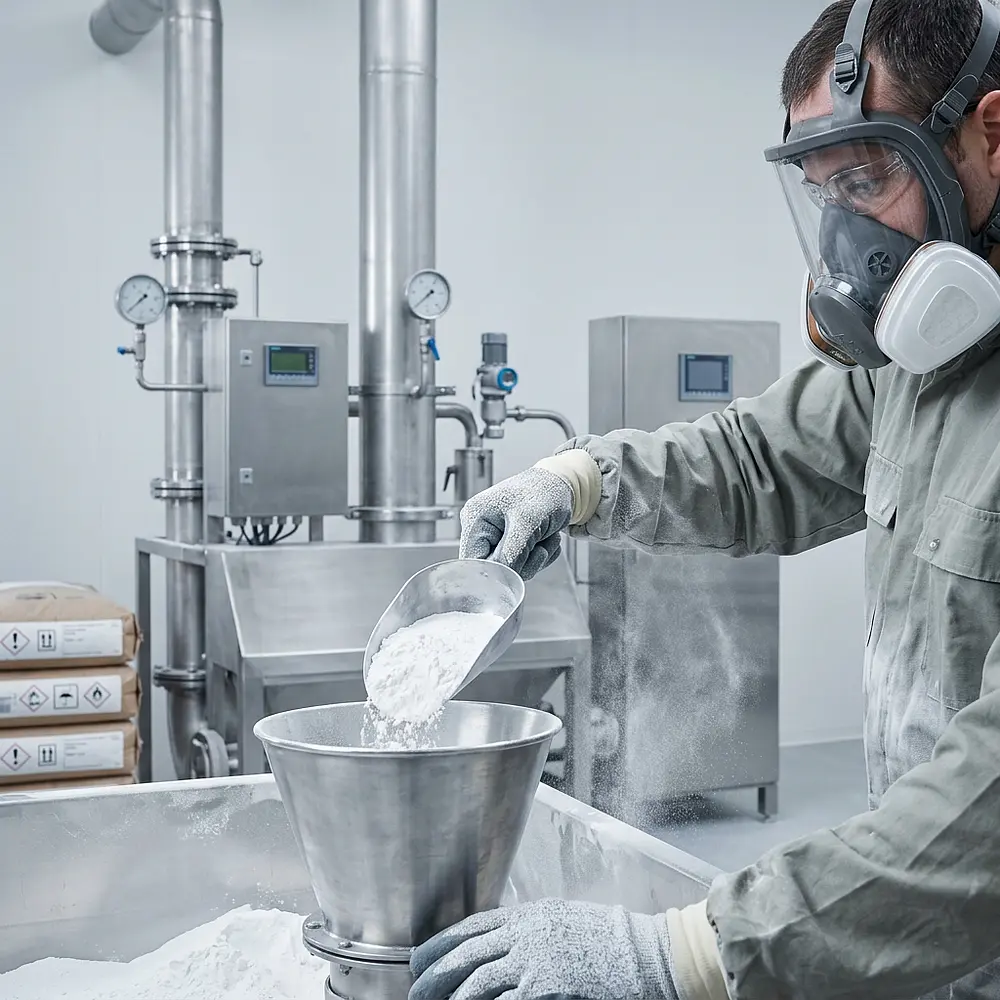
The strongest established concern around titanium dioxide relates to inhalation of airborne particles, especially in workplaces where TiO₂ is manufactured, milled, packaged, or handled as dust. In its evaluation of titanium dioxide, IARC classified inhaled titanium dioxide as Group 2B, possibly carcinogenic to humans, based mainly on evidence from animal inhalation studies, particularly in rats exposed to high airborne concentrations (IARC Monographs Vol. 93).
That classification is often misunderstood. IARC identifies hazards; it does not estimate the real-world risk to a consumer using a specific product in a typical way. The Group 2B designation does not mean that eating a product with titanium dioxide or applying a mineral sunscreen automatically carries the same cancer concern. IARC’s classification was tied to the inhalation route and to particle exposure conditions relevant to dust, not to ingestion or intact-skin use (IARC Monographs Vol. 93).
For workers, this matters. NIOSH issued occupational guidance in Current Intelligence Bulletin 63 and recommended exposure limits for fine and ultrafine titanium dioxide in workplace air. The emphasis is on industrial hygiene measures such as process enclosure, local exhaust ventilation, exposure monitoring, and respiratory protection where needed (NIOSH CIB 63, 2011).
For consumers, the practical point is narrower. Typical use of non-aerosol finished products does not create the same inhalation scenario as handling bulk powder. The main consumer exceptions are products that can be breathed in, such as aerosol sprays, powdered cosmetics, or dusty DIY materials. Those cases should be thought of as inhalation questions, not as ordinary skin-contact questions.
Is Inhaled Titanium Dioxide Dangerous?
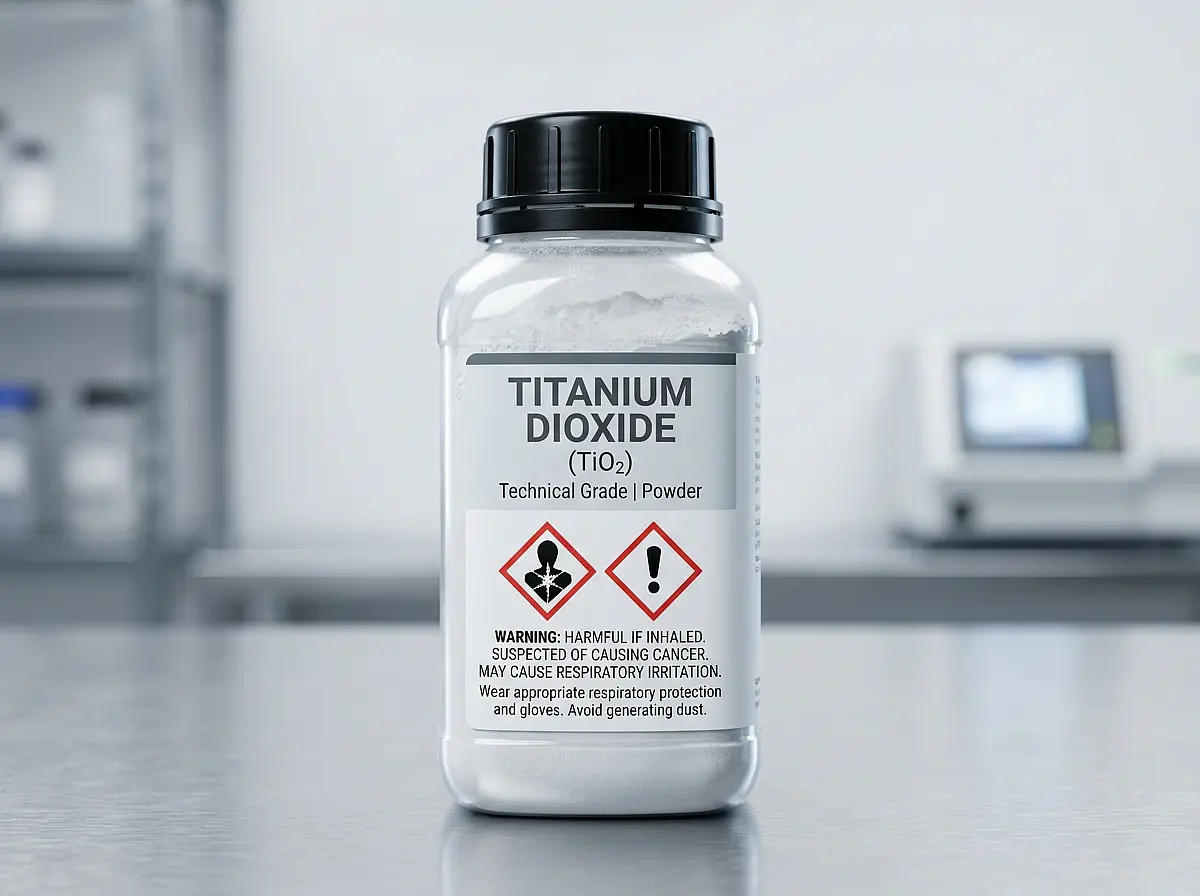
Group 2B means possibly carcinogenic to humans. It is a hazard category used when there is limited evidence in humans and less certainty than in higher categories such as Group 2A or Group 1. For titanium dioxide, IARC relied primarily on animal inhalation evidence and judged the human evidence inadequate at the time of review (IARC Monographs Vol. 93).
This is an important distinction for anyone searching is titanium dioxide bad for you. A hazard classification answers whether a substance can cause harm under some conditions. It does not answer how likely harm is in ordinary consumer use, at typical doses, by a specific route. That is why the IARC label should be interpreted together with exposure context rather than on its own.
What NIOSH Recommends for Workplace Exposure
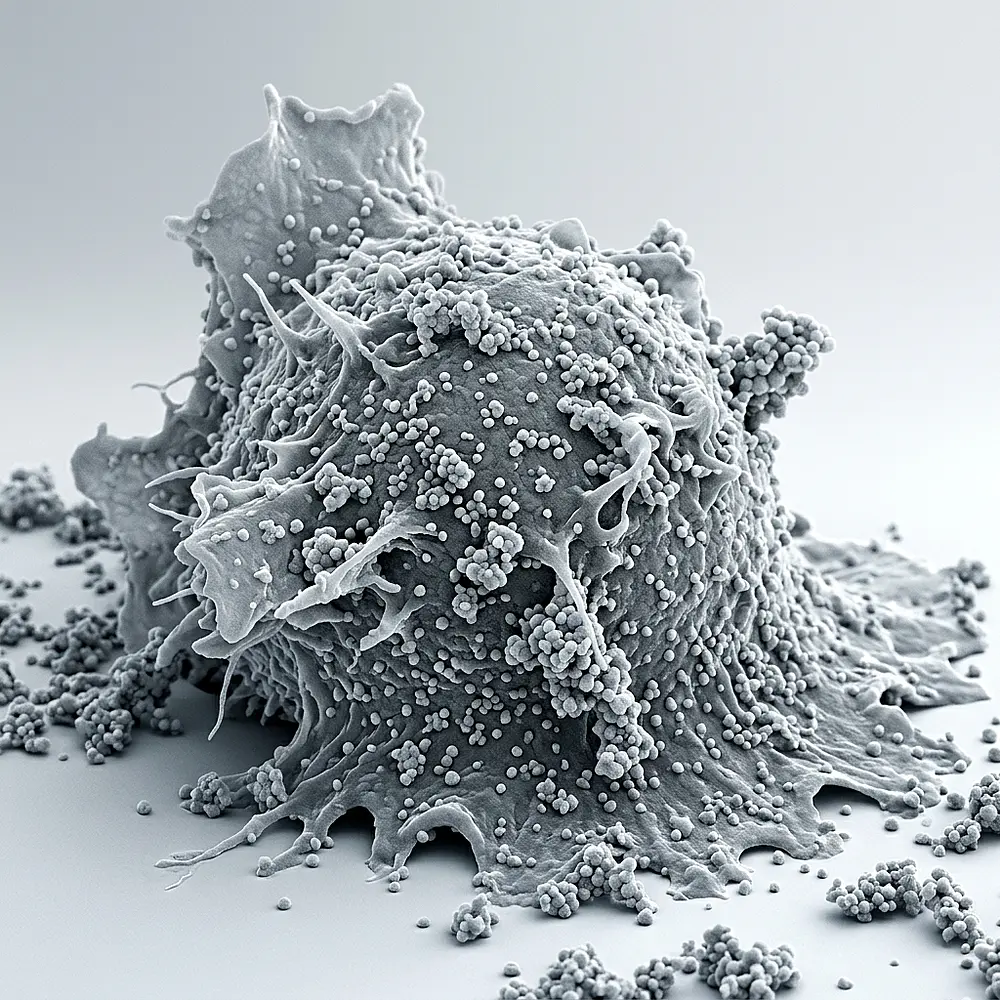
Nano-sized titanium dioxide is evaluated separately because reducing particle size changes how the material behaves. A smaller particle has more surface area relative to its mass, which can increase surface reactivity and alter how it interacts with cells, proteins, and tissues. That does not automatically mean nano-TiO₂ is harmful, but it does mean that safety data from larger-particle forms cannot always be assumed to apply unchanged to nano-forms.
This distinction was central to the European food review. EFSA assessed E171 using its nanotechnology guidance because food-grade titanium dioxide includes a fraction of particles in the nanoscale range. In that setting, uncertainty around particle characterization and genotoxicity was important enough that EFSA concluded E171 could no longer be considered safe as a food additive (EFSA Journal 2021;19(5):6585).
Outside food, nano-TiO₂ is also considered separately in cosmetics and occupational assessments. The SCCS has reviewed nano titanium dioxide in cosmetics with route-specific conditions, especially regarding inhalation potential, while workplace guidance from NIOSH treats ultrafine particles as a distinct occupational category (SCCS Opinion on Titanium Dioxide; NIOSH CIB 63). For the sunscreen-specific case of nanoscale TiO₂, see titanium dioxide sunscreen.
What IARC Group 2B Actually Means

NIOSH recommends separate exposure limits for fine and ultrafine titanium dioxide because smaller airborne particles may present greater biological activity per unit mass. In practice, the recommendations focus on lowering dust exposure in occupational settings through engineering controls first, then respiratory protection and monitoring where needed (NIOSH Current Intelligence Bulletin 63).
The most relevant measures are process enclosure, local exhaust ventilation near the source of dust generation, housekeeping practices that minimize airborne re-suspension, and fit-appropriate respiratory protection when airborne levels cannot otherwise be controlled. These are workplace controls for pigment and powder environments, not general consumer instructions.
Titanium Dioxide Nanoparticles: A Special Case
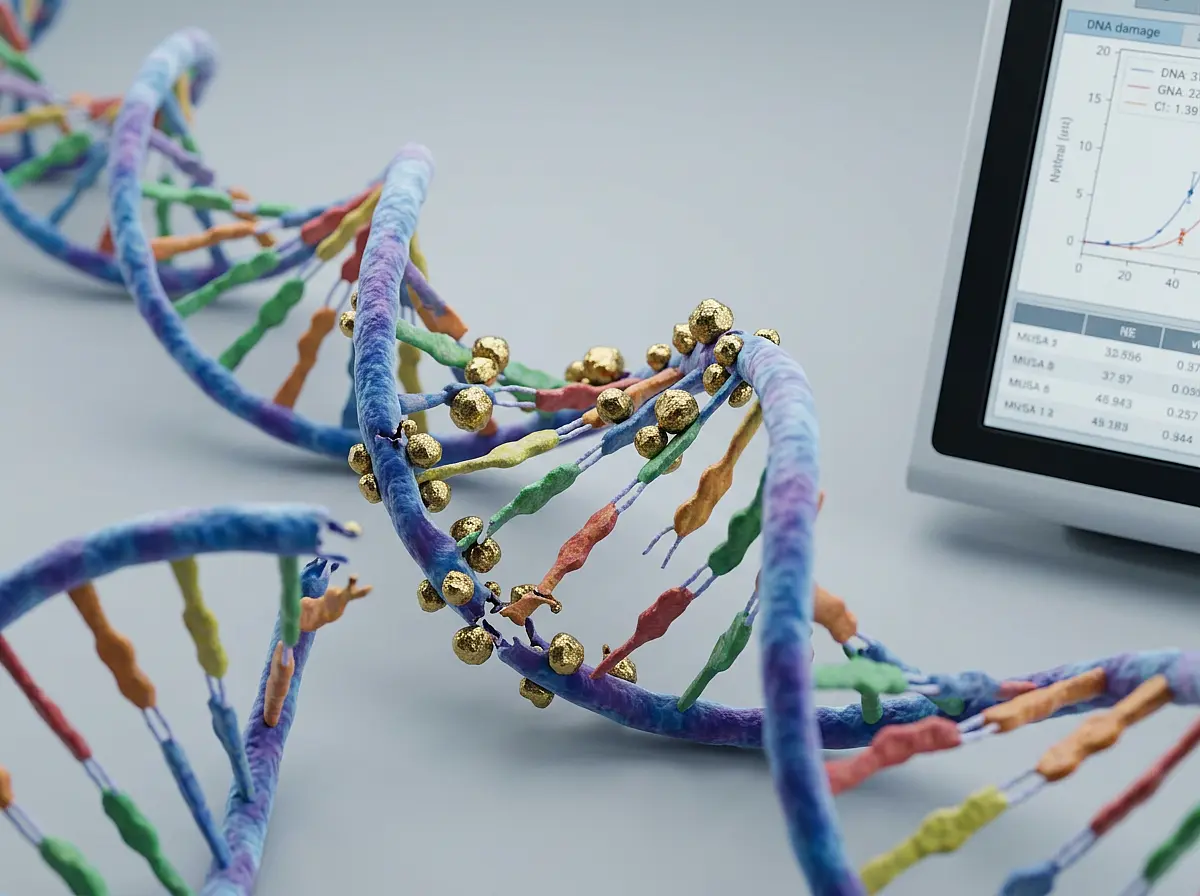
Several questions remain active in the literature. One is genotoxicity: whether DNA-related effects seen in some in vitro and animal studies reflect direct particle action, oxidative stress, inflammation, or a combination of mechanisms. EFSA’s food opinion reviewed this issue in detail and concluded that the concern could not be excluded for E171 (EFSA Journal 2021;19(5):6585).
Another open question is how particle characteristics alter biological behavior. Researchers continue to compare anatase versus rutile forms, coated versus uncoated particles, and different size distributions. Human evidence is still much thinner than mechanistic or animal evidence, which is one reason so much of the debate remains centered on uncertainty rather than on a single definitive human outcome study.
What Scientists Are Still Studying
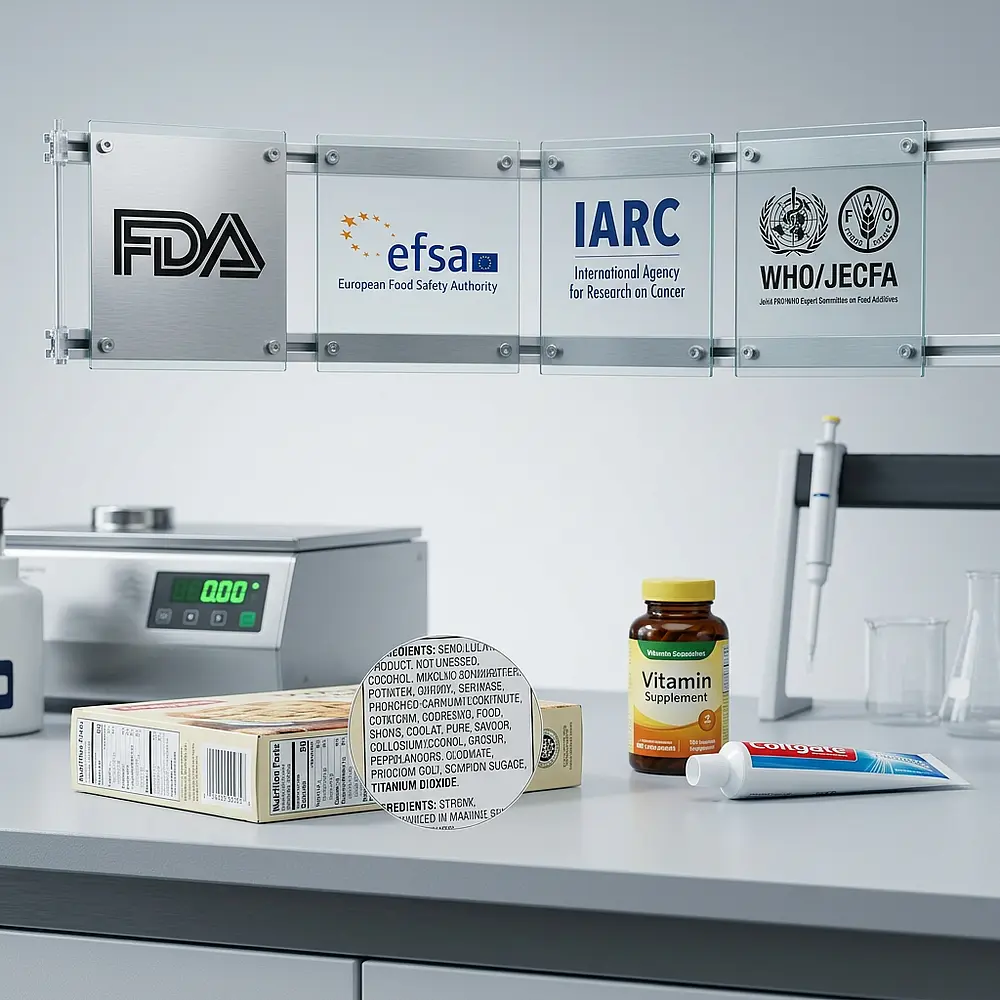
Different agencies are answering different questions. The FDA regulates food additives, cosmetics, and OTC drugs in the US. EFSA performs risk assessment for food use in the EU. IARC classifies cancer hazards. WHO/JECFA provides international food-additive evaluations but is not the most practical source for today’s consumer-facing interpretation of titanium dioxide compared with the much newer EFSA review. The EU–US divergence on food use is set out in titanium dioxide in food.
What Do Regulatory Agencies Say?
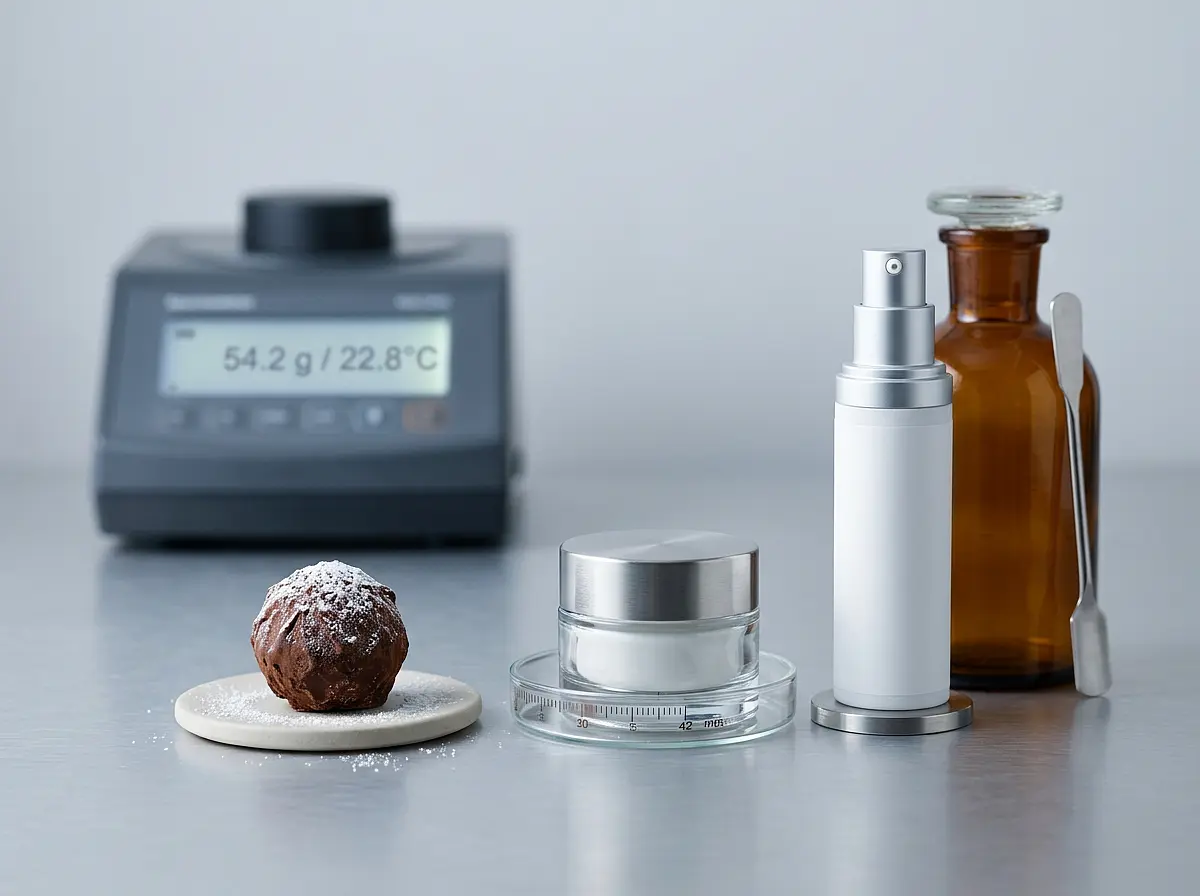
In the United States, titanium dioxide is permitted as a color additive in food under 21 CFR 73.575, with a maximum level of 1% by weight of the food. The FDA also permits its use in cosmetics and includes titanium dioxide among sunscreen active ingredients used in OTC sunscreen products under the federal sunscreen framework (FDA 21 CFR 73.575; FDA sunscreen monograph materials).
For consumers, the practical implication is simple: if you buy food or supplements in the US, titanium dioxide may still appear on ingredient labels. That continuing authorization is one reason the question is titanium dioxide safe still produces mixed answers online.
EFSA & EU
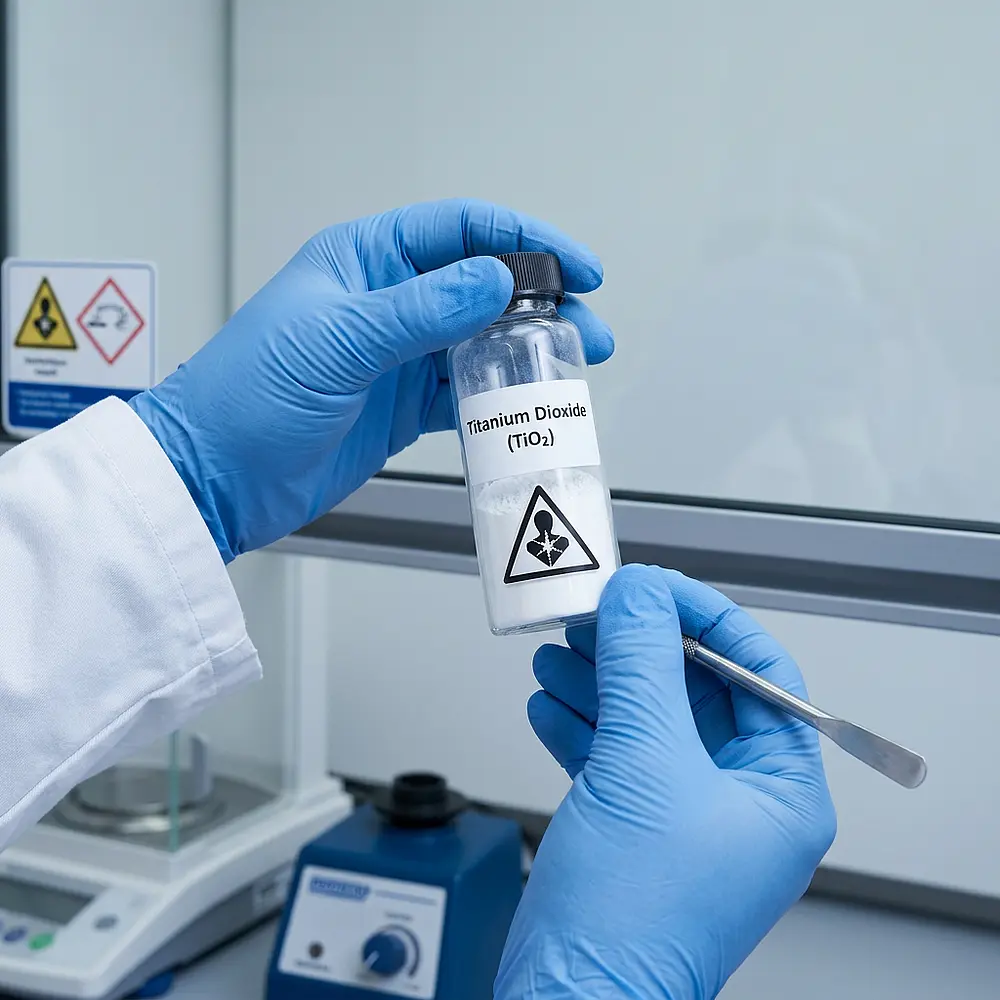
IARC classifies titanium dioxide as Group 2B for carcinogenic hazard based on inhalation evidence, mainly in experimental animals (IARC Monographs Vol. 93). IARC did not issue this classification as a verdict on oral ingestion or intact-skin use. Its role is hazard identification, not consumer product approval or exposure-limit setting.
FDA (United States)
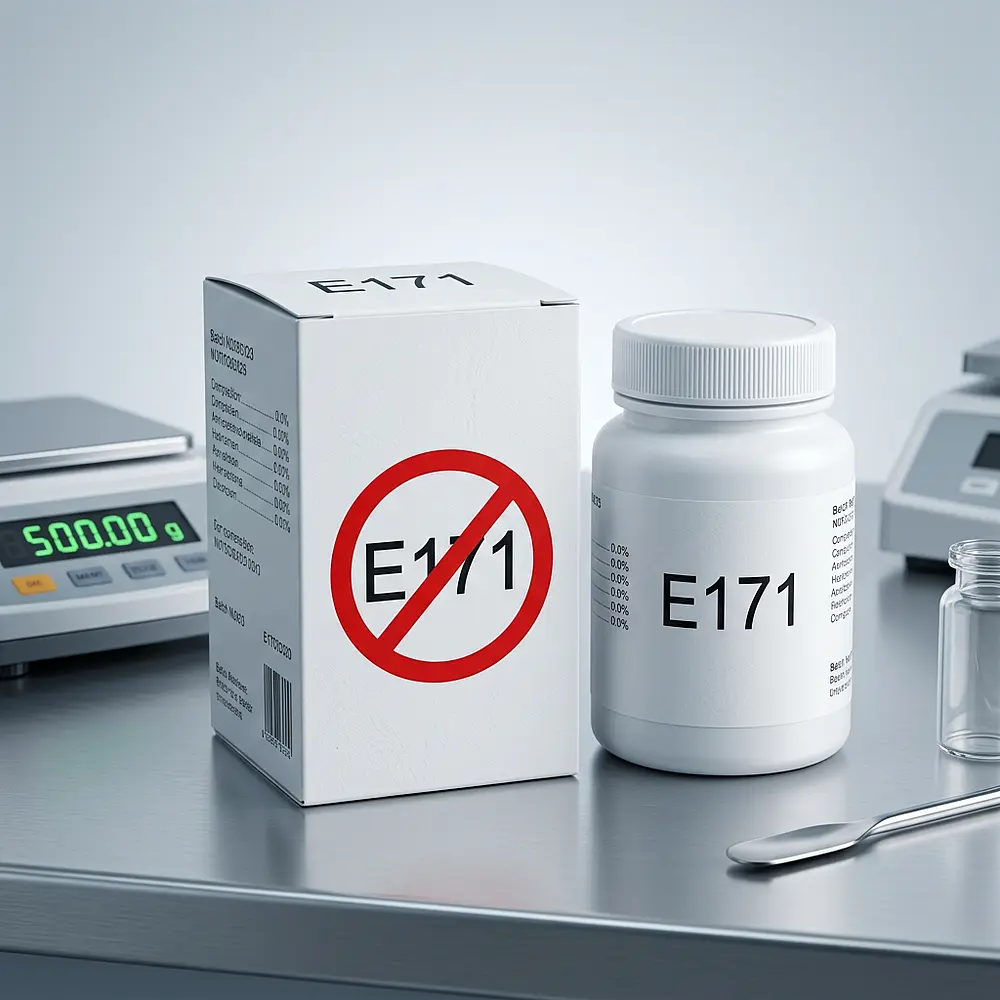
EFSA concluded in 2021 that E171 can no longer be considered safe as a food additive because a concern for genotoxicity could not be ruled out and no ADI could be established (EFSA Journal 2021;19(5):6585). The EU then adopted a food ban effective 7 August 2022 (Commission Regulation (EU) 2022/63).
That food decision does not automatically apply to all non-food uses. Titanium dioxide remains used in EU cosmetics under route- and form-specific conditions, with particular caution around inhalable forms assessed by the SCCS. Consumers should therefore avoid assuming that “banned in EU food” means “banned everywhere in Europe.”
WHO
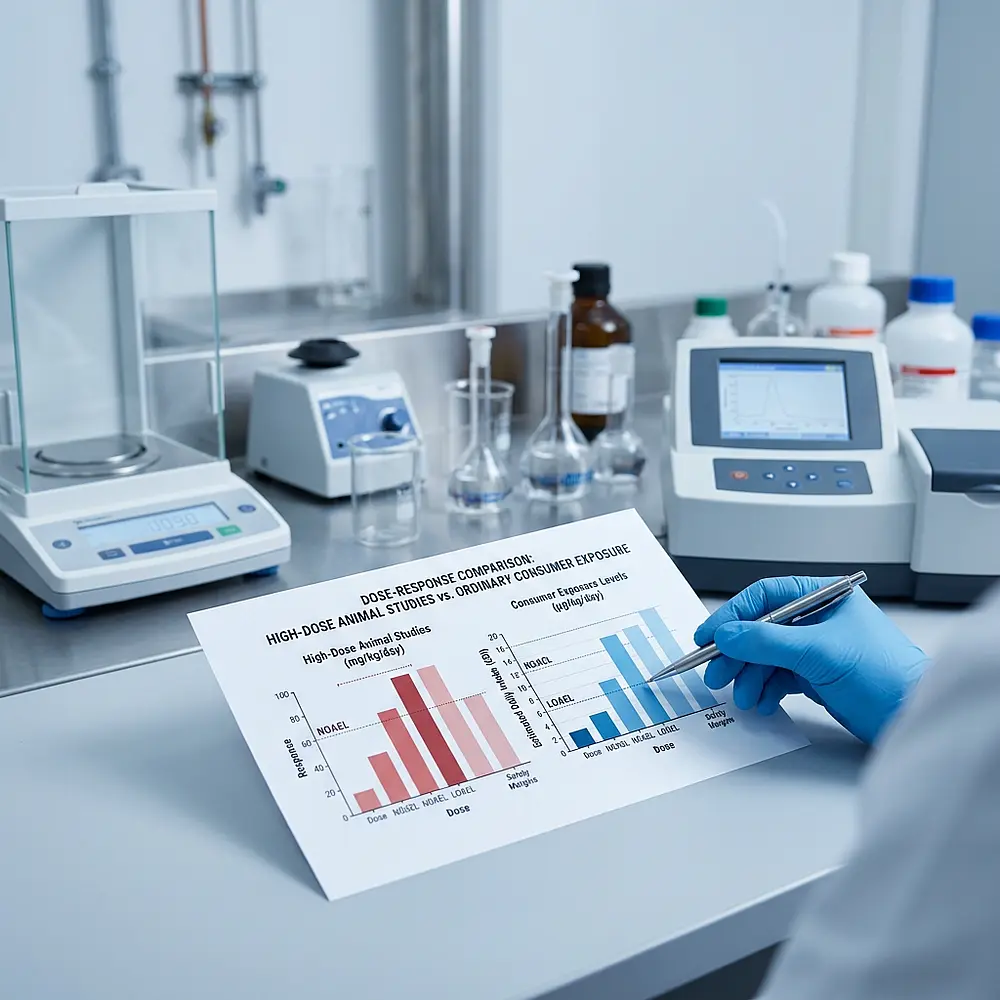
When people search for titanium dioxide side effects or titanium dioxide health effects, they often encounter a mix of cell studies, animal experiments, and regulatory summaries without much context. The most important point is that many adverse findings come from high-dose animal studies or mechanistic laboratory models designed to detect possible biological effects, not from direct evidence of harm at normal consumer exposure levels.
In the food context, the key concern identified by EFSA was genotoxicity. Its 2021 opinion reviewed studies reporting endpoints such as DNA strand breaks, chromosomal damage, and micronucleus formation, and concluded that the available data did not allow the agency to exclude concern for E171 (EFSA Journal 2021;19(5):6585). That is a stronger and more specific statement than simply saying “more research is needed.” It means the dataset did not support a confident food-safety threshold.
Animal ingestion studies have also reported effects such as altered gut inflammation markers, oxidative stress signals, and microbiome changes at doses that are often much higher than estimated routine human dietary exposure. EFSA and peer-reviewed reviews note that these studies vary widely in particle characterization, dose selection, and study quality, which limits how directly they can be translated into consumer risk (EFSA Journal 2021;19(5):6585; see also reviews indexed in NCBI/PubMed).
Human data are more limited. There are no large, definitive epidemiological studies showing that ordinary consumer exposure to titanium dioxide causes specific disease outcomes. Some published human tissue studies have reported detection of titanium-containing particles in intestinal or associated tissues, but those findings do not by themselves establish causation, dose-response, or clinical harm. This evidence gap is one reason debate persists.
So, is titanium dioxide bad for you at normal exposure levels? The best evidence-based answer is cautious: proven harm has not been established for typical consumer exposure across all uses, but food use remains under legitimate scientific and regulatory concern in Europe because unresolved genotoxicity questions prevented EFSA from confirming safety. For a more detailed evidence roundup, see titanium dioxide and cancer risk.
IARC
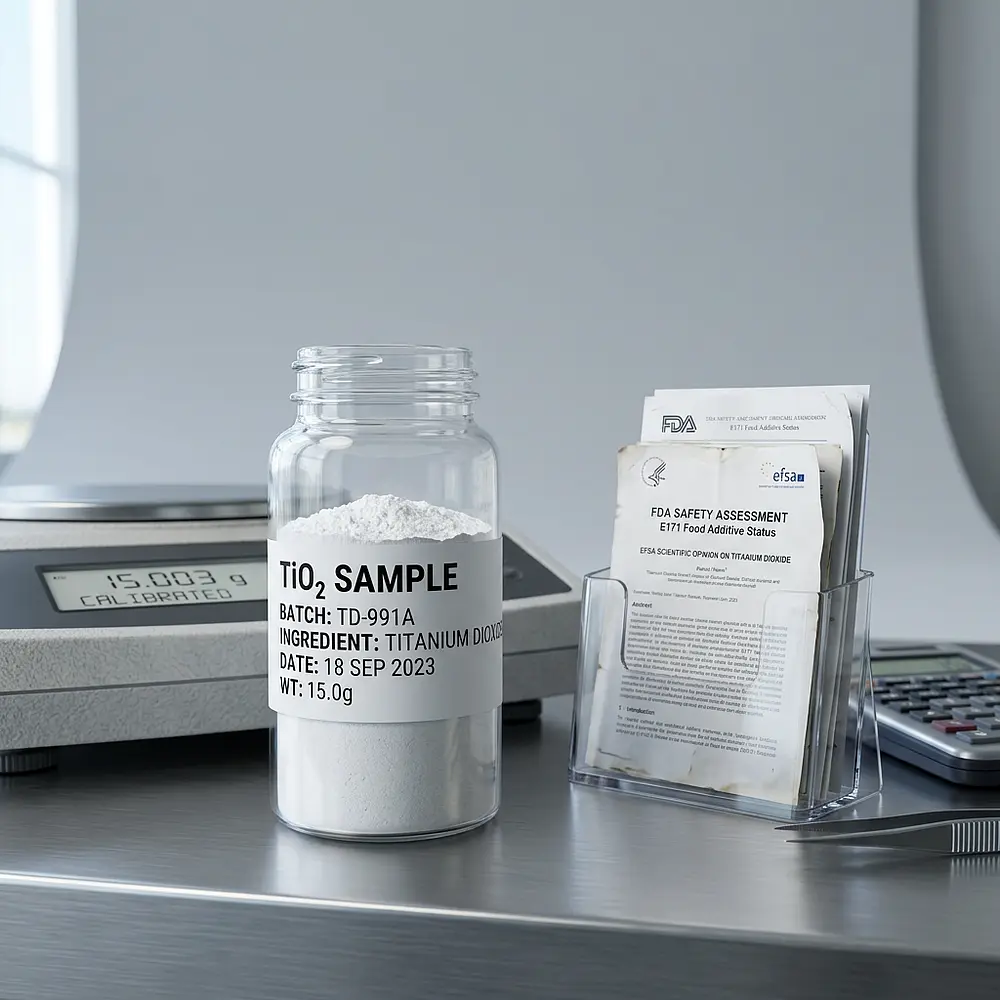
WHO/JECFA does not provide a modern, practical ADI benchmark that resolves today’s consumer questions about titanium dioxide in food. For current decision-making, the most useful food references are the still-active FDA color-additive rule in the US and the EFSA 2021 reassessment that led to the EU ban. In other words, WHO is part of the broader history, but it is less actionable for present-day label readers than FDA and EFSA.
Titanium Dioxide Side Effects: What Research Shows
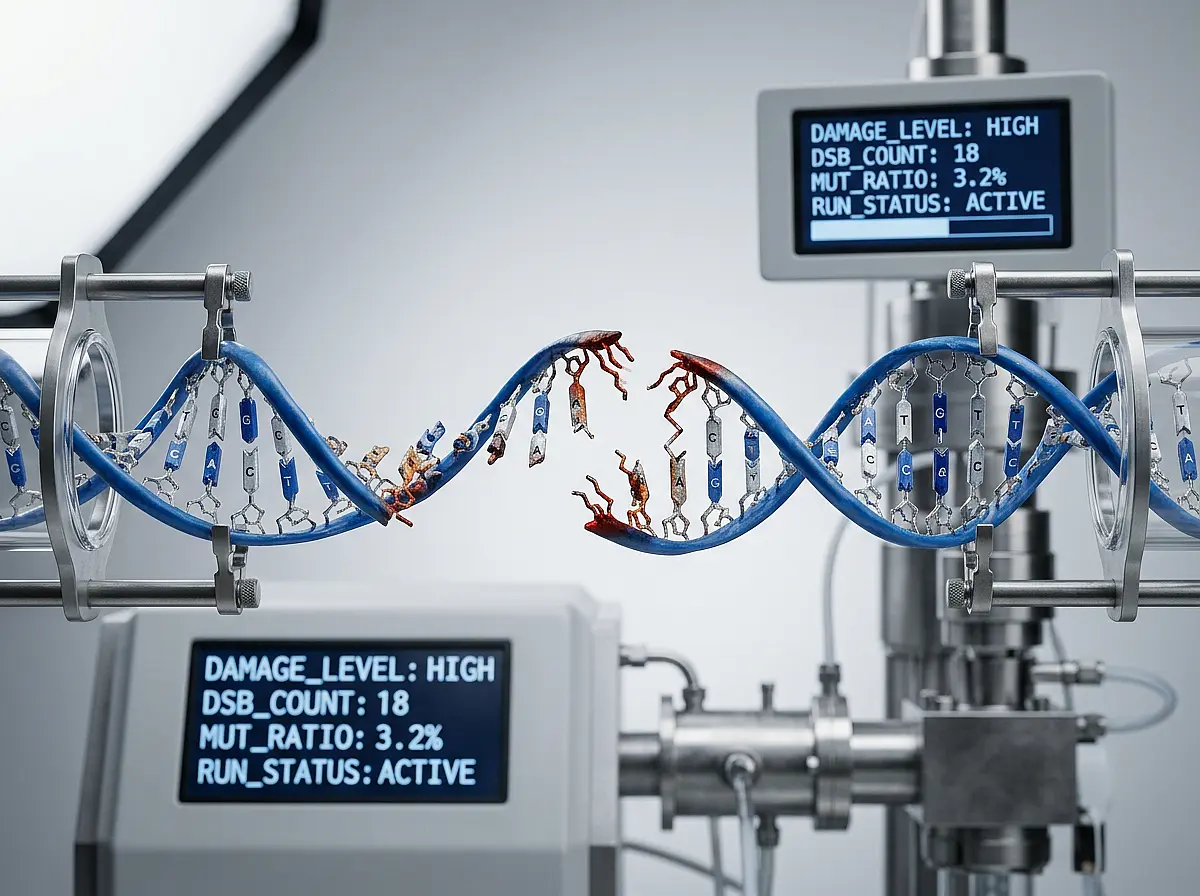
Genotoxicity means the potential to damage DNA or chromosomes. Regulators take this endpoint seriously because, if a genotoxic effect is real and relevant to human exposure, it may not be possible to assume a simple safe threshold. That is why EFSA’s inability to rule out genotoxicity was so important for E171 (EFSA Journal 2021;19(5):6585).
This does not mean EFSA proved that everyday food exposure causes cancer in consumers. It means the evidence did not allow the agency to confidently dismiss the possibility of DNA-related harm from the food additive. That distinction is central to understanding why Europe moved from uncertainty to precautionary prohibition.
So, Is Titanium Dioxide Toxic at Typical Consumer Levels?
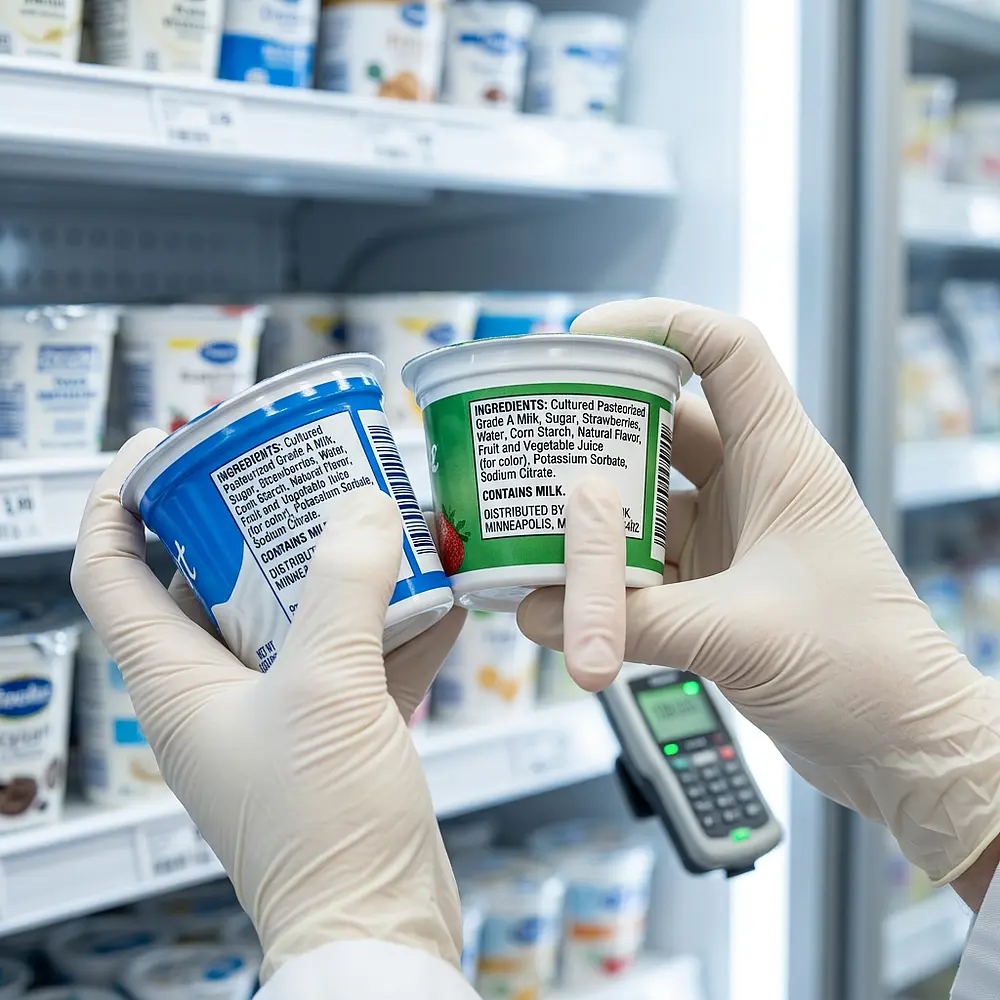
Avoidance can be a reasonable personal choice, but the reason matters. One reason is precaution: you prefer to limit an ingredient where uncertainty remains, especially in food. Another is avoidance based on a clearly demonstrated everyday harm. For titanium dioxide, current evidence supports the first rationale more than the second for most consumer products.
If you want to reduce dietary exposure, start with categories that have historically used titanium dioxide most often: candy, chewing gum, bakery decorations, white sauces, soups, spreads, supplements, and coated tablets. On labels, look for titanium dioxide, E171, or in cosmetics CI 77891. In the EU food market, E171 should no longer appear in compliant foods after the 2022 ban, but older references and imported product information may still mention it.
If your main concern is sunscreen, the evidence does not support abandoning a well-tolerated mineral sunscreen solely because it contains titanium dioxide intended for use on intact skin. The known harms of inadequate UV protection are substantial and well documented. If you still prefer to minimize inhalation, choosing a lotion or cream instead of a spray or loose powder is a practical middle-ground approach.
If you work around powders, pigments, or dust-generating materials, the most important step is not label avoidance but occupational exposure control in line with workplace guidance from NIOSH. And if you are specifically concerned about toothpaste for a child who tends to swallow it, discussing age-appropriate product use with a dentist or pediatric clinician may be more useful than treating toothpaste exactly like food or exactly like sunscreen.
Complete avoidance is difficult because titanium dioxide has been widely used across foods, medicines, and personal care products. A proportionate approach is usually more practical: be selective about oral exposure if you prefer precaution, stay sensible about inhalable formats, and do not overextend food-related concern to every topical use.
Genotoxicity: The Key Scientific Concern
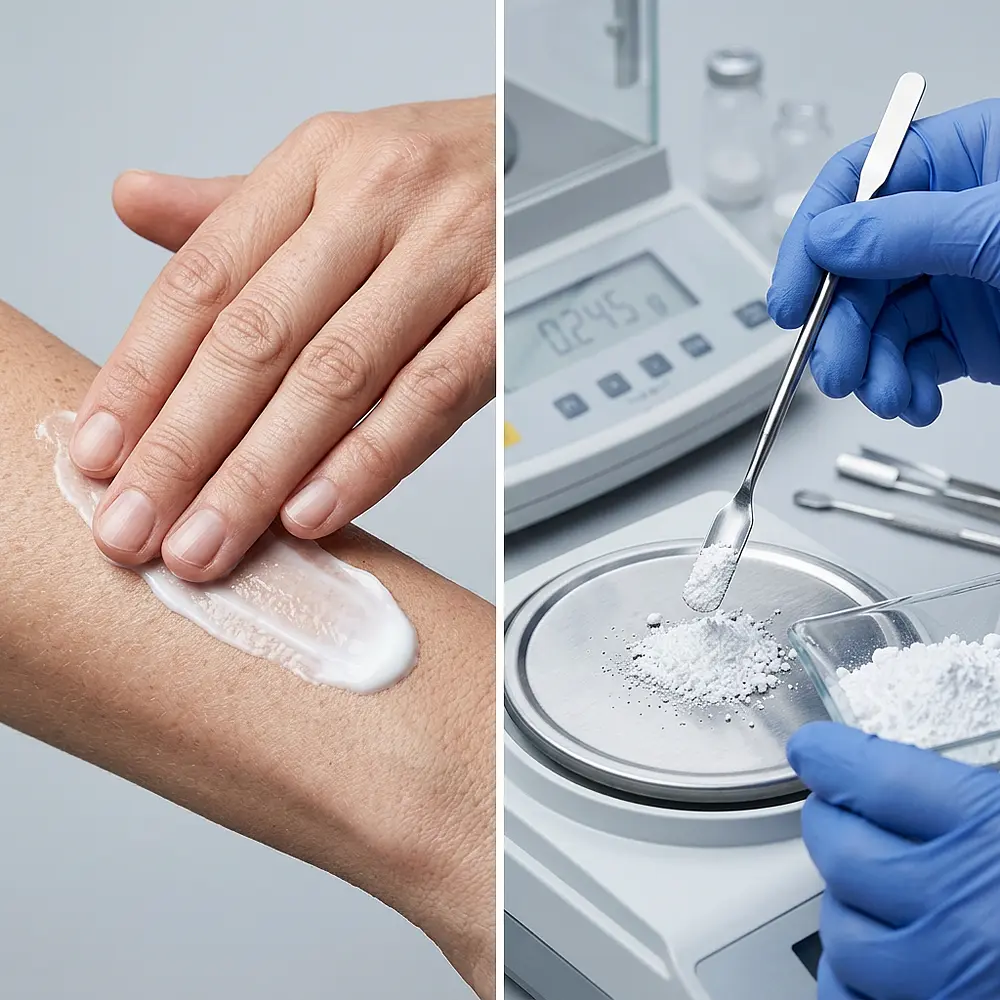
If the question is framed broadly, the evidence does not support calling all typical consumer exposure to titanium dioxide “toxic.” The more accurate answer depends on context. Topical use on intact skin remains relatively low concern based on penetration data and regulatory review. Occupational inhalation of airborne particles is the route with the clearest established hazard basis. Food ingestion sits between those two: not proven harmful at ordinary intake levels, but not considered adequately resolved for food safety by EFSA.
That is why the phrase is titanium toxic can be misleading. First, this page concerns titanium dioxide, not titanium metal in general. Second, toxicology depends on route, dose, and particle form. A single word like “toxic” compresses too many different scenarios into one label to be scientifically useful.
Should You Avoid Titanium Dioxide?
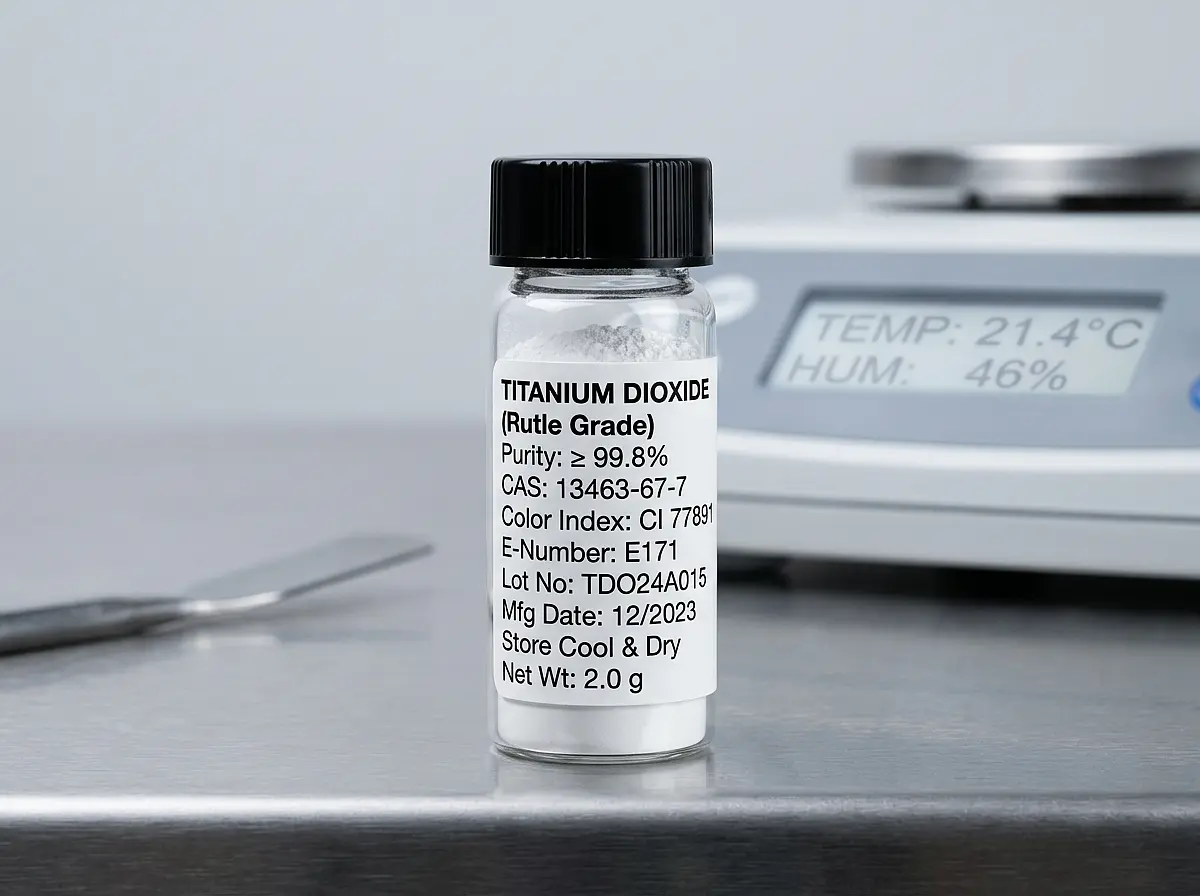
On labels, titanium dioxide may appear under different names depending on the product type. In food and supplements, look for titanium dioxide or E171. In cosmetics and personal care products, the common identifier is CI 77891. In medicines, especially coated tablets and capsules, it may be listed in inactive ingredients or excipient information.
If your goal is practical avoidance, checking the end of the ingredient list is often helpful because colorants and coating agents are commonly listed there. White or brightly opaque products are the most likely places to encounter it, although appearance alone is not a reliable indicator.
When Precaution Makes Sense—and When It Matters Less
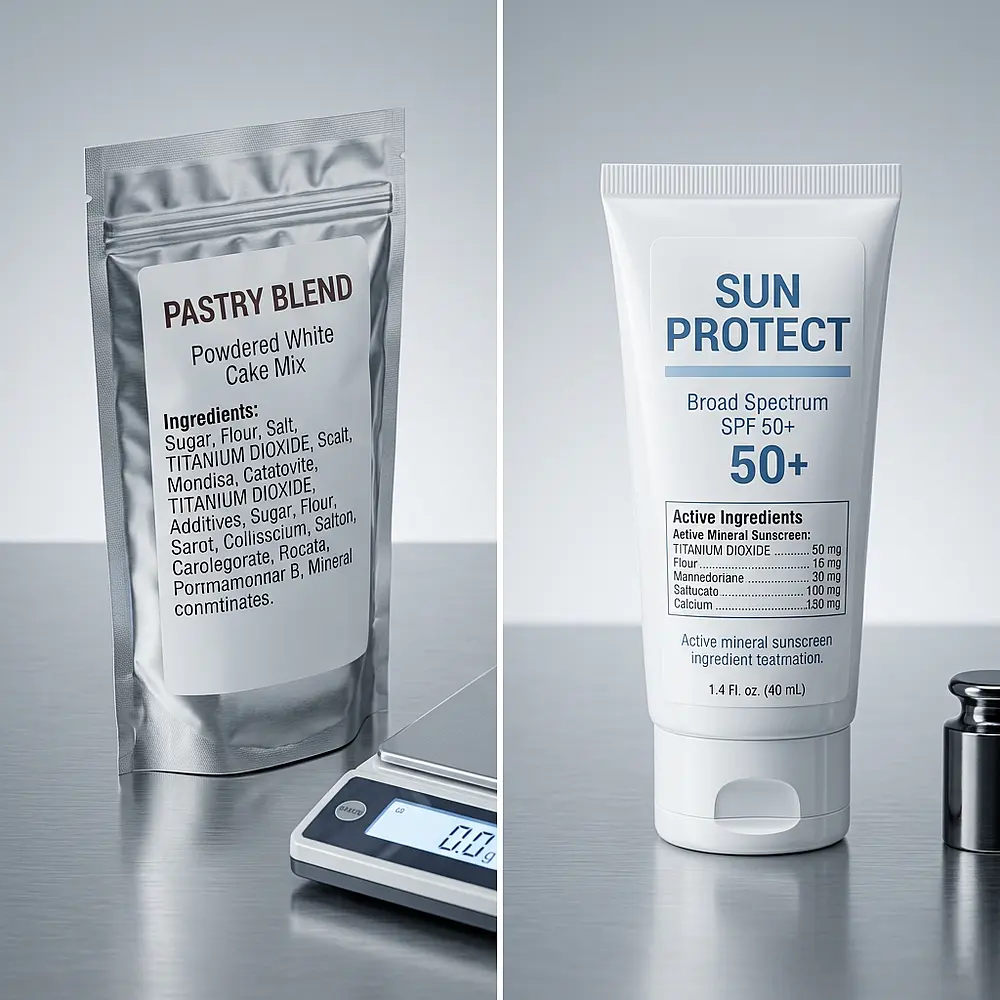
Is titanium dioxide safe? The most accurate short answer is: it depends on where it goes. For food, the US still permits it as a color additive, but the EU banned E171 after EFSA concluded that a genotoxicity concern could not be excluded and no ADI could be established. For intact-skin use in sunscreen and many cosmetics, current regulatory review and penetration data are substantially more reassuring. For inhalation, the meaningful concern is airborne particle exposure, especially in occupational settings or inhalable consumer formats.
If you want a practical consumer rule, use more caution with oral exposure, use common sense with sprays and powders, and do not let ingredient anxiety replace proven health measures such as sun protection. If your concern involves a medical condition, a child who may swallow products, or workplace dust exposure, speak with a qualified clinician or occupational-health professional.
How to Spot It on Labels
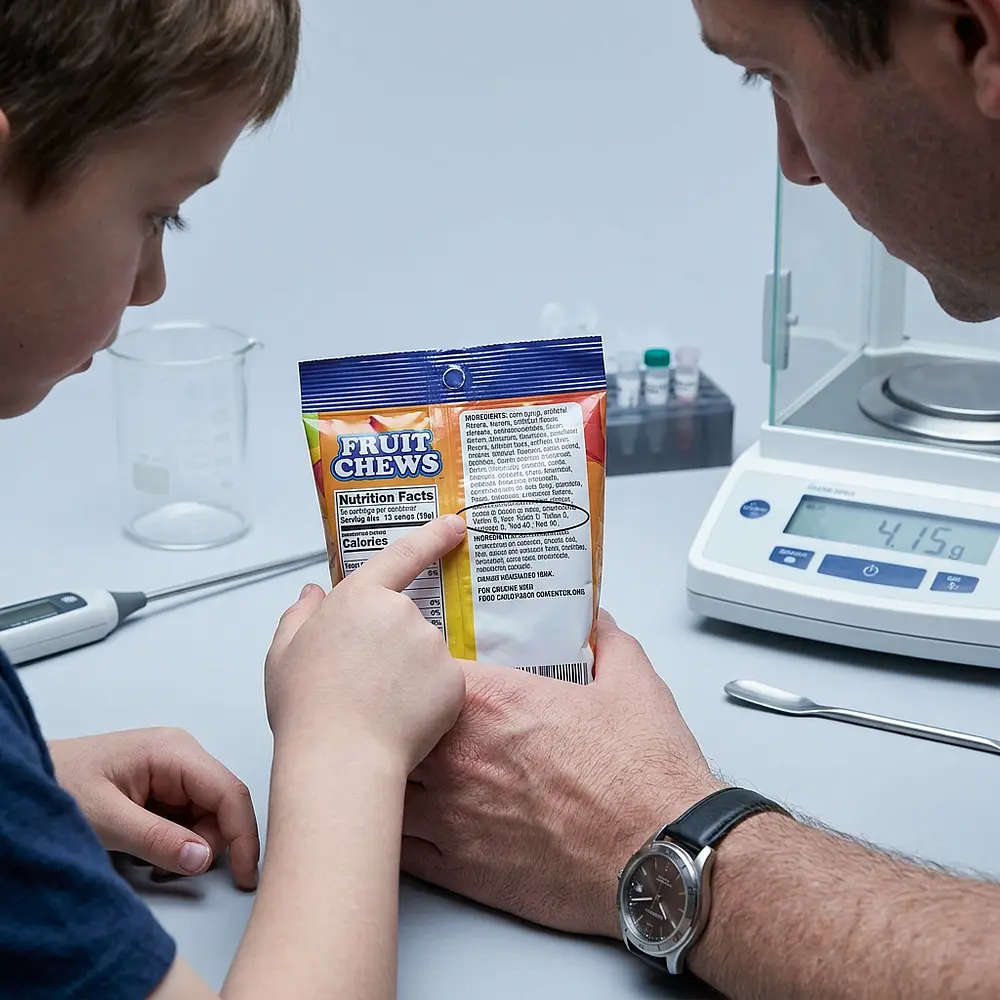
Precaution makes the most sense where the scientific and regulatory uncertainty is strongest: food ingestion. That is the route for which EFSA could not rule out genotoxicity and where the EU ultimately decided not to keep E171 on the market. People who want to reduce unnecessary additive exposure, especially for children’s sweets or supplement use, have a rational basis for doing so.
Precaution matters differently for topical products. A cream-based mineral sunscreen used on intact skin is not equivalent to eating E171, and treating those scenarios as interchangeable would overstate the evidence. Where consumers do want extra caution with cosmetics, choosing non-spray formats is more evidence-aligned than avoiding all titanium dioxide-containing topical products across the board.
Sources and Medical Review Information
This page covers a topic that falls within the category of health and safety information, where accuracy, transparency, and source quality are non-negotiable. Every substantive claim made throughout this article — regarding regulatory positions, toxicological classifications, clinical and mechanistic research findings, and agency conclusions — is grounded in named, verifiable primary sources. Readers who wish to verify any specific assertion are encouraged to consult the original documents directly.
Medical review and authorship: This article was written and reviewed by a specialist in toxicology and regulatory science (PhD in Toxicology, with additional training in pharmacology and risk assessment). The content reflects the state of published evidence and regulatory guidance as of the date shown below and is subject to periodic review as new scientific opinions, agency updates, or peer-reviewed publications become available. Last reviewed: June 2025. This page is intended for general informational purposes and does not constitute medical advice. Readers with specific health concerns, including questions related to dietary intake, occupational exposure, or pre-existing medical conditions, should consult a qualified healthcare professional.
Primary sources cited or consulted in the preparation of this page: European Food Safety Authority (EFSA) — Re-evaluation of titanium dioxide (E171) as a food additive, EFSA Journal 2021, 19(5):6585. U.S. Food and Drug Administration (FDA) — 21 CFR 73.575, Color Additives Permitted for Direct Addition to Food for Human Consumption; FDA OTC Monograph for Sunscreen Drug Products. International Agency for Research on Cancer (IARC) — Monographs on the Evaluation of Carcinogenic Risks to Humans, Volume 93: Carbon Black, Titanium Dioxide, and Talc (2010). National Institute for Occupational Safety and Health (NIOSH) — Current Intelligence Bulletin 63: Occupational Exposure to Titanium Dioxide (2011). European Commission Scientific Committee on Consumer Safety (SCCS) — Opinion on Titanium Dioxide in Cosmetic Products. World Health Organization / Joint FAO/WHO Expert Committee on Food Additives (JECFA) — relevant titanium dioxide evaluations. Additional peer-reviewed literature was sourced through NCBI/PubMed and PMC, including studies on genotoxicity, nanoparticle skin penetration, gut interactions, and particle accumulation in biological tissue. Where agency documents have been updated since original publication, the most current publicly available version was used.
Bottom Line
Author: Daniel Krüger, MSc, Medical Science Writer.
Medical reviewer: Dr. Anna Weber, PhD Toxicology.
Last reviewed: June 2025.
This page is for general informational purposes and is not a substitute for personal medical advice, diagnosis, or treatment. Because this is a health and safety topic, key claims in the article are based on named primary or authoritative sources, including regulatory documents and peer-reviewed reviews.
Key sources used in this article:
- European Food Safety Authority (EFSA). Re-evaluation of titanium dioxide (E171) as a food additive. EFSA Journal. 2021;19(5):6585.
- European Commission. Commission Regulation (EU) 2022/63 of 14 January 2022 amending Annexes II and III to Regulation (EC) No 1333/2008 as regards the food additive titanium dioxide (E171).
- U.S. Food and Drug Administration (FDA). 21 CFR 73.575: Titanium dioxide; color additive permitted for direct addition to food for human consumption.
- U.S. Food and Drug Administration (FDA). Sunscreen regulatory materials and OTC monograph framework for sunscreen active ingredients.
- International Agency for Research on Cancer (IARC). IARC Monographs on the Evaluation of Carcinogenic Risks to Humans, Volume 93: Carbon Black, Titanium Dioxide, and Talc.
- National Institute for Occupational Safety and Health (NIOSH). Current Intelligence Bulletin 63: Occupational Exposure to Titanium Dioxide. 2011.
- Scientific Committee on Consumer Safety (SCCS). Opinion on Titanium Dioxide in cosmetic products, including nano forms and route-specific conditions of use.
- Smijs TG, Pavel S. Titanium dioxide and zinc oxide nanoparticles in sunscreens: focus on their safety and effectiveness. Nanotechnology, Science and Applications. 2011;4:95-112.
- Additional peer-reviewed literature was reviewed through NCBI/PubMed and PMC for dermal penetration, inhalation toxicology, oral genotoxicity, and nanoparticle behavior.
For related topics, see homepage, what is titanium dioxide, titanium dioxide in food, titanium dioxide sunscreen, titanium dioxide in makeup, titanium dioxide and cancer risk, and the TiO₂ data reference.
Is inhaling titanium dioxide dangerous?
Inhaling titanium dioxide can be dangerous, especially as fine dust or airborne nanoparticles. The main concern is the lungs: repeated or high exposure may irritate the airways and, over time, could increase the risk of lung damage. This matters most in workplaces where powdered titanium dioxide is handled, not from normal eating. Food-grade titanium dioxide (E171) is mainly discussed for oral safety, where EFSA concluded it can no longer be considered safe because genotoxicity concerns could not be ruled out. Inhalation is a separate exposure route, and risk is generally much higher when titanium dioxide is breathed in as dust than when it is swallowed.
Is titanium dioxide safe in toothpaste and other oral care products?
Titanium dioxide in toothpaste and other oral care products is viewed differently from its use in food. The main concern raised by EFSA in 2021 was oral ingestion of titanium dioxide (E171), especially because a genotoxic risk could not be ruled out and no safe daily intake could be set. In toothpaste, exposure depends on how much is swallowed rather than spat out. For adults who use toothpaste normally, ingestion is usually low. For children, who may swallow more, caution makes more sense. Overall, occasional exposure from oral care products is generally considered less concerning than regular dietary intake, but many consumers still prefer titanium-dioxide-free options.
Can titanium dioxide nanoparticles penetrate the skin from sunscreen or cosmetics?
Titanium dioxide nanoparticles in sunscreens and cosmetics are generally considered a different exposure route than eating titanium dioxide. Current evidence suggests that, on healthy, intact skin, TiO₂ nanoparticles mostly remain on the skin surface or in the outer dead skin layer and do not significantly penetrate into deeper living tissue or the bloodstream. That is why concerns around titanium dioxide in food cannot be directly transferred to topical products. However, damaged skin, spray products, or inhalation can raise separate questions. In short: for normal use on intact skin, meaningful skin penetration appears very limited, but oral and inhalation risks should be assessed separately.
Is titanium dioxide safe in sunscreen?
Titanium dioxide in sunscreen is generally considered safe when used on intact skin. The main safety concerns you may have heard about relate to oral exposure—for example, food additive E171, which EFSA no longer considers safe due to unresolved genotoxicity concerns and the inability to set a safe daily intake. That does not automatically apply to sunscreen, because skin exposure is very different from swallowing it. In sunscreens, titanium dioxide mainly sits on the skin’s surface and helps block UV radiation. The bigger practical caution is to avoid inhaling spray or powder sunscreens, especially those containing nanoparticles. Creams and lotions are usually the safer choice.
What does the FDA say about titanium dioxide safety in food and cosmetics?
The FDA allows titanium dioxide as a color additive in food, within strict limits, and also permits its use in certain cosmetics. In food, the FDA has long considered it acceptable at low levels, while in cosmetics it is generally allowed when used as intended. However, this differs from Europe, where EFSA concluded in 2021 that titanium dioxide (E171) could no longer be considered safe for food because concerns about possible genotoxicity could not be ruled out, especially with very small particles. So, the FDA position is more permissive, but the safety debate remains ongoing—particularly for ingestion, not typical external cosmetic use.
What does the EFSA say about the safety of titanium dioxide in food?
According to EFSA’s 2021 review, titanium dioxide used as food additive E171 can no longer be considered safe for use in food. The main reason is a remaining concern about genotoxicity, meaning EFSA could not rule out the possibility that the particles may damage DNA. Because of this uncertainty, EFSA did not set an acceptable daily intake (ADI), so there is no confirmed “safe” intake level. The assessment also considered the presence of nanoparticles in food-grade titanium dioxide. EFSA’s role is risk assessment; EU authorities then decide on regulation. For consumers, this means caution is reasonable, especially regarding products containing E171.
Why is titanium dioxide allowed in food in the United States but banned in the European Union?
Titanium dioxide is allowed in U.S. food but banned in the EU because regulators interpreted the same safety question differently. In 2021, EFSA concluded that titanium dioxide (E171), a white food colorant, could no longer be considered safe because concerns about possible genotoxicity—damage to DNA—could not be ruled out. Since no safe daily intake could be established, EU risk managers chose to ban it in foods. U.S. authorities have so far kept it permitted under existing rules, reflecting a different regulatory judgment and review process. So the gap is less about the ingredient being “safe” in one place and “unsafe” in another, and more about precaution versus uncertainty.
Is titanium dioxide safe to eat in candy, sauces, and supplements?
Titanium dioxide (E171) is a whitening food additive once used in candy, sauces, and some supplements. Based on its 2021 review, EFSA concluded it can no longer be considered safe for eating because concerns about possible genotoxicity—meaning potential damage to DNA—could not be ruled out. No safe daily intake level could be established. A key reason is that food-grade titanium dioxide may contain a significant share of very small particles, including nanoparticles, which complicate safety assessment. For consumers, this means occasional exposure is not the same as proven harm, but regular intake is best minimized, especially by checking labels for “titanium dioxide” or “E171.”
Is titanium dioxide bad for you in food?
Titanium dioxide in food (E171) is no longer considered safe by the EFSA. The main concern is genotoxicity, meaning a potential to damage DNA, which could matter for long-term health. Because this risk could not be ruled out, no safe daily intake level was set. A key reason is that food-grade titanium dioxide can contain a significant share of very small particles, including nanoparticles, which complicate safety assessment. In the EU, this led to regulatory action against its use in foods. For consumers, the practical takeaway is simple: if you want to be cautious, avoid products listing “titanium dioxide” or “E171” on the label.
Is titanium dioxide safe for humans overall?
Overall, titanium dioxide is no longer considered clearly safe for humans when consumed in food. It is a white coloring additive called E171, once widely used in sweets, baked goods, sauces, and spreads. In 2021, EFSA concluded that titanium dioxide could no longer be regarded as safe because concerns about genotoxicity—possible DNA damage—could not be ruled out. As a result, no acceptable daily intake could be set. A key issue is that food-grade titanium dioxide can include a significant share of very small particles, including nanoparticles. For consumers, the practical takeaway is that limiting dietary exposure is a sensible precaution.
Is there conclusive evidence that titanium dioxide causes harm at typical real-world exposure levels?
There is no fully conclusive proof that titanium dioxide causes harm at typical real-world dietary exposure levels in every consumer. However, there is also not enough reassurance to confirm it is safe for eating. EFSA’s 2021 review concluded that titanium dioxide (E171) can no longer be considered safe as a food additive because concerns about genotoxicity—potential DNA damage—could not be ruled out. A key issue is that food-grade titanium dioxide can include a substantial fraction of very small particles, including nanoparticles. So the current position is not “proven harmful,” but rather “uncertainty remains significant enough that safety cannot be confirmed.”
What do workplace safety agencies say about occupational exposure to titanium dioxide dust?
Workplace safety agencies generally focus on inhalation, not eating. Their main concern is titanium dioxide dust in the air, especially fine or respirable particles that workers may breathe during manufacturing or handling. Agencies typically recommend controlling dust with ventilation, enclosed processes, protective equipment, and exposure limits or precautionary measures. The concern is long-term, repeated occupational exposure to airborne dust, which can irritate the lungs and is treated more cautiously because inhaled particles may pose cancer-related risks in some settings. This is different from the food safety debate around E171, which centers on oral exposure and EFSA’s concerns about possible genotoxicity.
Should consumers avoid titanium dioxide as a precaution?
As a precaution, many consumers may choose to avoid titanium dioxide in food. In 2021, EFSA concluded that titanium dioxide (E171), a whitening and coloring additive, can no longer be considered safe for oral use because concerns about genotoxicity could not be ruled out. No acceptable daily intake could be established, which means there is no clearly defined safe threshold. The concern also includes small particles, including nanoparticles, found in food-grade titanium dioxide. For practical caution, check labels for “titanium dioxide” or “E171,” especially in sweets, baked goods, sauces, soups, and spreads. Occasional intake is not the same as proven harm, but avoidance is a reasonable precaution.
How can you identify titanium dioxide on ingredient labels such as E171 or CI 77891?
You can identify titanium dioxide on labels by looking for “titanium dioxide”, “E171” in foods, or “CI 77891” in cosmetics and some non-food products. It is mainly used as a white colorant or whitening agent. On ingredient lists, it may also appear under “colour” or “color” followed by one of these names or codes. For consumers concerned about safety, this matters because EFSA concluded in 2021 that titanium dioxide (E171) can no longer be considered safe for food use, mainly due to unresolved genotoxicity concerns, and no safe daily intake could be established.
What products commonly contain titanium dioxide?
Titanium dioxide is commonly used as a white pigment and brightener. In food, it has appeared in products like candies, chewing gum, icing, pastries, sauces, soups, and creamy spreads, where it helps create a whiter or more opaque look. It may also be found in some dietary supplements and medications as a coating color. Outside food, titanium dioxide is widely used in toothpaste, cosmetics, and sunscreen. For health questions, the main concern is oral intake in foods, especially the additive known as E171. If you want to avoid it, check labels for “titanium dioxide” or “E171,” especially on brightly colored or heavily processed products.
Are titanium dioxide nanoparticles more risky than larger particles?
Titanium dioxide nanoparticles may be more concerning than larger particles because their very small size can change how they behave in the body. Smaller particles may be absorbed differently, interact more easily with cells, and are a key reason why safety concerns focus on genotoxicity. For food-grade titanium dioxide (E171), this matters because it can contain a significant share of particles in the nanoscale range. EFSA’s 2021 review considered these nano-sized particles and concluded that titanium dioxide can no longer be regarded as safe as a food additive. So while nanoparticles are not automatically proven to be more harmful, they are a major part of why no safe intake level could be confirmed.
Are titanium dioxide health effects different for ingestion, inhalation, and skin contact?
Yes. Titanium dioxide health effects depend strongly on the route of exposure. Ingestion is the main concern for consumers because food-grade titanium dioxide (E171) was no longer considered safe by EFSA in 2021, mainly due to unresolved genotoxicity concerns and the lack of a safe daily intake threshold. Inhalation is generally considered the highest risk in occupational or powder-exposure settings, because fine particles can reach the lungs and may cause harm with repeated exposure. Skin contact is usually the least concerning route, since intact skin limits absorption and topical use is not directly comparable to eating or breathing it in.
What are the known titanium dioxide side effects in humans?
Known titanium dioxide side effects in humans are not well defined as obvious short-term symptoms, but the main concern is potential long-term harm after swallowing it in food. Titanium dioxide (E171) has been used as a whitening color additive, yet EFSA concluded in 2021 that it can no longer be considered safe for food use. The key issue is a possible genotoxic effect, meaning it may damage DNA, and no safe daily intake could be set. Concerns focus especially on very small particles, including nanoparticles, which may accumulate in the body. For consumers, the main takeaway is caution with regular dietary exposure rather than acute poisoning symptoms.
Is titanium toxic at normal consumer exposure levels?
At normal consumer exposure levels, titanium as a metal is generally not considered highly toxic. However, titanium dioxide (TiO₂, E171) in food is judged more cautiously. In 2021, EFSA concluded that titanium dioxide can no longer be considered safe as a food additive, mainly because a possible genotoxicity risk could not be ruled out. That means no safe daily intake could be established. A key concern is that food-grade TiO₂ may contain a significant fraction of very small particles, including nanoparticles. So for consumers, the main issue is oral exposure from food, not titanium in general. Checking labels for E171 or titanium dioxide is the practical step.
Why did IARC classify inhaled titanium dioxide dust as a Group 2B possible carcinogen?
IARC classified inhaled titanium dioxide dust as Group 2B because some animal studies showed lung tumors after long-term exposure to very high concentrations of airborne TiO₂ particles. This classification applies to inhalation of dust, mainly in occupational settings, not to normal dietary intake. Group 2B means “possibly carcinogenic,” which reflects limited evidence and uncertainty, not proof that it causes cancer in humans under typical everyday use. The concern is linked to how poorly soluble particles can overload the lungs and cause chronic inflammation. This is separate from the food safety debate around E171, where EFSA’s concern focused mainly on possible genotoxicity after oral exposure.