Rutile vs Anatase
Have you ever wondered why two materials made of exactly the same chemical compound — titanium dioxide — can behave so differently in real-world applications? The answer lies in their crystal structure. Rutile and anatase are the two most common crystalline forms of TiO₂, and choosing between them is one of the most important decisions engineers, formulators, and materials scientists face when specifying a titanium dioxide product.
At first glance they look identical on paper, but the practical consequences of picking the wrong phase can be significant. Rutile is the thermodynamically stable bulk form at room temperature, favoured wherever opacity and outdoor durability matter, which is why it dominates the pigment industry. Anatase, by contrast, is metastable and transforms irreversibly into rutile at elevated temperatures, yet it shines in a completely different arena: photocatalysis, where its unique electronic properties outperform rutile.
So how do you decide? Should you prioritize opacity and UV stability, or photocatalytic activity and reactivity? Does density, hardness, or the manufacturing route matter for your use case? Each of these factors directly affects coating durability, self-cleaning surfaces, solar cell efficiency, and much more.
If you already understand the basic chemistry of titanium dioxide from our TiO₂ overview, this page takes you deeper into the practical differences that actually drive application decisions. Keep reading to discover which form fits your needs, why the choice matters, and how it connects to pigment production and the broader range of TiO₂ applications.
Crystal Structure and Thermodynamic Stability
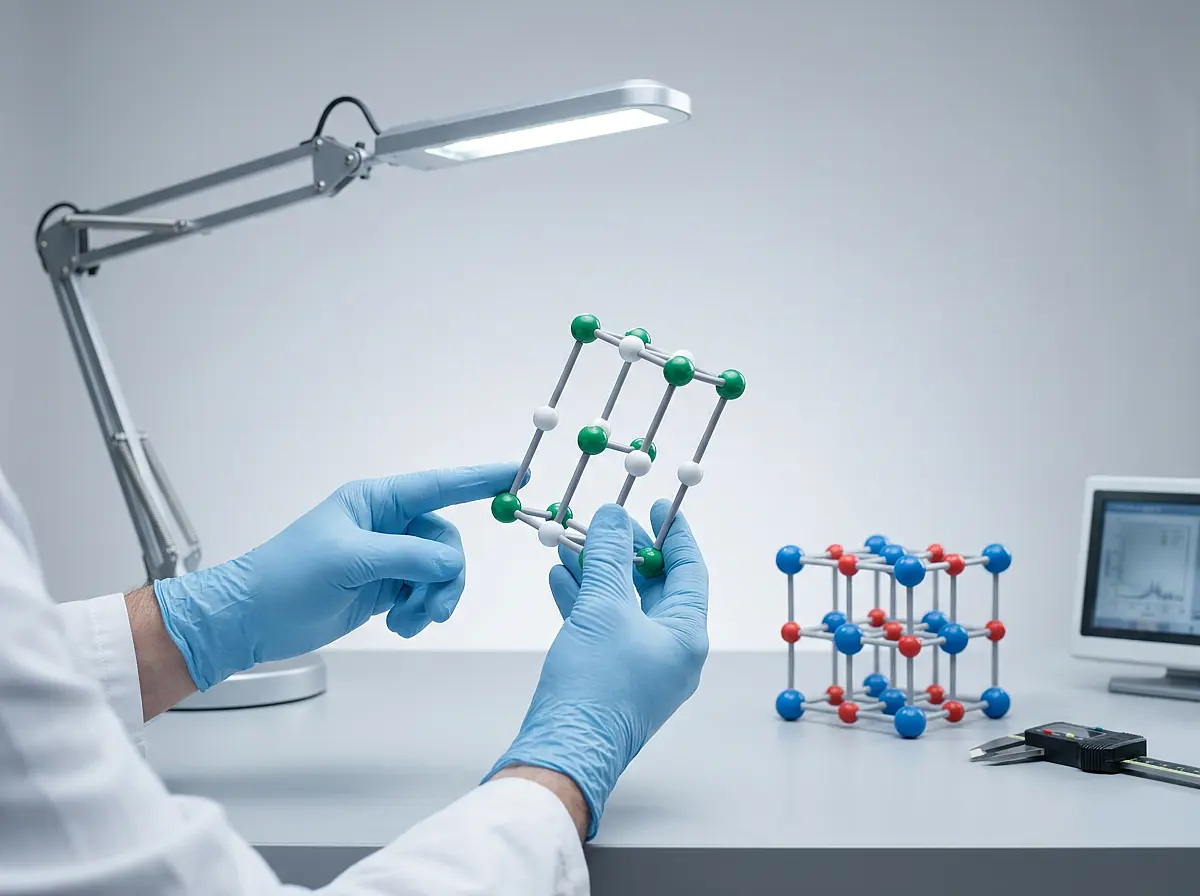
Both rutile and anatase crystallize in the tetragonal crystal system, yet they differ fundamentally in unit-cell geometry. Rutile consists of compact chains of edge-sharing TiO₆ octahedra, giving it a higher packing density, whereas anatase forms a corner-sharing octahedral network with a noticeably larger unit-cell volume per titanium atom. This single structural distinction underlies virtually every downstream property contrast discussed on this page — from optical behaviour to mechanical hardness and photocatalytic activity. In terms of thermodynamics, rutile is the stable bulk phase at room temperature and ambient pressure, while anatase is metastable: according to Cotton, F.A., Wilkinson, G., Murillo, C.A. & Bochmann, M., Advanced Inorganic Chemistry, 6th ed., 1999, p. 697, John Wiley & Sons, anatase is roughly 8–12 kJ/mol less stable than rutile in bulk form. When heated to approximately 600–800 °C, anatase undergoes an irreversible anatase to rutile phase transformation, converting permanently into the denser polymorph. An important exception emerges at the nanoscale: for very small particle sizes the stability relationship can invert, making anatase the thermodynamically preferred phase once surface energy dominates over bulk energy. A third natural polymorph, brookite, exists but has no commercial relevance and is not covered further here. For complete crystallographic data tables, including lattice parameters and coordination details, see our reference page on titanium dioxide (TiO₂). Density, hardness, and refractive index comparisons follow in the section below, so they are deliberately omitted here to avoid duplication.
Key Physical and Optical Properties Compared
Before examining each characteristic in detail, the list below summarises the four measurable parameters that most often drive the choice between the two dominant titanium dioxide polymorphs. Each figure is unpacked with its numeric value, sources, and application consequences at the point in the article where it carries real decision weight — so the entries here are kept as qualitative signposts rather than a duplicate data dump.
- Refractive index: higher for rutile than anatase — see the refractive index and opacity section for exact values and sources
- Density: rutile the denser polymorph — quantified in the density and hardness section
- Mohs hardness: rutile the harder of the two — figures in the density and hardness section
- Bandgap: anatase wider than rutile — precise values and their weathering meaning in the UV stability section
Read individually, these directions look like isolated facts; read together, they explain why one polymorph wins in pigments and the other in catalysis. The following sections translate each contrast into the real-world trade-off it creates — opacity, weight-per-volume, abrasion resistance, and photoreactivity — connecting each to the manufacturing routes, pigment behaviour, and specialised uses covered across our related titanium dioxide applications resources.
Refractive Index and Opacity
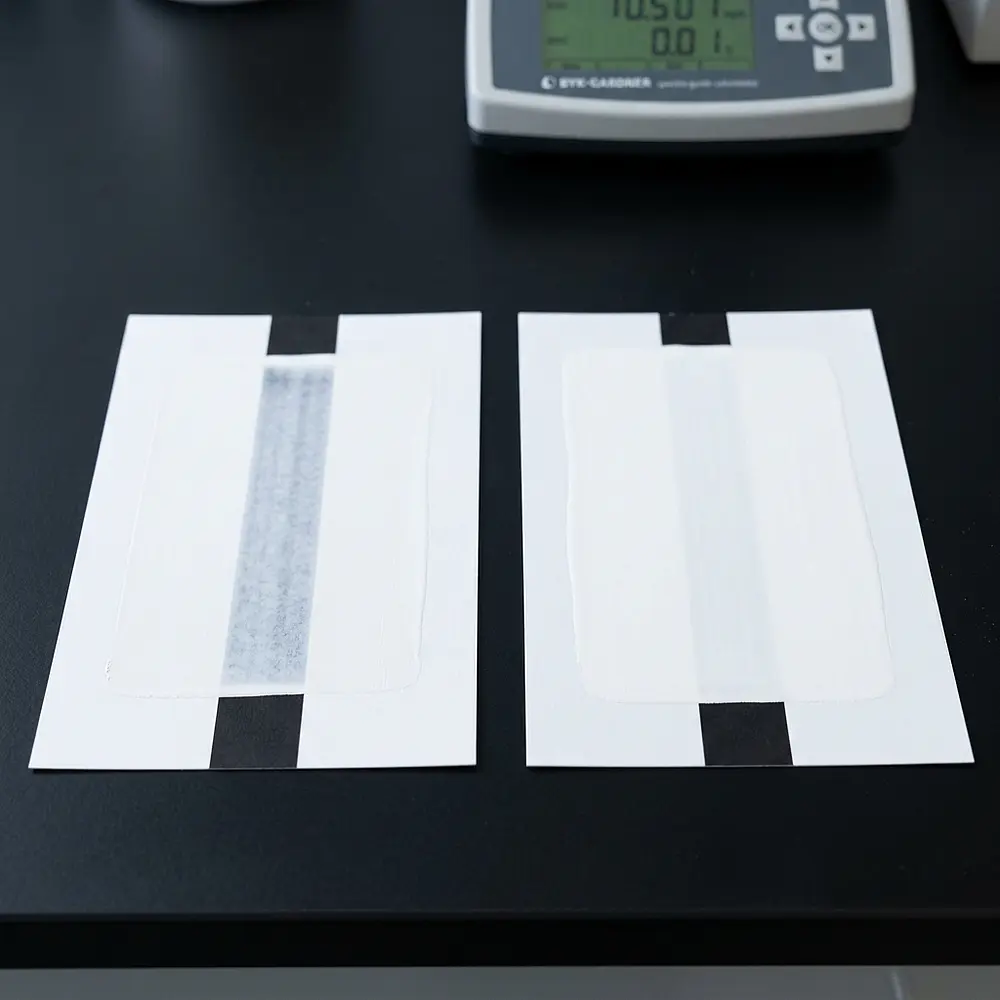
Among all the parameters separating the two polymorphs, the difference in refractive index stands out as the single most commercially decisive optical differentiator. Rutile reaches a value of n = 2.609, while anatase falls lower at n = 2.488–2.561 (ChemicalBook CB0461627; NIST WebBook C13463677 / PubChem CID 26042 — consistent with the data cited on our titanium dioxide (TiO₂) reference page). This gap is not academic: a higher refractive index means stronger light scattering per unit volume, which directly determines hiding power in paints, coatings, and plastics. In practical terms, rutile delivers more opacity per kilogram, so formulators achieve the same coverage with less pigment.
The scattering benefit is also nonlinear, which amplifies rutile's advantage further than the raw index numbers suggest. Light-scattering efficiency does not scale with the pigment's refractive index alone but with the contrast between pigment and surrounding binder — and scattering power rises roughly with the square of that refractive-index difference. Because typical organic binders sit near n = 1.5, rutile's step up to 2.609 produces a disproportionately larger contrast than anatase's 2.488–2.561, so the modest-looking index gap between the two polymorphs translates into a considerably wider real-world opacity margin than a linear reading would predict. This is precisely why the pigment industry treats even small refractive-index differences as commercially significant.
There is also a colour-tone distinction worth noting. Rutile produces a neutral-to-warm white, whereas anatase tends toward a slightly bluish off-white. That bluish cast can be an advantage in certain paper and textile applications, but it is generally less valued in standard paint formulations, where a neutral base tone integrates more predictably with colorant systems.
Density and Hardness
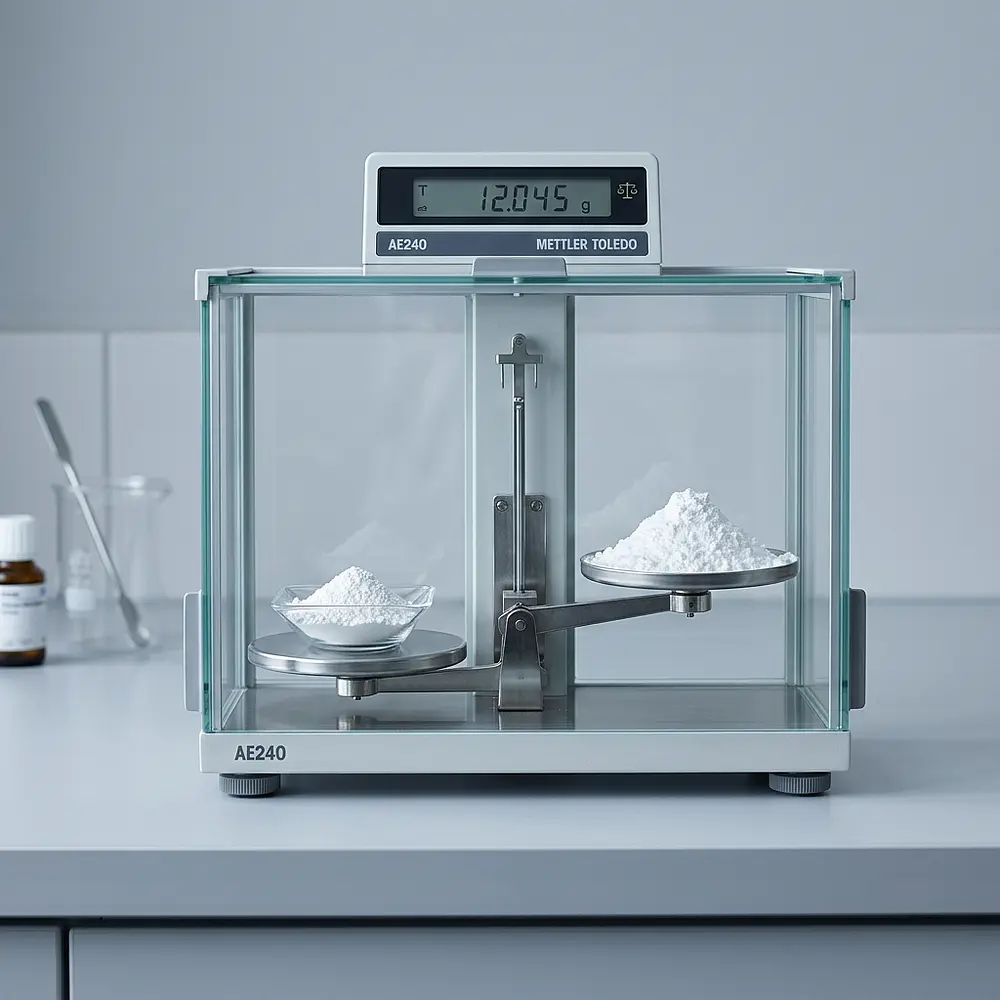
Turning to mechanical and bulk parameters, the differences in density and hardness between rutile and anatase follow directly from the structural contrast described earlier. Rutile has a density of 4.23 g/cm³, notably higher than anatase at 3.78–3.79 g/cm³ — a consequence of its more compact, edge-sharing octahedral packing. This matters in practice for weight-per-volume calculations when formulating coatings and plastics, where pigment loading is specified by mass. On the Mohs scale, rutile registers 6.2 versus 5.8 for anatase (a value anatase shares with brookite). The harder rutile can offer marginally better abrasion resistance in surface coatings, though it places slightly higher demands on milling and dispersion equipment; anatase's softer nature is occasionally cited as a minor processing advantage. In most real-world formulations, however, this hardness gap is secondary to optical performance and long-term stability considerations, which typically dominate the final material selection.
UV Stability and Weathering Behaviour
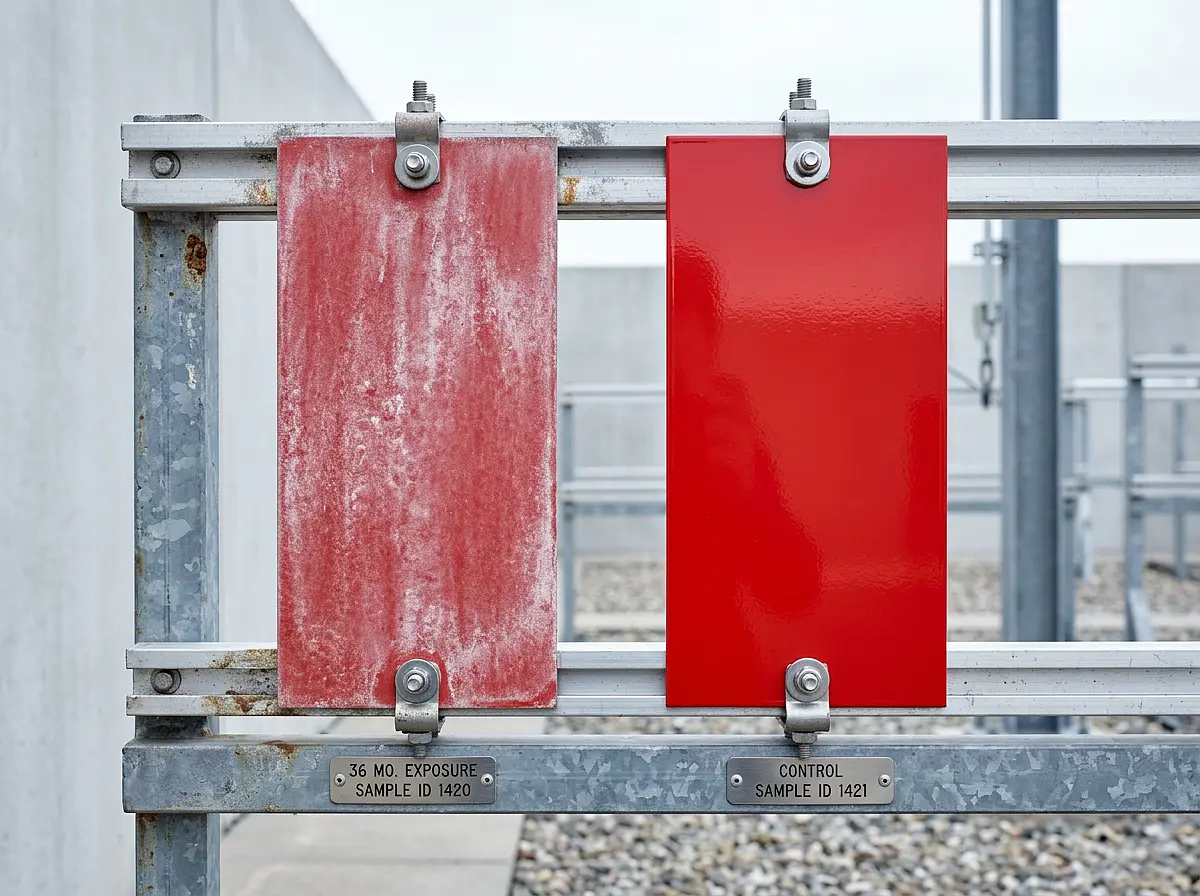
Nowhere is the practical contrast between the two polymorphs more commercially consequential than in outdoor performance, where how rutile and anatase differ in UV stability can determine whether a coating lasts years or fails within months. Rutile exhibits a bandgap of approximately 3.0 eV combined with faster electron-hole recombination, so under ultraviolet exposure it generates far fewer reactive oxygen species than anatase. The result is significantly better weathering stability: rutile-pigmented coatings retain their appearance and structural integrity far longer in outdoor service. Anatase, with a bandgap near 3.2 eV and slower recombination, can instead catalyse degradation of the organic binder when exposed to UV light. This manifests as chalking — surface powdering and progressive gloss loss as the binder erodes and leaves loose pigment at the surface. Crucially, this is a system-level effect, not a binary flaw of anatase in every context. The actual weathering outcome depends on binder chemistry, the surface treatment applied to the TiO₂ particles (inorganic coatings of Al₂O₃, SiO₂, or ZrO₂ markedly reduce photoreactivity), particle size, and the presence of UV-absorber additives. A properly treated and formulated system behaves very differently from bare pigment. For outdoor and UV-exposed applications — architectural coatings, automotive finishes, and exterior plastics — rutile is therefore the strongly preferred polymorph. The bandgap figures introduced here matter purely for their weathering consequences; the mechanistic reasons these same values make anatase the superior photocatalyst are examined in the following section. For a full treatment of the surface-treatment technologies that mitigate these effects, see our page on titanium dioxide pigment.
Photocatalytic Activity: Why Anatase Leads
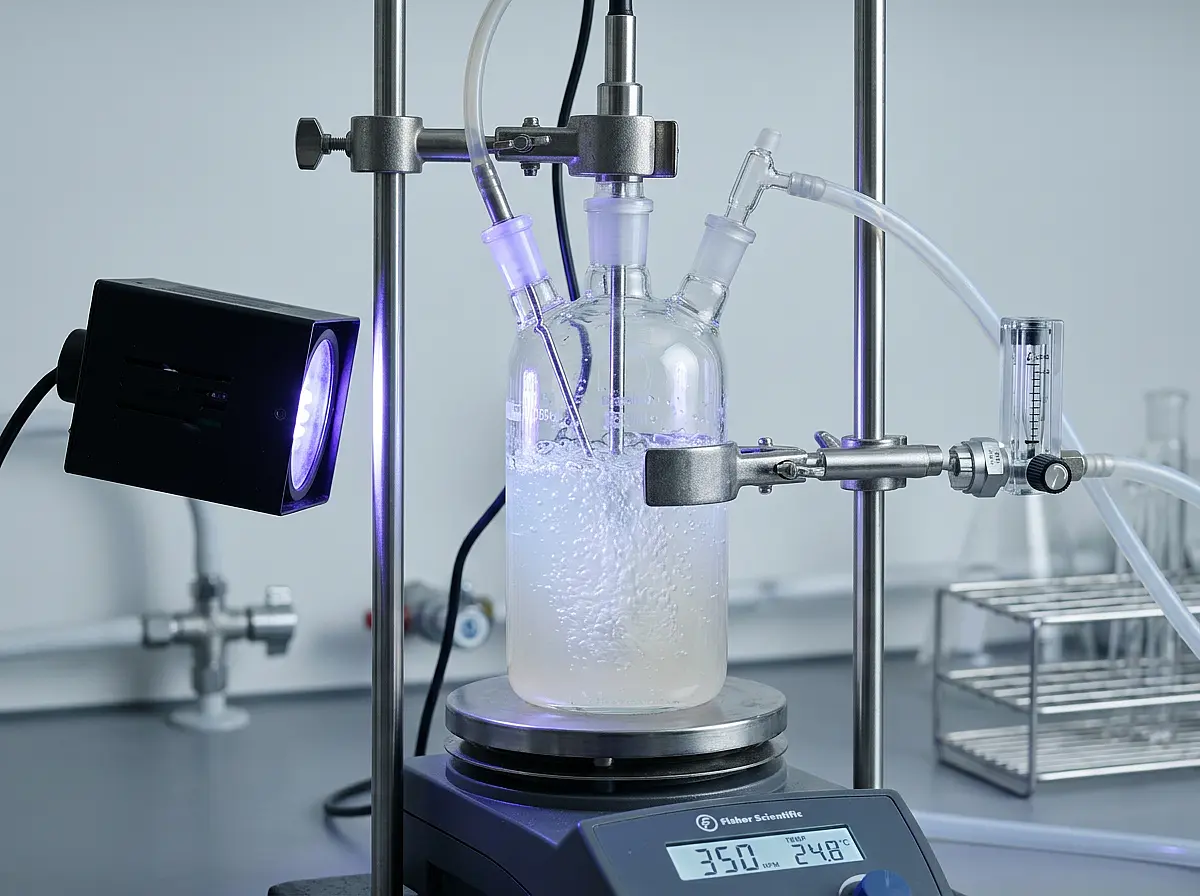
The very bandgap difference that makes anatase a liability outdoors becomes its greatest asset in catalysis. The wider anatase bandgap introduced in the previous section positions its valence band edge more favourably, generating photogenerated holes that are more strongly oxidising. These energetic holes drive the formation of hydroxyl and superoxide radicals that break down organic pollutants far more aggressively. The second mechanistic pillar behind superior anatase photocatalytic activity is markedly slower electron-hole recombination: charge carriers survive longer, giving them time to migrate from the bulk to the particle surface where redox reactions actually occur. Anatase's more open crystal structure, with its larger unit-cell volume per titanium atom, further aids mass transport of reactants to and products from these active surface sites. The foundational discovery linking TiO₂ photoelectrochemistry to practical use was the Fujishima-Honda effect (1972), which demonstrated photocatalytic water splitting on a TiO₂ electrode. Interestingly, mixed-phase material — most famously Degussa/Aeroxide P25, roughly 80% anatase / 20% rutile — is often cited as an even more effective photocatalyst than pure anatase, an enhancement attributed to beneficial charge transfer across the anatase-rutile phase junction that further suppresses recombination. A dedicated photocatalysis overview covers this topic in full mechanistic depth, including reaction pathways and quantum efficiency considerations, on our forthcoming photocatalysis resource page.
Application Decision Guide: When to Choose Rutile or Anatase

Having examined each property in isolation, the practical question remains: which polymorph should you specify? The matrix below is a quick-reference lookup only — it maps a single requirement straight onto the recommended form. The full reasoning, commercial context, and production background for each recommendation live in the two sections that follow, so treat these entries as an index into that detail rather than as standalone justifications.
- Maximum hiding power / opacity per kilogram → Rutile
- Outdoor UV and weathering durability → Rutile
- Neutral white base tone for colorant systems → Rutile
- Photocatalytic self-cleaning, air or water purification → Anatase
- Dye-sensitised solar cell efficiency → Anatase
- Cost-sensitive bulk use where only surface reactivity matters → Anatase
Procurement considerations such as cost per tonne and the manufacturing route supplying each form are woven into the two sections below, ensuring the recommendation reflects both technical performance and commercial reality.
Pigments, Coatings, and Plastics: The Case for Rutile
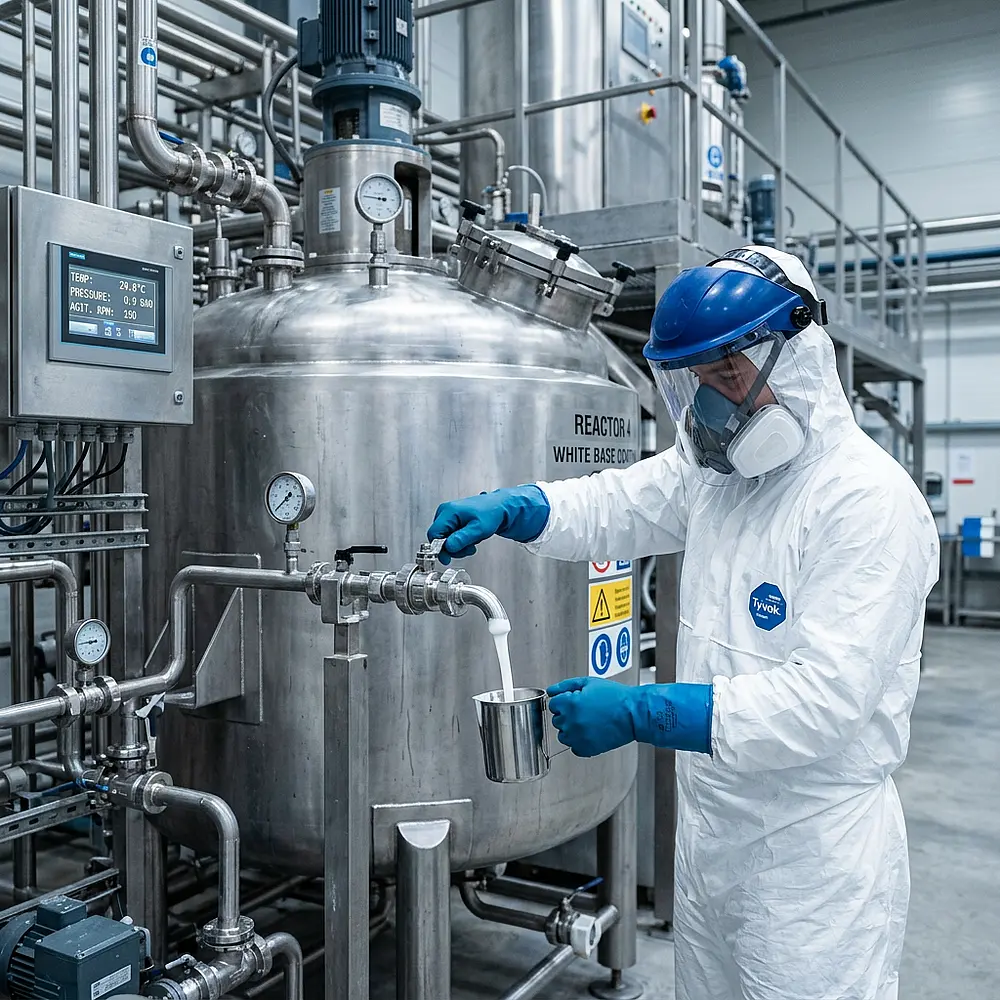
Across the pigment industry — architectural and industrial paints, plastic compounds, paper, and standard cosmetic formulations — one polymorph dominates commercial volume, and three decisive reasons explain why. First, superior hiding power, driven by the optical advantage detailed in our refractive index and opacity section. Second, better UV and weathering resistance, which protects binder integrity and keeps outdoor finishes intact for years rather than months. Third, a neutral white tone that most colorant systems accommodate more predictably than anatase's cooler cast.
The commercial calculus reinforces this technical case. Although rutile TiO₂ pigment carries a higher price per tonne than anatase, its greater scattering efficiency lets formulators hit target coverage at a lower loading, so the effective cost per unit of opacity often narrows or reverses the headline price gap. In practice, TiO₂ is frequently the single most expensive raw material in a coating formulation, which is why pigment volume concentration (PVC) is optimised so carefully: paint chemists dose rutile up to the critical PVC that maximises light scattering without starving the film of binder, and getting more opacity from each kilogram directly improves the formulation's economics. Anatase still appears in indoor paper coating and certain textile uses, where UV exposure stays minimal and its lower material cost can outweigh its weaker hiding power. On the production side, the chloride process predominantly yields rutile, while the sulfate process can deliver either polymorph depending on parameters — see our titanium dioxide pigment page for full formulation, production, and surface-treatment context.
Photocatalysis, Solar Cells, and Specialty Uses: The Case for Anatase
Turning to where this metastable polymorph genuinely earns its place, the anatase TiO₂ applications cluster around three domains that exploit reactivity and surface behaviour rather than opacity. Photocatalytic uses lead the field: self-cleaning glass, air-purification membranes, antimicrobial coatings, and water-treatment systems all rely on anatase's superior radical generation. In dye-sensitised solar cells (DSSC/Grätzel cells), its open, porous structure and favourable electronic properties are critical for dye adsorption and efficient electron injection into the conduction band — and these research-grade and nanoparticle products deliberately operate in the nanoscale stability regime already described, where anatase is the preferred form. Beyond these, anatase serves selected electronic and ceramic specialty roles. A commercial footnote reinforces the picture: anatase's lower price per tonne can tip the balance in cost-sensitive bulk photocatalytic applications where hiding power is irrelevant and only surface reactivity matters. For a broader map of how both polymorphs distribute across TiO₂ end uses, see our overview of titanium dioxide applications.
FAQ
Why does anatase outperform rutile in photocatalysis despite being the less thermodynamically stable polymorph?
Anatase outperforms rutile in photocatalysis primarily due to three interconnected factors. First, its wider bandgap (~3.2 eV vs. ~3.0 eV for rutile) positions the valence band edge more favorably, generating photoholes that are more strongly oxidizing — producing hydroxyl and superoxide radicals that aggressively degrade organic pollutants. Second, anatase exhibits markedly slower electron-hole recombination, giving charge carriers more time to migrate to the particle surface where redox reactions actually occur. Third, anatase's open crystal structure facilitates better mass transport of reactants to active surface sites. Thermodynamic metastability is therefore irrelevant to photocatalytic performance — what matters is electronic structure and charge-carrier dynamics, both of which favor anatase.
What role does Mohs hardness play in choosing between rutile (6.2) and anatase (5.8) for abrasive, coating, or filler applications?
Rutile's Mohs hardness of 6.2 versus anatase's 5.8 creates a modest but real performance difference depending on the application. In surface coatings requiring abrasion resistance — such as floor coatings, industrial finishes, or wear-resistant layers — rutile's greater hardness offers a marginal durability advantage. Conversely, anatase's slightly softer nature can ease milling and dispersion during manufacturing, reducing equipment wear and energy consumption. For filler applications, the hardness difference rarely drives the decision on its own. In practice, this gap is considered secondary to optical performance and UV stability, which typically dominate material selection. Hardness becomes a meaningful tiebreaker primarily when abrasion resistance is an explicit formulation requirement.
How do the different densities of rutile (4.23 g/cm³) and anatase (3.78–3.79 g/cm³) affect formulation decisions in coatings, cosmetics, and plastics?
Rutile's higher density (4.23 g/cm³) versus anatase (3.78–3.79 g/cm³) directly affects weight-per-volume calculations in formulations. Since pigment loading is typically specified by mass, formulators working with rutile are effectively packing more mass into the same volume, resulting in slightly higher film weight at equivalent volumetric loading. In cosmetics, where lightweight feel and skin-spreadability matter, anatase's lower density can be a minor practical advantage. In plastics, density influences composite weight targets. However, this density difference rarely drives the final selection decision on its own — optical performance, UV stability, and photocatalytic behavior typically outweigh density considerations across most formulation contexts.
How does the higher refractive index of rutile (2.609) compared to anatase (2.488–2.561) translate into real-world differences in hiding power and opa
Rutile's refractive index of 2.609 versus anatase's 2.488–2.561 translates into meaningfully superior hiding power in practical formulations. The critical mechanism is not the index values in isolation but the contrast between pigment and surrounding binder. Since typical organic binders sit near n = 1.5, scattering power rises roughly with the square of the refractive-index difference. Rutile's larger step up from n = 1.5 therefore produces a disproportionately greater scattering efficiency than the modest raw-number gap suggests. In paints, plastics, and coatings, this means formulators achieve equivalent opacity with less rutile pigment per kilogram — a direct cost and performance advantage. Additionally, rutile yields a neutral-to-warm white tone, whereas anatase tends toward a slightly bluish off-white, which integrates less predictably into standard colorant systems.
At what temperature does anatase irreversibly convert to rutile, and what are the practical consequences of this phase transformation for manufacturin
Anatase undergoes an irreversible phase transformation to rutile at approximately **600–800 °C**. This is not a gradual transition but a permanent structural reorganization into the denser, more stable polymorph — it cannot be reversed by cooling. For manufacturing, the consequences are significant. Any high-temperature process — sintering, calcination, or ceramic firing — must stay below this threshold if anatase properties are required in the final product. Photocatalytic coatings, dye-sensitized solar cell electrodes, and self-cleaning surfaces relying on anatase's electronic advantages can be destroyed by excessive processing temperatures. Conversely, manufacturers intentionally exploiting this transformation — for example, producing rutile pigment via the sulfate process — use controlled calcination to drive complete conversion. Dopants and surface treatments can shift the transformation onset temperature, giving process engineers some flexibility in controlling or preventing the
Both rutile and anatase are described as "tetragonal" — so why do their crystal structures lead to such different physical properties?
Both rutile and anatase are tetragonal, but "tetragonal" only describes the overall symmetry class — not the specific atomic arrangement within the unit cell. The critical difference lies in how TiO₆ octahedra connect: in rutile, octahedra share edges, creating compact, densely packed chains; in anatase, octahedra share corners, producing a more open framework with a larger unit-cell volume per titanium atom. This single structural distinction cascades into measurable property differences: rutile's tighter packing yields greater hardness, faster electron-hole recombination, and superior dielectric performance. Anatase's more open framework enables better charge-carrier mobility to particle surfaces and slower recombination — precisely what makes it the superior photocatalyst despite sharing the same chemical formula.
What is the fundamental difference between rutile and anatase TiO₂, and why does it matter for industrial applications?
Rutile and anatase are both crystalline forms of titanium dioxide (TiO₂), sharing the same chemical formula but differing fundamentally in crystal structure. Both crystallize in the tetragonal system, yet rutile consists of compact, edge-sharing TiO₆ octahedral chains, while anatase forms a more open, corner-sharing octahedral network with a larger unit-cell volume per titanium atom. This structural difference drives virtually every downstream property contrast. Rutile is the thermodynamically stable bulk phase at room temperature, delivering a higher refractive index (2.609 vs. 2.488–2.561), greater density (4.23 vs. 3.78–3.79 g/cm³), and superior UV stability — making it dominant in pigments and outdoor coatings. Anatase, being metastable, excels instead in photocatalysis due to its wider bandgap and slower electron-hole recombination. Choosing the wrong polymorph can mean premature coating failure or ineffective catalytic performance.
Can rutile and anatase be mixed intentionally (e.g., as in Degussa/Evonik P25), and what performance advantages does a mixed-phase TiO₂ offer over a p
Yes, rutile and anatase can be intentionally mixed. The most famous example is Degussa/Evonik P25 (now marketed as Aeroxide P25), which contains roughly 80% anatase / 20% rutile. This mixed-phase composition consistently outperforms pure anatase as a photocatalyst. The performance advantage stems from beneficial charge transfer across the anatase-rutile phase junction: electrons generated in anatase migrate to rutile, while holes remain in anatase. This spatial separation suppresses recombination more effectively than either pure polymorph alone, allowing more photogenerated radicals to drive oxidative reactions at particle surfaces. P25 remains the standard benchmark material in photocatalysis research, and its composition is deliberately engineered — not a byproduct of incomplete phase conversion.
Is anatase always cheaper than rutile, and what factors drive the price difference between the two TiO₂ polymorphs?
Anatase is generally cheaper than rutile, but the price gap is not fixed. Rutile commands a premium because of its dominance in high-volume pigment markets, which drives greater investment in surface-treatment processes. The chloride process — costlier but delivering higher-purity, more consistent rutile — adds to its price premium compared to sulfate-process anatase grades, which require less elaborate surface coating to meet typical specifications. Market dynamics also matter: TiO₂ pigment demand cycles strongly influence rutile spot pricing. For specialty photocatalytic or solar-cell applications, however, high-purity anatase nanoparticles can command prices comparable to or exceeding standard rutile pigment grades.
How do rutile and anatase compare in terms of electrical conductivity and dielectric properties, and which polymorph is preferred for electronic compo
Rutile is the strongly preferred polymorph for electronic components such as capacitors. Its dielectric constant reaches approximately 80–170 (depending on crystal orientation and measurement frequency), significantly higher than anatase's considerably lower values, making rutile-based TiO₂ ceramics attractive for capacitor dielectrics and passive components requiring high capacitance in compact form factors. Both polymorphs are wide-bandgap semiconductors and effectively insulators under ambient conditions, though conductivity increases with temperature and oxygen vacancy concentration. Rutile's denser, more compact crystal structure supports better-defined electronic properties, establishing it as the industrially standard choice wherever high dielectric performance is required.
What is brookite, and why is it largely irrelevant for industrial decision-making compared to rutile and anatase?
Brookite is the third naturally occurring crystalline polymorph of TiO₂, alongside rutile and anatase. It shares the same chemical formula but adopts a different crystal structure. For industrial decision-making, brookite is essentially irrelevant because it has no commercial production significance — no established large-scale manufacturing route yields it as a primary product, and it offers no compelling property advantage over rutile or anatase that would justify developing one. The page source explicitly notes that brookite exists but has "no commercial relevance." Practically, formulators and engineers need never choose between rutile, anatase, and brookite — the decision is always binary between the two commercially available polymorphs.
Which TiO₂ production process — the chloride process or the sulfate process — preferentially yields rutile vs. anatase, and what does this mean for so
The **chloride process** preferentially produces **rutile**, while the **sulfate process** can yield either polymorph but historically defaults toward **anatase**, though rutile can be obtained from it with additional processing steps. In the chloride process, TiCl₄ is oxidized at high temperatures, and rutile seeds or process conditions are controlled to directly deliver rutile-phase TiO₂. This makes chloride-process plants the natural supply source for high-performance rutile pigment grades. For sourcing decisions, this distinction is practical: buyers targeting **pigment applications** — where rutile's superior refractive index and UV stability are required — typically source from chloride-process producers. Buyers needing **anatase grades** for photocatalysis, paper, or specialty applications more commonly look to sulfate-process suppliers. Since chloride-process plants tend to produce higher-purity, more consistent rutile with tighter particle-size control, they also generally c
How does particle size at the nanoscale affect the thermodynamic stability relationship between anatase and rutile, and why can nanoparticle anatase s
At the nanoscale, surface energy becomes comparable to — and can even dominate over — bulk lattice energy. In bulk TiO₂, rutile is thermodynamically favored because its denser structure has lower bulk free energy (anatase is roughly 8–12 kJ/mol less stable). However, anatase has a lower surface energy than rutile. As particle size shrinks below roughly 10–14 nm, the surface-area-to-volume ratio increases dramatically, and the surface energy contribution to total free energy grows accordingly. At sufficiently small sizes, anatase's lower surface energy more than compensates for its higher bulk energy, inverting the stability relationship and making nanoparticle anatase the thermodynamically preferred phase rather than a metastable one.
In which applications — such as dye-sensitized solar cells (DSSC) or self-cleaning surfaces — is anatase the clearly superior choice over rutile, and
Anatase is the clearly superior choice in dye-sensitized solar cells (DSSC) and self-cleaning surfaces. In DSSCs, anatase's high surface area allows dye molecules to adsorb effectively, maximizing light harvesting, while its slower electron-hole recombination improves charge-carrier lifetime and current generation. For self-cleaning surfaces, anatase's stronger photocatalytic activity produces hydroxyl and superoxide radicals that efficiently decompose organic contaminants, and its open crystal structure aids reactant mass transport to active surface sites. Rutile is unsuitable for these applications because its faster recombination and lower surface area significantly reduce the photogenerated radical yield needed to drive surface reactions.
Why does rutile's greater UV stability make it the safer choice for outdoor paints and coatings, while anatase's photocatalytic activity can actually
Rutile's fast electron-hole recombination means it generates very few reactive oxygen species under UV exposure, keeping pigmented coatings highly resistant to weathering and retaining gloss over years of outdoor service. Anatase, with its slower recombination, produces far more energetic charge carriers that reach the particle surface and attack the surrounding organic binder — causing chalking, progressive surface powdering, and gloss loss as the binder erodes. However, this is a system-level effect: inorganic surface treatments (Al₂O₃, SiO₂, ZrO₂) and UV absorbers can substantially reduce anatase's photoreactivity, making formulation and particle treatment critical variables alongside polymorph choice.