Titanium Dioxide in Makeup
Titanium dioxide appears on the ingredient list of almost every foundation, mineral powder, and BB cream — and yet few consumers actually know what this substance does there, why regulators on both sides of the Atlantic have explicitly approved it, or why headlines about "possibly carcinogenic" TiO₂ omit crucial context.
The truth is: titanium dioxide is not just another filler. No other white pigment refracts light as strongly, provides such reliable coverage, and filters UV radiation at the same time — properties that have made it the backbone of modern color cosmetics for decades. But this very ubiquity raises legitimate questions: Is it safe on the skin? Does it make a difference whether the product is dabbed on or sprayed? What's the deal with nanoparticles? And what causes the white cast some people notice with mineral makeup or SPF foundations?
This page answers all of that based on verifiable scientific and regulatory sources — from the FDA's US color additive approval, through the opinion of the European Scientific Committee on Consumer Safety, to the IARC classification that is so often misquoted. No marketing, no scaremongering — just the facts you need to truly understand your cosmetics.
Table of Contents
- What Titanium Dioxide Does in Makeup: Opacity, Coverage, and UV Filtration
- US Regulatory Status: FDA Approval Under 21 CFR 73.2575
- EU Safety Assessment: SCCS Opinion SCCS/1617/20 and Concentration Limits
- IARC Group 2B Classification: What 'Possibly Carcinogenic' Actually Means for Makeup Users
- Nano vs. Pigment-Grade Titanium Dioxide: Particle Size, Labeling, and How to Identify It
- Alternatives to Titanium Dioxide in Makeup: Coverage Trade-offs and When to Consider Them
- FAQ
What Titanium Dioxide Does in Makeup: Opacity, Coverage, and UV Filtration
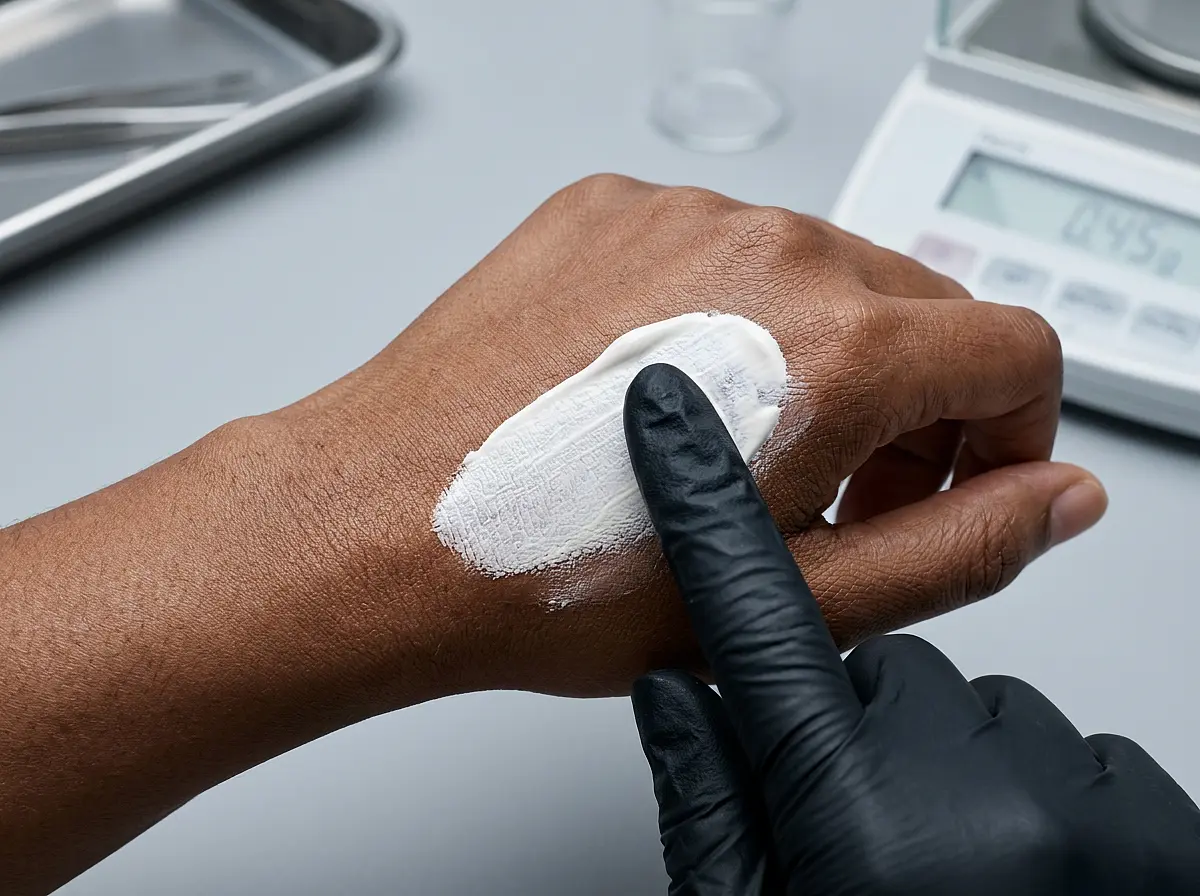
Titanium dioxide (TiO₂, CAS No. 13463-67-7) performs two distinct functions in color cosmetics, and both trace back to a single physical property: its refractive index. The refractive index of a material describes how strongly it bends light as that light passes from one medium into another; the larger the difference between a pigment particle's refractive index and the refractive index of the surrounding medium, the more light is scattered — and the more opaque and white the pigment appears. According to the CRC Handbook of Chemistry and Physics and Cotton & Wilkinson, Advanced Inorganic Chemistry (6th ed.), rutile TiO₂ has a refractive index of 2.609 and anatase TiO₂ ranges from 2.488 to 2.561. To appreciate why those numbers matter, it helps to compare them with the values for other commercially used white pigments: barium sulfate sits at approximately 1.64, calcium carbonate at approximately 1.59, and zinc oxide at approximately 2.01 (CRC Handbook; Cotton & Wilkinson). Titanium dioxide's values are therefore the highest among white pigments in commercial cosmetic use — a gap large enough to give it the greatest hiding power, or opacity, of any white colorant available to formulators.
The first function — pigmentation and coverage — exploits the fact that visible light is scattered and reflected at the surface of TiO₂ particles, producing a smooth, even, opaque finish. This is why formulators use it as the standard opacifier and brightener in foundations, pressed and loose powders, concealers, and mineral makeup: a small amount of TiO₂ achieves the whitening and coverage that would require substantially larger quantities of any lower-refractive-index alternative.
The second function concerns UV protection. Because TiO₂ physically scatters and reflects both UVA and UVB radiation, it is used as a physical UV filter in tinted SPF products and mineral sunscreen-makeup hybrids. The relationship between particle size, scattering behavior, and the resulting trade-off between visible-light opacity and UV-range efficiency is examined in detail in the white cast section below.
Rutile vs. Anatase: Crystal Forms and Their Role in Cosmetics
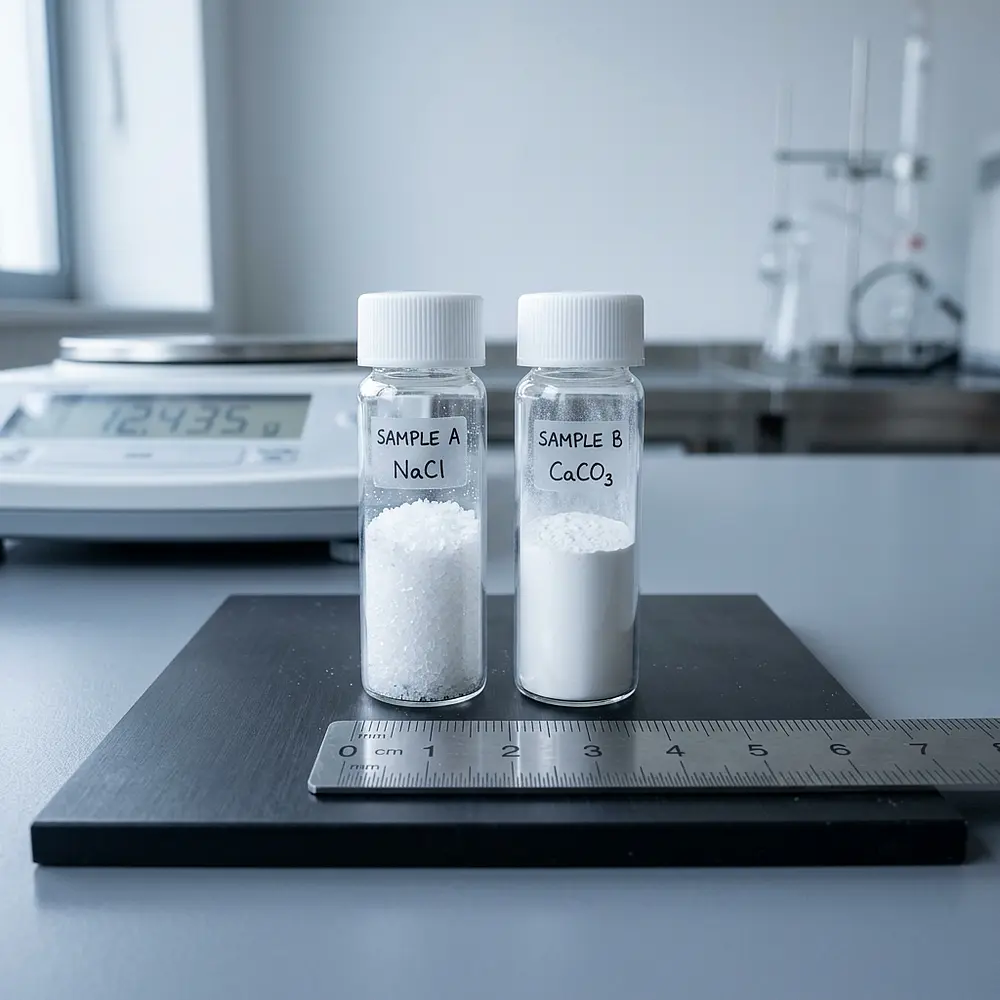
Titanium dioxide occurs in nature in several crystal forms; only two are relevant to makeup and color cosmetic applications. Rutile TiO₂ (CAS No. 1317-80-2) is the thermodynamically more stable polymorph, with a density of approximately 4.23 g/cm³. As detailed in the function section above, rutile's higher refractive index translates directly into greater hiding power, making it the preferred opacifier in foundations, face powders, and concealers. Anatase TiO₂ (CAS No. 1317-70-0) has a lower density of approximately 3.78 g/cm³ and somewhat less hiding power per unit weight; it appears more frequently in certain UV-filter contexts.
Rutile is generally preferred in cosmetic formulations over anatase. Neither the CRC Handbook of Chemistry and Physics nor Cotton & Wilkinson's Advanced Inorganic Chemistry (6th ed.) attribute that preference to photocatalytic considerations within the scope of the regulatory sources governing finished cosmetic products; the operative preference is grounded in rutile's superior optical performance as documented in those references.
A regulatory consequence of the rutile-versus-anatase distinction that is directly relevant to consumers is this: neither 21 CFR 73.2575 nor SCCS/1617/20 differentiates between rutile and anatase. The FDA color additive regulation authorizes "titanium dioxide" without specifying a crystal form, meaning both polymorphs fall within its scope. The SCCS opinion similarly evaluates pigmentary TiO₂ on the basis of particle size — the pigmentary versus nano boundary — rather than crystal structure. The practical implication is that the crystal form present in a finished makeup product is not a regulatory disclosure requirement under either US or EU law, and it cannot be identified from the ingredient list. A label entry reading "Titanium Dioxide" or "CI 77891" is consistent with either polymorph, or a mixture of both, and no marking distinguishes one from the other at the point of sale.
The White Cast Phenomenon: Particle Size, Refractive Index, and Visible-Light Scattering
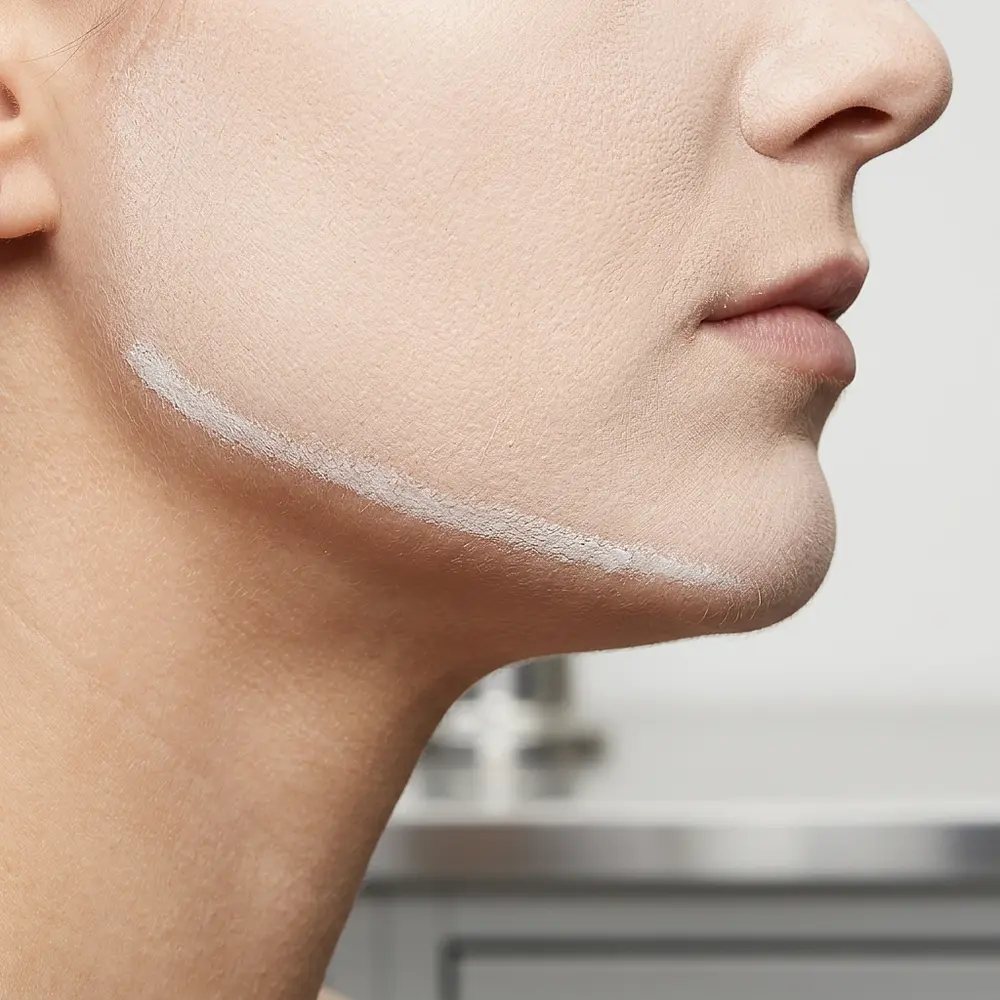
When someone applies a mineral foundation or an SPF-containing makeup and notices a whitish, ashy film on the skin, they are observing an optical phenomenon that follows directly from the physics of light scattering. The key variables are particle size and the contrast in refractive index between the TiO₂ particle and the surrounding medium in the formulation. Pigment-grade TiO₂ particles typically fall in the range of approximately 200 to 400 nm — dimensions that place them squarely within the wavelength range of visible light (roughly 400–700 nm). At those sizes, the particles scatter not only UV radiation but also visible light efficiently, and the high refractive-index contrast established in the function section amplifies that scattering into the perceptible brightening of the skin surface known as white cast.
When TiO₂ is micronized to the range of approximately 10 to 50 nm, the dominant scattering behavior shifts: at those smaller dimensions, Mie scattering preferentially affects UV wavelengths, and visible light is transmitted with far less interference, substantially reducing the white cast visible to the eye. This particle-size boundary is directly relevant to the regulatory framework: the EU definition of a nanomaterial under Article 2(1)(k) of Regulation (EC) No. 1223/2009 places the threshold at primary particles smaller than 100 nm, meaning that micronizing TiO₂ sufficiently to minimize white cast can bring a formulation into the nano category — with the labeling and safety-assessment consequences described in the ingredient list section. The SCCS/1617/20 opinion's safety conclusions for pigmentary TiO₂, including the 25% concentration limit for face makeup and loose powder, apply specifically above that 100 nm boundary and are not automatically transferable to micronized forms below it.
The white cast effect is not equally visible across all skin tones. Because the effect is produced by scattered white light superimposed on the skin surface, the perceptible contrast between that scattered light and the underlying skin tone is greater on deeper and darker complexions than on lighter ones — making the phenomenon more noticeable and practically significant for consumers with medium-to-deep skin tones. This is a consequence of luminance contrast physics, not of any differential interaction between TiO₂ and skin chemistry.
US Regulatory Status: FDA Approval Under 21 CFR 73.2575
In the United States, titanium dioxide is explicitly authorized as a color additive in cosmetics under a federal regulation that has been in place for decades. 21 CFR 73.2575 — the relevant provision within Title 21 of the Code of Federal Regulations — lists titanium dioxide among color additives that are exempt from batch certification. The regulation permits TiO₂ as a color additive in cosmetics generally, and its scope includes a provision that carries particular significance for consumers and formulators alike:
"[Titanium dioxide may be used as a color additive in cosmetics generally,] including cosmetics intended for use in the area of the eye."
This explicit inclusion of eye-area cosmetics matters because the FDA maintains a separate, stricter category for color additives used near the eyes — and the fact that 21 CFR 73.2575 affirmatively extends permission to that category means titanium dioxide is authorized not only in foundations, face powders, and concealers but also in eyeshadows, eyeliners, and similar products. No other qualification is added beyond conformity with good manufacturing practice (GMP): unlike some other color additive regulations, 21 CFR 73.2575 does not set a numerical maximum concentration. The operative standard is GMP-compliant use, which means manufacturers are responsible for ensuring that the quantity used is consistent with recognized manufacturing standards. For U.S. consumers, this means that titanium dioxide in any of these product formats sits within a clearly defined federal legal framework that binds manufacturers to established quality and safety standards.
EU Safety Assessment: SCCS Opinion SCCS/1617/20 and Concentration Limits
The principal EU reference document for the safety assessment of titanium dioxide in cosmetics is the Scientific Committee on Consumer Safety opinion SCCS/1617/20, whose final version was adopted by written procedure on 6 October 2020. A preliminary version had been published on 7 August 2020, with a public commenting period running from 10 August to 7 September 2020. The assessment was conducted explicitly against the background of a potential classification of TiO₂ as a Category 2 carcinogen by inhalation under Annex VI of Regulation (EC) No. 1272/2008 — a classification context the SCCS addressed directly in its conclusions.
The opinion evaluates TiO₂ in two regulatory contexts under EU cosmetics law: as a colorant (Annex IV, entry 143 of Regulation (EC) No. 1223/2009) and as a UV filter (Annex VI, entry 27 of the same Regulation). For both uses, the SCCS assessment focuses on pigmentary (non-nano) TiO₂ — the larger-particle form that is distinct from nanomaterial TiO₂, a distinction addressed in the ingredient list section below. For a typical face makeup application using loose powder, the Committee concluded that pigmentary TiO₂ is safe for consumers at concentrations up to 25% both when used as a colorant under Annex IV, entry 143, and when used as a UV filter under Annex VI, entry 27. The same 25% ceiling therefore applies across both regulatory functions in these non-spray face makeup and loose powder formats.
This conclusion does not extend to aerosol spray products. For a typical hair-styling aerosol spray, the SCCS assessed 25% as not safe — neither for general consumers nor for professional hairdressers. Instead, the Committee derived substantially lower safe concentrations for those formats: 1.4% for consumers and 1.1% for hairdressers. The reason for this divergence is the exposure route: in aerosol formats, TiO₂ particles are actively propelled into the air by a propellant, creating a dense, finely distributed particle cloud that can be inhaled deep into the respiratory tract. The inhalation exposure in spray scenarios is of a fundamentally different order of magnitude than the limited airborne release that occurs when loose powder is applied with a brush or sponge. For all product formats where an inhalation route is relevant, SCCS/1617/20 requires that a calculated Margin of Safety exceed 25 — a methodological threshold discussed further in the following section.
Why Spray Formats Face Stricter Limits Than Pressed or Loose Powder
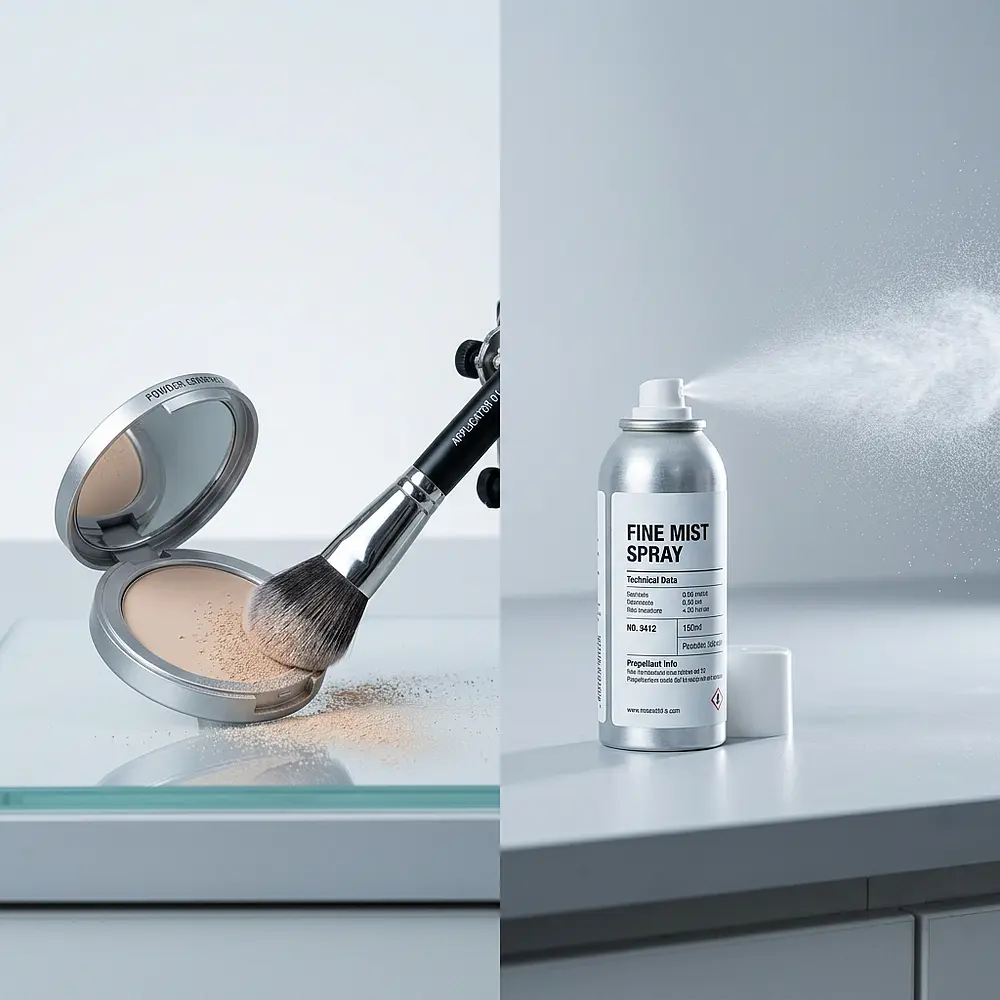
The concentration thresholds established by SCCS/1617/20 for loose powder versus aerosol spray — summarized in the preceding section — diverge not because of concentration alone, but because of how each product format delivers particles into the environment and how that delivery mechanism determines the inhalation exposure route. Understanding this distinction is essential for interpreting what those thresholds mean in practice.
When loose powder is applied with a brush or sponge, some particles become temporarily airborne. The quantity that reaches the respiratory tract, and the depth to which those particles penetrate, depends on factors including particle size, application technique, and the duration of exposure. The resulting inhalation dose is finite and, in typical consumer use conditions, calculable at a level that the SCCS found consistent with safety for pigmentary TiO₂.
An aerosol spray operates on a mechanistically different principle. A propellant actively drives the formulation into ambient air, generating a sustained cloud of fine, widely dispersed particles. Unlike settled powder disturbed during application, this cloud remains suspended and inhalable for an extended period, and the particles generated by aerosol atomization tend toward sizes that can penetrate beyond the upper airways into the lower respiratory tract. It is this combination — forced aerosolization, extended suspension time, and small respirable particle dimensions — that shifts the inhalation exposure to a level at which safe concentrations are a fraction of those permissible in non-spray formats.
To put this in plain terms: the Margin of Safety (MoS) is a safety buffer — the higher the number, the greater the distance between actual consumer exposure and the dose at which effects were observed in studies. Formally, the MoS is the ratio of the No Observed Adverse Effect Level (NOAEL) derived from toxicological studies to the estimated systemic exposure calculated from consumer use. SCCS/1617/20 requires a MoS greater than 25 as a minimum condition for concluding that a product is safe where an inhalation route is relevant — including combination products where both topical and inhalation exposure must be considered together. For aerosol products at concentrations permissible in non-spray formats, that margin cannot be demonstrated; it is only achievable at the substantially lower concentrations the SCCS derived for spray product types.
IARC Group 2B Classification: What 'Possibly Carcinogenic' Actually Means for Makeup Users
Headlines that describe titanium dioxide as a "carcinogen" draw on a classification that, without its essential context, is essentially meaningless for consumers applying makeup. The International Agency for Research on Cancer (IARC) classifies TiO₂ in Group 2B — "possibly carcinogenic to humans". This classification was first documented in IARC Monographs Volume 47 (1989) and was reviewed again in Volume 93 (2010). Importantly, IARC Volume 93 confirmed and retained the Group 2B classification — it did not revise it upward or downward. Consumers encountering references to either volume should understand they reflect the same regulatory conclusion, not two separate or evolving assessments.
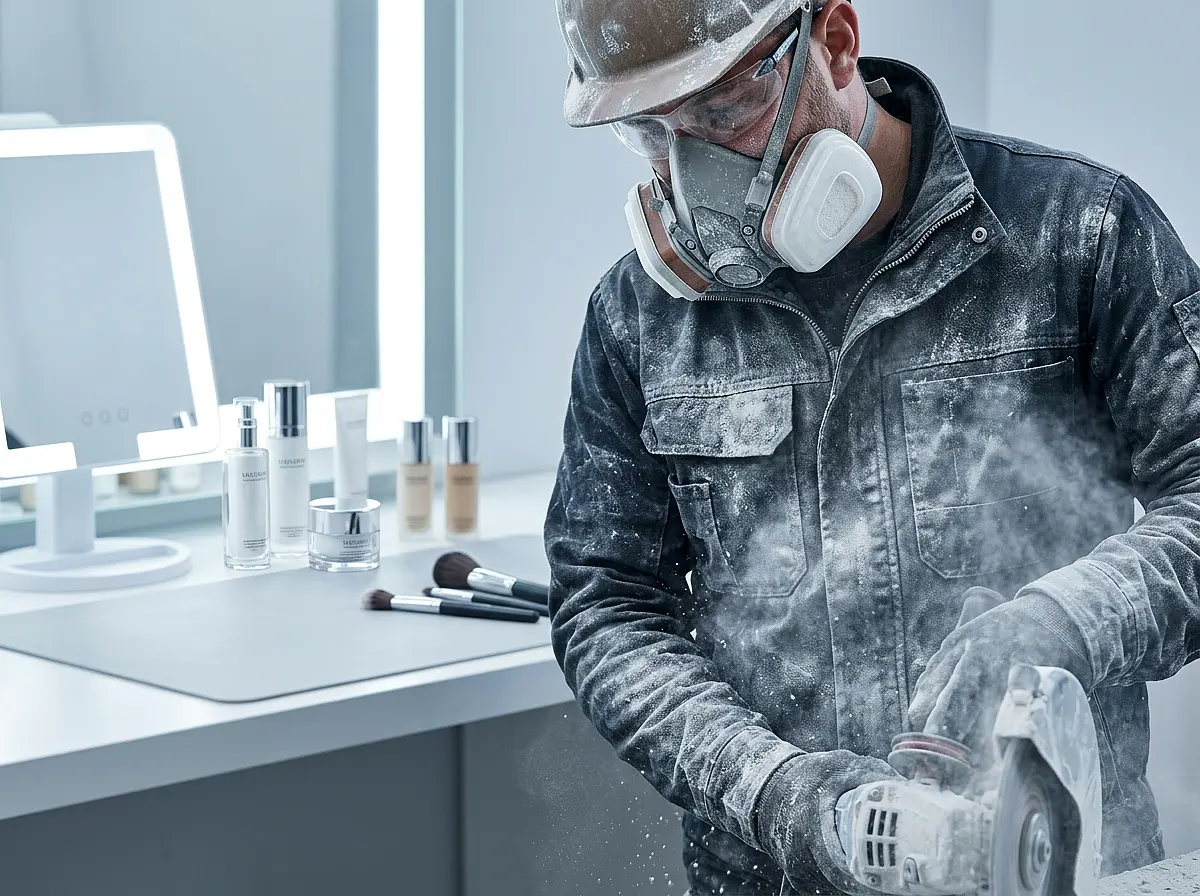
What Group 2B means — and does not mean — requires careful reading. As the International Chemical Safety Card ICSC 0338 (ILO/WHO) makes plain, the classification concerns long-term or repeated inhalation of airborne TiO₂ dust, primarily in occupational settings such as TiO₂ manufacturing or industrial processing, where workers may be exposed to high concentrations of fine or ultrafine airborne particles over sustained periods. "Possibly carcinogenic" in this context means that there is limited evidence from animal inhalation studies — not that TiO₂ has been shown to cause cancer through skin contact or topical application. The occupational relevance of this dust-exposure concern is also reflected in established workplace air limits: the U.S. OSHA permissible exposure limit (PEL) for titanium dioxide is 15 mg/m³ as an 8-hour time-weighted average, the ACGIH threshold limit value (TLV) is 10 mg/m³ over the same period, and NIOSH has set recommended exposure limits (RELs) of 2.4 mg/m³ for fine TiO₂ and 0.3 mg/m³ for ultrafine TiO₂, both as 10-hour time-weighted averages — limits that reflect the inhalation hazard framework for workers, not consumers using finished cosmetics.
Consumers who apply foundation, press powder onto their skin, or blend concealer are exposed topically and dermally — not through the sustained occupational inhalation that forms the evidentiary basis for the IARC assessment. ICSC 0338 does not indicate a dermal carcinogenicity concern. Applying the IARC Group 2B classification to finished makeup products therefore means applying a finding about one specific exposure route — inhalation in industrial contexts — to a fundamentally different exposure scenario. For the exposure conditions that actually characterize cosmetic use, the directly relevant safety assessment is SCCS/1617/20, as discussed above.
Titanium dioxide is also assigned a Right to Know (RTK) Substance Number of 1861 under the New Jersey Department of Health hazard substance list, which records health, flammability, and reactivity ratings of 2, 0, and 0, respectively. These designations are occupational and industrial safety classifications tied to dust-inhalation and handling hazards — they describe the substance in bulk or airborne form in workplace contexts, not the risk profile of TiO₂ as an ingredient in a finished cosmetic product applied to skin.
Nano vs. Pigment-Grade Titanium Dioxide: Particle Size, Labeling, and How to Identify It
![Cosmetic product boxes in a studio setting: one labeled with a '[nano]' notice, next to one reading 'Titanium Dioxide'](/fileadmin/_processed_/e/e/csm_titanium_dioxide_in_makeup-8-6487_d6eee80c66.webp)
The safety conclusions in SCCS/1617/20 — including the concentration limits discussed in the EU safety section — apply specifically to pigmentary (non-nano) TiO₂. The dividing line is primary particle size: nanomaterial TiO₂ consists of primary particles smaller than 100 nm by definition, while pigmentary TiO₂ has larger particles. The SCCS opinion explicitly leaves open whether its conclusions can be extended to nanomaterial forms of TiO₂ without further assessment. The scope of that opinion is therefore a boundary on what is currently known from a formal EU regulatory safety evaluation, not a statement that nano TiO₂ has been found unsafe — only that it has not been assessed to the same standard within this opinion.
This distinction between pigmentary and nano TiO₂ also determines which regulatory concentration thresholds apply and which labeling obligations are triggered. For labeling implications of this distinction — including how to identify nano TiO₂ on an EU ingredient list and what the absence of a comparable U.S. requirement means for American consumers — see the ingredient list section below.
How to Read a Makeup Ingredient List for Titanium Dioxide
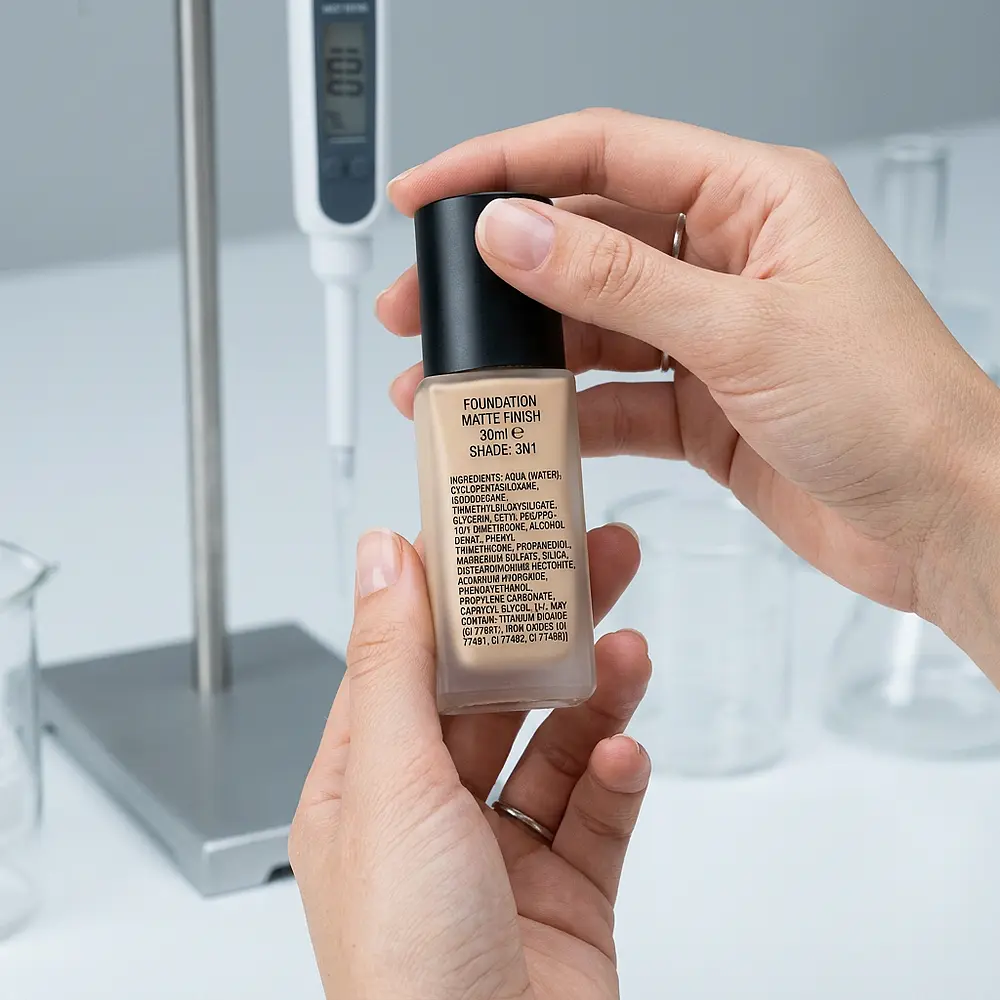
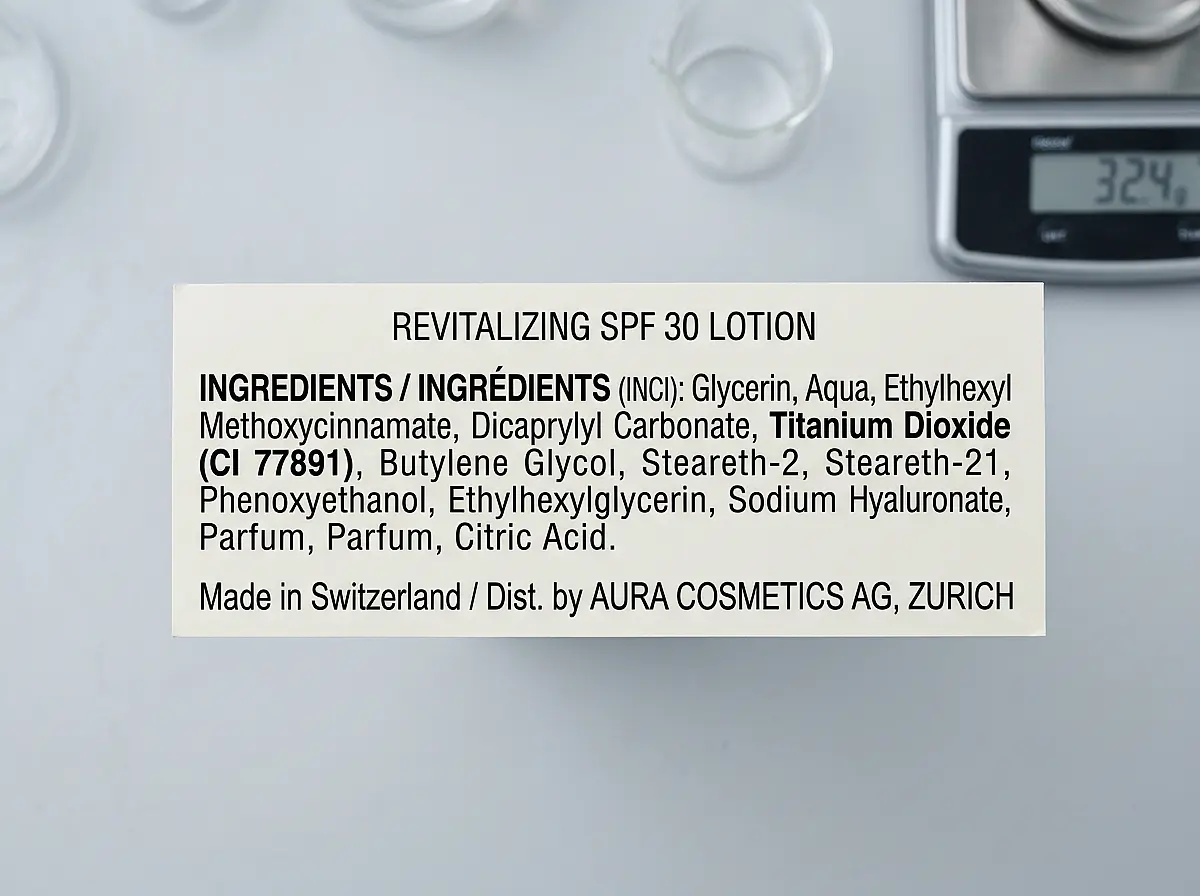
Consumers checking a makeup product's ingredient list for titanium dioxide will encounter the compound under several designations, depending on the market and the manufacturer's labeling conventions. The most common is the INCI name Titanium Dioxide, which appears on packaging sold in both the United States and the EU. Also widely used — particularly on EU products and some U.S. imports — is the Color Index number CI 77891: this standardized pigment designation refers to exactly the same substance (CAS No. 13463-67-7). The abbreviation "TiO₂" appears occasionally in informal product descriptions but is not a standard INCI or regulatory designation.
For consumers purchasing EU-market products, Regulation (EC) No. 1223/2009 provides a practical way to distinguish pigmentary from nanomaterial TiO₂ at the point of sale: whenever a manufacturer uses a nanomaterial form, the ingredient list must carry the suffix [nano] immediately after the ingredient name. A product displaying only "Titanium Dioxide" or "CI 77891" — without the [nano] suffix — contains the pigmentary form to which the SCCS/1617/20 safety conclusions apply. This labeling requirement follows from Article 2(1)(k) of Regulation (EC) No. 1223/2009, which defines a nanomaterial as an insoluble or biopersistent intentionally manufactured material with one or more external dimensions, or an internal structure, on the scale of 1 to 100 nm — the same particle-size threshold that separates pigmentary TiO₂ from the nano form for regulatory safety assessment purposes.
In the United States, no comparable FDA requirement exists for nanomaterials in cosmetics; U.S. consumers cannot reliably determine from an ingredient list alone whether a product contains nano TiO₂. Any "non-nano" claim on a U.S. label is a voluntary marketing statement without a binding federal verification standard.
One important limitation applies regardless of which designation appears on the label: neither the INCI name, the CI number, nor the [nano] suffix discloses the crystal form (rutile or anatase), the particle size distribution within pigmentary grades, or any surface coatings that may have been applied to improve dispersibility or stability. As noted in the crystal forms section, neither 21 CFR 73.2575 nor SCCS/1617/20 requires disclosure of crystal form — the label entry confirms only the regulatory designation and the presence of the substance.
Alternatives to Titanium Dioxide in Makeup: Coverage Trade-offs and When to Consider Them
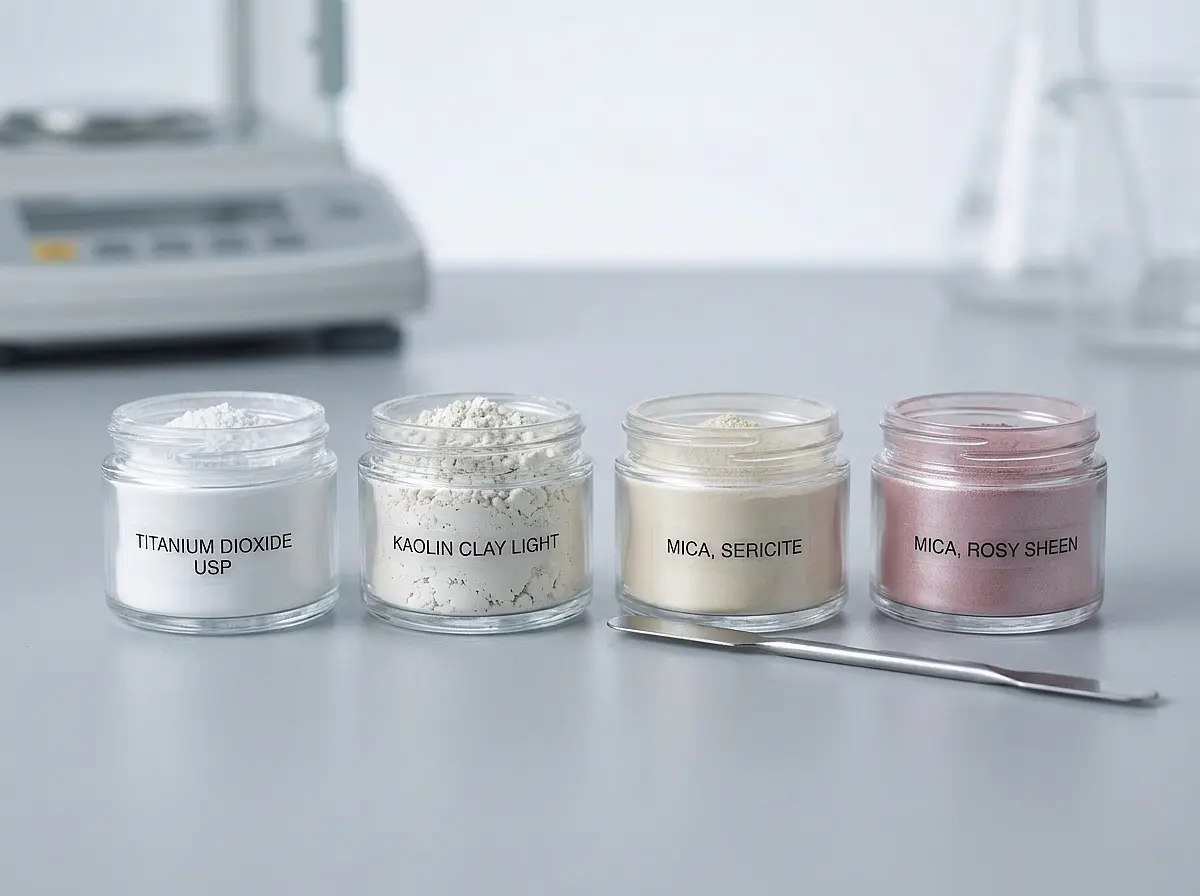
When consumers or formulators consider alternatives to titanium dioxide in makeup, the principal option that can be discussed within the scope of the regulatory sources covered on this page is zinc oxide. Like TiO₂, zinc oxide functions both as a white pigment and as a physical UV filter in mineral sunscreen-makeup hybrids — making it the most direct functional parallel in this category. Its refractive index of approximately 2.01 (CRC Handbook of Chemistry and Physics; Cotton & Wilkinson, Advanced Inorganic Chemistry, 6th ed.) is substantially lower than the 2.609 of rutile TiO₂, which means zinc oxide delivers less hiding power per unit weight while covering a somewhat broader UV spectrum, particularly in the UVA range. Because the full comparison between these two ingredients — including their respective refractive indices, UV filter spectra, and regulatory status — involves detail that would duplicate material already assembled elsewhere on this site, it is covered in full on the dedicated comparison of zinc oxide and titanium dioxide as cosmetic ingredients.
Beyond zinc oxide, other white pigments used in cosmetic formulations — such as barium sulfate and calcium carbonate — have refractive indices substantially below that of rutile TiO₂, as detailed in the function section above. The direct implication of those lower values is that these alternatives scatter visible light less efficiently per unit of pigment, meaning a formulation would require higher pigment loads or accept lower coverage to compensate for the optical difference.
FAQ
How can I tell from a cosmetic ingredient label whether a product contains nano-form titanium dioxide versus regular pigmentary TiO2?
Under EU cosmetics regulation, titanium dioxide in nano form must be declared on the ingredient list as 'Titanium Dioxide [nano]' — the word 'nano' in square brackets directly follows the INCI name. This requirement has been in effect since 2013. For regular, pigment-grade (non-nano) TiO2, the list simply shows 'Titanium Dioxide' or the color index code CI 77891, without a nano designation. US FDA regulations currently do not mandate an equivalent nano-specific labeling requirement, so American products are not required to distinguish between the two forms on the packaging.
What is the difference between nano and pigment-grade (non-nano) titanium dioxide, and which form is typically used in foundation and powder?
Titanium dioxide comes in two main particle size categories. Pigment-grade (non-nano) TiO2 has particles typically larger than 100 nm — often in the range of 200–300 nm — giving it strong light-scattering ability and high opacity. Nano-grade TiO2 has particles below 100 nm; at this scale, optical behavior changes, and particles scatter UV light more efficiently while becoming more transparent to visible light. In conventional foundation and pressed powder, pigment-grade (non-nano) TiO2 is the standard choice, precisely because its larger particle size delivers the visible coverage and white-balancing effect these products require. Nano-form TiO2 is more commonly found in sunscreen-focused formulations — such as tinted SPF moisturizers or mineral sunscreens — where transparency on skin is desirable alongside UV protection.
Is titanium dioxide really a carcinogen? What does the IARC Group 2B classification actually mean for everyday makeup users?
The IARC classification as Group 2B — possibly carcinogenic to humans — is based primarily on studies in rats that were exposed to high concentrations of TiO2 dust by inhalation in occupational settings. Group 2B is IARC's lowest level-of-concern category and means only limited or inadequate evidence in humans. The classification is also inhalation-specific and does not refer to topical skin application. For everyday makeup users applying foundation, concealer, or powdered products, the exposure route and particle quantity are fundamentally different from the industrial scenarios that led to the classification.
Why does the EU's SCCS assessment set a different safety limit for aerosol spray products — like setting sprays or hairsprays — than for loose powder
The difference lies in the intensity of inhalation exposure. Aerosol sprays — setting sprays, hairsprays, dry shampoos — produce fine, easily inhalable droplets or particles that can reach deep into the lungs. Because IARC has classified titanium dioxide via the inhalation route as a possible human carcinogen (Group 2B), the SCCS sets significantly stricter concentration limits for spray formats. Loose and pressed powders also generate some dust during application, but to a far lesser extent than aerosol sprays, which continuously propel fine particles into the breathing zone. The inhalation risk is therefore the decisive criterion in the format-specific safety assessment.
What has the EU Scientific Committee on Consumer Safety (SCCS) concluded about the safety of pigmentary titanium dioxide in face makeup and loose powd
The SCCS concludes that pigmentary (non-nano) titanium dioxide in face makeup products such as foundations, blushes, and pressed powders is safe under normal and reasonably foreseeable conditions of use. Dermal exposure from these products does not pose a significant safety concern. For loose powder products, however, increased caution applies, since particles can become airborne during application. The SCCS sets the maximum concentration for face makeup at 25% titanium dioxide — a value based on exposure levels assessed as safe.
Does FDA 21 CFR 73.2575 permit titanium dioxide in makeup products used around the eyes, such as eyeshadow and concealer?
Yes. 21 CFR 73.2575 approves titanium dioxide as a color additive for cosmetics in general, and this approval explicitly includes cosmetics intended for use in the area of the eye, subject to good manufacturing practice. This means eyeshadow, eyeliner, and other eye-area formulations are covered by the same regulation as foundation or powder — there is no separate eye-specific pathway or exclusion for titanium dioxide under US law. Formulators still need to observe the regulation's purity and identity specifications and follow good manufacturing practice for any eye-area product.
Is titanium dioxide in makeup legal and regulated in the United States, and which specific FDA regulation covers it?
Yes, titanium dioxide in makeup is legal in the United States. The FDA classifies it as an approved color additive for cosmetics and regulates it under 21 CFR 73.2575. This regulation approves titanium dioxide for cosmetics applied externally, sets purity specifications, and does not establish a maximum concentration for most cosmetic uses. Manufacturers bear responsibility for the safety of their formulations. This regulatory classification remains unchanged as of July 2026.
What is titanium dioxide (TiO2), and why is it in so many makeup products like foundation, powder, and concealer?
Titanium dioxide (TiO2) is a naturally occurring mineral compound identified on cosmetic labels as Titanium Dioxide or by the color index code CI 77891. It is one of the most widely used ingredients in makeup because it acts as a powerful white pigment and opacifier, giving products like foundation, powder, and concealer their coverage, brightness, and ability to even out skin tone. Its extremely high refractive index makes it exceptionally effective at scattering and reflecting light. Additionally, TiO2 is chemically stable, largely inert on the skin, and compatible with a broad range of formulation types, making it a practical and cost-effective choice for cosmetic manufacturers.
What concentration of titanium dioxide is considered safe in face makeup, and is the amount used in typical US drugstore or prestige products within t
There is no single universal maximum concentration for titanium dioxide across all face makeup products. The EU permits up to 25% TiO2 as a UV filter in leave-on cosmetics. Typical US drugstore and prestige foundations, powders, and concealers generally contain between 1% and 25% TiO2, depending on the product type and desired coverage. These amounts are generally considered safe under both FDA guidance and international assessments, provided the product is not an aerosol and is applied to intact skin.
How does titanium dioxide in mineral makeup compare to zinc oxide, and are there situations where one is preferred over the other?
Titanium dioxide (TiO2) and zinc oxide (ZnO) are both important ingredients in mineral makeup, but they differ in key respects. TiO2 offers a higher refractive index and superior light scattering, making it ideal for strong coverage and a brightening effect. Zinc oxide, on the other hand, provides broader UV protection — covering both UVA and UVB more completely — and is considered especially gentle for sensitive or reactive skin. Many mineral formulations combine both ingredients. ZnO is also credited with natural antimicrobial properties. Which ingredient is preferred depends on the desired coverage, skin type, and SPF requirements of the particular formulation.
Does titanium dioxide in makeup also function as a sunscreen or UV filter, and if so, how does its role differ between a tinted SPF moisturizer and a
Yes, titanium dioxide acts both as a pigment and as a physical UV filter: it reflects and scatters UV radiation rather than chemically absorbing it. In a tinted SPF moisturizer, titanium dioxide is deliberately formulated as an active sunscreen agent, contributes to the stated SPF value, and must comply with FDA drug monograph rules in the US and with UV filter requirements (up to 25%) in the EU. In a regular foundation, by contrast, titanium dioxide primarily serves as a white pigment for coverage and opacity. While it incidentally provides some UV attenuation, in that case neither an SPF claim is made nor is the concentration or particle size optimized for sun protection.
Is the titanium dioxide in makeup the same substance that was banned as a food additive (E171) in the European Union?
Yes, chemically it is the same substance: titanium dioxide (TiO2). E171, banned as a food additive in the EU since 2022, and the titanium dioxide used in cosmetics are chemically identical. However, the regulatory trigger for the E171 ban was oral ingestion and potential genotoxicity from internal consumption. In cosmetics, TiO2 is applied to the skin or, in the case of powders, potentially inhaled — entirely different exposure routes and risk assessments. The EU ban on E171 as a food additive therefore does not affect the separately regulated approval of titanium dioxide in cosmetic products.
Can titanium dioxide in makeup cause skin irritation, allergic reactions, or other dermal side effects?
Titanium dioxide is considered non-irritating and non-sensitizing when applied topically to intact skin. Allergic contact reactions are rare and barely documented in the dermatological literature. Regulatory authorities and scientific bodies, including the SCCS, classify pigmentary TiO2 as safe for skin application at typical cosmetic concentrations. People with particularly sensitive or compromised skin may occasionally experience mild irritation, though this is not specifically attributed to TiO2. The primary safety concern remains inhalation — particularly with loose powder products — rather than dermal exposure.
Does titanium dioxide in makeup penetrate the skin or enter the bloodstream when applied topically?
Current scientific evidence consistently shows that pigment-grade (non-nano) titanium dioxide does not significantly penetrate intact, healthy skin. TiO2 particles remain on the skin surface or in the outermost layers of the stratum corneum, without reaching living tissue or entering the bloodstream. Nano titanium dioxide — particles below 100 nm — has been examined more cautiously, but here too research has not demonstrated significant dermal absorption through undamaged skin under normal cosmetic use conditions. The primary safety concern with titanium dioxide in makeup therefore does not concern skin penetration, but inhalation with loose powder or aerosol formats.
Is titanium dioxide in loose face powder safe to use, or should I be concerned about inhaling particles during application?
Loose face powder containing titanium dioxide is generally considered safe for most adults when used as intended. The main concern is inhalation during application, since fine powder particles can temporarily become airborne. To minimize inhalation risk, it is advisable to apply the powder with light, controlled movements rather than shaking it vigorously, to ensure good ventilation, and to avoid applying it directly under the nose and mouth. People with respiratory conditions should exercise particular caution or seek medical advice.
Why do some mineral foundations and SPF-containing makeup products leave a noticeable white cast on the skin, and is titanium dioxide responsible?
Yes, titanium dioxide is a major cause of white cast. It is a bright white pigment with a very high refractive index that intensely reflects and broadly scatters light. In mineral foundations and SPF products, titanium dioxide is often used at relatively high concentrations — both as a coverage pigment and as a physical UV filter. On medium to darker skin tones, this reflectivity produces a visible ashy or gray-white effect, especially in flash photography. Micronized or nano-scale particles can somewhat reduce this effect, while larger pigment-grade particles are more prone to it. Zinc oxide, often used alongside TiO2 in SPF formulations, can also contribute to white cast.